
Recipe
Protein Coffee Recipe: How to Make It Iced or Hot, Without the Clumps
This protein coffee recipe shakes 1 cup of cold coffee with 1/2 cup of milk and one scoop of protein powder, then pours it over ice, for about 29 grams of protein and 180 calories. Below are the hot version, five variations, and what the research says about coffee and weight loss, caffeine limits and mushroom coffee.

Iced Protein Coffee (Proffee)
Ingredients
- 1 cup (8 oz) strong brewed coffee, chilled, or cold brew
- 1/2 cup 2% milk (or any milk)
- 1 scoop (about 1/3 cup) vanilla or unflavored whey protein powder
- 1/4 tsp ground cinnamon (optional)
- 1 cup ice
Steps
- Pour the milk into a jar with a tight lid or a shaker bottle, then add the protein powder.
- Close and shake hard for about 15 seconds, until no dry powder is left.
- Add the cold coffee and cinnamon, close again and shake for 10 more seconds, until foamy.
- Pour over the ice and drink right away.
Per serving, estimated from USDA FoodData Central: 180 calories, 29 g protein, 1 g fiber, 6 g sugar. Based on USDA's generic whey protein powder entry; brands vary a lot, so check your label. The coffee adds about 96 mg of caffeine.
How to make protein coffee without clumps
Protein powder clumps when it hits liquid all at once, and it clumps worst in very hot coffee. The fix is the same for iced and hot versions: dissolve the powder in a little cold or room-temperature milk first, then add the coffee.
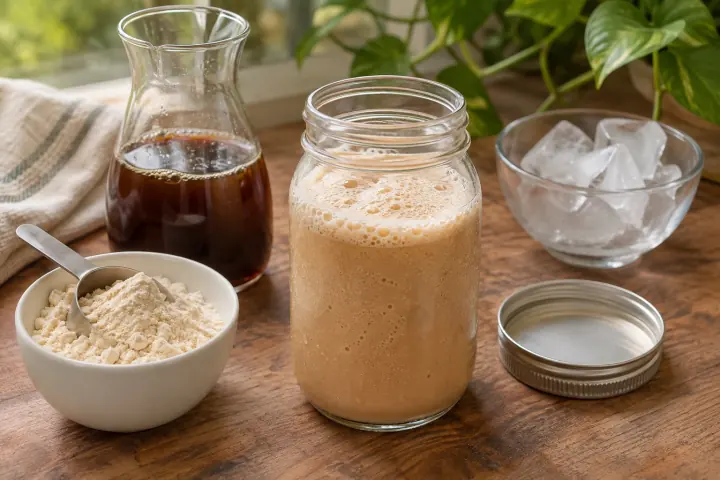
- Milk first, powder second. Powder poured onto an empty jar sticks to the bottom.
- Shake or whisk until smooth before any coffee goes in.
- Add the coffee last and shake again. Cold coffee foams nicely; hot coffee should be stirred in gradually.
- Drink it fresh. Protein coffee can separate as it sits, so give it another shake if you sip slowly.
Iced protein coffee, also called proffee
Proffee is simply protein plus coffee, usually served iced. The recipe card above is the classic version. Two shortcuts work just as well:
- With a ready-to-drink protein shake: pour about 1 cup of a vanilla or coffee-flavored protein shake over 1 cup of cold brew and ice. Check the shake's label for protein and added sugar.
- With espresso: replace the cup of brewed coffee with 1 to 2 shots of espresso, cooled, plus 1/2 cup more milk or water.
Make the coffee the night before and keep it in the fridge, and the morning version takes about three minutes.
Hot protein coffee
- In a large mug, whisk the scoop of protein powder into 1/4 cup of cold or room-temperature milk until it forms a smooth paste.
- Heat the remaining 1/4 cup of milk if you like it creamy.
- Slowly pour in 1 cup of hot coffee, whisking or using a handheld frother as you go.
- Dust with cinnamon and drink while warm.
Letting freshly brewed coffee cool for a minute or two before adding it makes clumps less likely, especially with whey.
Protein coffee variations
Each version is one drink. We calculated the numbers from USDA FoodData Central for the exact amounts listed.
- Mocha protein coffee: add 1 tbsp unsweetened cocoa powder to the milk and powder before shaking.
- Protein latte without powder: 1/2 cup strong coffee with 1 cup steamed or cold 2% milk. A gentler option if you don't like protein powder.
- Greek yogurt coffee: blend 1 cup cold coffee, 1/2 cup plain nonfat Greek yogurt, 1/4 cup milk and a handful of ice until frothy.
- Cinnamon coffee: stir 1/4 tsp ground cinnamon into the coffee grounds before brewing, or into the milk, for flavor without sugar.
- Butter coffee: blend 1 cup hot coffee with 1 tbsp unsalted butter until foamy (more on this one below).
| Drink | Calories | Protein | Caffeine |
|---|---|---|---|
| Iced or hot protein coffee (recipe card) | 180 | 29 g | about 96 mg |
| Mocha protein coffee | 190 | 30 g | about 108 mg |
| Protein latte without powder | 125 | 8 g | about 48 mg |
| Greek yogurt coffee | 105 | 15 g | about 96 mg |
| Butter coffee, 1 tbsp butter | 105 | 0 g | about 96 mg |
Calculated from USDA FoodData Central and rounded; see Sources. Caffeine uses USDA's value for brewed coffee (about 96 mg per 8 oz) plus cocoa; your coffee may have more or less.
How much protein do you need?
The Dietary Guidelines for Americans, 2025–2030, set a goal of 1.2 to 1.6 grams of protein per kilogram of body weight per day, adjusted to your calorie needs, and advise prioritizing protein foods at every meal. For a 150-pound adult (68 kg), that's roughly 82 to 109 grams a day, so a 29-gram coffee covers about a quarter to a third.
Protein may also help with fullness. A 2016 meta-analysis found that higher-protein preloads raised fullness ratings more than lower-protein ones, although the authors cautioned that the conditions were tightly defined. In real life, a protein coffee works best alongside breakfast, not as a replacement for food. For whole-food ideas, see our high-protein lunch ideas.
Two things to watch with powders. The 2025–2030 guidelines advise against low-calorie non-nutritive sweeteners, which many flavored powders contain, so an unflavored powder with cinnamon or vanilla is closer to that advice. And as the NIH's National Center for Complementary and Integrative Health points out about supplements in general, what's on the label may not be exactly what's in the container, so choose brands that use third-party testing.
Does coffee help you lose weight?
A little, at most, and mostly because of the caffeine. A 2019 meta-analysis of 13 randomized trials with 606 people found that caffeine intake was linked to small reductions in weight, BMI and body fat, but the studies varied widely. A 2024 network meta-analysis of 22 trials found that green tea led to a small weight loss compared with placebo, while coffee did not.
What matters more is what goes into the cup. USDA lists an 8-ounce cup of black brewed coffee at about 2 calories. Syrups, sweetened creamers and whipped cream are what turn coffee into a dessert. The protein versions above add calories too, but they bring protein with them.
Caffeine also does more than keep you awake. MedlinePlus notes that it stimulates the nervous system, raises blood pressure, can increase stomach acid and works as a mild diuretic. If you want more on this topic, our guide on how to boost metabolism puts coffee next to the other options.
How much caffeine is too much?
For most adults, the FDA cites 400 milligrams a day as an amount not generally associated with negative effects. That's about two to three 12-ounce cups of coffee. People vary a lot in how sensitive they are, and some conditions and medications make caffeine hit harder.
| Drink | Caffeine |
|---|---|
| Brewed coffee, 8 oz | 95 to 200 mg (USDA's average entry: about 96 mg) |
| Espresso, 1 oz shot | about 63 mg |
| Instant coffee, 8 oz | about 62 mg |
| Decaf coffee, 8 oz | 2 to 15 mg |
| Tea, 8 oz | 14 to 60 mg |
| Cola, 12 oz | 35 to 45 mg |
| Energy drink, 8 oz | 70 to 100 mg |
Sources: MedlinePlus (brewed coffee, tea, cola, energy drinks), FDA (decaf), USDA FoodData Central (USDA average, espresso and instant coffee).
Signs you've had too much, according to the FDA: a faster heart rate, heart palpitations, high blood pressure, trouble sleeping, anxiety, jitters, upset stomach, nausea and headache. The FDA estimates that toxic effects such as seizures can occur with rapid intake of around 1,200 mg. If you're pregnant, trying to become pregnant or breastfeeding, the FDA recommends asking your health care provider whether you should limit caffeine.
Remember to count everything. Some coffee add-ins carry their own caffeine on top of what's in your cup.
Cinnamon coffee: flavor, not medicine
Cinnamon is an easy way to make coffee taste sweeter without sugar. As for health claims, NCCIH says research doesn't clearly support using cinnamon for any health condition, and it's unclear whether cinnamon supplements help with diabetes or weight loss.
There's one safety detail. Cassia cinnamon, the most common type sold in North America, contains coumarin, which has been linked to liver problems. NCCIH says the cassia you'd sprinkle on coffee usually doesn't carry enough to cause trouble, but some products are high in coumarin and long-term heavy use could matter for sensitive people, such as those with liver disease. A pinch a day is a flavor habit, not a dose.
Butter coffee and MCT oil coffee
Butter coffee, sometimes called keto coffee, blends hot coffee with butter and often a spoonful of MCT or coconut oil. It's rich and foamy, but it's mostly saturated fat.

- 1 tablespoon of unsalted butter adds about 102 calories and 7 grams of saturated fat, according to USDA.
- 1 tablespoon of coconut oil adds about 121 calories and 11 grams of saturated fat.
- The American Heart Association recommends keeping saturated fat under 6% of calories, about 13 grams a day on a 2,000-calorie diet. A cup made with both butter and coconut oil has about 18 grams.
What about MCT oil? A 2015 meta-analysis of 13 trials found that replacing other fats with medium-chain triglycerides led to slightly more weight loss, about half a kilogram (roughly 1 pound) on average. The authors found signs of commercial bias and called for independent studies. Butter coffee also has no protein, so it won't keep you full the way the protein version does. If you like it, keep it occasional and use a teaspoon instead of a tablespoon.
Mushroom coffee: a quick look
Mushroom coffee is ground coffee or instant coffee blended with powdered mushrooms such as lion's mane, reishi, chaga or cordyceps. Sellers talk about focus, calm and immunity. Here is what we found in the research on the two most common mushrooms. Our mushroom coffee benefits guide covers each mushroom and the evidence in detail.
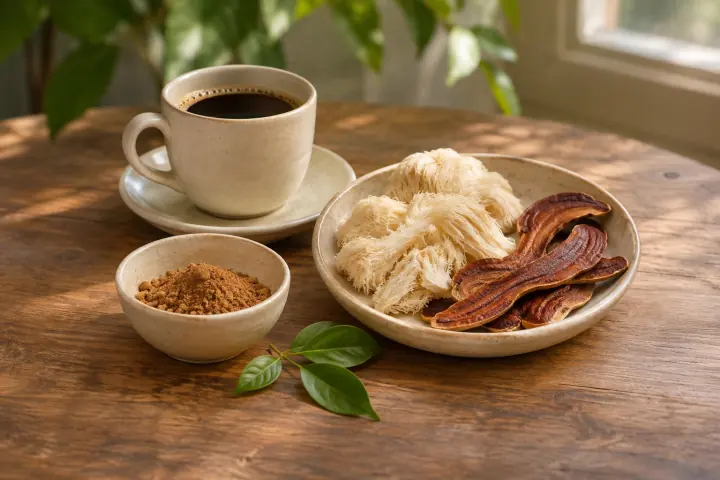
- Lion's mane: a 2025 systematic review found only five randomized trials and three small pilot trials in people, mostly on memory and thinking. In the two studies that could be combined, scores on a common memory test rose by about 1 point. Most of the remaining research was done in lab dishes and animals. Reported side effects included stomach discomfort, headache and allergic reactions.
- Reishi: a Cochrane review of 5 trials with 398 people found reishi didn't significantly lower blood sugar (HbA1c) or cholesterol compared with placebo in people with type 2 diabetes.
- The blends themselves: we found no systematic review testing mushroom coffee products as sold.
Does mushroom coffee have caffeine? Usually, yes, because most blends are part coffee. How much depends on how much coffee the blend contains, so read the label. If you want less caffeine, half-caf or decaf coffee does that job for less money. And if you try mushroom coffee because you enjoy the taste, there's no harm in that for most healthy adults, but it isn't a proven health upgrade over regular coffee.
Coffee add-ins and blends we've reviewed
Some readers want their coffee to do a bit more than wake them up. If that's you, these are the three coffee products we've reviewed. All three make weight-related claims, and those claims are the brands', not proven effects of the products. None of them replaces the protein in this recipe.
- Akemi Coffee Boost is a flavorless sachet you stir into the coffee you already drink. The brand lists green tea extract, green coffee bean extract, white kidney bean extract, mulberry leaf, L-carnitine and two fibers, and its FAQ says each sachet adds about 30 mg of caffeine. It doesn't publish the dose of each ingredient.
- Slimqa is a powdered coffee blend in single-serve sachets, one a day with a meal. The box names L-carnitine, green coffee extract and capsicum, and the sales page adds berberine, green tea extract and chromium. Ask the brand about caffeine per serving, since it isn't listed.
- Bryo is an instant Arabica coffee with berberine, L-carnitine and garcinia among its added ingredients, sweetened with stevia. The brand puts a cup at about 10 calories but doesn't publish its caffeine content.
Research on the individual ingredients in these blends points to small effects at best, and we found no independent trial of any of the three formulas. If you take medication, especially for blood sugar, ask your doctor before trying them.
When to see a doctor
- You notice a racing or irregular heartbeat, chest pain, high blood pressure readings, or anxiety and sleep problems that started or got worse with more coffee. The FDA advises talking with a health care professional about your caffeine intake if you have symptoms like these.
- You're pregnant, trying to become pregnant or breastfeeding. Ask your provider about caffeine.
- You have chronic kidney disease. NIDDK notes that some people with CKD need to keep protein moderate, so check with your care team before adding protein shakes or powder.
- You have liver disease and use a lot of cinnamon, or you take any prescription medicine and want to add a mushroom or weight-loss supplement.
- Teens and children: the FDA notes that medical experts advise against energy drinks for children and teens, and caffeine-heavy drinks like these aren't designed for them.
Coffee add-ins and blends we've reviewed
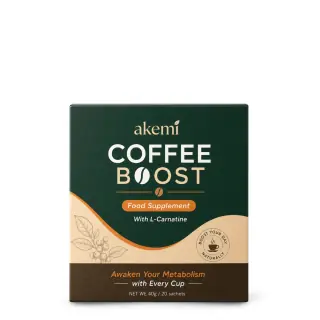
Akemi Coffee Boost review
Coffee drinkers who want a flavorless daily add-in alongside a balanced diet. From $1.11 a day.
Read the review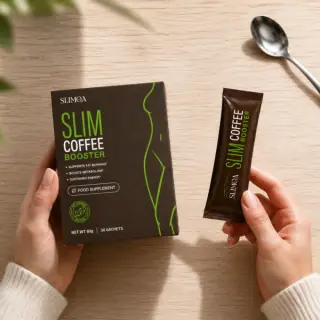
Slimqa Coffee Booster review
Coffee drinkers who want one simple daily habit alongside a balanced diet. From $0.67 a day.
Read the review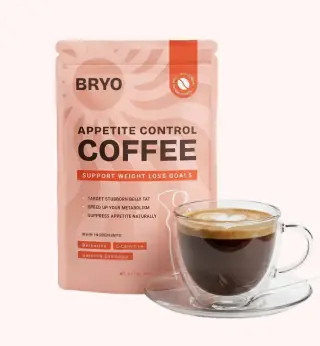
Bryo review
Daily coffee drinkers who want a flavored instant coffee with appetite-focused ingredients, alongside sensible eating. From $0.60 a day.
Read the review
FAQ
Can you put protein powder in hot coffee?
Yes, but whisk the powder into a little cold or room-temperature milk first, then slowly add the coffee. Dumping powder straight into very hot coffee is what causes clumps.
What is proffee?
Proffee is a nickname for protein coffee: coffee mixed with protein powder or a ready-to-drink protein shake, usually served over ice.
How much caffeine is in protein coffee?
As much as the coffee you use. An 8-ounce cup of brewed coffee has about 96 mg according to USDA's average entry, and MedlinePlus gives a range of 95 to 200 mg. The FDA cites 400 mg a day as an amount most adults tolerate.
Is protein coffee good for weight loss?
It can help you get more protein into breakfast, and protein tends to increase fullness. But it still has about 180 calories, and coffee itself has only a small effect on weight in studies.
Is mushroom coffee healthier than regular coffee?
Not in any proven way. Reviews of lion's mane and reishi found few human trials and small or no effects, and we found no systematic review of mushroom coffee blends themselves.
Does cinnamon in coffee help with blood sugar?
The evidence is unclear. NCCIH says research doesn't clearly support cinnamon for any health condition, including diabetes. Enjoy it for flavor, and keep the amount modest if you use cassia cinnamon.
Sources
- Coffee, brewed (FDC ID 2710375), USDA FoodData Central
- Milk, reduced fat (2%) (FDC ID 2705386), USDA FoodData Central
- Beverages, Protein powder whey based (FDC ID 173180), USDA FoodData Central
- Spices, cinnamon, ground (FDC ID 171320), USDA FoodData Central
- Cocoa, dry powder, unsweetened (FDC ID 169593), USDA FoodData Central
- Yogurt, Greek, nonfat milk, plain (FDC ID 2705424), USDA FoodData Central
- Butter, without salt (FDC ID 173430), USDA FoodData Central
- Oil, coconut (FDC ID 171412), USDA FoodData Central
- Beverages, coffee, brewed, espresso, restaurant-prepared (FDC ID 171891), USDA FoodData Central
- Coffee, instant, reconstituted (FDC ID 2710449), USDA FoodData Central
- Spilling the Beans: How Much Caffeine Is Too Much?, FDA
- Caffeine, MedlinePlus (National Library of Medicine)
- Dietary Guidelines for Americans, 2025–2030, USDA and HHS
- The Effects of Increased Protein Intake on Fullness: A Meta-Analysis and Its Limitations, J Acad Nutr Diet (2016), PubMed
- Weight Control and Complementary Health Approaches, NCCIH
- The effects of caffeine intake on weight loss: a systematic review and dose-response meta-analysis of randomized controlled trials, Crit Rev Food Sci Nutr (2019), PubMed
- Comparative effects of tea and coffee drinking on body weight in adults: a systematic review and network meta-analysis of randomised trials, Br J Nutr (2024), PubMed
- Cinnamon: Usefulness and Safety, NCCIH
- Saturated Fat, American Heart Association
- Effects of medium-chain triglycerides on weight loss and body composition: a meta-analysis of randomized controlled trials, J Acad Nutr Diet (2015), PubMed
- Benefits, side effects, and uses of Hericium erinaceus as a supplement: a systematic review, Front Nutr (2025), PubMed
- Ganoderma lucidum mushroom for the treatment of cardiovascular risk factors, Cochrane Database Syst Rev (2015), PubMed
- Healthy Eating for Adults with Chronic Kidney Disease, NIDDK
This guide is general information, not medical advice. Talk to your doctor before making changes to your diet, sleep or exercise routine.