
Nerve health
Neuropathy in Feet: Causes, What Helps and When to Get Help
Neuropathy in feet is damage to the nerves that serve your feet, and it usually shows up as burning, tingling, numbness or pain in both feet, often worse at night. Diabetes is the most common cause in the U.S., but far from the only one. Here is what causes it, what helps, and which signs need a doctor.

What is neuropathy in feet?
Peripheral neuropathy is damage to the peripheral nerves, the network that carries signals between your brain and spinal cord and the rest of your body, such as the message that your feet are cold. The National Institute of Neurological Disorders and Stroke (NINDS) says it affects millions of people in the U.S. and that more than 100 types have been identified.
Most types are length-dependent, NINDS explains: the nerve endings farthest from the brain, the ones in your feet, are where symptoms start or are worst. That's why neuropathy so often begins in both feet, and why in severe cases it can spread upward.
Three kinds of nerves can be hit. Sensory nerves carry touch, temperature and pain. Motor nerves move your muscles. Autonomic nerves handle things you don't think about, such as sweating and blood pressure. Most neuropathies affect all three to some degree.
Symptoms: burning, tingling and numb feet
The National Institute of Diabetes and Digestive and Kidney Diseases (NIDDK) lists these foot and leg symptoms. Most of the time they show up on both sides of the body:
- Burning, tingling or a pins-and-needles feeling
- Numbness, or trouble feeling pain or temperature
- Pain, sometimes from a light touch that normally wouldn't hurt
- Weakness or loss of muscle tone
- Changes in the way you walk, loss of balance, or pain when walking
- Swollen feet
NINDS adds painful cramps and muscle twitching when motor nerves are involved, and too much or too little sweating when autonomic nerves are. Losing your sense of where your feet are can make it hard to keep your balance with your eyes closed.
Why do my feet burn at night?
Burning feet at night is often the first thing people notice. NINDS says neuropathic pain is sometimes worse at night and can disrupt sleep. Damaged nerves can fire on their own, without any trigger, and some people feel pain from something as light as the touch of their bedsheets, a symptom called allodynia.
One practical fix NIDDK mentions is a bed cradle, a frame that keeps the covers off your feet. If burning keeps waking you, tell your doctor: nerve pain has its own treatments, covered below.
Not every sore foot is neuropathy, so let a doctor sort out the cause. Sharp heel pain with your first steps in the morning, for example, points more toward plantar fasciitis, which our guide to plantar fasciitis stretches covers.
Numb feet causes: what can damage the nerves
Diabetes is the leading cause of peripheral neuropathy in the U.S., according to NINDS, and NIDDK says up to half of people with diabetes have it. High blood sugar and high blood fats damage the nerves and the small blood vessels that feed them. Plenty of other conditions cause the same symptoms, though, which is why the cause needs to be checked.
| Cause | What to know |
|---|---|
| Diabetes | The most common cause in the U.S. Up to half of people with diabetes have peripheral neuropathy (NIDDK). |
| Low vitamin B12 | Can make the hands and feet numb or tingly. Higher risk: older adults, vegans and vegetarians, people with pernicious anemia or some stomach surgeries, and long-term users of metformin or acid-reducing medicines (NIH Office of Dietary Supplements). |
| Too much vitamin B6 | Along with low B12, excess B6 is one of the best-known vitamin-related causes (NINDS). |
| Alcohol and toxins | Heavy drinking and toxins such as lead can damage nerves (NINDS, MedlinePlus). |
| Medicines | Some drugs for cancer, HIV, heart or blood pressure problems, infections and seizures can cause neuropathy as a side effect (NINDS). Don't stop a medicine on your own. |
| Kidney or liver disease | Toxins that build up in the blood can damage nerve tissue. Most people on dialysis develop some form of neuropathy (NINDS). |
| Hormone problems | Hormonal imbalances can make tissues swell and press on nerves (NINDS), and doctors often test thyroid function (NIDDK). |
| Infections | Shingles, Lyme disease, HIV and other infections can attack nerve tissue (NINDS). |
| Autoimmune diseases | The immune system can attack the nerves directly, as in Guillain-Barré syndrome (NINDS). |
| Pressure or injury | A slipped disk, a broken bone or a cast can press on a nerve (NINDS). |
| Inherited conditions | Rare overall, but Charcot-Marie-Tooth disease is the most common inherited neurological disorder (NINDS). |
When no cause is found, doctors call the neuropathy idiopathic (NINDS).
Short-lived numbness has everyday causes too. MedlinePlus lists staying in one position too long and poor blood supply among the causes of numbness and tingling.
What helps neuropathy in feet
The first step is finding and treating the cause. NINDS notes that when the underlying cause is corrected, neuropathy can sometimes resolve on its own as nerves recover and regrow. MedlinePlus gives examples: blood sugar is managed in diabetes, and low vitamin levels are treated with supplements. It also warns not to stop or change medicines, or take large doses of vitamins, without talking to your provider.

- Manage diabetes closely. Keeping blood glucose at safe levels may reduce or even eliminate symptoms of diabetic neuropathy, NINDS says, and NIDDK adds keeping blood pressure and cholesterol in range to stop nerve damage from getting worse. Our guide to blood pressure by age explains the numbers.
- Build healthy habits. NINDS lists exercise, healthy eating, a healthy weight, quitting smoking and avoiding alcohol as changes that support healthier nerves. If your balance is shaky, ask about physical therapy, which NIDDK lists among the treatment options. Our guide to health-related fitness explains how balance and strength fit into a routine.
- Ask about nerve pain medicines. Doctors may prescribe certain antidepressants, such as duloxetine or nortriptyline, or anticonvulsants, such as gabapentin or pregabalin. Lidocaine patches and capsaicin cream can help small painful areas. NIDDK notes that these ease pain but don't reverse nerve damage, and NINDS says opioids are not recommended for neuropathy pain.
- Consider other support. NINDS says acupuncture, massage and tai chi may help some people manage chronic nerve pain, and TENS, a gentle electrical current delivered through skin pads, may be prescribed alongside other treatments. Talk therapy and meditation can help with the stress and low mood that long-term pain often brings.
- Protect your feet with the right shoes. NINDS notes that orthopedic shoes can improve walking problems and help prevent foot injuries.
Home remedies for neuropathy in feet: what's worth trying
No home remedy repairs damaged nerves. What you can do at home is protect numb feet, ease discomfort and back up the treatment your doctor recommends.
- Skip the heat. MedlinePlus advises against heating pads or hot water bottles on your feet, and against walking barefoot on hot pavement, tiles or sand. Numb feet may not feel a burn until the damage is done.
- Keep the covers off. A bed cradle keeps sheets from brushing sore feet at night (NIDDK).
- Try gentle massage. Massage is one of the complementary approaches NINDS says may help people manage nerve pain. Some people like a cooling balm for this. If that appeals to you, we reviewed TheraWolf Neuro Balm, a peppermint-oil balm the brand markets for tingling and nerve discomfort. Its cooling feel comes mainly from menthol. The brand's own terms say it isn't meant to diagnose, treat, cure or prevent any disease, and we found no independent trial of the formula, so treat it as a comfort option for intact skin and ask your doctor first if you have diabetes.
- Choose supportive footwear. If your feet also ache after long days on hard floors, we reviewed Hewelth StepCore insoles, firm trim-to-fit insoles with a deep heel cup. They aren't designed for neuropathy, and our review advises people with diabetes, poor circulation or foot wounds to check with their doctor or podiatrist before using them.
- Test before you supplement. Vitamin B12 helps when a deficiency is the cause, so ask for a blood test before buying pills. Too much vitamin B6 can cause neuropathy itself (NINDS).
Daily foot care when your feet are numb
When you can't feel a blister or a cut, you have to look for it. These steps come from the CDC and MedlinePlus, which write them for people with diabetes, and they make sense for anyone with numb feet.

- Check your feet every day: tops, sides, soles, heels and between the toes. Look for cuts, redness, swelling, sores, blisters, corns, calluses or nail changes. Use a mirror, or ask someone to help.
- Wash your feet every day in warm, not hot, water with mild soap. Test the temperature with your hand or elbow first, and don't soak your feet.
- Dry them gently, especially between the toes.
- Put lotion on the tops and bottoms of your feet, but not between your toes, where it could lead to infection.
- Cut toenails straight across and smooth sharp edges with a file. Let a podiatrist trim thick or discolored nails.
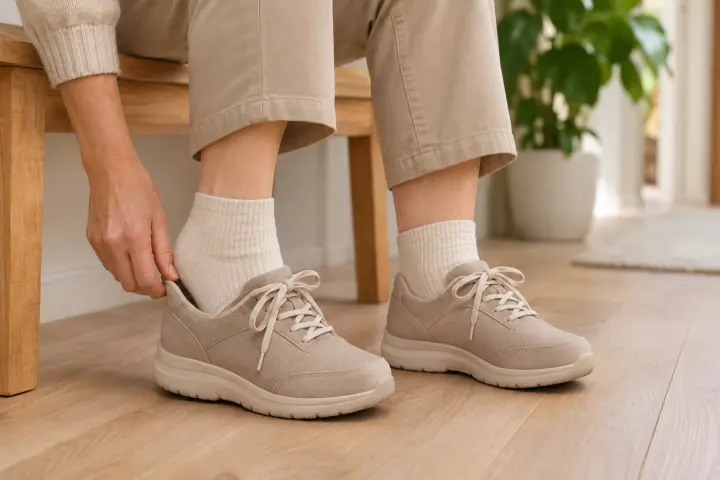
- Wear shoes and socks or slippers at all times, even indoors, and check inside each shoe before you put it on. Never buy tight shoes hoping they'll stretch.
- If you smoke, stop. Smoking reduces blood flow to your feet.
When to see a doctor about neuropathy in feet
See a doctor about any new numbness, tingling or burning in your feet that has no obvious cause. The cause can often be found, and some causes, such as low vitamin B12, have a straightforward treatment.
Call 911 or go to the emergency room if numbness or tingling comes with any of these, which MedlinePlus lists as emergencies:
- Weakness, or being unable to move, along with the numbness
- Numbness that starts just after a head, neck or back injury
- Losing control of an arm or leg, or of your bladder or bowels
- Confusion or passing out, even briefly
- Slurred speech, a change in vision, trouble walking or weakness
Make an appointment soon if numbness has no obvious cause, if leg numbness or tingling gets worse when you walk, or if it comes with a rash, dizziness or muscle spasms (MedlinePlus).
If you have diabetes, the CDC says not to wait for your next appointment if you notice tingling, burning or pain in your feet; loss of feeling or trouble sensing heat or cold; changes in the shape, skin, color or temperature of your feet; leg pain or cramping during activity; or a blister, sore, ulcer, infected corn or ingrown toenail. NIDDK explains that sores on numb feet can become infected and, in the worst cases, lead to losing a toe, foot or part of a leg.
Get your feet checked at every primary care visit and see a foot doctor every year, more often if you have nerve damage (CDC). Take off your shoes and socks at office visits so your feet get looked at (NIDDK).
How doctors diagnose neuropathy
Expect questions about your symptoms, health history, alcohol use, medicines and family history, followed by a physical and neurological exam (NINDS). The foot exam usually includes a tuning fork to test vibration, a monofilament test that touches your foot with a thin nylon strand, and checks of your balance and the way you walk (NIDDK).
Blood tests can look for diabetes, vitamin deficiencies, thyroid problems and kidney or liver disease. Depending on what the doctor finds, you may have a nerve conduction study and electromyography (EMG), which measure how well signals travel through nerves and muscles, or a small skin biopsy to look for damage to the tiniest nerve fibers (NINDS).
Products we've reviewed for tingly and tired feet

TheraWolf Balm review
Adults who want a cooling, plant-based balm for tingly or sensitive feet, legs and hands, alongside their doctor's advice. From $17.24.
Read the review
Hewelth StepCore review
People on their feet all day who want firmer arch support and heel cushioning in boots and sneakers, and don't mind buying at least two pairs. From $11.25.
Read the review
FAQ
What is the most common cause of neuropathy in feet?
Diabetes. NINDS calls it the leading cause of peripheral neuropathy in the U.S., and NIDDK says up to half of people with diabetes have it. Other causes include low vitamin B12, heavy drinking, some medicines, kidney disease, infections and autoimmune conditions.
Can neuropathy in feet be reversed?
Sometimes. NINDS says that when the underlying cause is corrected, neuropathy can resolve as nerves recover and regrow, and that many people can cut back their medicines as nerves heal. Nerve pain medicines ease symptoms but don't reverse the damage. Never stop a medicine without talking to your doctor.
What helps burning feet at night?
Tell your doctor, since nerve pain has specific treatments. Meanwhile, keep the covers off your feet with a bed cradle, avoid heating pads and hot water bottles, and keep blood sugar in range if you have diabetes. NINDS notes that neuropathic pain is sometimes worse at night.
Is tingling in the feet serious?
It can be. Brief tingling after sitting in one position is common. Tingling with no obvious cause should be checked, and tingling with weakness, trouble walking, slurred speech, vision changes or loss of bladder control needs emergency care, according to MedlinePlus.
Can low vitamin B12 cause numb feet?
Yes. The NIH Office of Dietary Supplements says a B12 deficiency can make your hands and feet numb or tingly. Older adults, vegans, people with pernicious anemia or some stomach surgeries, and long-term users of metformin or acid-reducing medicines are at higher risk. A blood test can check your level.
Do creams help neuropathy in feet?
Some can. NINDS says lidocaine patches and capsaicin cream may help small painful areas. Cooling balms can feel soothing, but the one we reviewed hasn't been tested in trials for neuropathy. Ask your doctor before using any cream if you have diabetes or broken skin.
Sources
- Peripheral Neuropathy, National Institute of Neurological Disorders and Stroke (NINDS)
- Peripheral Neuropathy, National Institute of Diabetes and Digestive and Kidney Diseases (NIDDK)
- Diabetes and Your Feet, Centers for Disease Control and Prevention
- Numbness and tingling, MedlinePlus Medical Encyclopedia, National Library of Medicine
- Diabetes - taking care of your feet, MedlinePlus, National Library of Medicine
- Vitamin B12 Fact Sheet for Consumers, NIH Office of Dietary Supplements
This guide is general information, not medical advice. Talk to your doctor before making changes to your diet, sleep or exercise routine.