
Exercise
How Many Calories Do Push-Ups Burn? The Real Numbers, by Body Weight
Push-ups don't burn many calories, mostly because a set only lasts a few seconds. Here is the math behind the numbers you see online, worked out for three body weights, and why push-ups are worth doing anyway.
The short answer
Most adults burn roughly 4 to 12 calories per minute of push-ups. Where you land depends on how much you weigh and how hard you're working. Since a set of push-ups usually takes well under a minute, a single set burns only a handful of calories, and a whole push-up workout rarely reaches more than a few dozen.
That's not a reason to skip them. Push-ups are a strength exercise, and that is where their value lies.
How the math works
Researchers estimate the energy cost of an activity in METs. One MET is the energy you use sitting quietly, and an activity rated at 4 METs uses about four times as much. The 2024 Adult Compendium of Physical Activities, the standard reference for these values, lists push-ups under calisthenics: 3.8 METs at a moderate effort and 7.5 METs at a vigorous effort. The same entries also cover sit-ups, pull-ups and similar moves, so push-ups don't have a separate value of their own.
To turn METs into calories, the Compendium's conversion is: METs × 3.5 × your body weight in kilograms ÷ 200 = calories per minute. To get kilograms, divide your weight in pounds by 2.2.
Calories per minute of push-ups, by body weight
Using those Compendium values, here is roughly what one minute of push-ups burns. For 10 minutes of push-ups and similar calisthenics, multiply by 10: roughly 40 to 125 calories, depending on your weight and effort.
- 130 pounds (59 kg): about 4 calories at a moderate effort, about 8 at a vigorous effort
- 170 pounds (77 kg): about 5 calories at a moderate effort, about 10 at a vigorous effort
- 210 pounds (95 kg): about 6 calories at a moderate effort, about 12.5 at a vigorous effort
A worked example
Say you weigh 170 pounds and do 3 sets of 15 push-ups at a hard pace, with each set taking about 30 seconds. That's about 1.5 minutes of actual work. At about 10 calories a minute, the push-ups themselves burn about 15 calories, or roughly a third of a calorie per push-up. The rests between sets burn little more than sitting or standing would.
The same math explains the bigger numbers you sometimes see online: they usually assume many minutes of nonstop effort, which few people manage with push-ups alone.
Why your real number may differ
- MET values are averages. The Compendium's own notes say the standard values underestimated the energy cost of every activity in its comparison table, and the gap grows with age and body mass index.
- Pace and form change the effort. Slow, full-range push-ups and quick partial ones don't cost the same.
- Fitness trackers estimate calories from heart rate and motion, so their numbers for push-ups are estimates too.
Push-ups are a strength exercise first
The Physical Activity Guidelines for Americans name push-ups as an example of muscle-strengthening activity and note that they mainly work the chest, shoulders and upper arms. Adults should do muscle-strengthening activities that work all the major muscle groups (legs, hips, back, chest, abdomen, shoulders and arms) on at least 2 days a week.
The guidelines don't set a time for strength work. They say to keep going until another repetition would be hard to do. One set of 8 to 12 repetitions is effective, and 2 or 3 sets may be more effective. Strength and endurance build up gradually over time.
For burning calories, aerobic activity does more of the work. The guidelines recommend 150 to 300 minutes a week of moderate-intensity activity, such as brisk walking, or 75 to 150 minutes of vigorous activity, on top of strength training.

What a push-up test can tell you
A 2019 study followed 1,104 male firefighters in Indiana for 10 years. Those who could do more than 40 push-ups at the start had a much lower rate of heart disease events than those who managed fewer than 10. It's an observational study of active men, so it shows a link rather than proof that push-ups protect the heart, and the authors called for larger studies in more diverse groups. They suggested push-up capacity could be a simple, free way to estimate functional fitness.
How to do a push-up, and easier ways to start

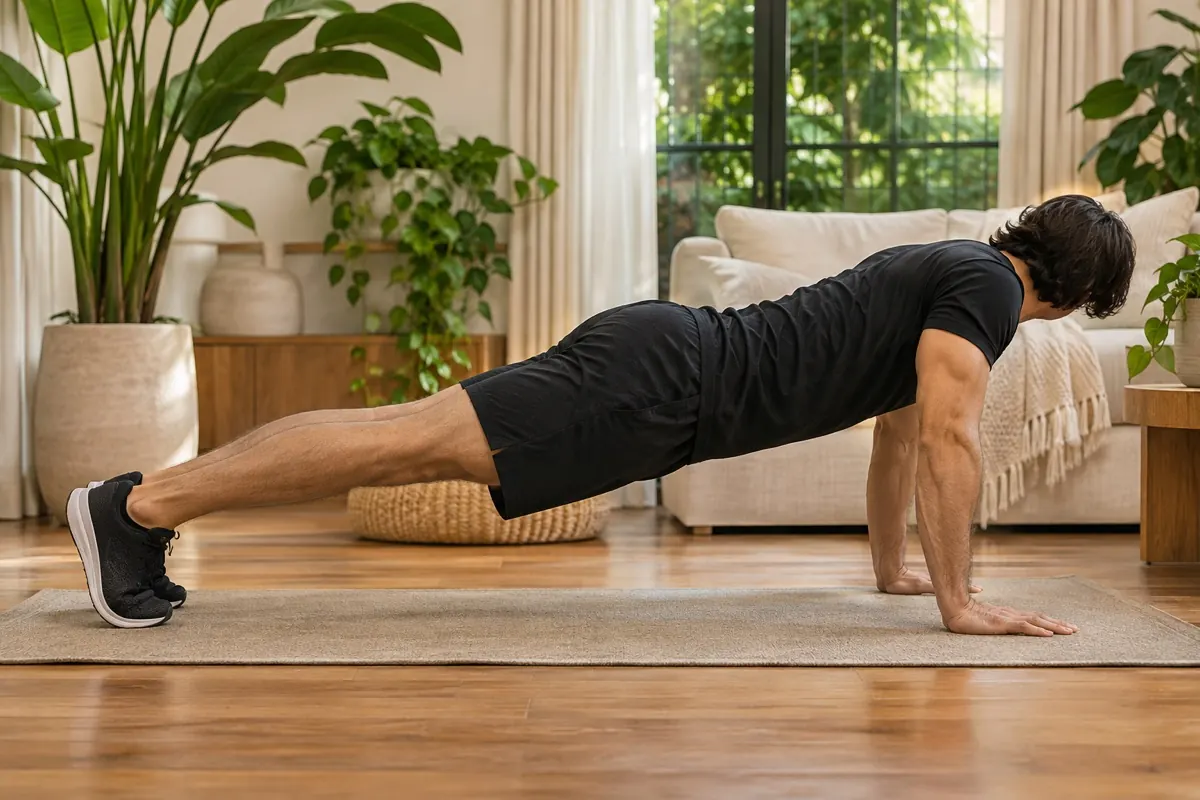
- Place your hands on the floor a little wider than your shoulders, with your body in a straight line from head to heels.
- Lower your chest toward the floor with control, keeping your hips from sagging, then press back up.
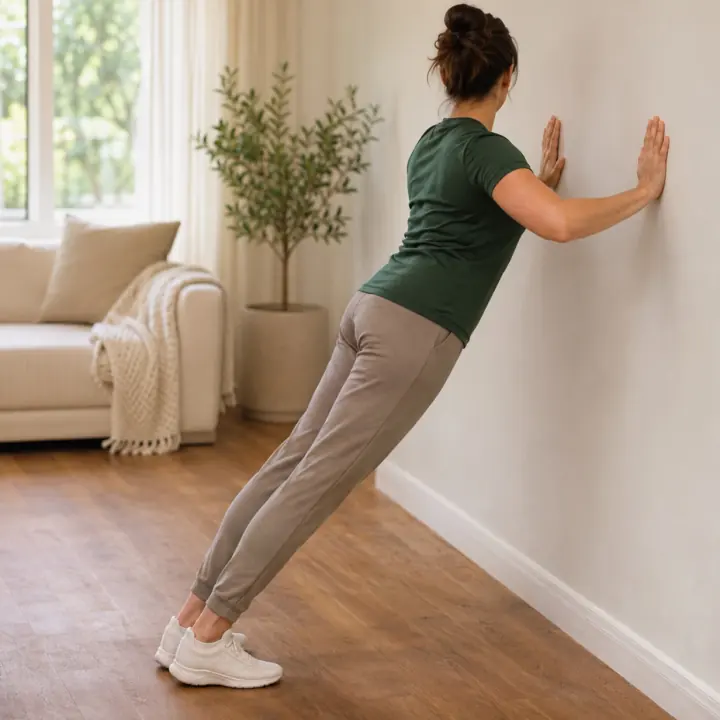
- Too hard for now? Do them against a wall or a sturdy counter, or from your knees, and move lower as you get stronger.
- Want more of a challenge? Add repetitions or sets, or lower yourself more slowly.
- Start low and go slow, as the guidelines put it. If you have a chronic condition or symptoms such as joint or chest pain, check with a health care provider about what's right for you.
Products we've reviewed for weight & metabolism

FAQ
How many calories do 100 push-ups burn?
It depends on your pace and weight. If 100 push-ups add up to about 4 minutes of hard work, a 170-pound person burns roughly 40 calories, using the Compendium's 7.5 METs for vigorous calisthenics. A lighter person burns less and a heavier person more.
How many calories does one push-up burn?
Roughly a third of a calorie for a 170-pound person working hard, if a set of 15 takes about 30 seconds. It's an estimate: the Compendium gives values per minute of effort, not per repetition.
Are push-ups cardio or strength training?
Strength. The Physical Activity Guidelines for Americans list push-ups as a muscle-strengthening activity that mainly works the chest, shoulders and upper arms. Done quickly in a circuit, they also raise your heart rate.
How many push-ups should I do?
The guidelines don't give a daily number. They recommend muscle-strengthening activities on at least 2 days a week, done until another repetition would be hard. One set of 8 to 12 repetitions is effective, and 2 or 3 sets may be more effective.
Do knee or wall push-ups burn fewer calories?
Usually, because they lift less of your body weight, and the Compendium doesn't give them separate values. They're a good way to build up to full push-ups.
Sources
- 2024 Adult Compendium of Physical Activities: A third update of the energy costs of human activities, J Sport Health Sci (2024), PubMed
- Conditioning exercise MET values (codes 02020 and 02022), 2024 Adult Compendium of Physical Activities
- Unit conversions (METs to calories per minute), Compendium of Physical Activities
- Corrected METs, Compendium of Physical Activities
- Physical Activity Guidelines for Americans, 2nd edition, U.S. Department of Health and Human Services
- Association Between Push-up Exercise Capacity and Future Cardiovascular Events Among Active Adult Men, JAMA Netw Open (2019), PubMed
This guide is general information, not medical advice. Talk to your doctor before making changes to your diet, sleep or exercise routine.