
Hearing
Bone Conduction Headphones: How They Work, Safety and Running Tips
Bone conduction headphones rest on your cheekbones, just in front of your ears, and send sound as tiny vibrations through the bones of your skull to the inner ear, leaving your ear canals open. That open fit is why runners and cyclists like them, but your inner ear still gets the full sound, so the usual volume limits apply. Here's how they work, what the research says about safety, and how to use them outdoors.
What are bone conduction headphones?
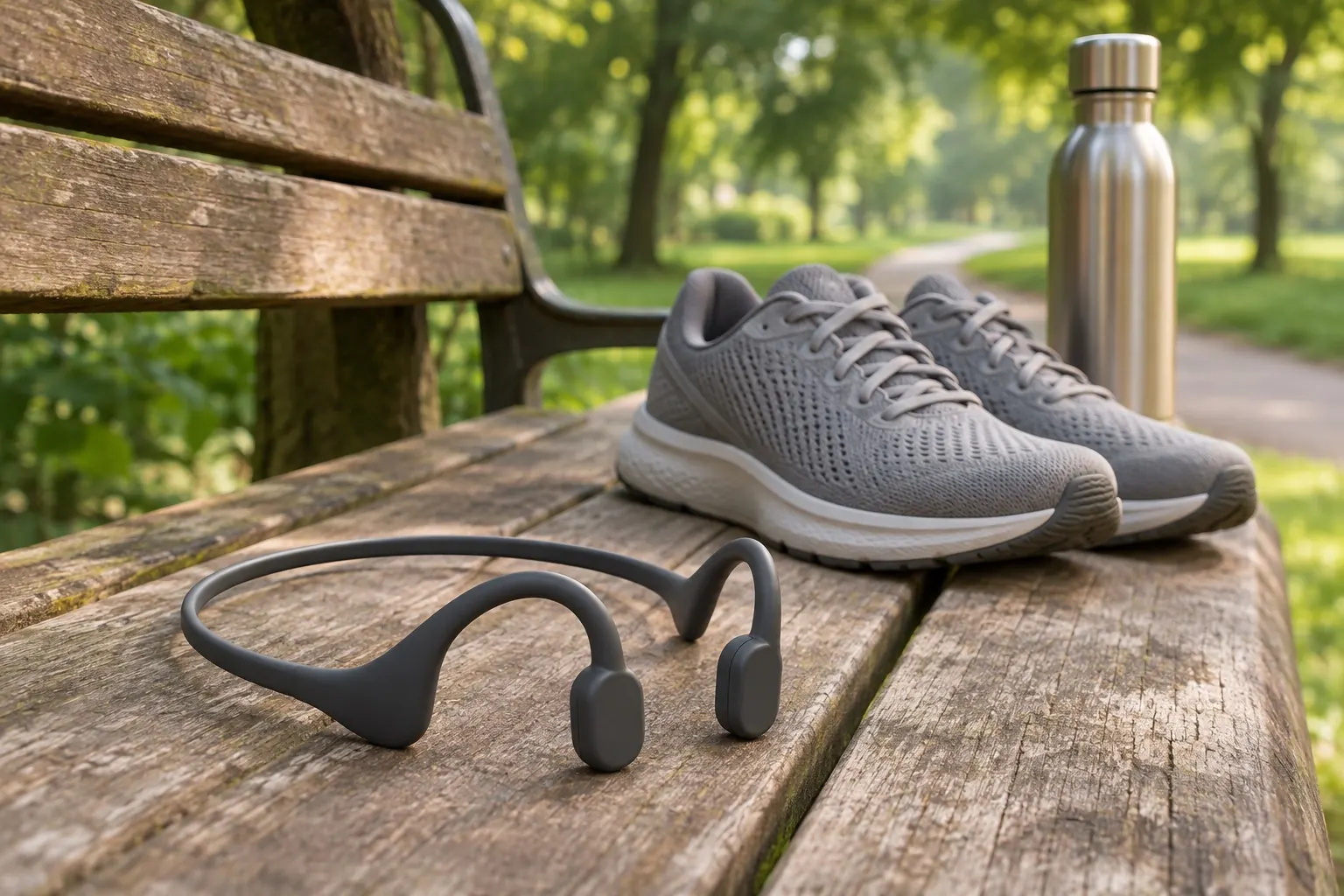
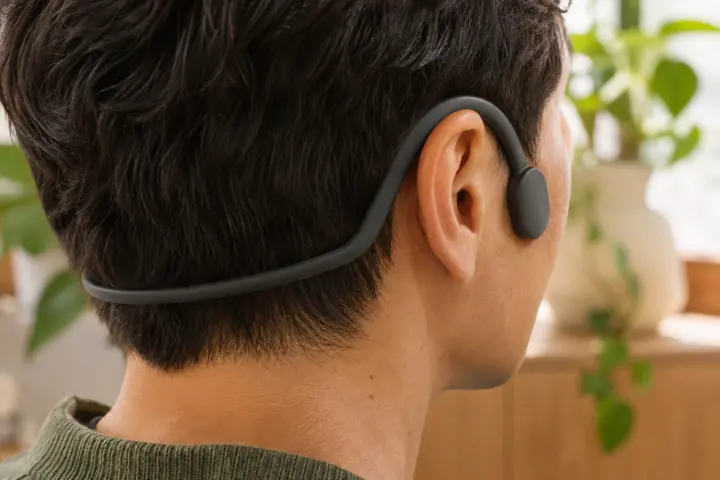
Bone conduction headphones are a type of open-ear headphone. A thin band wraps around the back of your head, and two small pads sit on your cheekbones just in front of each ear. Nothing goes in your ear canal or covers your ear, so you keep hearing the room, the street and the people around you while you listen to music or take a call.
Bone conduction itself isn't new. MedlinePlus, the National Library of Medicine's health site, explains that hearing tests use it: a small device called a bone oscillator is placed on the bone behind the ear to check how well you hear sound carried through bone rather than through the ear canal.
How do bone conduction headphones work?
Sound can reach your inner ear in two ways, MedlinePlus says. The usual route, air conduction, runs through the ear canal, the eardrum and the three tiny bones of the middle ear. The second route, bone conduction, passes through the bones around and behind the ear.
Either way, the sound ends up in the same place: the cochlea, a snail-shaped, fluid-filled organ in the inner ear. The National Institute on Deafness and Other Communication Disorders (NIDCD) describes how vibrations ripple that fluid and bend the tips of tiny sensory hair cells, which turn the movement into electrical signals the auditory nerve carries to the brain.
A review in Otology & Neurotology lists five ways skull vibration becomes hearing, with the inertia of the cochlear fluid the most important. It also notes that the bone route is less efficient than the air route. A 2023 study in 21 people adds a practical twist: when the vibrating pad sits close to the ear canal opening, as it does on most headsets, most of what you hear may come from sound the vibration radiates into your own ear canal. So these headphones aren't purely bone conduction, but they still leave the ear open.
| Earbuds and over-ear headphones | Bone conduction headphones | |
|---|---|---|
| Where they sit | In the ear canal or over the ear | On the cheekbones, in front of the ears |
| Path to the inner ear | Air: ear canal, eardrum, middle ear bones | Skull vibration, plus sound the pads radiate into the open ear canal |
| Outside sounds | Muffled or blocked | Still reach your ears |
| Where the sound is turned into nerve signals | The cochlea | The same cochlea |
Based on MedlinePlus, NIDCD, and reviews of bone conduction hearing in Otology & Neurotology (2005) and Trends in Hearing (2023).
Are bone conduction headphones safe?
For your ears, they're as safe as the volume you choose. Noise-induced hearing loss happens when loud sound damages those hair cells in the cochlea, and NIDCD notes that human hair cells don't grow back. Bone conduction takes a different path but ends in the same cochlea, so loud music through your cheekbones can harm hearing just like loud music through earbuds. We found no study showing that bone conduction headphones protect hearing better than other types.
There's one catch with an open-ear design. Because it doesn't block outside noise, it's tempting to turn the volume up on a loud street, train or gym floor. The World Health Organization (WHO) recommends well-fitted, noise-cancelling headphones in noisy places precisely so you don't have to raise the volume, and a 2026 systematic review of 25 studies found that using earphones in noisy environments was linked with hearing loss in teens.
The stakes are real. WHO estimates that over 1 billion young adults are at risk of permanent, avoidable hearing loss from unsafe listening, and NIDCD says music through headphones at maximum volume reaches about 94 to 110 dBA.
Safe listening levels: how loud and how long
Sound is measured in decibels (dB), and every step up cuts the time you can safely listen. NIDCD says sounds at or below 70 dBA are unlikely to cause hearing loss even after long exposure, while long or repeated exposure at or above 85 dBA can. WHO turns that into a weekly listening budget.
| Sound level | Safe listening per week | About as loud as |
|---|---|---|
| 60 dB | Unlimited | Normal conversation |
| 80 dB | 40 hours | A doorbell |
| 85 dB | 12 hours 30 minutes | Heavy traffic heard inside a car |
| 90 dB | 4 hours | Shouted conversation |
| 95 dB | 1 hour 15 minutes | A motorcycle |
| 100 dB | 20 minutes | A hair dryer |
| 105 dB | 8 minutes | A car horn at 5 meters |
From WHO's safe listening questions and answers. For workplaces, the CDC's National Institute for Occupational Safety and Health sets its limit at 85 dBA averaged over an 8-hour day and halves the allowed time for every 3 dBA increase.
How to listen safely with any headphones
- Keep the volume below 60% of your device's maximum, as WHO advises.
- Turn on your phone's headphone level or volume-limit feature, or use a sound-level app; WHO suggests staying below an 80 dB average.
- Give your ears breaks. WHO says frequent pauses from loud sound help the sensory cells recover.
- In loud places, turn the music off or plug your ears rather than turning it up.
- If you have to raise your voice to be heard by someone at arm's length, WHO says the sound around you is too loud.
Bone conduction headphones for running and cycling
This is where the open-ear design earns its place. With nothing in your ears, you can still hear a car pulling out, a bike bell or someone calling your name. That matters: a study in Injury Prevention found 116 reports of pedestrians injured or killed while wearing headphones in the US between 2004 and 2011, and 29% of them mentioned that a warning sounded before the crash. It was built from news and injury reports, so it can't prove headphones caused the crashes, and it didn't separate open-ear models from others.
Hearing a car is only half the job; you also have to notice it. Music still competes for your attention, so open ears help most when the volume is low.

- Set the volume before you start, low enough that you'd still hear someone talking next to you.
- Pause the music at crossings, on busy roads and anywhere you share the path with bikes or cars.
- Adjust the band so it sits snugly and the pads don't bounce when you move.
- Check the water rating. Sweat and rain resistance isn't the same as swimming; for the pool, you need a model made and rated for submersion.
- On a bike, check your state and city rules, since some places limit headphone use while riding.
Pros and cons of bone conduction headphones

- Pro: your ears stay open, so you keep hearing traffic, voices and announcements.
- Pro: nothing sits in the ear canal, which some people find more comfortable over long stretches.
- Pro: you can follow a conversation without taking them off.
- Con: they don't block noise, so in loud places you may be tempted to turn them up.
- Con: they aren't hearing protection. NIDCD advises earplugs or earmuffs for loud activities such as concerts or power tools.
Bone conduction headphones and hearing loss
Doctors do use bone conduction in hearing aids, but for specific cases. The Otology & Neurotology review explains that because the bone route is less efficient, bone conduction hearing aids are mainly used when regular air conduction aids can't be. Consumer headphones aren't hearing aids, and they can't tell you what kind of hearing loss you have. If music or speech sounds muffled, see your doctor or an audiologist for a hearing test before you shop.
Trying a pair
If you want to try bone conduction for runs, rides or commutes, we reviewed OsseoWave. The brand says sound travels through your cheekbones so your ears stay open, and lists 25 g, Bluetooth 5.3 and an IPX5 rating, which it describes as protection against sweat, rain and splashes, so it isn't a swimming headphone. The spec sheet lists about 5 hours of playback at 70% volume, and the brand's FAQ says the box includes a pair of earplugs, handy on a loud train so you can keep the volume down. Prices start at $69.95 a pair on the four-pack, plus shipping.
For concerts, loud gyms or a noisy bedroom, earplugs do the protecting. We reviewed EaroPlugs, reusable silicone earplugs the brand says cut noise by 18 to 28 decibels. The store doesn't publish a lab-tested noise reduction rating, so for shooting or power tools, choose protectors that list a tested rating.
When to see a doctor about your hearing
Noise damage usually builds slowly. NIDCD says sounds may start to seem muffled or distorted, you may struggle to follow conversations or turn up the TV, and loud noise can also cause tinnitus, a ringing, buzzing or roaring in the ears. A temporary dip in hearing after a loud event can fade in 16 to 48 hours, yet research suggests it may leave lasting damage. MedlinePlus says to contact your provider if:
- Hearing problems get in the way of daily life, don't go away or get worse
- Hearing is worse in one ear than the other
- You have sudden, severe hearing loss or ringing in the ears
- You have ear pain along with hearing problems
- You have new headaches, weakness or numbness anywhere in your body
Sudden hearing loss is urgent. NIDCD says to treat it as a medical emergency and see a doctor right away: about half of people recover some or all of their hearing on their own, but delaying diagnosis and treatment can make treatment less effective.
Open-ear headphones and earplugs we've reviewed
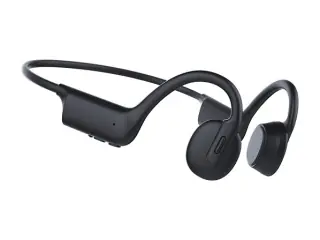
OsseoWave review
Runners, cyclists, walkers and commuters who want music and calls without plugging their ears. From $69.95.
Read the review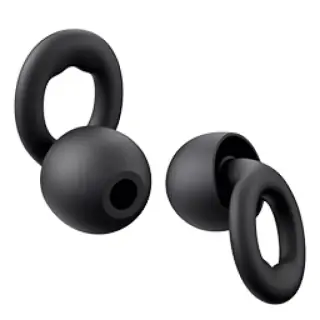
EaroPlugs review
Light sleepers, open-office workers and concertgoers who want reusable earplugs that turn noise down without cutting them off completely. From $33.99.
Read the review
FAQ
Are bone conduction headphones safe for your ears?
They're safe at sensible volumes, and the same limits apply as for any headphones. The sound still reaches the cochlea, where noise damage happens. WHO suggests keeping the volume under 60% of maximum and giving your ears regular breaks.
Can bone conduction headphones damage your hearing?
Yes, if they're played too loud for too long. The sound takes a different route but still reaches the inner ear hair cells that loud noise destroys, and NIDCD says those cells don't grow back. Long or repeated exposure at or above 85 dBA can cause hearing loss.
Are bone conduction headphones good for running?
Many runners like them because the ears stay open to traffic, bikes and voices. That helps only if the volume is low enough to notice those sounds, so pause the music at crossings and on busy roads.
Can you swim with bone conduction headphones?
Only with a model made and rated for swimming. Many are rated for sweat and rain, not submersion. OsseoWave, for example, carries an IPX5 rating that the brand describes as protection against sweat, rain and splashes.
Do bone conduction headphones work if you have hearing loss?
It depends on the type of loss, which only a hearing test can tell. Clinical bone conduction hearing aids are mainly used when regular hearing aids can't be, and consumer headphones aren't a substitute. See an audiologist first.
What volume is safe for headphones?
WHO advises keeping the volume below 60% of the maximum and staying under an 80 dB average, which allows about 40 hours of listening a week. At 90 dB, the safe weekly limit drops to 4 hours.
Sources
- Noise-Induced Hearing Loss, National Institute on Deafness and Other Communication Disorders (NIDCD), NIH
- How Do We Hear?, National Institute on Deafness and Other Communication Disorders (NIDCD), NIH
- Sudden Deafness, National Institute on Deafness and Other Communication Disorders (NIDCD), NIH
- Audiometry, MedlinePlus Medical Encyclopedia, National Library of Medicine
- Hearing loss, MedlinePlus Medical Encyclopedia, National Library of Medicine
- Deafness and hearing loss: Safe listening, questions and answers, World Health Organization
- Deafness and hearing loss, fact sheet, World Health Organization
- Noise-Induced Hearing Loss, NIOSH, Centers for Disease Control and Prevention
- Bone-conducted sound: physiological and clinical aspects, Otol Neurotol (2005), PubMed
- Hearing through bone conduction headsets, Trends Hear (2023), PubMed
- Headphone use and pedestrian injury and death in the United States: 2004-2011, Inj Prev (2012), PubMed
- Effects of earbuds and headphones on hearing and vestibular outcomes in adolescents and young adults: a systematic review, Noise Health (2026), PubMed
This guide is general information, not medical advice. Talk to your doctor before making changes to your diet, sleep or exercise routine.