
Gut health
Probiotic Foods: Which Fermented Foods Actually Have Live Cultures
The most reliable probiotic foods are yogurt and kefir labeled with live and active cultures; refrigerated sauerkraut, kimchi, miso and kombucha also carry live microbes, though usually not proven probiotic strains. Here's what's in each one, what the research shows for gut health, and how prebiotic foods fit in.
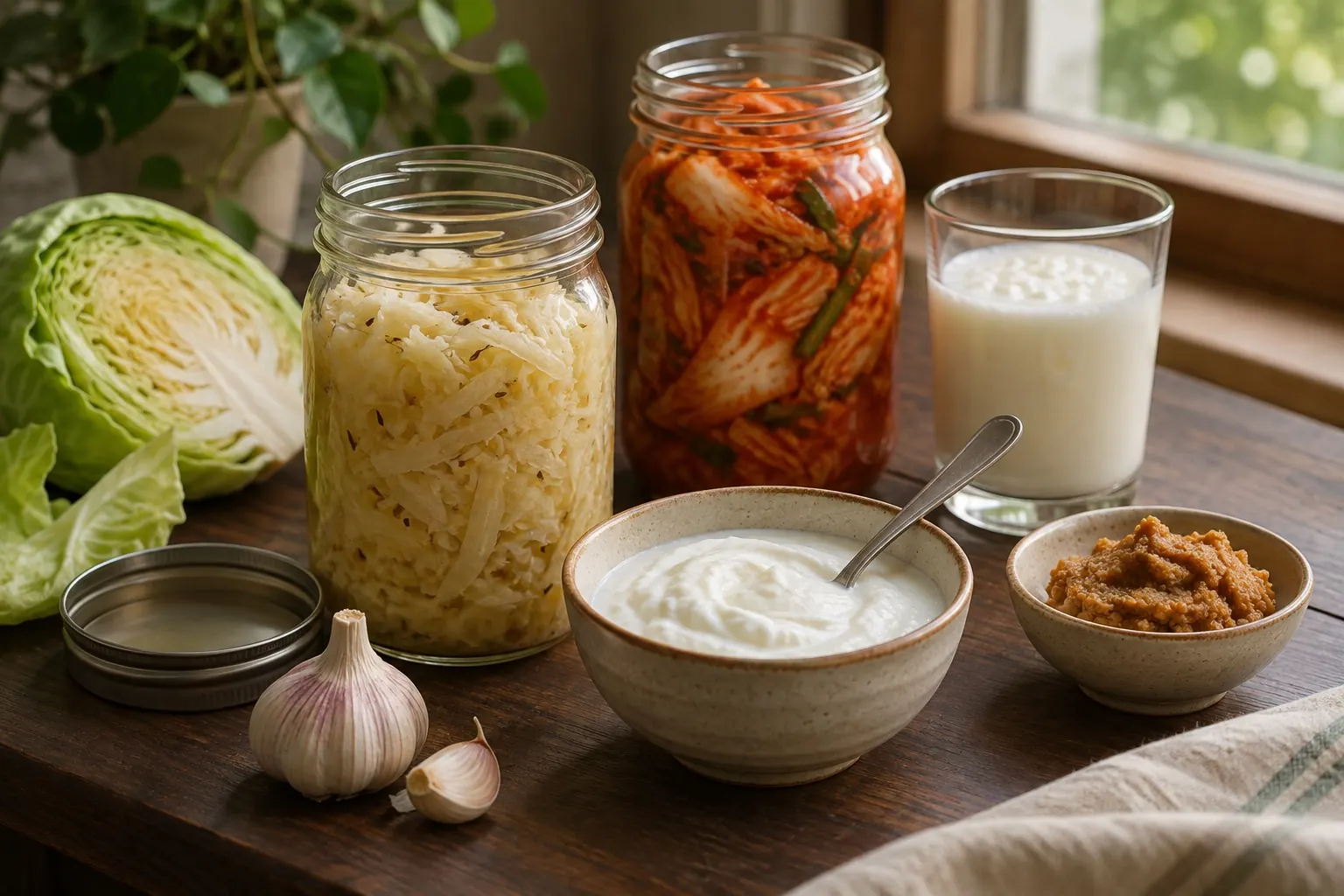
What counts as a probiotic food?
Probiotics are "live microorganisms that, when administered in adequate amounts, confer a health benefit on the host." That's the scientific definition the NIH Office of Dietary Supplements (ODS) uses. Most are bacteria from the Lactobacillus and Bifidobacterium groups, plus a few yeasts.
Here's the part most food lists skip: fermented doesn't automatically mean probiotic. ODS separates three groups. Some fermented foods, such as yogurt, can be sources of beneficial microbes. Others contain live cultures that aren't proven probiotic strains, such as kimchi, sauerkraut, miso and kombucha. And some, such as sourdough bread and most commercial pickles, are processed after fermenting and contain no live cultures by the time you eat them.
That's why Cleveland Clinic's advice is simple: food processing can destroy the natural microbes, so check labels for "live and active cultures."
Probiotic foods list
The table sorts common fermented foods by what you can actually expect from them. Sodium figures come from USDA FoodData Central, because several of these foods are salty enough to matter.
| Food | What it is | Live cultures? | What to look for |
|---|---|---|---|
| Yogurt | Milk fermented with Lactobacillus bulgaricus and Streptococcus thermophilus | Yes, and some brands add Bifidobacterium or Lactobacillus strains | "Live and active cultures" on the label |
| Kefir | Fermented milk drink made with kefir grains | Yes | Refrigerated, with live cultures listed |
| Sauerkraut | Fermented cabbage | Live cultures, but not typically proven probiotic strains | Refrigerated and unpasteurized; 1 cup canned has about 939 mg of sodium |
| Kimchi | Korean fermented cabbage and vegetables | Live cultures, but not typically proven probiotic strains | Refrigerated; 1 cup has about 747 mg of sodium |
| Miso | Fermented soybean paste | Live cultures, but not typically proven probiotic strains | 1 tablespoon has about 634 mg of sodium |
| Kombucha | Fermented tea | Live cultures, but not typically proven probiotic strains | Very little human research so far |
| Cheese and cottage cheese | Many cheeses are fermented | Many cheeses carry live cultures, but not typically proven probiotic strains | Live cultures named on the label |
| Pickles | Fermented cucumbers | Most commercial pickles have none | Only refrigerated, fermented pickles; 1 small dill spear has about 283 mg of sodium |
| Raw unfiltered apple cider vinegar | Fermented apple sugars | Live cultures, but not typically proven probiotic strains | Raw and unfiltered; see our guide for safe use |
| Sourdough bread | Fermented dough | No: baking leaves no live cultures | A fermented food, not a probiotic one |
Live-culture status from the NIH Office of Dietary Supplements and Cleveland Clinic. Sodium from USDA FoodData Central (SR Legacy): canned sauerkraut, kimchi, miso and dill pickles. The Daily Value for sodium is 2,300 mg.
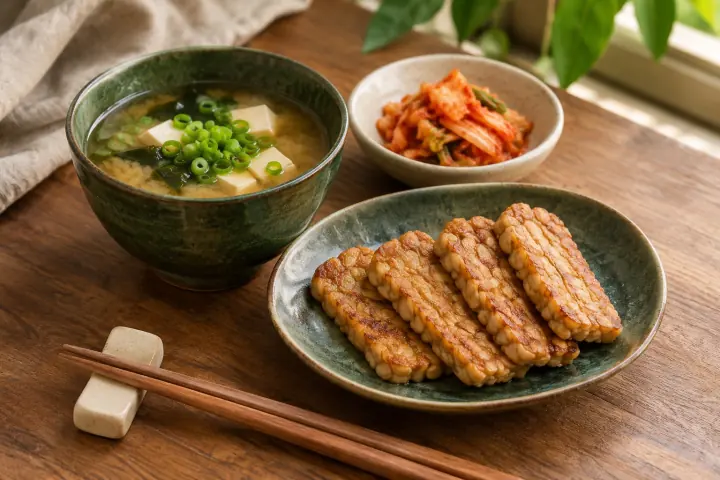
Tempeh, the fermented soybean cake, is missing from the table on purpose: it's cooked before you eat it, so count it as a protein food rather than a source of live cultures. For apple cider vinegar, our apple cider vinegar guide covers how to use it without hurting your teeth.
Fermented foods for gut health: what the research shows
The best summary so far is a 2025 meta-analysis of fermented foods in healthy adults: 25 studies with 4,328 people, 19 of them randomized trials. Eating fermented foods improved how often people had bowel movements, stool consistency, gut transit time and digestive symptoms, including bloating and gas. The catch is in the fine print: the certainty of the evidence was mostly low, and the studies varied a lot.
So the honest takeaway is that fermented foods look helpful for everyday digestion, especially regularity, but they aren't a treatment. If bloating is what sent you here, our guide on how to get rid of bloating covers the habits with the most evidence.
Does yogurt have probiotics?
Yogurt is made with two bacteria, Lactobacillus bulgaricus and Streptococcus thermophilus, and ODS notes that some yogurts also contain probiotic strains from Bifidobacterium or the Lactobacillus family. Look for "live and active cultures" on the label, since processing can destroy them, as Cleveland Clinic notes.
Yogurt has the most research of any fermented food. A systematic review of 108 studies found a causal link between eating yogurt and better lactose digestion, which is why many people who struggle with milk do fine with yogurt. It also found consistent associations between fermented milk and lower risk of type 2 diabetes and colorectal cancer, and better weight maintenance, though associations don't prove cause.
Kefir: a quick look
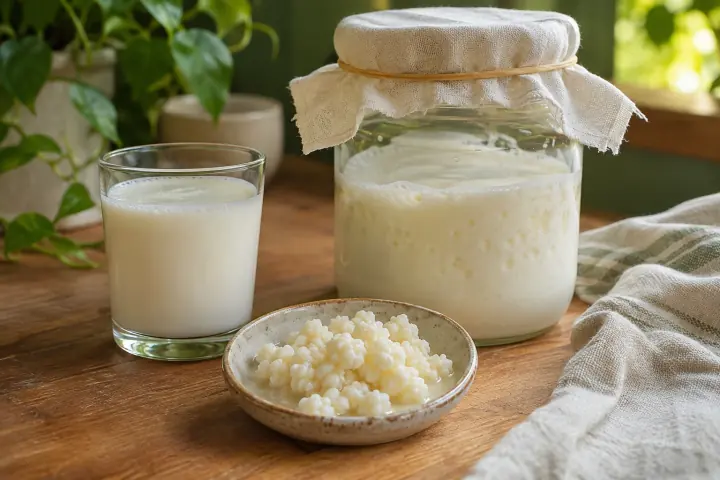
Kefir is a tangy, drinkable fermented milk made with kefir grains. A cup of low-fat plain kefir has about 104 calories and 9 grams of protein, according to USDA FoodData Central.
The research is thinner than the hype. A 2023 systematic review of randomized trials in people found 16 studies. Kefir may help reduce a cavity-causing mouth bacterium, may support treatment for H. pylori alongside standard therapy, and may help cholesterol and blood pressure, but the evidence was very limited and 12 of the studies had a high risk of bias. The authors concluded kefir appears safe for generally healthy people. We go deeper in our guide to kefir benefits, including how to make it at home.
Sauerkraut benefits
Sauerkraut is cabbage fermented in salt. Raw, refrigerated sauerkraut contains live cultures, but ODS notes they aren't typically proven probiotic strains, and we found no systematic review on sauerkraut itself. What it does offer is fiber for very few calories: USDA lists 1 cup of canned sauerkraut at about 4 grams of fiber and 27 calories.
The trade-off is salt. That same cup has about 939 mg of sodium, roughly 40% of the 2,300 mg Daily Value. A forkful on a sandwich or bowl is a better habit than a cup at a time, especially if you watch your blood pressure.
Kimchi benefits
Kimchi, the spicy Korean ferment of cabbage and other vegetables, has more human research than sauerkraut. A 2025 systematic review and meta-analysis pooled 5 intervention studies with 205 people and 4 long-term cohort studies with 42,455 people. Eating fermented kimchi lowered fasting blood sugar slightly, by about 2 mg/dL, and once the most inconsistent studies were set aside, triglycerides and blood pressure were lower too. In the cohorts, people who ate more kimchi had lower rates of cancer and metabolic syndrome.
The authors called the findings promising but urged caution, because the studies were few. Kimchi is also salty: about 747 mg of sodium per cup, according to USDA.
Miso, kombucha and other fermented foods
Miso, a fermented soybean paste, carries live cultures that ODS says aren't typically proven probiotic strains. It's also very salty, at about 634 mg of sodium per tablespoon, so a spoonful stirred into soup is a sensible amount.
Kombucha is fermented sweetened tea, and it's popular partly because of its probiotic reputation. A 2019 systematic review searched the medical literature and found just one study reporting results in people, so claims about kombucha's health benefits haven't been tested in human trials yet. Enjoy it if you like it, without counting on it for your gut.
Prebiotic foods list
Prebiotics are the other half of the picture. ODS defines them as carbohydrates, such as inulin and other fructo-oligosaccharides, that gut microbes use as fuel; probiotics are the microbes themselves. Products that combine both are called synbiotics. Mayo Clinic notes that prebiotics are mainly found in high-fiber foods.
Cleveland Clinic groups the most common prebiotic foods by the type of fiber they carry:
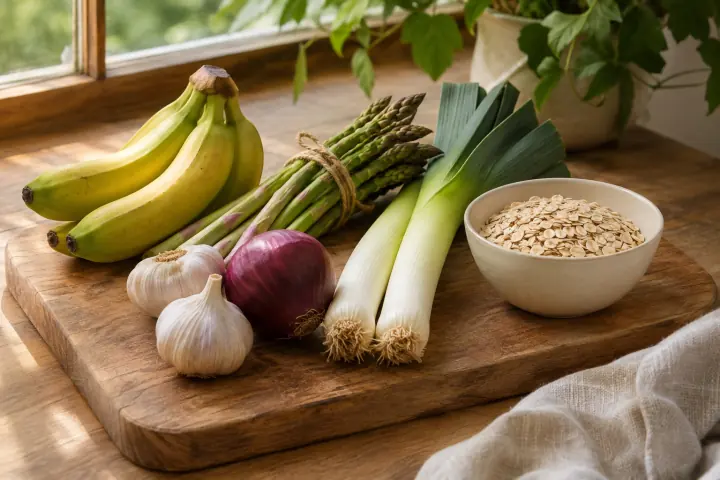
- Resistant starch: boiled and chilled potatoes, green bananas, barley, oats, rice, beans and other legumes
- Inulin: asparagus, chicory root, dandelion greens, garlic, Jerusalem artichokes, leeks, onions, soybeans and wild yams
- Pectin: apples, apricots, carrots, green beans, peaches, raspberries, tomatoes and potatoes
Add them gradually. Cleveland Clinic warns that prebiotics increase gas as your gut bacteria wake up to them, and people with IBS may have trouble with some, such as stone fruits. Many of these foods are also in our USDA chart of high fiber foods.
When to take probiotics
With food, there's no special timing: eat yogurt, kefir or kimchi whenever they fit your meals, ideally regularly. For supplements, Cleveland Clinic says to take them as the label recommends, since some probiotics work better with food and others on an empty stomach, and most need to be taken daily.
Antibiotics are the one situation where timing really comes up. NCCIH reports that a 2017 review of 17 studies suggested taking probiotics with antibiotics roughly halved the chance of antibiotic-associated diarrhea, though the authors called that tentative. Ask your doctor or pharmacist how to space a probiotic around your antibiotic doses, and follow your product's directions.
Probiotic foods or a supplement?
Both work differently. Cleveland Clinic notes that foods and drinks may support a broader range of microbes, while a supplement usually gives a higher dose of specific strains. ODS adds three things worth knowing before you buy: the effects are strain-specific, a higher CFU count isn't necessarily more effective, and the best labels state the CFU count at the end of the product's shelf life, not at manufacture.
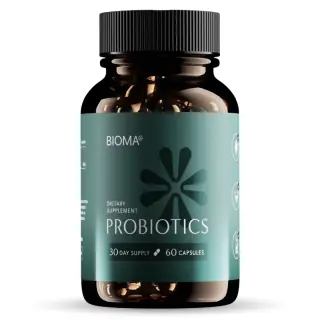
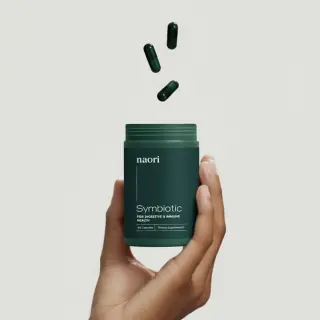
If you're considering a capsule, we reviewed two. Bioma uses three Bifidobacterium strains (B. lactis, B. longum and B. breve) with XOS prebiotic fiber and tributyrin, but its label doesn't list a CFU count. Naori lists 120 billion CFU from more than 30 strains, plus prebiotic fiber and digestive enzymes, which per ODS doesn't by itself make it more effective. Neither formula has been tested in its own independent trial.
Who should be careful, and when to see a doctor
- People with weakened immune systems or serious illness, and premature infants. NCCIH and ODS both flag a higher risk of serious infections in these groups. The FDA has warned that probiotics given to premature infants can cause severe, potentially fatal infections.
- Anyone on a low-sodium diet: sauerkraut, kimchi, miso and pickles add up fast.
- If you're pregnant, breastfeeding or have a chronic condition, or for children, ask your doctor before starting a probiotic supplement.
- Expect some extra gas for a few days when you start a new probiotic. Cleveland Clinic says this should resolve within days.
- See a doctor for digestive symptoms that don't settle, or right away for blood in your stool, unexplained weight loss, vomiting or fever.
Probiotic supplements we've reviewed
FAQ
What are probiotics?
Live microorganisms, mostly bacteria from the Lactobacillus and Bifidobacterium groups plus some yeasts, that give a health benefit when taken in adequate amounts. They're found in some fermented foods and in supplements, and their effects depend on the strain.
What are the best probiotic foods?
Yogurt and kefir with live and active cultures are the most reliable, because they carry known cultures and have the most research. Refrigerated sauerkraut and kimchi, miso and kombucha also contain live microbes, though usually not proven probiotic strains.
What are the benefits of probiotics?
The best evidence is for preventing antibiotic-associated diarrhea, with some benefit for IBS symptoms. NCCIH notes that for most uses it's still unknown which probiotics work, how much to take and who benefits most.
Is kombucha good for you?
It's a fermented tea with live cultures, but a 2019 systematic review found only one study reporting results in people. Its health claims haven't been tested in human trials yet.
Are pickles probiotic?
Most commercial pickles aren't. ODS notes that they're processed after fermentation and contain no live cultures. Only refrigerated, fermented pickles carry live microbes, and they're high in sodium.
What's the difference between prebiotics and probiotics?
Probiotics are live microbes. Prebiotics are fibers and other carbohydrates, such as inulin, that feed the microbes already in your gut. Garlic, onions, leeks, asparagus, green bananas and oats are common prebiotic foods.
Sources
- Probiotics: Fact Sheet for Health Professionals, NIH Office of Dietary Supplements
- Probiotics: Usefulness and Safety, NCCIH
- Probiotics, Cleveland Clinic
- What Are Prebiotics and What Do They Do?, Cleveland Clinic
- Probiotics and prebiotics: What you should know, Mayo Clinic
- FoodData Central (SR Legacy: sauerkraut, kimchi, miso, dill pickles, low-fat plain kefir), USDA
- Daily Value on the Nutrition and Supplement Facts Labels, FDA
- Impact of fermented foods consumption on gastrointestinal wellbeing in healthy adults: a systematic review and meta-analysis, Front Nutr (2025), PubMed
- Yogurt, cultured fermented milk, and health: a systematic review, Nutr Rev (2021), PubMed
- The effects of kefir consumption on human health: a systematic review of randomized controlled trials, Nutr Rev (2023), PubMed
- Effects of Fermented Kimchi Consumption on Anthropometric and Blood Cardiometabolic Indicators: a systematic review and meta-analysis, Nutr Rev (2025), PubMed
- Symptoms and Causes of Constipation, NIDDK
- Kombucha: a systematic review of the empirical evidence of human health benefit, Ann Epidemiol (2019), PubMed
This guide is general information, not medical advice. Talk to your doctor before making changes to your diet, sleep or exercise routine.