
Cleaning
How to Remove Rust From Metal: Tools, Cast Iron, Chrome, Chains and Railings
To remove rust from metal, brush off the loose rust, soak or wrap the item in white vinegar for a few hours, scrub it while wet, then rinse, dry it completely and wipe on a thin coat of oil. Cast iron, chrome, bike chains and railings each need their own approach, and one rule covers them all: never mix vinegar or rust removers with bleach.
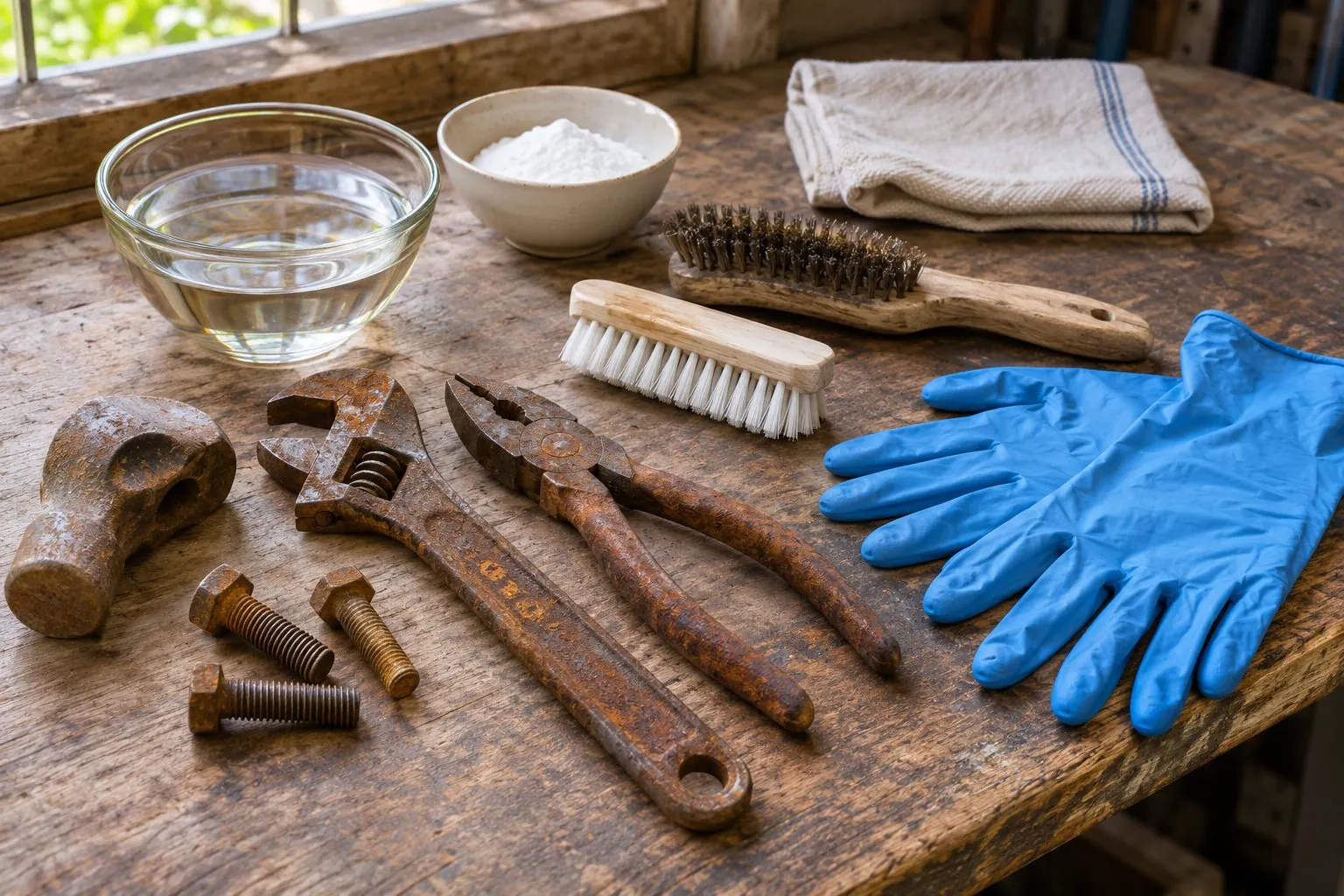
How to remove rust from metal: pick the method by the object
Start with the gentlest method that works and step up only if you need to. Each method is explained below.
| Object | Start with | Avoid |
|---|---|---|
| Hand and garden tools, screws, bolts | A few hours in white vinegar, a scrub with steel wool, a rinse and a coat of oil | Letting vinegar dry on the metal |
| Cast iron pans | Coarse salt or a brief vinegar soak, then dry on a burner and re-season | Long soaks, the dishwasher, cold water on a hot pan |
| Chrome fixtures and trim | Baking soda paste on a soft cloth | Coarse steel wool and harsh scouring |
| Stainless steel | Baking soda paste with a nonmetallic pad, rinsed well | Steel wool, carbon steel wire brushes, chloride cleaners |
| Bike chains | Degrease, scrub, dry fully, then lubricate | Long acid soaks |
| Railings and patio furniture | Wire brush, then prime the same day and paint | Latex primer on bare iron; dry sanding old paint |
Based on NC State, NDSU and UMaine Extension, the Specialty Steel Industry of North America and the National Park Service.
What rust is and why it keeps spreading
Rust is what iron and steel turn into when they react with oxygen and moisture. The Canadian Conservation Institute, the Canadian government's conservation lab, explains that rusting is slow in clean dry air and faster in humid air, and that water-soluble salts, especially chlorides, speed it up. Road salt, sea air and even sweaty hands supply them.
Humidity is the trigger. The National Park Service's guide to architectural cast iron puts the minimum relative humidity needed for rusting at 65%, and lower when salt or acids are present. Once rust forms, its porous film holds liquid against the metal and drives more corrosion, until the iron is eaten away if nothing stops it.
How to remove rust with vinegar
White vinegar is the cheapest rust remover in the house. It's a mild acid, and FDA guidance calls for table vinegar to contain at least 4 grams of acetic acid per 100 mL. Acids dissolve rust; metal shops do the same job with stronger acids, a process the Park Service calls pickling.
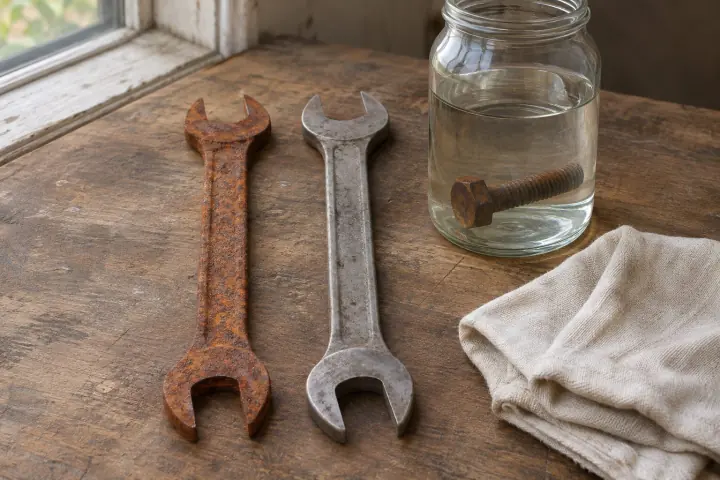
- Brush off loose rust, dirt and grease first, so the vinegar reaches the rust itself.
- Submerge small items in undiluted white vinegar. For bigger ones, wrap the rusty part in vinegar-soaked rags and cover it with plastic wrap so it stays wet.
- Leave it a few hours, as NC State Extension suggests for rusty garden tools, and check it now and then. Heavy rust may need longer or a second round.
- Scrub while it's still wet with steel wool, a stiff brush or a steel scrubber, then rinse it right away in water.
- Dry it completely. NC State warns that vinegar left to dry on tools creates more rust.
- Protect it. Rub a thin coat of mineral or linseed oil over the metal with a clean rag; NC State says to skip cooking oil on tools.
Baking soda rust removal: for light rust and delicate finishes
Baking soda isn't an acid. PubChem, the National Library of Medicine's chemistry database, describes sodium bicarbonate as slightly alkaline (a 0.1 molar solution has a pH of about 8.3) and lists it among abrasives. A paste doesn't dissolve rust the way vinegar does; it scours light surface rust off with little risk to the finish.
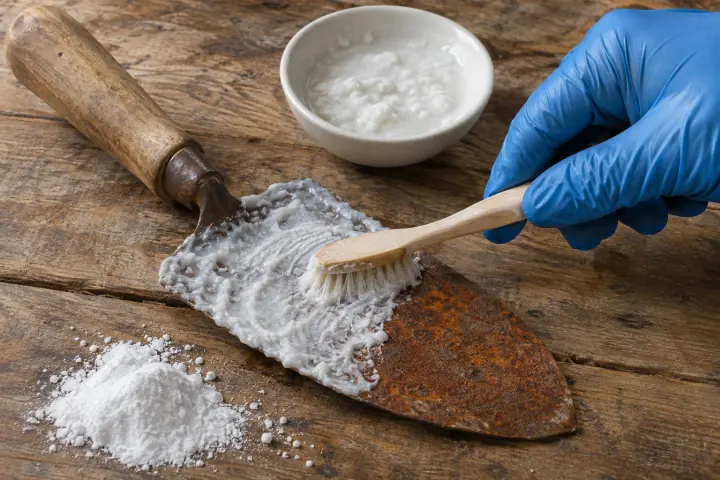
- Mix baking soda with a little water into a thick paste, about the texture of toothpaste.
- Spread it over the rust spot and let it sit for a while.
- Scrub with an old toothbrush, a soft brush or a nonmetallic scrub pad, working along the grain on stainless steel.
- Rinse with clean water, dry thoroughly and wipe on a thin film of oil.
What about baking soda and vinegar together? The fizz is the two cancelling out: PubChem notes that weak acids readily break baking soda down, releasing carbon dioxide. Use them one after the other instead: vinegar first, then a baking soda scrub after rinsing.
Citric acid rust removal
Citric acid powder is another mild acid that works on rust. PubChem classes it as a chelating agent, meaning it binds metal ions, and notes that about 11% of its use goes to metal cleaning and finishing. The Park Service lists ammonium citrate, a related compound, among chemical rust removers for iron.
There's no official home recipe, so start with a weak solution in warm water and check the item every hour or so, then rinse, dry and oil it. Wear eye protection: PubChem lists citric acid as causing serious eye irritation.
In two 2024 studies from the University of L'Aquila in Italy, oxalic acid removers cleared rust stains from stone better than citric or acetic acid versions. Oxalic acid is harsher, though: PubChem lists it as harmful on skin contact and able to cause severe burns and eye damage, so use it only as a ready-made product, exactly as labeled.
Rust remover vs rust converter: which do you need?
A rust remover takes the rust off and leaves bare metal. Commercial removers use acids or chelating agents; the Park Service's cast iron guide lists phosphoric, sulfuric, oxalic and hydrochloric acid products and ammonium citrate, and notes that pickled iron has to be neutralized afterward.
A rust converter leaves the rust in place and changes it chemically. One chemistry conservators use is tannic acid, which reacts with rusted iron to form ferric tannate, a blue-black film, according to the Canadian Conservation Institute. The institute warns that the film isn't a vapor barrier and, on its own, quickly degrades outdoors, so a converted surface outside still needs primer and paint.
Use a remover for tools, hardware and fittings, and consider a converter before painting a large, rough surface such as a railing. Read every label: some rust-stain removers contain hydrofluoric acid, which a 2025 emergency medicine case report describes as capable of life-threatening poisoning from seemingly minor skin exposures.
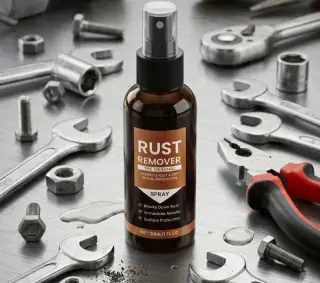
If you'd rather spray and wipe than soak and scrub, we reviewed Rustifix, a rust remover spray. The brand says you spray until the rust is covered, wait 5 to 10 minutes and wipe it off, with a second coat for thick or old rust, and that it leaves a thin film that helps keep moisture off. It doesn't publish its ingredients, so follow its directions (ventilate, keep it away from your eyes, test painted surfaces first) and wear gloves. The 1 fl oz bottles run from $24.95 each in a two-pack to $15.99 each in a five-pack, a good fit for tools, bolts, taps and other small jobs.
How to remove rust from tools, screws and bolts
The vinegar method handles most hand tools. A few extra tips:
- For thin, even surface rust, skip the soak. The Canadian Conservation Institute suggests rubbing gently with fine steel wool (grade 000 or 0000) and a few drops of light oil.
- For pliers and shears, work the joint open and closed after soaking and again after oiling.
- Soak screws, nuts and bolts together in a jar of vinegar, then scrub, rinse, dry and oil them. Badly pitted hardware is cheap to replace.
- Once a garden tool is clean, NC State Extension suggests sharpening the edge with a metal file, using long strokes away from you, and tightening any loose screws.
- Store tools dry, hanging up or on a shelf rather than on a damp floor.
How to remove rust from cast iron
A rusty cast iron skillet is almost always worth saving. NDSU Extension says rusty pans can be scrubbed with coarse salt or briefly soaked in vinegar, then re-seasoned:
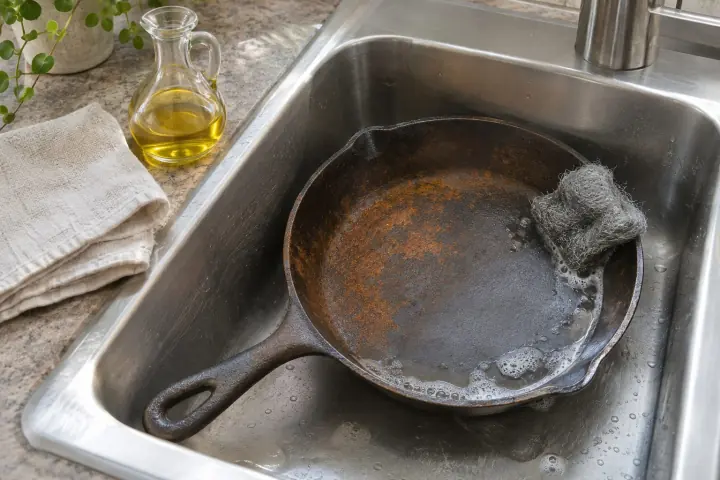
- Scrub the rust with coarse salt and a little water. For stubborn spots, use steel wool. It strips seasoning too, which is why UMaine Extension keeps it out of routine cleaning, but you're re-seasoning anyway.
- If rust remains, soak the pan briefly in vinegar, checking often.
- Wash with a little dish soap, rinse, dry it with a towel and set it on a hot burner to drive off the last moisture, as NDSU recommends.
- Coat the whole pan, inside and out, with a thin layer of vegetable oil.
- Bake it upside down at 450 to 500°F for about an hour, with foil below to catch drips. NDSU notes it may take a couple of treatments, and UMaine says 3 to 5 rounds build a solid coat.
Don't cook on a rusty surface; re-season first. To keep rust away, UMaine Extension says never to soak cast iron in water or run it through the dishwasher, or to rinse a hot pan under cold water, which can warp or crack it. Dry it right after washing and rub in a little neutral oil. NDSU also suggests avoiding long, slow cooking of acidic foods such as tomato-based dishes.
How to remove rust from chrome and stainless steel
Chrome faucets, handlebars and trim are plated, so the goal is to lift the rust spots without scouring through the shiny layer. Use a baking soda paste on a soft cloth or an old toothbrush, then rinse and dry. If the plating has blistered or pitted, cleaning can't rebuild it.
Stainless steel resists rust, but it can still show orange spots, and the cause is often contamination from outside. The Specialty Steel Industry of North America explains that tiny particles of ordinary carbon steel, from steel wool or a carbon steel wire brush, get embedded in the surface and rust over time. Its advice: clean only with nonmetallic or stainless steel materials, rinse thoroughly with water and avoid cleaners that contain chlorides. A baking soda paste on a nonmetallic pad, rubbed along the grain, handles most light spots on sinks and appliances.
How to clean a rusty bike chain
A chain hides rust between hundreds of small moving parts, so clean it gently and dry it fast.
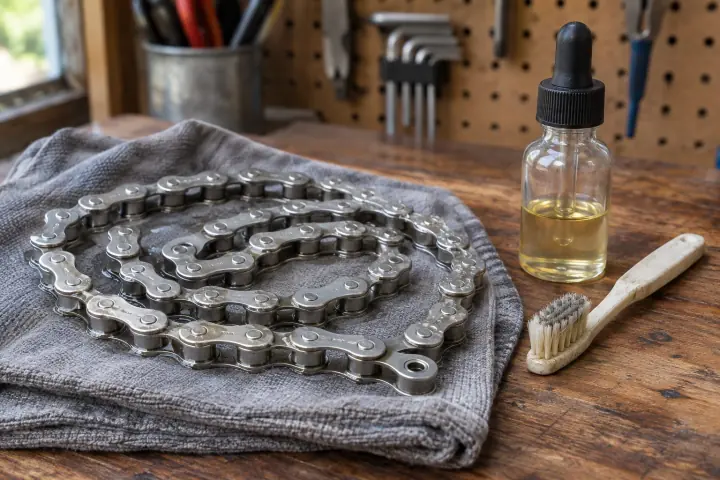
- Wipe off the grime with a rag while you turn the pedals backward.
- Scrub the chain with warm water, a little dish soap and an old toothbrush, then wipe it down with a damp rag.
- On light rust, rub with fine steel wool and a few drops of light oil, the Canadian Conservation Institute's method for thin rust on iron.
- Dry it completely with a towel and leave the bike somewhere warm and dry.
- Put a drop of chain lubricant on each roller, turn the pedals to work it in and wipe off the excess.
Skip long acid soaks: acid works into the rollers and pins, where it's hard to rinse out and can dry on the steel. If links stay stiff after cleaning or the plates are pitted, a new chain is the better fix.
Railings, patio furniture and other outdoor metal
Outdoor iron needs paint, not just cleaning. The National Park Service's guide to architectural cast iron calls a protective coat of paint the most common and effective way to preserve it.
- Scrape off flaking paint and loose rust and finish with a wire brush, which the Park Service calls the most common and least expensive method for paint and light rust.
- Once it's clean and dry, prime the same day. Newly cleaned iron should get a corrosion-inhibiting primer before new rust forms, which can take minutes to hours. If you wait, wire-brush off any fresh rust first.
- Choose the right primer. The Park Service warns that latex and other water-based primers cause immediate rusting on bare cast iron, and suggests at least two coats of alkyd rust-inhibitive primer under an alkyd enamel.
- Paint in good weather. Skip it if the temperature will drop below 50°F within 24 hours, the relative humidity is above 80%, or there's fog, mist or rain.
Old paint needs care. If your home was built before 1978, it may have lead-based paint, and EPA notes that scraping and sanding create dust that may contain lead. EPA suggests misting surfaces before scraping and recommends a certified inspector to test the paint or a lead-safe certified contractor for the job.
How to prevent rust
- Keep the air dry. The Canadian Conservation Institute says about 50% relative humidity is safe for most iron, while above about 65% damage keeps progressing, so a dehumidifier helps in a damp garage or basement.
- Dry tools, pans and bikes right after they get wet, and rinse off road salt.
- Oil bare steel. A thin film works as a temporary moisture barrier, the institute says; re-oil when rust returns.
- Drain and dry crevices that hold water, which the Park Service says speed up rusting.
- Handle clean steel with dry hands or gloves. Salts and oils on the skin can start corrosion, according to the institute.
Rust removal safety
- Wear gloves and eye protection, and work outdoors or with windows open. Even citric acid can cause serious eye irritation, and stronger products such as oxalic acid can burn skin and eyes, according to PubChem's safety data.
- Never mix bleach with vinegar, rust removers or other acids. The Washington State Department of Health warns that bleach mixed with an acid gives off chlorine gas, and it lists rust removal products among the acids. Use one product at a time and rinse in between, including on rust stains in a toilet.
- If a rust-stain remover lists hydrofluoric acid, choose a milder product or follow every precaution on the label.
- Keep removers in their original containers, out of reach of children and pets.
- If someone swallows a product, gets it in their eyes or breathes fumes from mixed cleaners, call Poison Control at 1-800-222-1222, open 24 hours a day, or 911 for trouble breathing.
When to call a professional or replace the item
Rust removal is a surface job. Call a pro or replace the item when:
- Rust has eaten through. Holes, deep pits, flaking layers or thin metal mean strength is gone; have a welder or contractor check any railing, step or bracket that carries weight.
- The paint is old and the home was built before 1978. Have it tested or hire a lead-safe certified contractor, as EPA recommends.
- Paint is bubbling on a car body, or brakes and other safety parts are rusty. That's a job for a body shop or mechanic.
- Chrome is pitted or peeling. A plating shop can refinish it, or replace the fixture.
- A cast iron pan is cracked or warped, a chain has stiff or pitted links, or a grill grate has rusted through. Replace it.
- The piece is an antique, an heirloom or historic ironwork. The Canadian Conservation Institute advises against commercial liquid rust strippers on old iron and suggests a metals conservation specialist for heavily corroded pieces.
Rust remover we've reviewed
FAQ
Does vinegar remove rust?
Yes, on most iron and steel. White vinegar is a mild acid (at least 4% acetic acid under FDA guidance) that loosens rust over a few hours. Scrub while wet, rinse, then dry and oil the metal right away, because vinegar left to dry causes more rust.
How long should you soak rust in vinegar?
A few hours for most rusty tools, according to NC State Extension. Give heavy rust longer or a second round, and keep cast iron soaks brief.
Does baking soda remove rust?
It helps with light rust. Baking soda is mildly alkaline and abrasive rather than acidic, so a paste scrubs surface rust off instead of dissolving it. It's a good choice for chrome, stainless steel and other finishes you don't want to scratch.
What is the best rust remover?
It depends on the job. Vinegar or citric acid suits tools and hardware, baking soda suits light rust on delicate finishes, and a commercial remover or converter suits bigger or tougher jobs. Follow the label, ventilate and never mix any of them with bleach.
How do you remove rust from a knife?
Rub light spots with a baking soda paste or a cloth dampened with white vinegar, rinse, dry the blade right away and wipe on a little food-safe oil. Drying knives right after washing keeps spots from returning.
Sources
- Care and Cleaning of Iron, CCI Notes 9/6, Canadian Conservation Institute
- Basic care: Iron objects, Canadian Conservation Institute
- Tannic Acid Coating for Rusted Iron Artifacts, CCI Notes 9/5, Canadian Conservation Institute
- Preservation Brief 27: The Maintenance and Repair of Architectural Cast Iron, National Park Service
- Spring Clean Includes Garden Tools (2023), NC State Extension, Rutherford County
- Prairie Fare: Seasoned to perfection, why cast iron cookware remains in style (2025), NDSU Extension
- Cast Iron Basics: How to Clean, Season, and Maintain Your Cast Iron Pan (2024), UMaine Cooperative Extension
- CPG Sec. 525.825 Vinegar, Definitions, U.S. Food and Drug Administration
- Sodium Bicarbonate: pH, reactivity with acids and uses, PubChem (National Library of Medicine)
- Citric Acid: chelating agent, uses and safety, PubChem (National Library of Medicine)
- Oxalic Acid: uses and hazard classification, PubChem (National Library of Medicine)
- Efficacy of Chitosan-Carboxylic Acid Hydrogels in Reducing and Chelating Iron for the Removal of Rust from Stone Surface, Gels (2024), PubMed
- Natural Deep Eutectic Solvents as Rust Removal Agents from Lithic and Cellulosic Substrates, Molecules (2024), PubMed
- Hydrofluoric Acid Fatality from Dermal Exposure, J Emerg Med (2025), PubMed
- Care and use in shop (iron contamination of stainless steel), Specialty Steel Industry of North America
- Lead-Safe Renovations for DIYers, U.S. Environmental Protection Agency
- Dangers of Mixing Bleach with Cleaners, Washington State Department of Health
- Chlorine Gas: Get the Facts, Poison Control (National Capital Poison Center)
This guide is general information. Follow the label of any rust remover or acid, wear gloves and eye protection, work with good ventilation, never mix cleaners with bleach, and have a professional check any rusted metal that carries weight.