
Heart health
Blood Pressure by Age: What's Normal and What's Average
Blood pressure by age tends to rise, especially the top number, but the healthy target doesn't change: for every adult, normal is below 120/80 mm Hg. Below are the American Heart Association categories, real U.S. averages by age and sex from CDC survey data, and how to take an accurate reading at home.
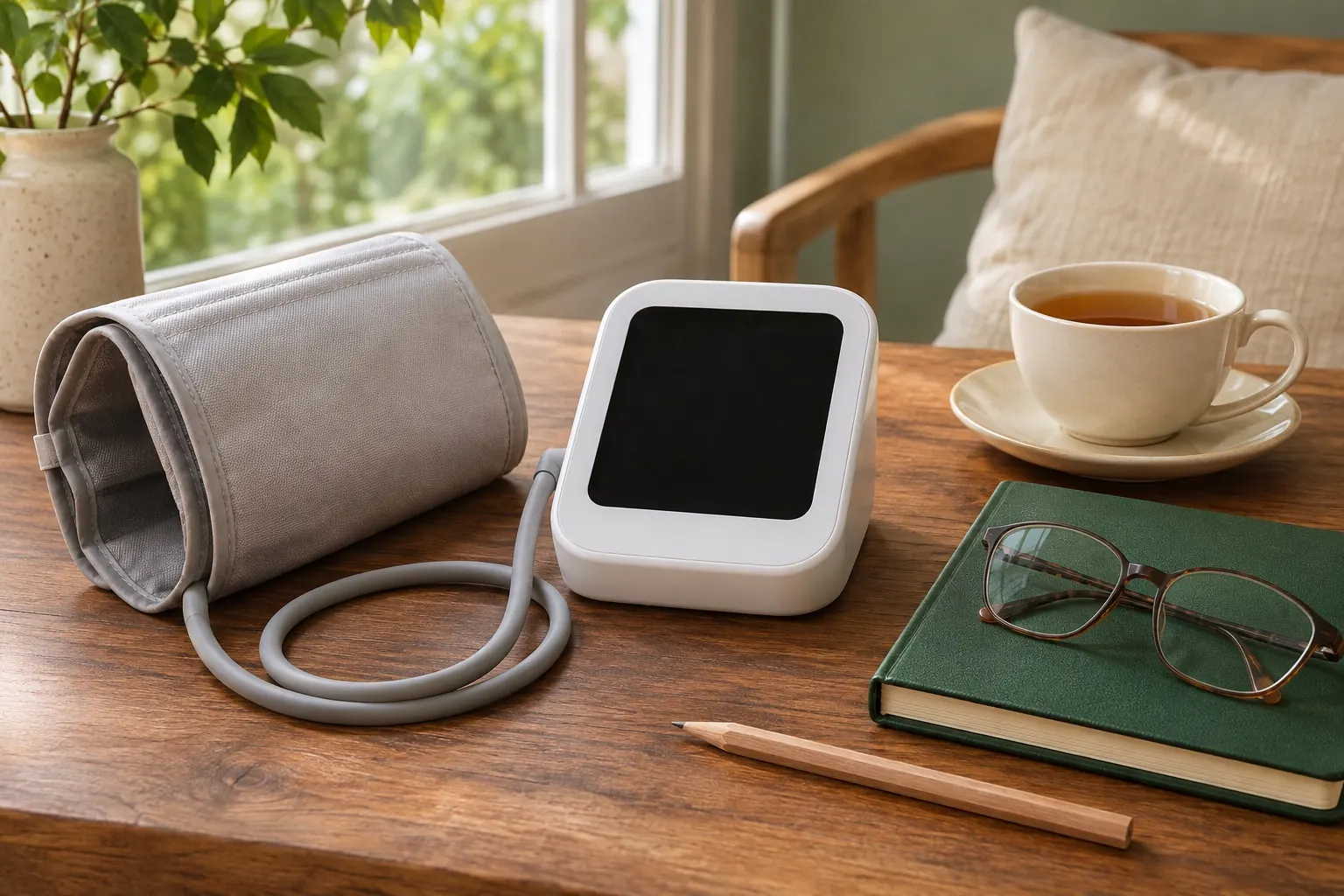
What is a normal blood pressure by age?
For adults, normal doesn't depend on age. The American Heart Association (AHA) chart uses the same cutoffs for every adult, man or woman, at 25 or at 75: normal is a top number (systolic) below 120 and a bottom number (diastolic) below 80 mm Hg. Systolic is the pressure in your arteries when the heart beats; diastolic is the pressure while the heart rests between beats.
What does change with age is the average. In U.S. survey data, average systolic pressure climbs steadily from young adulthood to old age. The AHA explains why: large arteries become stiffer, plaque builds up over time, and heart and blood vessel disease become more common. It also notes that the systolic number says more about heart disease risk for people over 50.
So an average reading for your age isn't the same as a healthy one. In the CDC data below, the average top number for Americans 60 and over was already in the stage 1 range. High blood pressure can lead to heart attack or stroke, and the AHA says measuring is the only way to know if you have it.
Blood pressure chart: the AHA categories
| Category | Systolic (top number) | Diastolic (bottom number) | What the AHA advises |
|---|---|---|---|
| Normal | Less than 120 | and less than 80 | Keep up heart-healthy habits. |
| Elevated | 120 to 129 | and less than 80 | Recheck with your health care team. Lifestyle changes help keep it from turning into high blood pressure. |
| Stage 1 hypertension | 130 to 139 | or 80 to 89 | If confirmed: lifestyle changes, with medication depending on your risk or on conditions such as diabetes, heart failure or kidney disease. |
| Stage 2 hypertension | 140 or higher | or 90 or higher | If confirmed: lifestyle changes and medication. |
| Severe hypertension | Higher than 180 | and/or higher than 120 | Wait a minute and measure again. If it's still that high and you have no symptoms, call your health care professional. |
| Hypertensive emergency | Higher than 180 | and/or higher than 120, with symptoms | Call 911. |
Source: American Heart Association. Emergency symptoms: chest pain, shortness of breath, back pain, numbness, weakness, change in vision or difficulty speaking. Readings above 180/120 are often called a hypertensive crisis; the AHA's current chart splits them into these two rows. Only a doctor can confirm a diagnosis.
Because of the and/or rules, either number can move you into a higher category. A reading of 125/85, for example, counts as stage 1, because the bottom number is in the 80 to 89 range.
Average blood pressure by age and gender
The best official snapshot of average readings by age comes from the CDC's National Center for Health Statistics (NCHS). It analyzed blood pressure measured by physicians in 19,921 adults in the National Health and Nutrition Examination Survey (NHANES) from 2001 to 2008, using the average of up to three readings for each person.
| Age | Men | Women | All adults |
|---|---|---|---|
| 18 to 39 | 119/70 | 110/68 | 115/69 |
| 40 to 59 | 124/77 | 122/74 | 123/75 |
| 60 and over | 133/69 | 139/68 | 136/68 |
Mean systolic/diastolic in mm Hg, from NCHS National Health Statistics Report No. 35 (2011). The averages include people with treated and untreated high blood pressure; pregnant women were excluded. We found no newer NCHS table of average readings by age and sex.
Three patterns stand out. Systolic pressure climbs with age in both sexes. Diastolic pressure rises into middle age and then falls, a curve NCHS saw in both men and women. And men had higher average readings than women overall, although women 60 and over had the higher average top number in this data.
Because the averages include people with high blood pressure, they run higher than what's healthy. Among adults the report classed as normotensive (under 140/90 and not on blood pressure medicine), the average was 116/69; among those with untreated hypertension, it was 146/84 (NCHS, age-adjusted).
How common is high blood pressure at each age?
Newer CDC data show how quickly high blood pressure becomes common. For NHANES from August 2021 to August 2023, NCHS counted hypertension as a reading of 130/80 mm Hg or higher, or taking blood pressure medicine, in line with the 2017 ACC/AHA guideline.
| Age | Men | Women | All adults |
|---|---|---|---|
| 18 to 39 | 30.0% | 16.4% | 23.4% |
| 40 to 59 | 55.9% | 49.0% | 52.5% |
| 60 and over | 72.7% | 70.6% | 71.6% |
| All adults | 50.8% | 44.6% | 47.7% |
Source: NCHS Data Brief No. 511 (October 2024).
Many people don't know they have it. Only 59.2% of adults with hypertension were aware of it, falling to 27.2% among those 18 to 39, and only 20.7% had it under control. That's the strongest argument for checking your numbers at any age.
High blood pressure doesn't only affect the heart. NINDS lists narrowing of the arteries from high blood pressure among the causes of nerve damage, which our guide to neuropathy in feet covers.
Normal blood pressure for women and men
The normal range is the same for both: below 120/80 mm Hg. Men tend to run a little higher on average, and in the 2021 to 2023 data high blood pressure was almost twice as common in men 18 to 39 as in women the same age (30.0% versus 16.4%). By 60, the gap had closed.
If you're pregnant, follow your prenatal care team's advice; the AHA says a home monitor for a pregnant person, a child or an older adult should be validated for them. The chart above is for adults, so ask a pediatrician about a child's numbers.
How to check blood pressure at home
The AHA recommends home monitoring for everyone with high blood pressure, so your health care professional can see whether treatment is working, and says it can also help confirm a diagnosis. It doesn't replace regular visits. Here is the AHA's method, step by step.
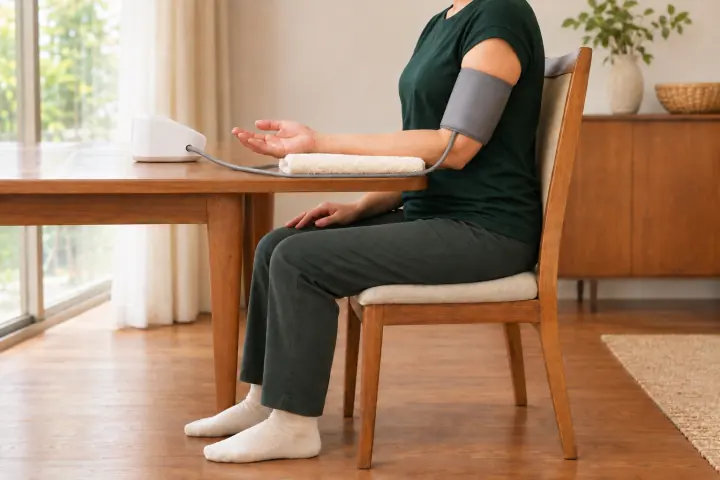
- Pick the right monitor: an automatic, upper-arm cuff model that has been validated. Ask your doctor or pharmacist, or check the validated device list the AHA points to at validatebp.org. Measure around your upper arm and choose a monitor with the right cuff size.
- Plan ahead. For 30 minutes before, don't smoke, drink caffeine or alcohol, or exercise. Empty your bladder.
- Sit upright with your back supported, feet flat on the floor and legs uncrossed.
- Rest your arm on a flat surface so the middle of the cuff is at heart level. Prop a pillow under your arm if needed.
- Wrap the cuff on bare skin, with its bottom edge just above the bend of the elbow, not over clothing. Either arm works; there's usually not a big difference between them.
- Sit quietly for at least 5 minutes first, and don't talk or use your phone.
- Take at least two readings, 1 minute apart, and record them all, or let the monitor store them.
- Measure at the same time every day, and ask your health care professional how often to check.
- If a reading is above 180/120, wait a minute and measure again. If it's still that high, call your health care professional. If you also have chest pain, shortness of breath, back pain, numbness, weakness, a change in vision or difficulty speaking, call 911.
Take a new monitor to your next appointment so your health care professional can check that you're using it correctly and that it matches the office equipment. The AHA suggests bringing it in once a year, or as the manufacturer directs.
Bring your log, too. A 2017 meta-analysis of individual patient data from 25 trials found that self-monitoring on its own made no clear difference to blood pressure, but combined with support such as medication adjustments, education or lifestyle counseling it lowered clinic systolic pressure by up to about 6 mm Hg at 12 months.
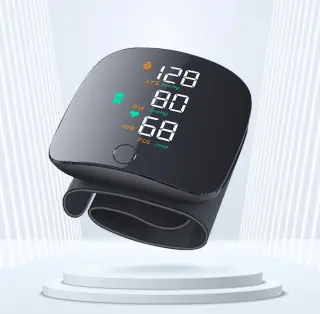
What about wrist monitors? Many people find them easier to use: no cuff to wrap around the upper arm and a smaller device to keep on the nightstand. The AHA's first choice for home readings is an upper-arm cuff, and wrist models are more sensitive to how you hold them, so a little care goes a long way. We reviewed one wrist model, NovaMedic Pro, which has a large screen, a voice readout and memory for 200 readings. For steady numbers, sit with your wrist at heart level, stay still, and bring it to your next checkup so your doctor can compare it with the office reading.
Foods that lower blood pressure
The eating plan with the strongest evidence is DASH (Dietary Approaches to Stop Hypertension), developed through studies funded by the National Heart, Lung, and Blood Institute (NHLBI). It needs no special foods. It builds meals around vegetables, fruits and whole grains; includes fat-free or low-fat dairy, fish, poultry, beans, nuts and vegetable oils; and limits fatty meats, full-fat dairy, tropical oils, sugary drinks and sweets. The foods it favors are rich in potassium, calcium, magnesium, fiber and protein, and lower in sodium.


| Food group | Servings |
|---|---|
| Grains | 6 to 8 a day |
| Vegetables | 4 to 5 a day |
| Fruit | 4 to 5 a day |
| Fat-free or low-fat dairy | 2 to 3 a day |
| Meats, poultry and fish | 6 or fewer a day |
| Fats and oils | 2 to 3 a day |
| Nuts, seeds, dry beans and peas | 4 to 5 a week |
| Sweets | 5 or fewer a week |
| Sodium | 2,300 mg a day; 1,500 mg lowers blood pressure even further |
Salt matters as much as the menu. In the DASH-Sodium trial, which provided all meals to 412 adults for a month, cutting sodium lowered blood pressure on both a typical American diet and DASH, and DASH combined with 1,500 mg of sodium a day lowered it most. The benefits showed up in people with and without high blood pressure.
Most sodium doesn't come from the salt shaker. The FDA says over 70% comes from packaged and prepared foods. Its Daily Value for sodium is less than 2,300 mg a day, and on a Nutrition Facts label, 5% DV or less per serving counts as low and 20% or more as high. The AHA also lists regular physical activity among the habits that keep blood pressure healthy; our guide to health-related fitness shows where to start.
When to see a doctor about your blood pressure
- Call 911 for a reading above 180/120 with chest pain, shortness of breath, back pain, numbness, weakness, a change in vision or difficulty speaking. The AHA calls this a hypertensive emergency.
- Call your health care professional if a repeat reading is still above 180/120 and you have no symptoms.
- Book a visit if your home readings are regularly in the elevated range or higher. Only a doctor can confirm high blood pressure, and the AHA says home monitoring doesn't replace regular visits.
- Never stop or change blood pressure medicine because of a home reading without checking with your health care professional first (AHA).
- Ask about low readings too. The AHA notes that a doctor can also check whether your blood pressure is too low.
- If you have diabetes, kidney disease or heart failure, or you're pregnant, ask your doctor which target and which monitor are right for you.
The home blood pressure monitor we've reviewed
FAQ
What is a normal blood pressure by age?
For every adult, normal is below 120/80 mm Hg, whatever your age or sex, according to the AHA. Average readings do rise with age: in CDC survey data, the average was about 115/69 for adults 18 to 39 and 136/68 for those 60 and over.
What is normal blood pressure for a 60-year-old?
The same as for anyone: below 120/80 mm Hg. The average for Americans 60 and over in NCHS data was 136/68, which puts the top number in the stage 1 range, so being average for your age isn't a reason to ignore a high reading.
Does blood pressure go up with age?
The top number usually does. The AHA says large arteries stiffen and plaque builds up over time, and NCHS data show average systolic pressure rising from young adulthood to old age. The bottom number tends to rise into middle age and then dip.
What is normal blood pressure for women?
Below 120/80 mm Hg, the same as for men. Women average slightly lower readings than men overall, and in 2021 to 2023 data 44.6% of U.S. women had high blood pressure, compared with 50.8% of men.
Which arm should I use to check my blood pressure?
Either one. The AHA says there's usually not a big difference between arms. What matters more is the cuff on bare skin, your arm supported at heart level, and two readings a minute apart.
Are wrist blood pressure monitors accurate?
Wrist monitors are more sensitive to position, so how you use them matters. The AHA's first choice for home monitoring is an upper-arm cuff. If you prefer a wrist model, keep your wrist at heart level, sit still, and compare it with your doctor's reading at your next visit.
Sources
- Understanding Blood Pressure Readings, American Heart Association
- Monitoring Your Blood Pressure at Home, American Heart Association
- Home Blood Pressure Measurement Instructions (PDF), American Heart Association
- Mean Systolic and Diastolic Blood Pressure in Adults Aged 18 and Over in the United States, 2001-2008, National Health Statistics Reports No. 35, NCHS (2011)
- Hypertension Prevalence, Awareness, Treatment, and Control Among Adults Age 18 and Older: United States, August 2021-August 2023, NCHS Data Brief No. 511 (2024)
- Self-monitoring of blood pressure in hypertension: A systematic review and individual patient data meta-analysis, PLoS Med (2017), PubMed
- DASH Eating Plan, National Heart, Lung, and Blood Institute
- Health Benefits of DASH (DASH and DASH-Sodium trials), National Heart, Lung, and Blood Institute
- Sodium in Your Diet, U.S. Food and Drug Administration
- Peripheral Neuropathy, National Institute of Neurological Disorders and Stroke
This guide is general information, not medical advice. Talk to your doctor before making changes to your diet, sleep or exercise routine.