
Skin care
Peptides for Skin: What They Do, the Main Types and How to Use a Peptide Serum
Peptides for skin are short chains of amino acids added to serums and creams to prompt collagen production, soften expression lines or carry copper into the skin. Trials show modest gains, mostly in hydration and brightness. Treat them as a gentle extra in a routine built on daily sunscreen and moisturizer, not a replacement for better-proven options like retinoids.
What are peptides in skincare?
Cleveland Clinic describes peptides as strings of amino acids added to some skin care products to boost their effectiveness. Amino acids link into peptides, and peptides link into proteins, including collagen and elastin, the two that help keep skin firm and flexible.
The peptides in a serum are made for a specific job. Some are meant to act as messengers that prompt skin cells to make more collagen; others carry minerals such as copper, or target the small muscle movements behind expression lines. They also face a practical hurdle: a 2025 review called poor penetration through the skin's outer layer one of the biggest drawbacks of cosmetic peptides.
One more thing to keep in mind when you read a label. In the US, cosmetic products and ingredients, apart from color additives, don't need FDA approval before they're sold, and the FDA says a product whose intended use is to treat disease or change how the body works is legally a drug. So a cosmetic serum reaches the shelf without FDA approval of the product or its promises.
What do peptides do for skin? What the research shows
The honest answer: they may help a little, and the evidence is thinner than the marketing suggests.
The largest summary so far, a 2026 meta-analysis of 19 randomized trials with 1,341 participants, found that peptides improved skin hydration and brightness. The effect on wrinkles was modest, and most of it came from peptides taken by mouth rather than those applied to the skin. Results for elasticity and skin density were inconsistent. On safety the news is good: peptides were well tolerated, with few side effects reported across the trials.
Earlier reviews point to a quality problem. A 2019 systematic review of peptides meant to stimulate collagen and other skin-support proteins found just 15 clinical studies. Only six compared the peptide with a placebo, five were double-blind, and nine included only women. The authors called the research sparse and asked for better-designed trials. A 2024 systematic review of cosmeceuticals for sun-damaged skin was more upbeat, rating the evidence for peptides the strongest among the ingredients it compared, which shows how much the verdict depends on which studies get counted.
The American Academy of Dermatology (AAD) keeps expectations grounded. It says anti-aging skin care products deliver modest results and that no product can treat all signs of skin aging. A moisturizer can plump up fine lines within a few days, but most products take at least six weeks to work, and sometimes three months.
Types of peptides in skin care
Reviews sort cosmetic peptides into four groups by how they're meant to work. Ingredient lists don't say which group a peptide belongs to, so here's a quick key:
| Type | What it's meant to do | Examples on labels | What the evidence shows |
|---|---|---|---|
| Signal peptides | Act as messengers that prompt skin cells to make more collagen and elastin. | Palmitoyl pentapeptide-4 | The most studied group, yet a 2019 review found only six placebo-controlled trials. |
| Carrier peptides | Deliver trace minerals such as copper to the skin. | Copper tripeptide-1 (GHK-Cu) | Plenty of lab data; a 2026 evidence review called the clinical evidence sparse. |
| Neurotransmitter-inhibiting peptides | Aim to quiet the tiny muscle contractions behind expression lines. | Acetyl hexapeptide-8 (argireline) | Some studies show shallower lines, but how much reaches the muscles is uncertain. |
| Enzyme-inhibiting peptides | Slow the enzymes that break down collagen. | Soy and rice peptides | A 2025 review describes the clinical evidence as limited. |
Sources: reviews of cosmetic peptides on PubMed (19570099, 39858482, 30941744, 42797253 and 40565185), listed at the end of this guide.
Many serums mix several types in one bottle. That's reasonable, since they're meant to work in different ways, but a longer peptide list doesn't prove a stronger effect. What matters is a formula you'll use morning and night for weeks.
Copper peptides: benefits and limits
Copper peptides are carrier peptides that bind copper. The best known is GHK-Cu, a three-amino-acid peptide paired with copper, usually listed on labels as copper tripeptide-1. In cell studies, GHK has prompted the production of collagen and other compounds that support the skin, and it has been studied for wound repair.
Evidence in people is another matter. A recent review noted a surprising absence of clinical studies of copper peptides in anti-wrinkle products. A 2026 systematic evidence-mapping review went further: it found the clinical evidence sparse, with older cosmetic reports small or incompletely described, and called GHK-Cu promising but unproven.
Can you use copper peptides with vitamin C or retinol? We found no clinical trials of either combination. The cautious route is to introduce each product on its own and, if you use both, apply them at different times of day, for example vitamin C in the morning and copper peptides at night.
Acetyl hexapeptide-8 (argireline) and expression lines
Acetyl hexapeptide-8, often sold as argireline, is the peptide behind most claims about softening expression lines, the creases from frowning, squinting and smiling. It's designed to interfere with the signals that make small facial muscles contract, which is why it's often compared to wrinkle-relaxing injections.
A 2025 review of the research found that it may reduce wrinkle depth and improve elasticity and hydration. The same review explained the catch: it's a large, water-loving molecule that passes poorly through the skin, and whether enough of it reaches the muscles remains uncertain. Expect, at most, a softer look, not the effect of an injection.
Peptide serum or peptide cream: how to choose
Both deliver the same kinds of peptides; the difference is the base. A serum is a light liquid that goes on right after cleansing and layers easily under moisturizer and sunscreen. A peptide cream or moisturizer combines the peptides with your moisturizing step, which suits dry skin or anyone who wants fewer products. We found no studies showing that one form works better than the other.
Whichever you choose, check these before you buy:
- The peptides named in the ads also appear on the full ingredient list. The list is what's in the bottle.
- Fragrance, if your skin is sensitive. MedlinePlus lists fragrances in cosmetics and moisturizers among the causes of allergic contact dermatitis.
- "Hypoallergenic" isn't a guarantee. The AAD notes such products can still cause an allergic reaction, only with less risk.
- Price. The AAD says effective anti-aging products come in all price ranges.
- "Clinically proven" claims. According to the AAD, the phrase means the product was given to consumers to try.
- The purchase terms. Some serums sold online open on a subscription by default.
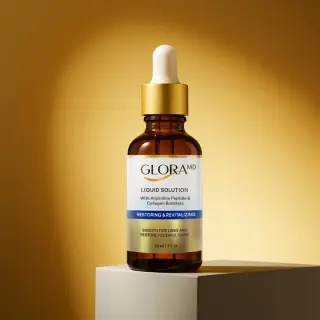
If you'd like a serum that covers three peptide types in one bottle, we reviewed GloraMD. Its full ingredient list includes acetyl hexapeptide-8, palmitoyl pentapeptide-4 and copper tripeptide-1, plus sodium hyaluronate and squalane for moisture. The brand suggests a dime-sized amount morning and night, kept away from the eyes, and says one 1 fl oz bottle lasts 30 to 45 days.
We found no independent trial of the GloraMD formula itself, and it contains lavender and geranium oils, so patch test it first. Its order page opens on a subscription plan, so choose One-Time Purchase if you only want to try one bottle.
How to use peptides with other actives
Peptides are gentle, so the bigger risk is piling on too many new products at once. The AAD warns that using several products, especially more than one anti-aging product, tends to irritate the skin, and irritated skin can make signs of aging more visible. Here's a simple morning and evening routine.
- Patch test first. The AAD suggests applying the normal amount to a quarter-sized spot, such as the underside of your arm or the bend of your elbow, twice a day for 7 to 10 days. Move to your face only if your skin stays calm.
- Add one new product at a time, and give it a few weeks before adding another, so you know which one your skin is reacting to.
- Morning: cleanse, apply the peptide serum, then moisturizer and a broad-spectrum sunscreen with SPF 30 or higher. The AAD puts sunscreen after your other skin care and under makeup. If you use vitamin C, it advises applying it after washing in the morning, before sunscreen.
- Evening: cleanse, apply the serum, then moisturizer. If you also use a retinoid, the AAD suggests applying it at bedtime, 20 to 30 minutes after washing; if it feels drying, put moisturizer on first.
- Give it time. Wait at least six weeks, and up to three months, before you judge the result, and keep using the product if you want to keep it, as the AAD advises.
Can you use peptides with retinol? We found no evidence that they cancel each other out, and peptides are well tolerated. Retinoids have the stronger track record, but the AAD notes that retinol can irritate, especially sensitive skin, and that this irritation is usually temporary. Start them separately.
Can you use peptides with vitamin C? We found no trials of peptide serums used together with vitamin C or exfoliating acids. If you want both, use vitamin C in the morning and peptides at night, and add them one at a time.
Peptides vs. retinol
These two aren't rivals, and many people use both. Here's how they compare on what the sources say:
| Peptides | Retinoids | |
|---|---|---|
| Evidence for lines and wrinkles | Modest; the 2026 meta-analysis found the wrinkle benefit came mostly from oral peptides. | The AAD says retinol can treat mild fine lines and wrinkles, and lists a prescription retinoid for sun-damaged skin. |
| Irritation | Well tolerated in trials, with few side effects. | Can irritate at first, especially sensitive skin; the AAD says this is usually temporary. |
| When to apply | Morning, night or both, as the label directs. | At bedtime, 20 to 30 minutes after washing, per the AAD. |
| Pregnancy | Little safety data; ask your doctor. | The AAD advises avoiding retinoids, including over-the-counter retinol. |
Sources: the AAD, Cleveland Clinic and the 2026 meta-analysis listed at the end of this guide.
A Cleveland Clinic dermatologist puts it plainly: for anti-aging, hyaluronic acid and retinoids are very effective and tend to be less expensive. A peptide serum makes the most sense as a gentle daily step alongside them, or for people whose skin doesn't tolerate a retinoid.
Side effects: are peptides safe for your skin?
In the 2026 meta-analysis, peptides were well tolerated, with minimal side effects reported. When a serum does cause a reaction, look at the whole ingredient list, not only the peptides. MedlinePlus explains that contact dermatitis, red, itchy and sometimes tender skin where a product touched, can come from irritating chemicals or from an allergy, and often shows up 24 to 48 hours after contact.
- Stop using a product that stings, burns or tingles, as the AAD advises.
- If a rash appears, gently wash the product off, don't use it again, and soothe the skin with a cool compress or petroleum jelly if needed.
- Keep serums away from your eyes unless the label says they're made for that area.
- Pregnant or breastfeeding? The AAD suggests telling your obstetrician and dermatologist about the medicines and prescription skin care you use. Ask about cosmetic serums too, since there's little research on most peptides in pregnancy.
When to see a dermatologist
Book a visit with a board-certified dermatologist, or your doctor, if:
- A reaction is severe, or doesn't get better after you stop the product and treat it at home
- The skin shows signs of infection, such as tenderness, redness, warmth or fever
- A spot on your face is new, looks different from your other spots, or is changing in size, shape or color
- A mole or spot itches or bleeds
- You want bigger changes than a serum can give. Dermatologists can offer a prescription retinoid and in-office options such as fillers, laser resurfacing and skin-tightening treatments.
Peptide skin care we reviewed
FAQ
What do peptides do for skin?
Peptides are designed to prompt collagen production, soften expression lines or deliver copper to the skin. In trials they mainly improved hydration and brightness, with a modest effect on wrinkles, so expect subtle results that take at least six weeks.
Is a peptide serum worth it?
It can be, if your expectations are modest. Peptides are gentle and well tolerated, which makes them an easy addition. For bigger changes, daily sunscreen and a retinoid have more evidence behind them, and the AAD says effective anti-aging products come in all price ranges.
Can you use peptides with retinol?
Yes. We found no evidence that they work against each other. Add them one at a time, use the retinoid at bedtime as the AAD suggests, and stop any product that stings, burns or tingles.
Can you use copper peptides with vitamin C?
There are no good trials of the combination. The cautious approach is to use vitamin C in the morning, as the AAD recommends, and copper peptides at night, introducing each one separately.
How long do peptides take to work on skin?
Moisturizing ingredients can plump fine lines within days, but the AAD says most anti-aging products take at least six weeks to work, and sometimes three months. Keep using the product if you want to keep the result.
Are collagen peptides the same as peptides in skin care?
No. Collagen peptides are supplements you swallow, while skin care peptides go on your face. In a 2026 meta-analysis, oral peptides accounted for most of the modest wrinkle benefit, but research on both is still limited.
Sources
- Peptides for Skin Care: Are They Worth It?, Cleveland Clinic
- How to maximize results from anti-aging skin care products, American Academy of Dermatology
- How to select anti-aging skin care products, American Academy of Dermatology
- Should I apply my skin care products in a certain order?, American Academy of Dermatology
- Dermatologist-recommended skin care for your 20s, American Academy of Dermatology
- How to test skin care products, American Academy of Dermatology
- How dermatologists treat sun-damaged skin, American Academy of Dermatology
- Dermatologist-approved pregnancy skin care, American Academy of Dermatology
- What to look for: ABCDEs of melanoma, American Academy of Dermatology
- Is It a Cosmetic, a Drug, or Both? (Or Is It Soap?), U.S. Food and Drug Administration
- Contact dermatitis, MedlinePlus Medical Encyclopedia (National Library of Medicine)
- Oral and topical peptides for skin aging: systematic review and meta-analysis of randomized controlled trials, Front Med (2026), PubMed
- Peptides stimulating synthesis of extracellular matrix used in anti-ageing cosmetics: Are they clinically tested? A systematic review of the literature, Australas J Dermatol (2019), PubMed
- Cosmeceuticals in photoaging: A review, Skin Res Technol (2024), PubMed
- Role of topical peptides in preventing or treating aged skin, Int J Cosmet Sci (2009), PubMed
- Peptides: Emerging Candidates for the Prevention and Treatment of Skin Senescence: A Review, Biomolecules (2025), PubMed
- Acetyl Hexapeptide-8 in Cosmeceuticals: A Review of Skin Permeability and Efficacy, Int J Mol Sci (2025), PubMed
- Topically applied GHK as an anti-wrinkle peptide: Advantages, problems and prospective, Bioimpacts (2025), PubMed
- GHK-Cu as a Bioactive Metallopeptide and Drug-Delivery Cargo: a structured systematic evidence-mapping review, Pharmaceutics (2026), PubMed
This guide is general information, not medical advice. Talk to your doctor before making changes to your diet, sleep or exercise routine.