
Recipe
High Protein Breakfast Ideas: 10 Easy Breakfasts With 18 to 34 Grams of Protein
These high protein breakfast ideas each deliver about 18 to 34 grams of protein, from make-ahead spinach and feta egg muffins to cottage cheese eggs, Greek yogurt parfaits and a tofu scramble with no eggs at all. Every number comes from USDA FoodData Central, and below you'll find the full egg muffin recipe, the best picks for weight loss and how much protein you actually need.
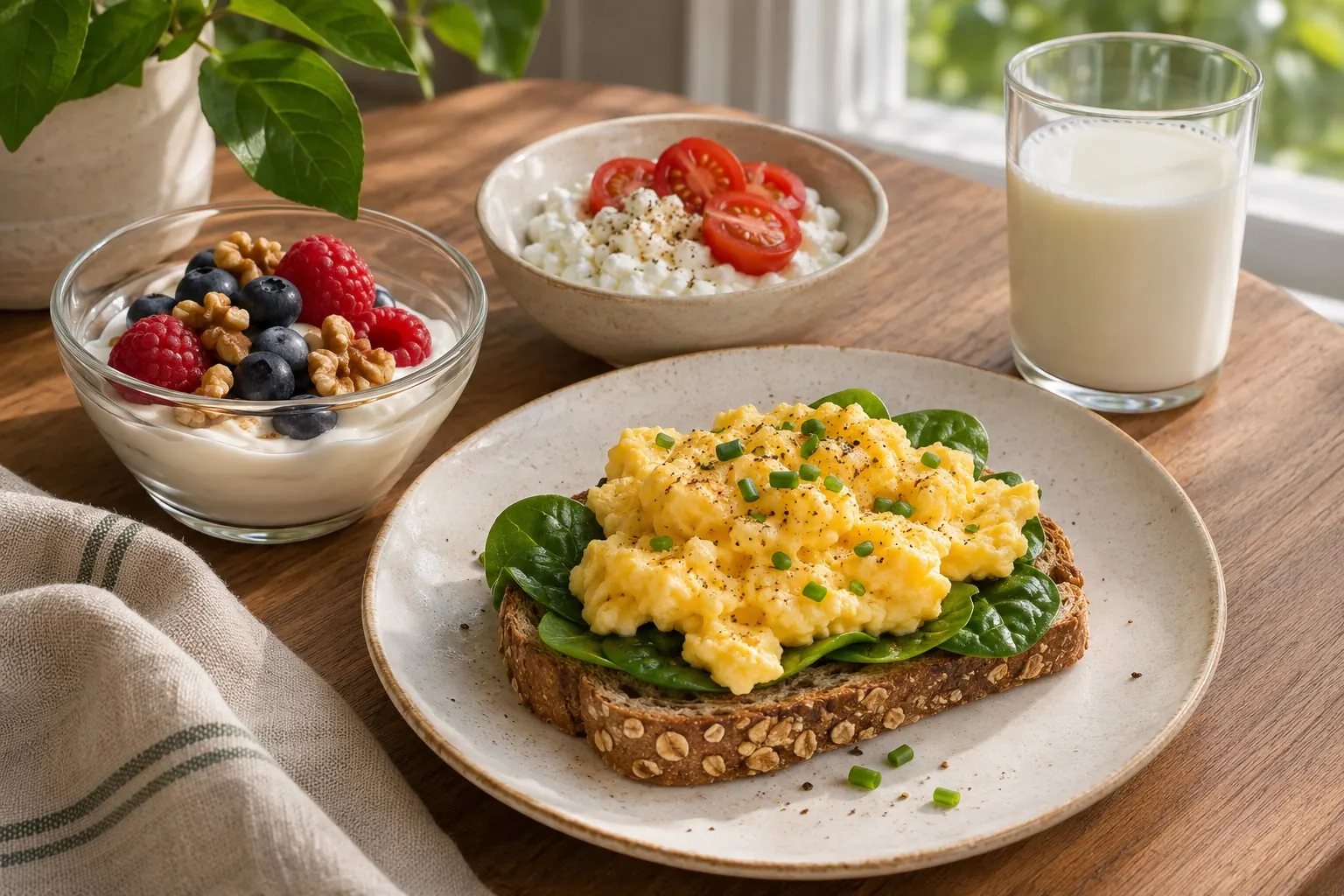
Spinach, Feta and Cottage Cheese Egg Muffins
Ingredients
- Oil or cooking spray for the muffin tin
- 10 large eggs
- 1 cup low-fat (2%) cottage cheese
- 2 cups baby spinach, chopped (about 2 oz)
- 1 red bell pepper, diced (about 1 cup)
- 1/2 cup crumbled feta
- 1/4 tsp black pepper (no added salt needed; the feta and cottage cheese bring plenty)
Steps
- Heat the oven to 350°F and grease a 12-cup muffin tin well, or use silicone liners.
- Whisk the eggs, cottage cheese and black pepper in a large bowl. For a smooth, egg-bite texture, blend them for 20 seconds instead.
- Divide the spinach, red pepper and feta among the cups.
- Pour the egg mixture over the vegetables, filling each cup about three-quarters full.
- Bake for 20 to 25 minutes, until the muffins are puffed and the centers are set, not wet.
- Cool for 5 minutes, then run a knife around each muffin to release it. Eat warm, or refrigerate in a covered container and reheat in the microwave.
Per serving, estimated from USDA FoodData Central: 290 calories, 25 g protein, 1 g fiber, 4 g sugar. Per serving of 3 muffins, about 580 mg of sodium. One muffin has about 96 calories and 8 g of protein.
10 high protein breakfast ideas at a glance
We built each breakfast from everyday ingredients and calculated the protein and calories from USDA FoodData Central for the exact amounts listed. Most take 10 minutes or less, and five of them can be made ahead.
| Breakfast | What's in it | Protein | Calories |
|---|---|---|---|
| 1. Spinach and feta egg muffins | 3 muffins from the recipe card | 25 g | 290 |
| 2. Cottage cheese scrambled eggs | 2 eggs, 1/4 cup cottage cheese, 1 cup spinach, 1 slice whole-wheat toast | 23 g | 275 |
| 3. Greek yogurt parfait | 6 oz plain nonfat Greek yogurt, 1/2 cup raspberries, 1/4 cup oats, 2 tbsp sliced almonds | 23 g | 275 |
| 4. Cottage cheese toast | 1/2 cup cottage cheese on 2 slices whole-wheat toast, 1/2 cup cherry tomatoes | 20 g | 265 |
| 5. Protein oatmeal | 1/2 cup oats cooked in 1 cup 2% milk, 1 tbsp peanut butter, 1/2 banana | 18 g (25 g with 2 egg whites) | 425 (460) |
| 6. Overnight oats with Greek yogurt | Our overnight oats recipe, 1 jar | 18 g | 380 |
| 7. Tofu and black bean scramble | 1/2 cup firm tofu, 1/4 cup black beans, spinach, red pepper, 1 whole-wheat tortilla | 31 g (27 g without the tortilla) | 380 (255) |
| 8. Smoked salmon toast | 3 oz smoked salmon, 1 tbsp cream cheese, 2 slices whole-wheat toast | 24 g | 310 |
| 9. Egg and black bean burrito | 2 eggs, 1/4 cup black beans, 1 oz cheddar, 1 whole-wheat tortilla | 27 g | 440 |
| 10. Berry protein smoothie | 1 cup 2% milk, 1 scoop whey protein, 1/2 cup blueberries, 1/2 banana | 34 g | 330 |
Calculated from USDA FoodData Central and rounded; see Sources. Protein powders and tofu vary by brand, so check your labels. Overnight oats numbers come from our recipe page.
1. Spinach and feta egg muffins: about 25 grams
This is the recipe in the card at the top. Cottage cheese whisked into the eggs adds protein and makes the muffins soft and fluffy, close to the egg bites sold in coffee shops. Three muffins give you about 25 grams of protein for 290 calories.

Skip the salt. Feta and cottage cheese are both salty, and a serving already carries about 580 mg of sodium, a quarter of the 2,300 mg daily limit in the Dietary Guidelines.
2. Cottage cheese scrambled eggs: about 23 grams
Stir 1/4 cup of cottage cheese into two beaten eggs just before they go into the pan, and cook gently. The curds melt into creamy scrambled eggs and add about 6 grams of protein. Serve on a slice of whole-wheat toast with a handful of wilted spinach.
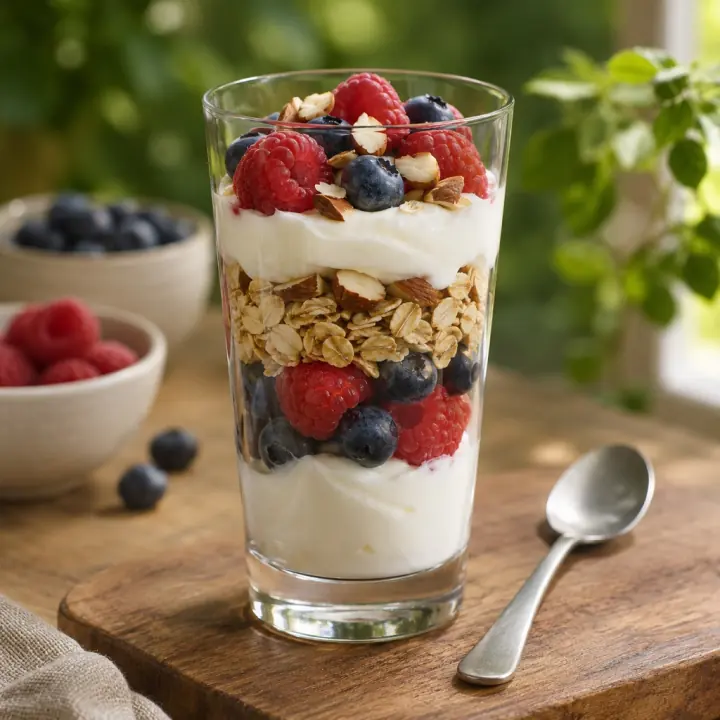
3. Greek yogurt parfait: about 23 grams
Layer a 6-ounce container of plain nonfat Greek yogurt with raspberries, a quarter cup of rolled oats and two tablespoons of sliced almonds. It takes two minutes and needs no cooking. Plain yogurt matters here: flavored versions can carry a lot of added sugar, and the 2025–2030 Dietary Guidelines suggest keeping any one meal to 10 grams of added sugars or less.
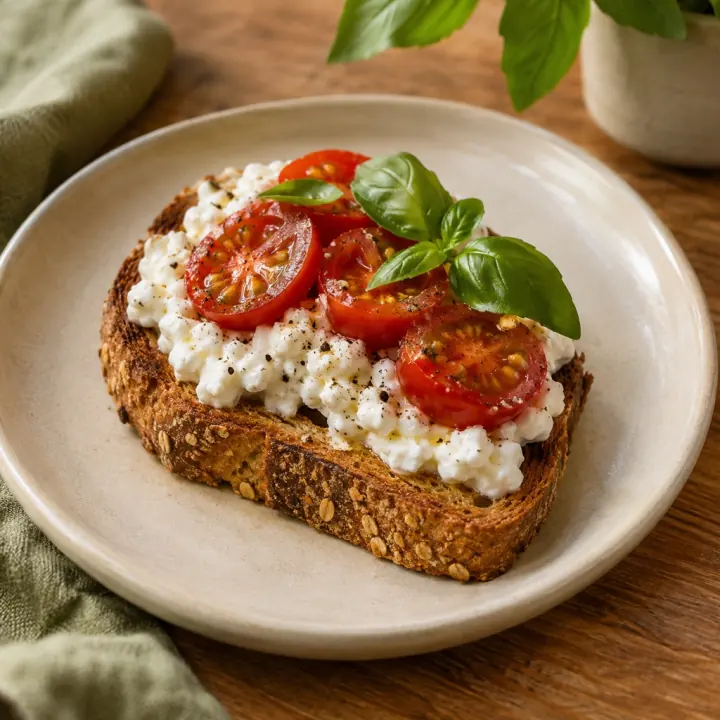
4. Cottage cheese toast: about 20 grams
Spread half a cup of low-fat cottage cheese over two slices of whole-wheat toast and top with sliced cherry tomatoes, black pepper and basil. For a sweet version, use sliced peaches or berries and a pinch of cinnamon instead.
5. Protein oatmeal: about 18 to 25 grams
Cook half a cup of oats in a cup of 2% milk instead of water, then stir in a tablespoon of peanut butter and top with half a sliced banana. That's about 18 grams. To reach about 25, whisk two egg whites into the oatmeal near the end and keep stirring over the heat for a minute or two, until they're fully cooked; they disappear into the oats and make them extra creamy.
6. Overnight oats with Greek yogurt: about 18 grams
If you'd rather not cook in the morning, our overnight oats recipe mixes oats, milk, Greek yogurt and chia seeds in a jar the night before, for about 18 grams of protein. Make four jars at once and you're covered for most of the week.
7. Tofu and black bean scramble: about 27 to 31 grams
This is the best high protein breakfast without eggs. Crumble half a cup of firm tofu into a hot pan with a little oil, add a quarter cup of black beans, diced red pepper and a handful of spinach, and season with cumin, turmeric and black pepper. Eat it from the bowl (about 27 grams) or wrap it in a whole-wheat tortilla (about 31 grams).
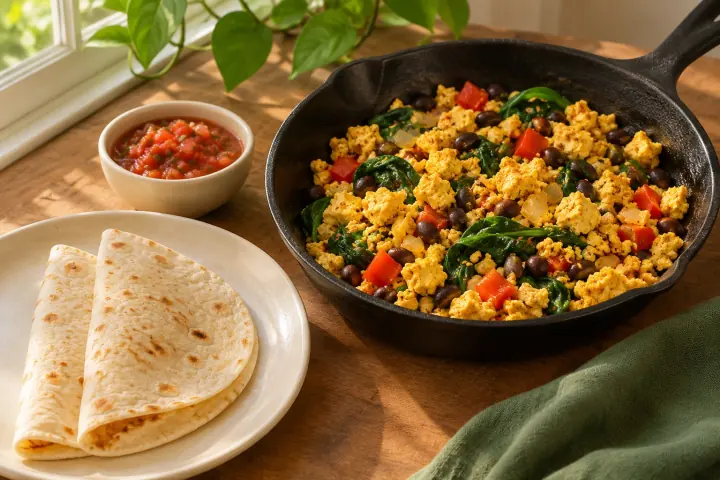
Check the tofu label. USDA's firm tofu entries differ a lot in protein depending on how the tofu is made, so your number may be higher or lower.
8. Smoked salmon toast: about 24 grams
Spread a tablespoon of cream cheese over two slices of whole-wheat toast and layer on 3 ounces of smoked salmon, with cucumber, red onion or capers if you like. It's quick and filling, but salty: the salmon alone has about 570 mg of sodium, and the whole plate about 900 mg. Save it for days when the rest of your meals are lighter on salt.
9. Egg and black bean breakfast burrito: about 27 grams
Scramble two eggs, then fold them into a whole-wheat tortilla with a quarter cup of black beans, an ounce of shredded cheddar and salsa. We chose whole-wheat tortillas on purpose: the Dietary Guidelines list flour tortillas among the refined carbohydrates to cut back on.
Burritos freeze well. Wrap each one tightly, freeze, and reheat in the microwave, turning once, until it's hot all the way through.
10. Berry protein smoothie: about 34 grams
Blend a cup of 2% milk, one scoop of whey protein powder, half a cup of blueberries and half a frozen banana. At about 34 grams, it's the highest-protein option here and works well on the go. Protein powders differ a lot by brand, so read the label for the protein per scoop and for added sweeteners. Prefer no powder? Swap it for half a cup of plain Greek yogurt and a tablespoon of peanut butter.
High protein breakfast foods
Any breakfast becomes high protein when it's built around one of these foods. Pair one big source, such as tofu, Greek yogurt, eggs or cottage cheese, with a smaller one, such as milk, nuts or whole-wheat toast.
| Food | Protein | Calories |
|---|---|---|
| Whey protein powder, 1 scoop (1/3 cup) | 25 g | 113 |
| Firm tofu, 1/2 cup | 22 g | 181 |
| Plain nonfat Greek yogurt, 6 oz | 17 g | 100 |
| Smoked salmon, 3 oz | 16 g | 99 |
| Turkey sausage, cooked, 2 oz | 14 g | 112 |
| Eggs, 2 large | 13 g | 143 |
| Low-fat (2%) cottage cheese, 1/2 cup | 12 g | 92 |
| 2% milk, 1 cup | 8 g | 122 |
| Black beans, cooked, 1/2 cup | 8 g | 114 |
| Egg whites, 2 large | 7 g | 34 |
| Peanut butter, 2 tbsp | 7 g | 191 |
| Cheddar cheese, 1 oz | 6 g | 114 |
| Almonds, 1 oz | 6 g | 164 |
| Rolled oats, 1/2 cup dry | 5 g | 153 |
| Chia seeds, 1 oz | 5 g | 138 |
| Whole-wheat bread, 1 slice | 4 g | 81 |
Values from USDA FoodData Central, rounded. Brands vary, especially for protein powder and tofu.
High protein breakfast for weight loss
First, an honest point: eating breakfast isn't a weight-loss strategy by itself. A 2019 meta-analysis in The BMJ of 13 trials found that people assigned to eat breakfast ate about 260 more calories a day and weighed slightly more (0.44 kg, about 1 pound) than those who skipped it. The trials were short and mostly low quality, but they don't support forcing down a morning meal you don't want.
If you do eat breakfast, making it protein-rich is a reasonable choice. A 2016 meta-analysis found that higher-protein meals raised fullness ratings more than lower-protein ones, under tightly controlled conditions. And in a 2012 meta-analysis of 24 trials with 1,063 people on reduced-calorie diets, higher-protein versions led to about 0.8 kg (under 2 pounds) more weight loss and helped people keep about 0.4 kg more lean mass over roughly 12 weeks.
- Lightest picks with the most protein: tofu scramble without the tortilla (255 calories, 27 g), cottage cheese scrambled eggs (275, 23 g), the Greek yogurt parfait (275, 23 g) and three egg muffins (290, 25 g).
- Watch the add-ons: granola, flavored yogurt, syrups and sweetened coffee drinks are where breakfast calories and added sugar pile up.
- Keep the fiber: berries, oats, beans and whole-wheat bread add fiber that helps the meal hold you over. Our high fiber foods chart has more ideas.
For the bigger picture on appetite and metabolism, see our guides to natural appetite suppressants and how to boost metabolism.
How to get 30 grams of protein at breakfast
The Dietary Guidelines for Americans, 2025–2030, set a goal of 1.2 to 1.6 grams of protein per kilogram of body weight a day and advise prioritizing protein foods at every meal. For a 150-pound adult (68 kg), that's about 82 to 109 grams a day, or roughly 27 to 36 grams per meal across three meals.
Two breakfasts here clear 30 grams on their own: the berry protein smoothie (34 g) and the tofu scramble in a tortilla (31 g). For the others, the easiest add-on is a cup of 2% milk, which brings about 8 grams: egg muffins plus milk reach about 33 grams, and the burrito plus milk about 35.
High protein breakfast without eggs
- Tofu and black bean scramble: about 27 to 31 grams, and plant-based if you skip dairy toppings.
- Berry protein smoothie: about 34 grams with whey.
- Greek yogurt parfait: about 23 grams.
- Cottage cheese toast: about 20 grams.
- Protein oatmeal or overnight oats: about 18 grams without egg whites.
Make-ahead high protein breakfasts
- Egg muffins: bake a batch of 12 and keep them covered in the fridge for the next few mornings.
- Breakfast burritos: wrap and freeze them individually, then microwave one before you leave.
- Overnight oats: mix four jars on Sunday night with our overnight oats recipe.
- Chia pudding: our chia seed pudding recipe is a fiber star but has only about 7 grams of protein per serving, so stir in Greek yogurt or have it next to eggs to make it a high protein breakfast.
- Parfait kits: portion yogurt into containers and keep the oats and nuts separate so they stay crunchy.
What to drink with a high protein breakfast
A cup of milk adds about 8 grams of protein. If coffee is non-negotiable, our protein coffee recipe turns it into about 29 grams of protein on its own, which can stand in for part of breakfast on rushed mornings.
Some readers also like a coffee add-in with their morning cup. If that's you, we've reviewed two, and their claims are the brands', not proven effects. Akemi Coffee Boost is a flavorless sachet you stir into coffee; the brand lists green tea extract, green coffee bean extract, L-carnitine and two fibers, with about 30 mg of caffeine per sachet. Slimqa is a powdered coffee blend taken once a day with a meal, with L-carnitine, green coffee extract and capsicum on the box. Neither adds protein, so they go next to a breakfast like the ones above, not in place of it.
Who should check before eating more protein
- People with chronic kidney disease. NIDDK notes that some people with CKD need to keep protein moderate so waste doesn't build up in the blood, so ask your care team for your target.
- People with diabetes who take insulin or other glucose-lowering medicine. Changing what you eat at breakfast can change your readings, so check with your care team before a big switch.
- Anyone with a food allergy to eggs, milk, soy, fish or nuts, which appear in several of these breakfasts.
- Children, teens and pregnant or breastfeeding women. Their protein needs differ, so ask a pediatrician, doctor or dietitian.
When to see a doctor
- You have chronic kidney disease, or a blood or urine test has shown a kidney problem, and you plan to raise your protein or use protein powder.
- You get hives, swelling of the lips or tongue, vomiting or trouble breathing after eating eggs, milk, soy, fish or nuts. Trouble breathing needs emergency care.
- You have ongoing bloating, gas or diarrhea after dairy breakfasts.
- You're losing or gaining weight without trying, or you feel unusually tired despite eating well.
- You're pregnant and want to know which breakfasts, smoked fish and protein powders are right for you.
Coffee add-ins we've reviewed
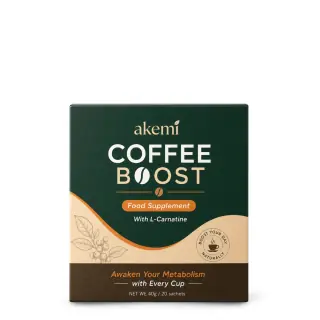
Akemi Coffee Boost review
Coffee drinkers who want a flavorless daily add-in alongside a balanced diet. From $1.11 a day.
Read the review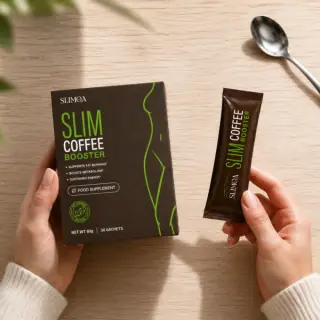
Slimqa Coffee Booster review
Coffee drinkers who want one simple daily habit alongside a balanced diet. From $0.67 a day.
Read the review
Hinuki review
People who'd rather chew a small jelly than swallow capsules and want a simple habit around meals. From $3.00 a day.
Read the review
FAQ
What is a good high protein breakfast?
One built around eggs, Greek yogurt, cottage cheese, tofu or a protein smoothie, with fruit or whole grains alongside. The 10 ideas above range from about 18 to 34 grams of protein.
How can I get 30 grams of protein for breakfast?
A smoothie with milk and a scoop of whey (about 34 g) or a tofu scramble in a whole-wheat tortilla (about 31 g) gets there alone. Or add a cup of milk, about 8 g, to three egg muffins.
Is a high protein breakfast good for weight loss?
It can help you feel full, and higher-protein diets led to slightly more weight loss in trials. But adding breakfast doesn't cause weight loss by itself, so total calories still matter.
What is a high protein breakfast without eggs?
A tofu and black bean scramble (about 27 to 31 g), a whey and berry smoothie (about 34 g), a Greek yogurt parfait (about 23 g) or cottage cheese toast (about 20 g).
How much protein is in 2 eggs?
About 13 grams for two large eggs, according to USDA FoodData Central. Stirring in 1/4 cup of cottage cheese adds about 6 grams more.
Can you meal prep a high protein breakfast?
Yes. Egg muffins, frozen breakfast burritos and overnight oats all keep well. Make them on the weekend and reheat or grab them in the morning.
Sources
- Dietary Guidelines for Americans, 2025–2030, USDA and HHS
- Effect of breakfast on weight and energy intake: systematic review and meta-analysis of randomised controlled trials, BMJ (2019), PubMed
- The Effects of Increased Protein Intake on Fullness: A Meta-Analysis and Its Limitations, J Acad Nutr Diet (2016), PubMed
- Effects of energy-restricted high-protein, low-fat compared with standard-protein, low-fat diets: a meta-analysis of randomized controlled trials, Am J Clin Nutr (2012), PubMed
- Healthy Eating for Adults with Chronic Kidney Disease, NIDDK
- Egg, whole, raw, fresh (FDC ID 171287), USDA FoodData Central
- Egg, white, raw, fresh (FDC ID 172183), USDA FoodData Central
- Cheese, cottage, lowfat, 2% milkfat (FDC ID 172182), USDA FoodData Central
- Cheese, feta (FDC ID 173420), USDA FoodData Central
- Spinach, raw (FDC ID 168462), USDA FoodData Central
- Peppers, sweet, red, raw (FDC ID 170108), USDA FoodData Central
- Yogurt, Greek, plain, nonfat (FDC ID 170894), USDA FoodData Central
- Milk, reduced fat, fluid, 2% milkfat (FDC ID 171267), USDA FoodData Central
- Bread, whole-wheat, commercially prepared (FDC ID 172688), USDA FoodData Central
- Cereals, oats, regular and quick, not fortified, dry (FDC ID 173904), USDA FoodData Central
- Peanut butter, smooth style, without salt (FDC ID 172470), USDA FoodData Central
- Bananas, raw (FDC ID 173944), USDA FoodData Central
- Raspberries, raw (FDC ID 167755), USDA FoodData Central
- Blueberries, raw (FDC ID 171711), USDA FoodData Central
- Nuts, almonds (FDC ID 170567), USDA FoodData Central
- Tomatoes, red, ripe, raw, year round average (FDC ID 170457), USDA FoodData Central
- Tofu, raw, firm, prepared with calcium sulfate (FDC ID 172475), USDA FoodData Central
- Beans, black, mature seeds, cooked, boiled, without salt (FDC ID 173735), USDA FoodData Central
- Tortillas, ready-to-bake or -fry, whole wheat (FDC ID 174081), USDA FoodData Central
- Fish, salmon, chinook, smoked (FDC ID 173687), USDA FoodData Central
- Cheese, cream (FDC ID 173418), USDA FoodData Central
- Cheese, cheddar (FDC ID 173414), USDA FoodData Central
- Beverages, Protein powder whey based (FDC ID 173180), USDA FoodData Central
- Sausage, turkey, fresh, cooked (FDC ID 173871), USDA FoodData Central
- Seeds, chia seeds, dried (FDC ID 170554), USDA FoodData Central
- Tofu, firm, prepared with calcium sulfate and magnesium chloride (nigari) (FDC ID 172448), USDA FoodData Central
This guide is general information, not medical advice. Talk to your doctor before making changes to your diet, sleep or exercise routine.