
Gut health
How to Get Rid of Bloating: What Causes It and What Actually Helps
To get rid of bloating, swallow less air (eat slowly, skip fizzy drinks, gum and straws), eat smaller meals, cut back on the foods that trigger your gas, and add fiber slowly with plenty of water. Everyday bloating usually passes on its own, but bloating that lasts more than a week or comes with pain, fever, vomiting, bleeding or weight loss is a reason to see a doctor.

How to get rid of bloating: the short answer
Bloating is that tight, full, pressured feeling in your belly, sometimes with a waistband that fits fine at breakfast and digs in by dinner. For most people it comes down to gas: air you swallow while eating and drinking, plus gas made in the large intestine when bacteria break down carbohydrates your small intestine didn't fully digest. NIDDK, part of the National Institutes of Health, names sugars, starches and fiber as those carbohydrates, including lactose and fructose.
That points straight to what works: take in less air, eat smaller meals, learn which foods set you off, and deal with constipation if it's part of the picture. Gas itself is normal. NIDDK says people pass gas 8 to 14 times a day on average, and up to 25 times a day is still considered normal.
What causes bloating?
The usual causes are ordinary, and several can stack up on the same day:
- Swallowed air. Eating or drinking fast, chewing gum, carbonated drinks, smoking and loose dentures all add air, according to NIDDK.
- Carbohydrates that reach the large intestine undigested. Beans, lentils, broccoli, cabbage, apples, pears, whole grains, dairy and sweeteners ending in "-ol" are common examples.
- Constipation. Cleveland Clinic lists it among the common causes of a bloated stomach.
- Large or high-fat meals. NIDDK notes that high-fat foods may increase bloating and suggests smaller, more frequent meals.
- Hormonal shifts. Cleveland Clinic links bloating to menstruation, pregnancy and perimenopause, through water retention and effects on how the gut moves.
- Digestive conditions. NIDDK lists irritable bowel syndrome (IBS), lactose intolerance, small intestinal bacterial overgrowth (SIBO), celiac disease, reflux and gastroparesis among the conditions that increase gas symptoms.
- Sitting a lot and some medicines. Cleveland Clinic lists inactivity, medication side effects and medicines that cause constipation.
Less often, bloating is a sign of something serious. NIDDK notes that a blockage in the digestive tract, which colorectal, ovarian or stomach cancer can cause, also produces gas symptoms. That's why the warning signs at the end of this guide matter.
Why am I so bloated?
If you're asking this at 9 p.m. with your jeans unbuttoned, look back at the day. A few patterns explain a lot of it:
- You ate fast, at your desk or in the car, and swallowed more air than usual.
- You had sparkling water, soda or beer with dinner, or chewed gum all afternoon.
- You ate a big serving of beans or cruciferous vegetables, especially if you don't usually eat them.
- You started eating a lot more fiber, or a new fiber supplement, all at once. MedlinePlus notes that a large amount of fiber in a short time can cause gas, bloating and cramps.
- You had "sugar-free" candy, gum or snacks sweetened with sorbitol, xylitol, erythritol or maltitol.
- You haven't had a bowel movement in a couple of days.
- Milk or ice cream tends to bother you, which can point to lactose intolerance.
- Your period is due.
How to debloat: 8 habits that help most people
These are the changes NIDDK and Cleveland Clinic recommend first. None of them needs a product, and you can start most of them at your next meal.

- Slow down at meals. Sit down to eat when you can and chew well. NIDDK lists eating slowly and not talking while you eat among the habits that cut swallowed air.
- Skip the air sources: fizzy drinks, straws, chewing gum and hard candy. Still water is the easy swap.
- Eat smaller meals, more often, instead of one very large dinner.
- Keep a simple food-and-symptom diary for a week or two: what you ate, and when bloating hit. NIDDK says a diary like this helps you and your doctor or dietitian spot the foods behind your symptoms.
- Read labels for sweeteners ending in "-ol" (sorbitol, mannitol, xylitol, erythritol, maltitol) and go easy on them.
- If dairy is a trigger, try smaller portions or a lactase product, which NIDDK says can help with lactose intolerance. Plain yogurt is often easier: a systematic review found that yogurt improves lactose digestion.
- Move every day. Cleveland Clinic recommends regular activity such as walking and avoiding long stretches of sitting. An easy walk after dinner is a simple way to fit it in.
- Cut back on salt, as Cleveland Clinic suggests, and if constipation is part of it, add fiber gradually with plenty of water (more on that below).
How to get rid of bloating fast
There's no switch that flattens a bloated belly in minutes. When it hits, the goal is to help the gas move along and not add more:
- Get up and walk instead of lying down on the couch.
- Sip still water or a cup of peppermint tea instead of anything carbonated.
- Skip gum, hard candy and drinking through a straw for the rest of the day.
- If constipation is behind it, plan your fiber, fluids and movement for the next few days rather than hunting for a quick fix.
- Ask a pharmacist about over-the-counter options. Cleveland Clinic lists antacids, magnesium supplements, probiotics, psyllium husk and laxatives among them, and NIDDK says your doctor may recommend an over-the-counter medicine.
Foods that cause bloating, and what to try instead
No food dissolves gas once it's there. What helps is knowing the common triggers and having gentler ways to keep eating well. This is NIDDK's list of foods and drinks that may cause gas, with practical swaps.
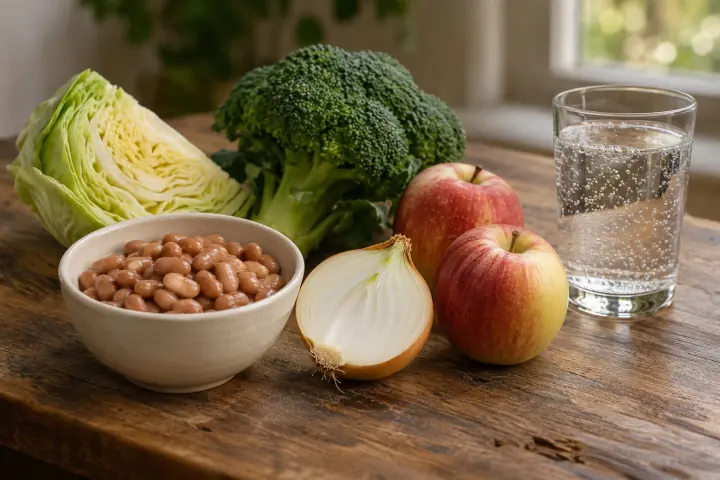
| Food group | Common triggers | What to try |
|---|---|---|
| Vegetables | Broccoli, cauliflower, cabbage, collard greens, kale; beans, peas and lentils | Smaller portions, increased over a few weeks so gut bacteria can adjust |
| Fruits | Apples, peaches, pears and fruit juices | Smaller servings, and track which ones bother you |
| Whole grains | Whole wheat and other whole grains | Keep them for the fiber, but build up slowly |
| Dairy | Milk, ice cream and yogurt | A lactase product, or plain yogurt, which many people digest more easily than milk |
| Sugar alcohols | Sugar-free candy, gum and snacks with sorbitol, mannitol, xylitol, erythritol or maltitol | Check labels and limit them |
| Drinks | Fizzy drinks, plus juices, sodas, sports and energy drinks with high-fructose corn syrup | Still water or a caffeine-free herbal tea |
| Rich meals | High-fat foods | Smaller, lighter meals spread through the day |
Triggers from NIDDK's guidance on eating and gas. Fiber advice from MedlinePlus; yogurt and lactose from a systematic review in Nutrition Reviews (2021).
Notice that many triggers are healthy foods. Beans, whole grains and fruit are some of the best high fiber foods, so the aim is to find your own amount, not to drop them. If you have IBS, NIDDK says your doctor may suggest trying a low-FODMAP diet for a few weeks; FODMAPs are carbohydrates that are hard to digest.
Do probiotics help with bloating?
They may, for some people, and the evidence is strongest in IBS. The NIH Office of Dietary Supplements summarizes the meta-analyses: in one that pooled 23 trials and 2,575 people with IBS, probiotics cut the chance that symptoms persisted by 21%, with benefits on bloating and flatulence scores, although the studies were low quality. In another, flatulence fell with all the probiotics tested, and abdominal distension improved with products containing Bifidobacterium breve, B. infantis, Lactobacillus casei or L. plantarum.
Effects depend on the strain, so one product's results don't carry over to another. NCCIH says probiotics have a long record of apparently safe use in healthy people, with more risk for people who are seriously ill or have weakened immune systems. Cleveland Clinic adds that a new probiotic can itself cause a few days of extra gas and bloating.
Fermented foods are the food route. A 2025 meta-analysis of trials in healthy adults found that eating them improved bowel movement frequency, stool consistency and gut symptoms, bloating included, but the certainty of the evidence was mostly low. Our guide to probiotic foods covers which ones contain live cultures.
If you'd rather take a capsule, we reviewed two. Bioma pairs three Bifidobacterium strains, among them B. breve and B. longum, with a prebiotic fiber and tributyrin. Naori combines a 120-billion-CFU probiotic blend with prebiotic fiber and 13 digestive enzymes that, according to the brand, target bloating after meals. Neither formula has been tested in an independent trial, so treat them as something to try, not a treatment.
Does peppermint tea help with bloating?
Peppermint is the herbal option with the most research behind it, but that research is on peppermint oil, not tea. NCCIH says a small amount of research suggests enteric-coated peppermint oil capsules may improve IBS symptoms in adults. A 2022 review found the oil beat placebo for overall IBS symptoms and belly pain, with more side effects, mostly mild reflux and indigestion.
Peppermint tea appears to be safe, according to NCCIH, and a warm, caffeine-free cup is a pleasant swap for a fizzy drink. Just don't expect it to act like the capsules studied in IBS. If you take regular medicines, NCCIH advises checking with your health care provider before adding an herbal product such as peppermint oil.

Can fiber help with bloating, or make it worse?
Both, depending on how you add it. When bloating comes with constipation, fiber is part of the fix. A 2022 meta-analysis of 16 trials found fiber supplements helped adults with chronic constipation, with psyllium showing a clear effect, especially above 10 grams a day for at least four weeks. The same analysis found more flatulence in the fiber groups.
The way around that is pace. MedlinePlus advises adding fiber over a few weeks and drinking plenty of fluids, and says the gas from a sudden jump often fades as your gut bacteria adjust. Our psyllium husk guide covers how to take it safely. If you'd rather take psyllium as a flavored drink, we reviewed ColonBroom, which has 3.6 grams of psyllium per scoop; the brand itself suggests one scoop a day in the first week because some people feel bloated while they adjust.
How long does bloating last?
It depends on the cause. Bloating after a big or gassy meal usually eases as the gas moves through, and Cleveland Clinic says most cases resolve with home care. Bloating from a new habit tends to settle as your gut adjusts: Cleveland Clinic says the extra gas from a new probiotic should resolve within a few days, and MedlinePlus says gas from added fiber often fades as gut bacteria adapt.
Bloating that comes and goes with your period follows your cycle. Bloating that lasts more than a week, keeps coming back without a clear reason or gets worse is a reason to see a doctor.
When to see a doctor about bloating
NIDDK says to see a doctor if gas symptoms bother you, change suddenly, or come with belly pain, constipation, diarrhea or weight loss. Cleveland Clinic adds bloating that lasts more than a week or is very painful. Get care promptly if bloating comes with any of these:
- Fever, vomiting or bleeding, including blood in your stool
- Weight loss you can't explain, or weakness
- Constant belly pain, or being unable to pass gas
- Bloating, pelvic or belly pain, or feeling full too quickly that lasts 2 weeks or longer and isn't normal for you. The CDC lists these among the symptoms of ovarian cancer.
If you're pregnant, have a chronic digestive condition or take regular medicines, talk to your doctor before trying supplements. NIDDK specifically advises checking with your doctor before using probiotics or other supplements for gas.
Gut health products we've reviewed

Bioma review
Adults who want a simple, stimulant-free daily probiotic for digestive comfort and regularity. From $0.88 a day.
Read the review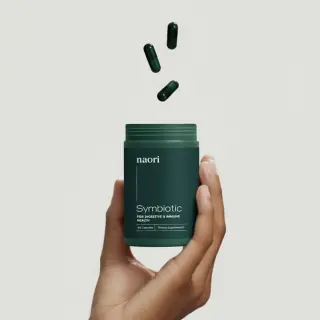
Naori review
Adults who want probiotics, prebiotic fiber and digestive enzymes in one capsule. From $0.87 a day.
Read the review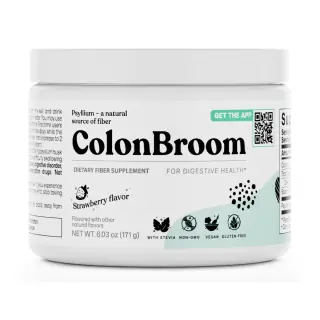
ColonBroom review
Adults who want an easy, tasty way to add psyllium fiber for regularity and fewer bloated days. From $0.93 a day.
Read the review
FAQ
How do you get rid of bloating fast?
Take an easy walk, sip still water or peppermint tea, and skip fizzy drinks, gum and straws for the rest of the day. There's no instant fix: most bloating eases as the gas moves through.
What helps with bloating?
Eating slowly, smaller meals, fewer fizzy drinks and sugar alcohols, daily activity, and adding fiber gradually with water. A food diary helps you find your own triggers. Probiotics and peppermint oil have some evidence, mostly in people with IBS.
Why is my stomach bloated and hard?
Usually trapped gas or constipation. A hard, swollen belly with constant pain, vomiting, fever, or no gas or bowel movements needs prompt medical care.
Can constipation cause bloating?
Yes. Cleveland Clinic lists constipation among the common causes of a bloated stomach. Fiber, fluids and activity help, and fiber should go up slowly so it doesn't add gas of its own.
What drink is good for bloating?
Still water or a warm, caffeine-free tea such as peppermint, which NCCIH says appears to be safe. Skip carbonated drinks and drinks sweetened with high-fructose corn syrup, which NIDDK lists as possible gas triggers.
Is bloating a sign of something serious?
Usually not. But see a doctor if it lasts more than a week, keeps getting worse, or comes with bleeding, weight loss, vomiting or fever. The CDC lists bloating that lasts 2 weeks or longer and isn't normal for you among the symptoms of ovarian cancer.
Sources
- Symptoms and Causes of Gas in the Digestive Tract, NIDDK
- Treatment for Gas in the Digestive Tract, NIDDK
- Eating, Diet and Nutrition for Gas in the Digestive Tract, NIDDK
- Symptoms and Causes of Constipation, NIDDK
- Bloated Stomach, Cleveland Clinic
- Dietary fiber, MedlinePlus
- Peppermint Oil, NCCIH
- Probiotics: Usefulness and Safety, NCCIH
- Probiotics: Fact Sheet for Health Professionals, NIH Office of Dietary Supplements
- Probiotics, Cleveland Clinic
- Symptoms of Ovarian Cancer, CDC
- Impact of fermented foods consumption on gastrointestinal wellbeing in healthy adults: a systematic review and meta-analysis, Front Nutr (2025), PubMed
- The Effect of Fiber Supplementation on Chronic Constipation in Adults: an updated systematic review and meta-analysis, Am J Clin Nutr (2022), PubMed
- Yogurt, cultured fermented milk, and health: a systematic review, Nutr Rev (2021), PubMed
This guide is general information, not medical advice. Talk to your doctor before making changes to your diet, sleep or exercise routine.