
Pest control
How to Get Rid of Roaches: Baits, Sealing and Cleanup That Work
To get rid of roaches, cut off their food and water, seal the cracks they hide in, find the hot spots with sticky traps and put cockroach bait right where they live. Expect results in weeks, not hours, and skip bug bombs, which often miss the roaches and add real risks.
German cockroach, American cockroach or palmetto bug? Know your roach
The right plan depends on the species. Small roaches in a kitchen or bathroom are usually German cockroaches, which live and breed indoors. Big ones that wander in are usually American or oriental cockroaches, which mostly live outside and in drains, according to UC IPM, the University of California's pest program.
| Cockroach | Size and look | Where you find it |
|---|---|---|
| German | 1/2 to 5/8 inch, light brown, two dark stripes behind the head | Indoors only, mostly kitchens and bathrooms |
| American (palmetto bug) | 1 1/2 to 2 inches, reddish brown | Sewers, drains and basements; wanders in from outside |
| Oriental (water bug) | About 1 to 1 1/4 inches, shiny black to dark reddish brown | Cool, damp places such as basements, garages and drains |
| Brownbanded | About 1/2 inch, with light bands | Warm spots: behind pictures, inside appliances and furniture |
Based on UC IPM, Penn State Extension and Rutgers Cooperative Extension.
German cockroaches are the hard ones because of how fast they multiply. Each egg case holds 30 to 48 eggs and a female makes 4 to 8 of them in her life, according to Penn State Extension. Rutgers puts the whole cycle, egg to egg-laying adult, at about 100 days, and UC IPM estimates that one female and her offspring can produce over 30,000 roaches in a year.
Signs of roaches: droppings, egg cases and smell
Roaches hide during the day, so look for what they leave behind, ideally with a flashlight after dark. UC IPM lists dark specks or smears of droppings, shed skins, egg cases and live or dead roaches, often under counters, behind drawers and at the back of cabinets.
- Roach droppings are 1/8 to 1/4 inch long. Under a magnifying glass they show ridges along their length and squared-off ends, while mouse droppings are smooth with rounded ends, according to University of Arkansas Extension.
- Roach eggs come in a purse-shaped case, which German cockroach females carry with them (Penn State). Brownbanded females glue theirs under furniture and inside appliances and boxes (UC IPM).
- A heavy German cockroach population leaves a characteristic unpleasant odor (Penn State).
- Seeing German cockroaches in daylight usually means a severe infestation, according to Rutgers.
Where do roaches come from?
German cockroaches usually ride in. Penn State Extension says it's hard to keep them from arriving in boxes, grocery bags, suitcases and the like. Once inside, NPIC, the National Pesticide Information Center, notes they travel and hide along pipes and in wall voids, under sinks and appliances. American cockroaches tend to crawl in from outside or come up through sewers and drains, according to Penn State.
Whatever brought them, they stay for food, water and tight places to hide. UC IPM says an adult German cockroach can fit into a crack 1/16 inch wide.
How to get rid of cockroaches in the house, step by step
University extension programs recommend the same plan, often called integrated pest management: make the home hard to live in first, then put bait exactly where the roaches are. The steps below work for German roaches and most others.
- Set sticky traps to find the hot spots.
- Clean the kitchen every night: no dishes in the sink, counters wiped, garbage out.
- Cut off water. Fix drips, dry the sink and put pet water away overnight.
- Vacuum roaches, egg cases and droppings out of cracks and from under appliances.
- Seal cracks and crevices with caulk, especially around pipes and cabinets.
- Put gel bait or bait stations next to hiding spots, never out in the open.
- Check the traps every week. If counts don't fall, move the bait, add more or switch products.
Be patient. UC IPM says baits are slow-acting and results may take 7 days or longer, and boric acid is similar. That's normal, and it's no reason to reach for a spray.
Roach traps: use sticky traps to find where they hide
Sticky traps, also called glue traps, won't wipe out an infestation, but they show you where to aim. UC IPM suggests placing them where floors meet walls, in corners, behind large appliances, inside cabinets and near any activity, numbering each one and checking them daily for several days. Many roaches are caught in the first 24 hours. Penn State suggests ten or more spots over a week.
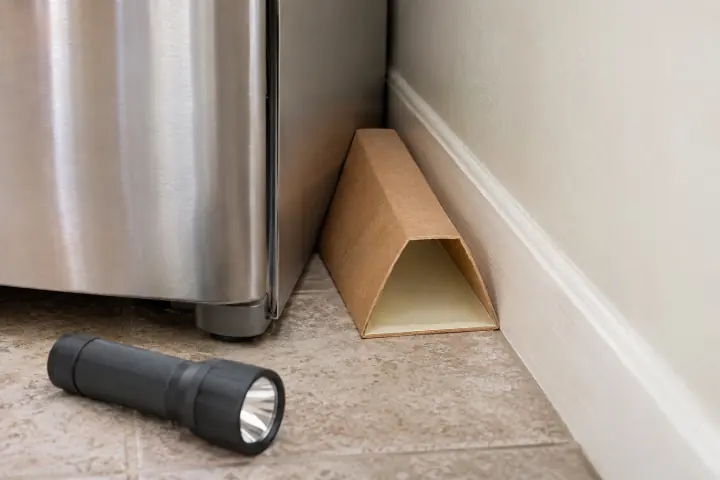
- The traps that catch the most mark the hot spots for bait, cleaning and caulk.
- Keep a simple count before and after treatment so you know whether it's working (UC IPM).
- Throw full traps away in a sealed plastic bag (UC IPM).
- Place them where children and pets won't touch them.
Roach bait and gel: the roach killer that works best
Baits are the main pesticide tool for cockroaches, according to UC IPM. They come as gels, pastes, granules and prefilled stations, and stations keep the insecticide enclosed and keep working for many months. Rutgers says gel baits and bait stations can be used very effectively against German cockroaches.
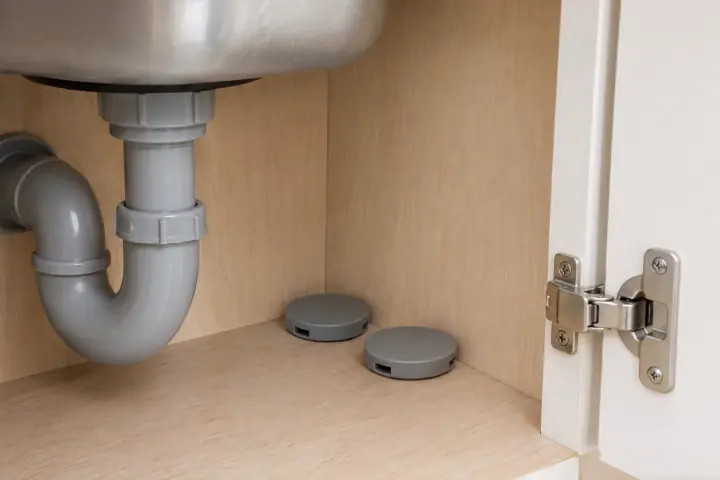
- Put bait right next to hiding spots, because baits don't attract roaches from far away: under appliances, along walls, inside cabinets and beside droppings (UC IPM).
- Apply gel in small dabs in cracks and crevices, and add fresh gel as it hardens (UC IPM).
- Take away competing food. Baits work better in a clean kitchen (UC IPM).
- Don't spray insecticide around bait. Sprays can repel roaches and push them into other areas (UC IPM).
- If roaches keep coming, move the stations, add more bait or try a different product. NPIC notes some roaches avoid certain baits, and resistance is a reason to switch active ingredients.
- Keep baits where children and pets can't reach them (Rutgers), and follow the label.
Boric acid for roaches, and diatomaceous earth
Boric acid is slow but long-lasting. UC IPM describes it as a contact and stomach insecticide that doesn't repel roaches and stays effective for a long time if it stays dry, often taking 7 days or more to affect a population. NPIC says it disrupts insects' stomachs and can scratch their outer layer.
- Choose a product labeled for cockroaches and follow its directions.
- Apply a thin, barely visible film in cracks, voids and under appliances, never piles. UC IPM says thick layers cake, and Penn State warns heavy deposits may repel roaches.
- Put it only where people and pets won't touch it. Many boric acid products must be applied out of children's reach, NPIC notes.
- If it gets wet, it stops working and has to be cleaned up and reapplied (UC IPM).
- Don't use it outdoors around plants, which it can harm (UC IPM).
NPIC rates boric acid as low in toxicity to people, but swallowing it can cause nausea, vomiting, stomach ache and diarrhea, and in pets signs can start within 2 hours. Children may be more sensitive to pesticides than adults.
Diatomaceous earth and silica aerogel are drying dusts. UC IPM says they work when applied to voids and out-of-the-way places, and Penn State notes boric acid or diatomaceous earth can be puffed into wall voids for long-term control.
What kills roaches instantly? Why sprays and bug bombs fall short
A spray kills the roach you see, which is why it feels like it works. UC IPM says sprays give quick, temporary knockdown but no long-term control, can scatter roaches to other areas, and that cockroaches have become resistant to many common sprays. Rutgers says most over-the-counter sprays and aerosols aren't effective and that total release aerosols, or bug bombs, are not effective and should be avoided.
Bug bombs also bring real hazards: UC IPM notes they often miss the hiding spots and can be dangerous because they're flammable. If you ever use one, EPA says to place it at least 6 feet from ignition sources such as pilot lights, never use more than needed, never set one off in a closet, cabinet or under a counter, and have everyone, pets included, leave for the time on the label, usually 2 to 4 hours. For anyone with asthma, CDC advises avoiding sprays and foggers altogether.
Want something that works right away? Use a vacuum. It removes roaches, shed skins and egg cases on the spot (UC IPM).
What attracts roaches, and how to keep them away
Roaches come for food, water and shelter. NPIC notes that they can chew through paper, cardboard and thin plastic packaging, and that cracks 3/8 inch or smaller make ideal hiding spots.
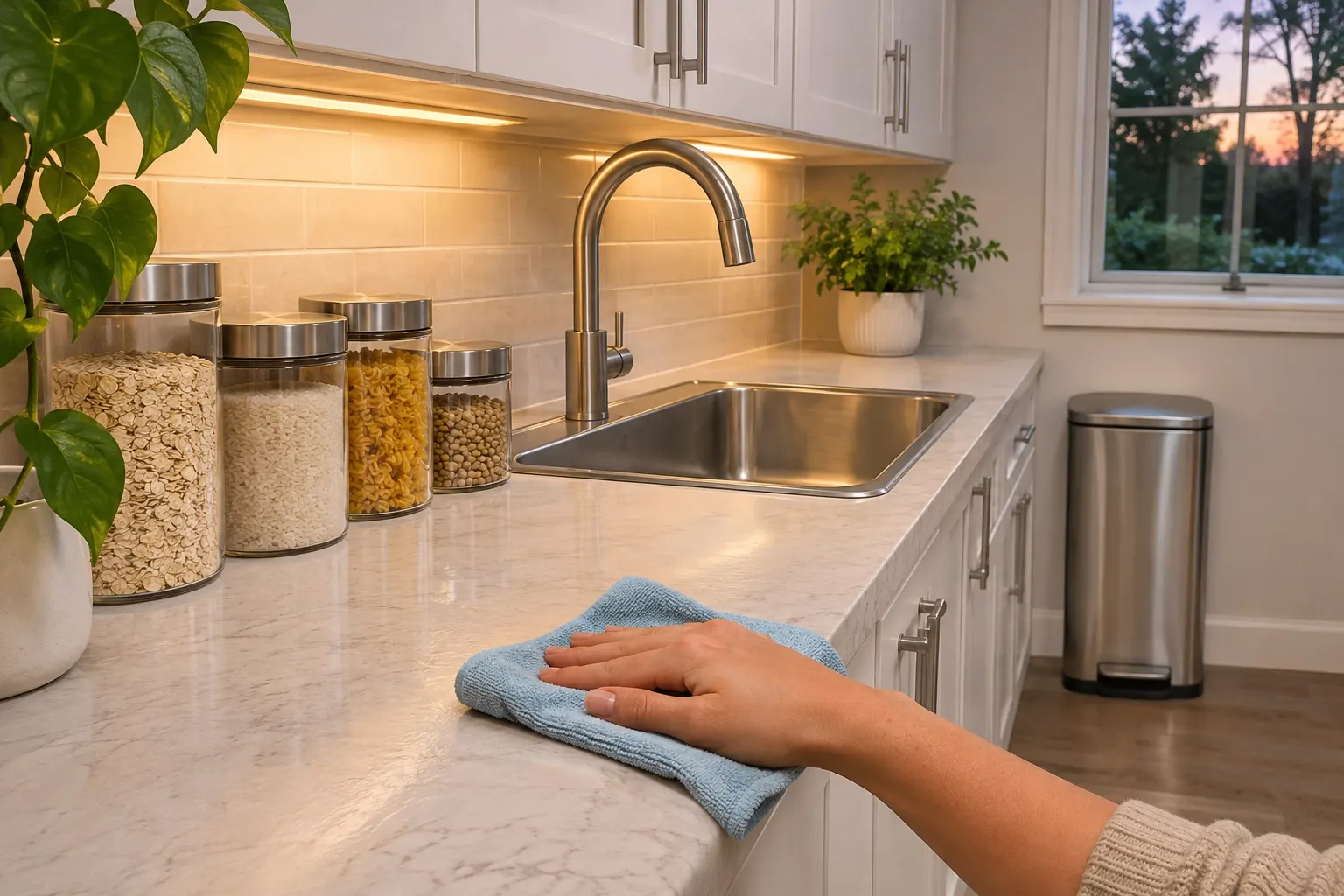
- Clean the kitchen and sink every night and don't leave dirty dishes out overnight (NPIC, Penn State).
- Store food in glass jars or sealed hard containers (UC IPM), and put pet food and water away at night (NPIC).
- Empty garbage and recycling often, and keep trash in a can with a tight lid.
- Fix leaky pipes and faucets and don't let water collect anywhere (EPA).
- Clear out piles of newspapers, paper bags, rags and boxes (UC IPM).
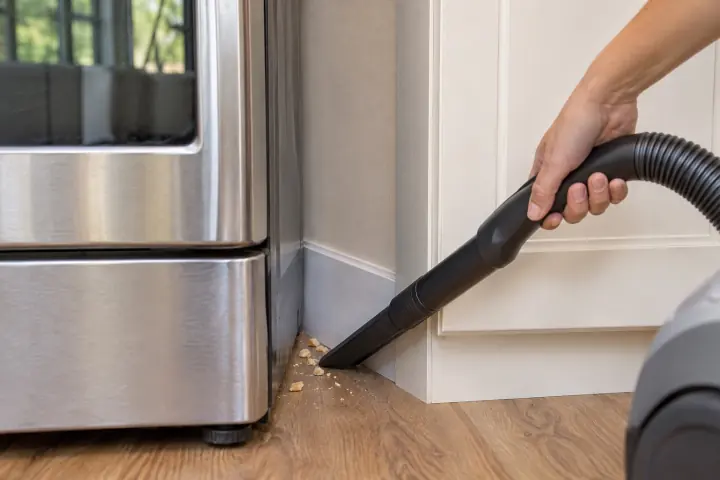
- Vacuum cracks and the gaps around appliances at least weekly (NPIC), using a vacuum with a HEPA or triple filter, since shed skins and droppings can trigger allergies when they get into the air (UC IPM). Seal the bag or contents right away.
- Cover floor drains with screen and keep water in the drain traps (Penn State).
Seal the cracks they hide in
EPA and CDC both list sealing as a core step: around and inside cabinets, along baseboards and around plumbing. NPIC suggests silicone caulk, screening or copper mesh, and Penn State recommends caulking holes where pipes pass through walls.
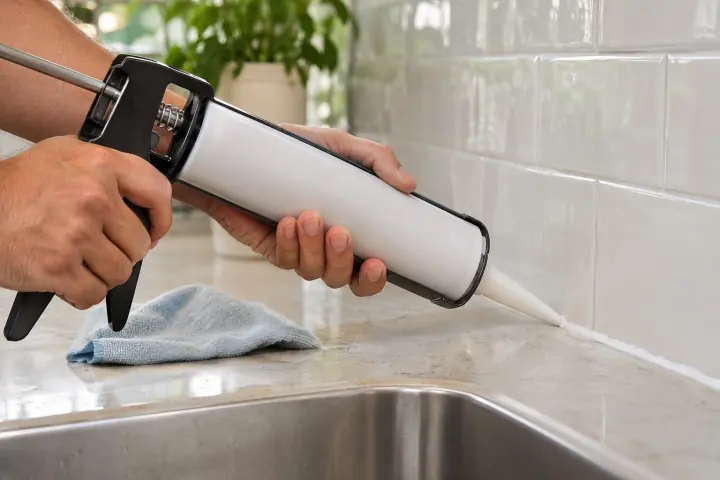
- Caulk the joints where backsplashes meet countertops and along baseboards.
- Seal gaps where pipes enter the wall under sinks and behind the toilet and washer.
- Add door sweeps and weather stripping to exterior doors (UC IPM).
- Check grocery boxes and items from storage before bringing them in (UC IPM).
Do ultrasonic pest repellers work on roaches?
The research on plug-in sound devices is mostly negative for roaches. A University of Arizona Cooperative Extension review describes a study of nine devices in which German cockroaches entered rooms with and without sound in equal numbers, along with other studies that found no response, and concludes that commercial devices haven't been shown to work in homes. On the other side, a 2023 laboratory study found German cockroaches avoided certain ultrasonic frequencies, most strongly 35 and 40 kHz, inside a glass test chamber, though a signal generator in a lab isn't a plug-in unit in a kitchen. EPA treats repellers as devices, so makers don't submit efficacy data before selling them.
If you'd like to add one anyway, on top of baits, sealing and cleanup, we reviewed two. The Repellio Ultrasonic Pest Repeller lists cockroaches among its targets; the brand rates it for up to 120 sq ft, about one room, and its own chart describes 3 to 4 weeks for full results. PestPulse is sold for insects and rodents, and the brand says it shifts its frequency pattern over time so pests don't get used to it, with up to 900 sq ft per unit. Neither brand publishes independent tests.
Plug one in low on the wall in the room with the most activity, with nothing in front of it, and judge it by your sticky-trap counts rather than by feel. If the counts don't drop, the bait and cleanup are still doing the real work.
Are roaches dangerous? Allergies, asthma and germs
Roaches don't generally bite people, NPIC says. The bigger problem is what they leave in the air. EPA says proteins in cockroach droppings and saliva can cause allergic reactions or trigger asthma symptoms, and that cockroach allergens likely play a significant role in asthma in many urban areas. UC IPM links indoor infestations to childhood asthma, especially in apartment buildings, and Penn State lists skin rashes, watery eyes and sneezing among the reactions.
They can carry germs too. Penn State says German cockroaches can carry organisms that cause gastroenteritis, and UC IPM notes that American cockroaches can carry Salmonella and Shigella.
When to call a professional
UC IPM recommends a licensed pest control professional for serious infestations. It's time to call one when:
- Sticky traps still catch roaches after several weeks of baiting and cleanup.
- You see roaches in daylight, which Rutgers says usually signals a severe infestation.
- Big outdoor roaches keep coming in from drains, crawl spaces or the yard; UC IPM says high numbers of American, oriental or Turkestan cockroaches may need their hiding places treated.
- You live in an apartment. Tell the landlord or manager early, since sprays can push roaches into neighboring units, as NPIC notes.
- Someone at home has asthma or allergies and you'd rather not handle dusts and baits yourself.
EPA suggests hiring a company with a certified, licensed applicator (your state department of agriculture can confirm it), asking for references and the labels of any pesticides they'll use, and getting several estimates.
A health note: if wheezing, coughing or allergy symptoms get worse at home, see your doctor. Call 911 for trouble breathing. If anyone swallows bait, boric acid or another pesticide, call Poison Control at 1-800-222-1222; the call is free and confidential.
Ultrasonic pest repellers we've reviewed
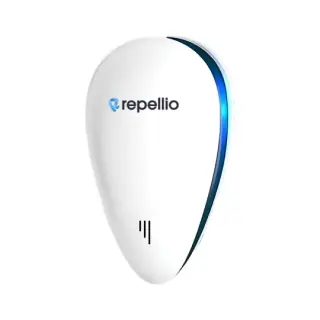
Repellio Ultrasonic Pest Repeller review
Small spaces and single problem rooms, like a dorm, an apartment kitchen or a garage, where you want a chemical-free unit you can plug in and move around. From $20.00.
Read the review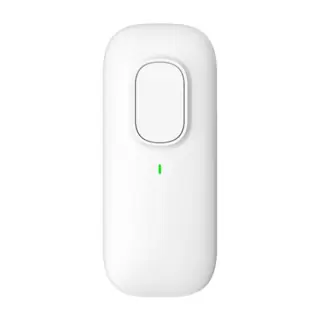
PestPulse review
Renters and families who want a no-chemical, plug-and-forget extra layer against insects and mice in kitchens, garages and basements. From $19.50.
Read the review
FAQ
Do roaches bite?
Rarely. NPIC says cockroaches don't generally bite people. The real concern is their shed skins and droppings, which can trigger allergies and make asthma worse.
How long do roaches live?
An adult female German cockroach lives about 20 to 30 weeks, according to Penn State Extension, and Rutgers puts the full cycle from egg to egg-laying adult at about 100 days.
How do I get rid of roaches fast?
Vacuum the roaches, egg cases and droppings you can reach today, then start the slower steps that end an infestation: cleanup, sealing and bait. UC IPM says baits may take 7 days or longer, and sprays only give temporary knockdown.
Does boric acid kill roaches?
Yes, slowly. UC IPM says it often takes 7 days or more to affect a population and lasts if it stays dry. Use a product labeled for cockroaches, apply a thin film in cracks and voids, and keep it away from children and pets.
How do I get rid of roaches in an apartment?
Use the same steps, cleanup, caulk, sticky traps and bait, and tell your landlord or manager early. Avoid sprays and bug bombs; NPIC notes that some pesticides repel roaches and can push them into other units.
What attracts roaches?
Food, water and tight hiding spots: crumbs, dirty dishes, pet food left out, leaky pipes, and clutter such as paper bags and cardboard. Remove those and baits work better.
Sources
- Pest Notes: Cockroaches, UC IPM, University of California Agriculture and Natural Resources
- German Cockroaches, Penn State Extension
- Common Urban Pests: Identification, Prevention, and Control, Penn State Extension
- Cockroach Species in New Jersey and Their Control Strategies, FS1327, Rutgers Cooperative Extension
- Controlling Mice and Rats, MP546 (cockroach vs. mouse droppings), University of Arkansas Cooperative Extension Service
- Cockroaches, National Pesticide Information Center (Oregon State University and EPA)
- Boric Acid General Fact Sheet, National Pesticide Information Center
- Do's and Don'ts of Pest Control, U.S. Environmental Protection Agency
- Safety Precautions for Total Release Foggers, U.S. Environmental Protection Agency
- Asthma Triggers: Gain Control (cockroaches and pests), U.S. Environmental Protection Agency
- Common Asthma Triggers, Centers for Disease Control and Prevention
- Sonic Pest Repellents, AZ1639, University of Arizona Cooperative Extension
- Evaluation of Repellency and Lethal Effects of Ultrasonic Waves on the Blattella germanica, J Arthropod Borne Dis (2023), PubMed
- Pesticide Devices: A Guide for Consumers, U.S. Environmental Protection Agency
- Tips for Selecting a Pest Control Service, U.S. Environmental Protection Agency
- Poison Control (National Capital Poison Center)
This guide is general information. Read and follow the label of any insecticide, bait, dust or trap, keep baits, boric acid and sticky traps out of reach of children and pets, and call a licensed pest professional for a large or lasting infestation. If anyone swallows a pesticide, call Poison Control at 1-800-222-1222.