
Teeth
How to Whiten Teeth at Home: Safe Options, Natural Tips and What Dentists Advise
The short answer to how to whiten teeth at home is a peroxide product made for teeth, such as whitening strips or a tray gel, ideally with the ADA Seal, plus a whitening toothpaste for surface stains. Expect some temporary sensitivity, skip the acidic and abrasive kitchen tricks, and check with a dentist first, because not every stain responds to bleaching.
Why teeth turn yellow
Knowing why your teeth changed color tells you whether home whitening can help. The American Dental Association (ADA) splits stains into two kinds. Extrinsic stains build up on the surface of the enamel, from pigmented food and drink or tobacco. Intrinsic stains sit inside the tooth, from causes such as aging, too much fluoride while teeth were forming, or a tetracycline antibiotic in childhood, and the ADA calls removing stains deep in the dentin near impossible with external whitening.
The ADA's consumer site, MouthHealthy, lists the usual culprits:

- Coffee, tea and red wine, whose pigments cling to enamel
- Tobacco: tar is dark, and nicotine turns yellow once it mixes with oxygen
- Age: enamel thins over the years and more of the yellowish dentin underneath shows through
- An injury, after which a tooth may lay down extra dentin and darken
- Certain medicines, including some antihistamines, antipsychotics and blood pressure drugs, plus chemotherapy and head and neck radiation
MouthHealthy adds that yellow teeth usually bleach well, brown teeth respond less, and teeth with gray tones may not bleach at all. Whitening won't change the color of caps, veneers, crowns or fillings, or discoloration caused by medicines or an injury.
How to whiten teeth at home: your options compared
Bleaching products contain one of two ingredients: hydrogen peroxide or carbamide peroxide, which breaks down into hydrogen peroxide. They break stains into smaller pieces so the color is less concentrated. Whitening toothpastes mostly polish stains off the surface instead. Here's how the at-home choices compare:
| Option | How it works | What the evidence shows |
|---|---|---|
| Whitening toothpaste | Mild abrasives and polishing agents remove surface stains; some add a little peroxide. | A 2025 meta-analysis of 14 trials found less stain area and intensity than regular toothpaste. It doesn't change your teeth's natural color. |
| Whitening strips and paint-on gels | A thin layer of peroxide gel worn on the teeth, at lower strengths than a dentist uses. | Reviews of 71 and 37 trials found they whiten better than placebo in the short term, with low-certainty evidence. |
| Trays from your dentist | Custom trays with 10% to 38% carbamide peroxide, worn 2 to 10 hours a day for 6 to 28 days. | Effective; sensitivity is more common at higher strengths. |
| LED light kits | A gel plus a blue light in a mouthpiece. | A 2026 review of 10 systematic reviews found adding light didn't improve the final shade; the gel does the work. |
| Peroxide-free gels and pens | Polishing agents, stain-loosening salts or color correctors instead of bleach. | A 2025 review found a smaller but visible change, with sensitivity in fewer than 3% of users. |
Sources: the ADA, MouthHealthy and the systematic reviews listed at the end of this guide.
How fast you see a change depends on strength and time. In one study cited by the ADA, an over-the-counter bleaching product took 16 days to match the result of a 7-day dentist-supplied tray system and a single in-office visit. Whichever you choose, MouthHealthy advises looking for the ADA Seal of Acceptance, which means the product was tested for safety and effectiveness.
How to whiten teeth naturally
The natural route is less about kitchen tricks and more about keeping new stains off. These are the habits the ADA recommends:
- Brush twice a day for two minutes, with a whitening toothpaste that carries the ADA Seal if you want extra stain removal.
- Clean between your teeth once a day.
- Cut back on coffee, tea and red wine, or have them less often.
- Don't smoke or use tobacco.
- See your dentist regularly for checkups and cleanings.
And here's what MouthHealthy says to skip:
Natural whitening tricks to skip
- Baking soda scrubs and other abrasive DIY pastes. Scrubbing with something too abrasive can wear away enamel and make teeth look more yellow, because the dentin underneath shows through.
- Activated charcoal. The ADA says there's no evidence that charcoal dental products are safe or effective.
- Oil pulling and turmeric. There's no reliable scientific evidence that either whitens teeth.
- Lemon, orange or apple cider vinegar on your teeth. Fruit and vinegar acids wear away enamel when they sit on your teeth. Eating fruit as usual is fine.
How to get rid of stains on teeth
Surface stains from coffee, tea, wine or tobacco are the easiest to lift. A whitening toothpaste, a professional cleaning and cutting back on the cause can make a visible difference, and a peroxide product can go further.
Deeper stains are different. Discoloration from tetracycline, excess fluoride, an injury or tooth nerve damage sits inside the tooth, and the ADA notes that tetracycline stains can need three to four months of nightly treatment. MedlinePlus advises seeing a dentist if your teeth are an abnormal color without an obvious cause, or if the color stays after you've cleaned them well. A single tooth that turns gray or dark deserves a visit too.
Is whitening safe? Peroxide and sensitivity
At-home whitening used as directed is generally well tolerated, but it isn't side-effect free. The ADA says temporary, mild to moderate tooth sensitivity can affect up to two-thirds of users early in treatment, and gum irritation can come from trays that fit poorly or gel that touches the gums. A 2018 Cochrane review of home whitening found both effects were more common at higher concentrations but mild and short-lived.
MouthHealthy explains why: peroxide passes through the enamel to the dentin and irritates the tooth's nerve. To keep it manageable:
- Follow the product's directions and don't leave it on longer or use it more often than the label says. MouthHealthy warns that overuse can damage enamel or gums.
- Keep the gel off your gums, and use trays that fit.
- If your teeth get sensitive, take a break and try again later, as MouthHealthy suggests.
- Talk to a dentist first if your teeth are already sensitive, you have cavities or gum problems, or you have crowns or fillings on your front teeth that won't change color.
- Whitening isn't for children. The American Academy of Pediatric Dentistry discourages full-mouth cosmetic bleaching while a child still has baby teeth. If you're pregnant, ask your dentist before starting.
Sensitivity from whitening feels like a brief zing. A tooth that throbs or aches on its own is a different problem; our guide to tooth nerve pain explains what to do while you get a dentist appointment.
Does LED teeth whitening work?
LED kits pair a whitening gel with a blue light in a mouthpiece, and the light is the selling point. The research doesn't back it up. A 2026 umbrella review of 10 systematic reviews of in-office bleaching found that adding a laser or lamp didn't consistently improve the final shade compared with the same gel used without light, and didn't reduce sensitivity. Those studies used peroxide gels in dental offices, but the message carries over: the gel does most of the work.
That doesn't make a light kit useless. The timed, hands-free session helps some people stick to a routine. If that appeals to you, we reviewed WellaWhite, a cordless LED kit with moldable trays and a gel the brand describes as peroxide-free. The brand doesn't publish the full gel formula and we found no independent trial of the kit, so judge it on surface stains from coffee, tea or wine, and keep the box sealed until you're ready, since opened kits only go back if they're defective.
Does a teeth whitening pen work?
A whitening pen paints a thin layer of gel onto each tooth. How well it works depends on what's in the gel. Pens with peroxide are a small-dose version of strips. Peroxide-free pens rely on polishing and stain-loosening ingredients, so the realistic goal is lifting surface stains rather than changing your natural shade, and most of the evidence for those ingredients comes from toothpaste trials.
If you want a pocket-size touch-up, we reviewed PearliPen, a twist-up pen whose listed key ingredients are silica, sodium phytate and mint leaf extract, with no peroxide. The brand suggests a thin layer left on for 15 to 20 minutes, twice a day for one to two weeks, without eating or drinking. We found no trial of PearliPen itself, so see it as a way to keep coffee and tea stains in check between cleanings.
When to see a dentist
The ADA recommends a dental exam before you start whitening, to find out what's causing the color and whether bleaching will help. See a dentist in any case if:
- One tooth darkens or turns gray, especially after a knock to the mouth
- Your teeth are an abnormal color with no obvious cause, or the color stays after a good cleaning
- Sensitivity doesn't settle after you stop whitening, or a tooth aches on its own
- Your gums are sore, swollen or bleeding
- You have cavities, a cracked tooth, or crowns, veneers or fillings that will show a mismatch after whitening
At-home whitening products we reviewed
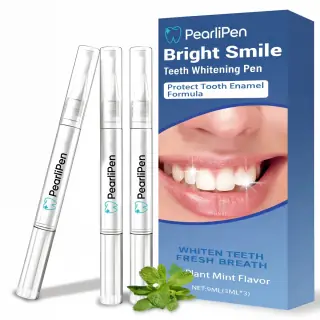
PearliPen review
People who want quick, peroxide-free touch-ups between dental cleanings and like something small enough to carry in a bag. From $25.50.
Read the review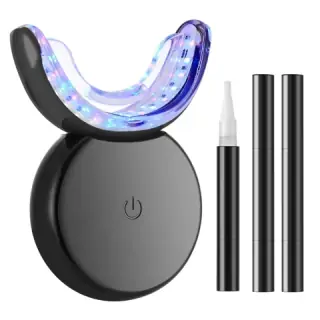
WellaWhite review
Adults with everyday coffee, tea or wine stains who want a hands-free light routine at home and would rather skip peroxide. From $59.00.
Read the review
FAQ
What is the fastest way to whiten teeth at home?
A peroxide product such as whitening strips or a tray gel works faster than whitening toothpaste, which only polishes surface stains. In one study cited by the ADA, an over-the-counter product took 16 days to match a 7-day dentist tray system.
Does baking soda whiten teeth?
Baking soda is abrasive, and the ADA warns that using something too abrasive can wear away enamel and make teeth look more yellow. A whitening toothpaste with the ADA Seal is the safer choice.
Do whitening strips work?
Yes, in the short term. A 2018 Cochrane review of 71 trials found home bleaching products, strips included, whitened teeth better than placebo over 2 weeks to 6 months, though the certainty of the evidence was low.
Does hydrogen peroxide whiten teeth?
Yes. Hydrogen peroxide, or carbamide peroxide that breaks down into it, is the bleaching agent in most whitening products. Use a product made for teeth, ideally with the ADA Seal, and follow its directions, since overuse can damage enamel or gums.
Why are my teeth yellow even though I brush?
Brushing removes surface stains, but enamel thins with age and lets the yellowish dentin underneath show through. Medicines, past fluoride or antibiotic exposure and genetics can also color teeth from the inside, which brushing can't reach.
Can you whiten crowns or veneers?
No. Only natural teeth whiten. Crowns, veneers, caps and fillings keep their color, so ask your dentist before whitening if you have them on your front teeth.
Sources
- Whitening, Oral Health Topics, American Dental Association
- Teeth Whitening, MouthHealthy (American Dental Association)
- Natural Teeth Whitening, MouthHealthy (American Dental Association)
- Tooth - abnormal colors, MedlinePlus Medical Encyclopedia (National Library of Medicine)
- Home-based chemically-induced whitening (bleaching) of teeth in adults, Cochrane Database Syst Rev (2018), PubMed
- Assessment of color changes and adverse effects of over-the-counter bleaching protocols: a systematic review and network meta-analysis, Clin Oral Investig (2024), PubMed
- Effect of Whitening dentifrice on discoloration of tooth surface: an updated systematic review and meta-analysis, BMC Oral Health (2025), PubMed
- Do Laser and Light Activation Improve In-Office Dental Bleaching Outcomes? An Umbrella Review, J Esthet Restor Dent (2026), PubMed
- Hydrogen Peroxide-Free Color Correctors for Tooth Whitening in Adolescents and Young Adults: A Systematic Review, Dent J (Basel) (2025), PubMed
This guide is general information, not medical advice. Talk to your doctor before making changes to your diet, sleep or exercise routine.