
Hydration
How Much Water Should I Drink a Day? Ounces, Cups and When You Need More
How much water should I drink a day? For healthy adults, the National Academies set about 91 ounces (2.7 liters) of total water for women and 125 ounces (3.7 liters) for men, from food and drinks combined. That works out to roughly 9 cups of fluids a day for women and 12.5 for men. Below: the full chart by age, the water hiding in food, the signs you're running low, and when heat, exercise or pregnancy change the math.
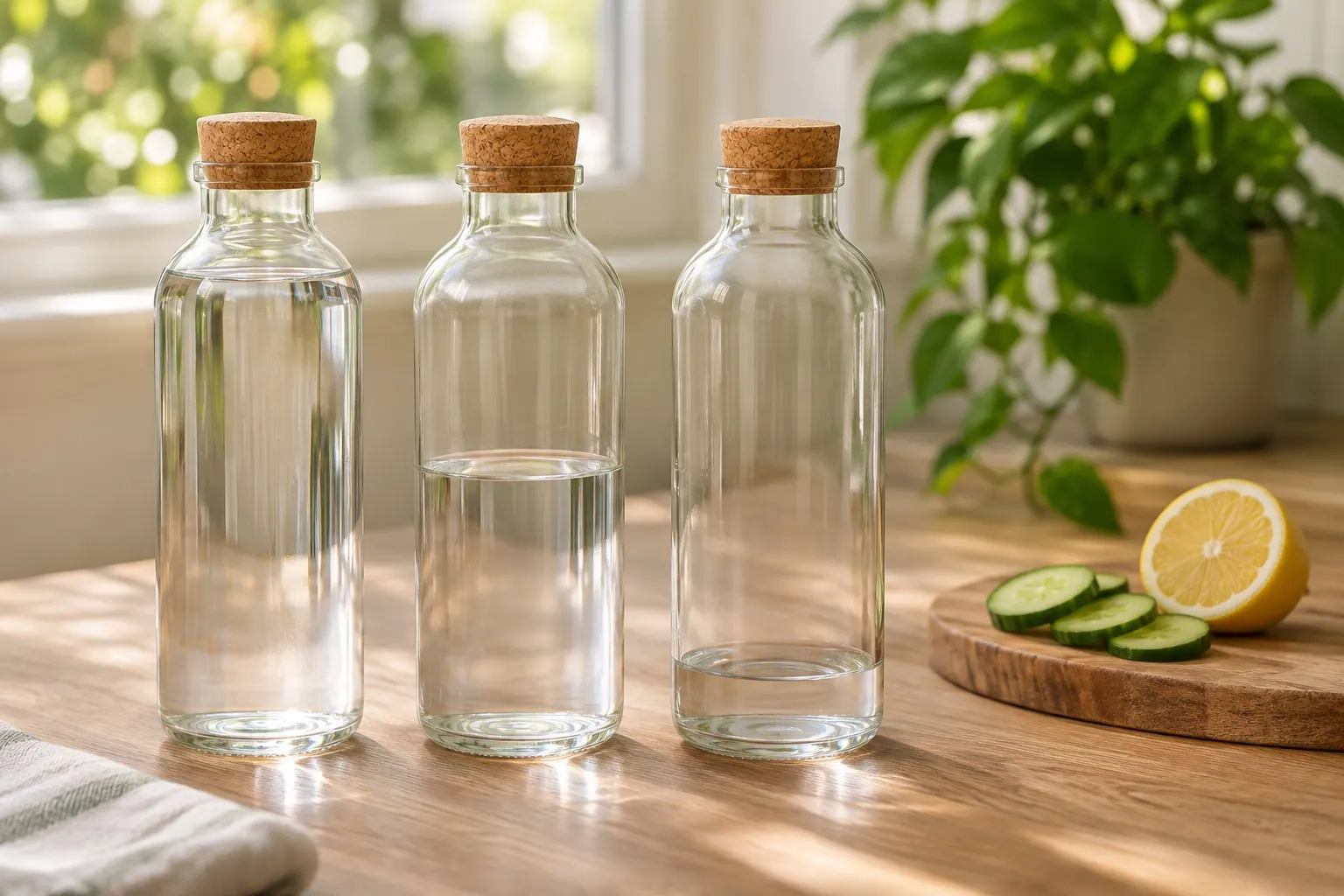
How much water should I drink a day?
There's no single magic number, but there is an official starting point. The National Academies of Sciences, Engineering, and Medicine set an adequate intake for total water, meaning everything you take in from plain water, other drinks and food. For adults 19 and older, it's 3.7 liters a day for men and 2.7 liters for women.
Those figures aren't a minimum you have to hit. When the panel released them in 2004, it explained that they reflect what adequately hydrated people actually take in, and that most healthy people meet their needs by letting thirst guide them. The table converts every age group into ounces and cups.
| Age group | Total water a day | Ounces | 8-oz cups | From drinks (about 80%) |
|---|---|---|---|---|
| Children 1 to 3 | 1.3 liters | 44 oz | 5.5 cups | About 4.5 cups |
| Children 4 to 8 | 1.7 liters | 57 oz | 7 cups | About 5.5 cups |
| Boys 9 to 13 | 2.4 liters | 81 oz | 10 cups | About 8 cups |
| Girls 9 to 13 | 2.1 liters | 71 oz | 9 cups | About 7 cups |
| Boys 14 to 18 | 3.3 liters | 112 oz | 14 cups | About 11 cups |
| Girls 14 to 18 | 2.3 liters | 78 oz | 9.5 cups | About 8 cups |
| Men 19 and older | 3.7 liters | 125 oz | 15.5 cups | About 12.5 cups |
| Women 19 and older | 2.7 liters | 91 oz | 11.5 cups | About 9 cups |
| Pregnancy | 3.0 liters | 101 oz | 12.5 cups | About 10 cups |
| Breastfeeding | 3.8 liters | 128 oz | 16 cups | About 13 cups |
Adequate intakes for total water from the National Academies' Dietary Reference Intakes table, which counts water in food, beverages and drinking water. Ounces and cups are our conversions, rounded. The drinks column is our math from the panel's estimate that about 80% of total water comes from beverages; for children and teens, treat it as a rough guide, not a target to push.
For kids, the table is background, not a quota. A pediatrician is the right person to ask, especially when a child is sick.
How many ounces of water should I drink a day?
In ounces, the adult numbers are about 91 ounces of total water a day for women and 125 for men. You don't have to drink all of it. The National Academies estimates that about 20% of the water you take in comes from food, so the drinking part is closer to 73 ounces for women and 100 ounces for men. In cups, that's about 9 and 12.5; in liters, roughly 2.2 and 3.
Here's what that can look like on an ordinary day for a woman: a 12-ounce coffee at breakfast, a 16-ounce glass of water mid-morning, 12 ounces with lunch, a 16-ounce bottle through the afternoon and 16 ounces between dinner and bed. That's 72 ounces, before counting the soup, fruit or yogurt she ate. A man would add about three more 8-ounce glasses.
If you carry a refillable bottle, the math gets easy. A 24-ounce bottle filled three times covers most women's drink share, and four refills come close to the men's.
Is 8 glasses of water a day right? What about the body-weight rule?
The famous eight 8-ounce glasses add up to 64 ounces. That isn't an official target: the National Academies panel said plainly that it wasn't offering a rule of thumb for how many glasses to drink. It's also less than the 73 to 100 ounces of fluids adequately hydrated adults typically take in, although coffee, milk, soup and watery foods fill that gap for most people.
Another rule you'll see online is to drink half your body weight in ounces. Body size does play a part: MedlinePlus lists weight among the things that change your needs, along with sex, age, activity level and medical conditions. But none of the official sources we checked uses a per-pound formula. The National Academies set intakes by age, sex, pregnancy and breastfeeding.
A simpler check works for most healthy adults: if you rarely feel thirsty and your urine is pale yellow, you're probably drinking enough.
Does coffee count toward your water intake?
Yes. The National Academies concluded that caffeinated drinks count toward your daily total just as much as caffeine-free ones. MedlinePlus lists soup, milk, tea, coffee, soda and juice among the sources of water in your diet.
There are two catches. Alcohol doesn't add to your body's water, because it's a diuretic, MedlinePlus notes. And sweetened drinks bring calories along with the water, which is why choosing water over sugary drinks is one of the CDC's main tips. Our guide to cutting sugary drinks has a four-week plan if soda is your default.

Water from food: which foods give you the most
Food supplies about a fifth of the average adult's water, according to the National Academies. Fruits and vegetables are the obvious ones, but soups, yogurt and even cooked oatmeal are mostly water too. Here's how much water common foods carry, based on USDA FoodData Central:

| Food | Serving | Water by weight | Water per serving |
|---|---|---|---|
| Chicken broth, ready-to-serve | 1 cup | 98% | 8.2 oz |
| Plain low-fat yogurt | 1 cup | 85% | 7.1 oz |
| Oatmeal, cooked with water | 1 cup | 84% | 6.6 oz |
| Tomato, chopped | 1 cup | 94% | 5.8 oz |
| Apple | 1 medium | 86% | 5.3 oz |
| Watermelon, diced | 1 cup | 91% | 4.7 oz |
| Strawberries, halved | 1 cup | 91% | 4.7 oz |
| Orange | 1 medium | 87% | 3.8 oz |
| Cucumber, sliced | 1 cup | 95% | 3.3 oz |
| Celery, chopped | 1 cup | 95% | 3.3 oz |
| Iceberg lettuce, shredded | 1 cup | 96% | 2.3 oz |
Water percentages from USDA FoodData Central (SR Legacy). Ounces per serving are our math, using about 29.6 g of water per fluid ounce. The broth also has about 924 mg of sodium per cup, 40% of the FDA's 2,300 mg Daily Value.
Watery foods help, but they don't replace drinking when you're thirsty. On days you eat few fruits and vegetables, more of your water has to come from your glass.
Signs of dehydration
Dehydration happens when you lose more fluid than you take in. MedlinePlus lists heavy sweating, fever, vomiting, diarrhea and urinating a lot (for example from uncontrolled diabetes or water pills) as common causes, and notes that older adults and people with conditions such as diabetes are at higher risk. Early signs include:
- Thirst
- A dry or sticky mouth
- Urinating less than usual
- Darker yellow urine
- Dry, cool skin
- Headache
- Muscle cramps
If you have a fever, vomiting or diarrhea, MedlinePlus advises drinking plenty of fluids without waiting for these signs. Severe dehydration is a different situation, and its warning signs are in the doctor section at the end.
What color should urine be?
When you're healthy and hydrated, urine should fall somewhere between pale yellow and light straw, according to Cleveland Clinic. Slightly darker urine is a sign of mild dehydration, and it should lighten once you drink.
Clear urine all day can mean the opposite: you may be drinking more than you need. Color isn't a perfect gauge, because some foods, supplements and medicines change it. The CDC's travel-health guidance adds that urine volume and color are most useful in the morning.
If drinking doesn't lighten dark urine, or your urine is pink, red or brown and you haven't eaten anything that explains it, contact a doctor.
When to drink more: heat, exercise and illness
Your needs climb with sweat. The National Academies noted that very active people who are continually exposed to hot weather often need 6 liters or more of total water a day, more than double the figure for an average woman.
For moderate activity in the heat lasting less than 2 hours, the CDC's workplace guidance (from its NIOSH institute) is 1 cup (8 ounces) of water every 15 to 20 minutes. If you're sweating for several hours, it recommends sports drinks with balanced electrolytes, and it advises avoiding alcohol and drinks high in caffeine or sugar.
For a typical workout, plain water does the job. The CDC's travel-health guidance says that during mild to moderate exertion, electrolyte replacement offers no advantage over plain water, and that for recreational athletes, food is the most efficient way to replace salt. Our homemade electrolyte drink guide covers the long, sweaty days when salt does matter.
Illness counts too. Fever, vomiting and diarrhea all raise fluid losses, so keep drinking even when you don't feel like eating.
How much water should a pregnant woman drink?
The National Academies' adequate intake rises to 3.0 liters (about 101 ounces) of total water a day during pregnancy and 3.8 liters (about 128 ounces) while breastfeeding. Using the same 80% estimate, that's roughly 10 cups of fluids a day in pregnancy and 13 while breastfeeding.
Pregnancy changes many things at once, from nausea to swelling to blood pressure, so ask your obstetrician or midwife what's right for you, especially if you're vomiting, have a condition that affects fluids, or have been told to drink more or less.
Who should pay closer attention
- Older adults. MedlinePlus notes that thirst can change with age and that older adults are at higher risk of dehydration, so a drink with every meal and snack is a useful habit.
- Children who are sick. MedlinePlus advises watching how much ill children drink especially closely.
- People with diabetes, who MedlinePlus lists among those at higher risk.
- People who've had kidney stones. NIDDK notes that many health professionals recommend six to eight 8-ounce glasses of fluid a day, unless you have kidney failure. Ask your doctor what's right for you.
- People with heart, kidney or liver disease, or anyone on a fluid limit or water pills. Your doctor's instructions come before any chart on this page.
Can you drink too much water?
Yes, though it's uncommon in healthy people. MedlinePlus lists drinking too much water among the causes of an electrolyte imbalance, and Cleveland Clinic explains that when your kidneys work normally, too much water almost never lowers blood sodium on its own. The risk rises during long endurance events, when people sweat out sodium and replace it with plain water.
The CDC's travel-health guidance calls the idea that you can't drink too much outdated and dangerous. It names excessive water as a major contributor to exercise-associated hyponatremia (low blood sodium), says forcing yourself to drink when you aren't thirsty raises the risk, and recommends drinking only enough to relieve thirst during long exercise. Cleveland Clinic suggests that more than 32 ounces (about a liter) of water an hour is probably too much.
Low blood sodium can cause headache, nausea and vomiting, fatigue, muscle cramps and confusion, and in severe cases seizures, according to MedlinePlus, which says to call your provider right away if you have symptoms.
Does drinking water help you lose weight?
Not much on its own. A 2024 meta-analysis of 8 randomized trials in adults with overweight or obesity found that drinking more water didn't significantly change body weight. Swapping sugar-sweetened drinks for water was the one approach the authors said might offer a modest benefit, about 0.8 kg (under 2 pounds), a result that fell just short of statistical certainty.
Water has no calories, so it's a smart default, as the CDC points out. For what actually helps with hunger, see our guide to natural appetite suppressants.
Easy ways to drink more water
The CDC's own list is refreshingly practical:
- Carry a reusable water bottle with you.
- Freeze water in freezer-safe bottles for ice-cold water all day.
- Choose water over sugary drinks.
- Order water when you eat out.
- Serve water with meals.
- Add a wedge of lime or lemon.
- Our addition: pair a glass with something you already do, like your morning coffee or brushing your teeth at night, so it happens without a reminder.
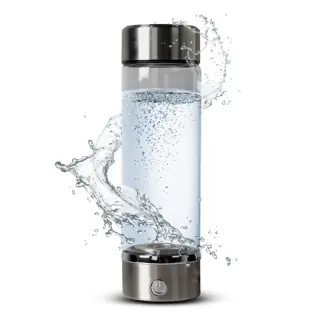
If a bottle on your desk is what keeps you refilling, we reviewed the LifeWater Hydrogen Bottle, a rechargeable glass bottle that holds 14.2 ounces; five refills come to about 71 ounces, close to an average woman's drink share. The brand says its 3-minute cycle adds hydrogen gas to the water. Research on hydrogen water is still early, as our hydrogen water guide explains, so think of it as a refill habit, not a health fix.
When to see a doctor
MedlinePlus advises calling your provider if you think you or a family member may become dehydrated, ideally before it gets severe. Get medical help for signs of severe dehydration:
- Little or no urine, or very dark or amber urine
- Dry, shriveled skin
- Confusion or irritability
- Dizziness
- A rapid heartbeat or rapid breathing
- Sunken eyes or listlessness
Call 911 if someone loses consciousness, becomes confused or has a seizure, has a fever over 102°F (38.8°C), shows signs of heatstroke, or gets worse despite drinking (MedlinePlus).
Also see a doctor if you're constantly thirsty or urinating far more than usual without a clear reason, if you have symptoms of low blood sodium after long exercise, or if a health condition or medicine affects how much you're allowed to drink.
A refillable bottle we've reviewed
FAQ
How much water should I drink a day?
About 91 ounces (2.7 liters) of total water a day for women and 125 ounces (3.7 liters) for men, from food and drinks combined, according to the National Academies. About 80% usually comes from drinks: roughly 9 cups for women and 12.5 cups for men.
How many ounces of water should I drink a day?
Around 73 ounces of fluids for women and 100 ounces for men. That's our math from the National Academies' total water figures, assuming about 20% of your water comes from food. You need more in the heat, during long exercise, and when pregnant or breastfeeding.
How much water should a woman drink a day?
About 2.7 liters (91 ounces) of total water, or roughly 9 cups of fluids once food is counted. That rises to about 3.0 liters during pregnancy and 3.8 liters while breastfeeding.
Does coffee count as water intake?
Yes. The National Academies concluded that caffeinated drinks count toward your daily total just like caffeine-free ones. Alcohol is the exception: it doesn't add to your body's water.
What are the signs of dehydration?
Early signs include thirst, a dry or sticky mouth, urinating less, darker yellow urine, headache and muscle cramps. Little or no urine, dizziness, confusion and a rapid heartbeat are signs of severe dehydration that need medical help.
Can you drink too much water?
Yes, though it's uncommon in healthy people. Drinking far more than you need, especially plain water during long endurance exercise, can lower blood sodium. Cleveland Clinic suggests more than about 32 ounces an hour is probably too much.
Sources
- Dietary Reference Intakes: Recommended Dietary Allowances and Adequate Intakes, Total Water and Macronutrients, National Academies of Sciences, Engineering, and Medicine
- Report Sets Dietary Intake Levels for Water, Salt, and Potassium (2004), National Academies
- Water in diet, MedlinePlus Medical Encyclopedia (National Library of Medicine)
- Dehydration, MedlinePlus Medical Encyclopedia (National Library of Medicine)
- Fluid and Electrolyte Balance, MedlinePlus (National Library of Medicine)
- Low blood sodium, MedlinePlus Medical Encyclopedia (National Library of Medicine)
- About Water and Healthier Drinks, CDC
- Heat Stress: Workplace Recommendations, CDC NIOSH
- Heat and Cold Illness in Travelers, CDC Yellow Book
- Eating, Diet, & Nutrition for Kidney Stones, NIDDK
- Urine Color Chart: What the Color of Your Pee Says About You, Cleveland Clinic
- Hyponatremia, Cleveland Clinic
- Water Intoxication, Cleveland Clinic
- Water Intake and Adiposity Outcomes among Overweight and Obese Individuals: A Systematic Review and Meta-Analysis of Randomized Controlled Trials, Nutrients (2024), PubMed
- Diabetes Symptoms, CDC
- Sodium in Your Diet, FDA
- Soup, chicken broth, ready-to-serve (FDC ID 174536), USDA FoodData Central
- Yogurt, plain, low fat (FDC ID 170886), USDA FoodData Central
- Cereals, oats, cooked with water, without salt (FDC ID 173905), USDA FoodData Central
- Tomatoes, red, ripe, raw (FDC ID 170457), USDA FoodData Central
- Apples, raw, with skin (FDC ID 171688), USDA FoodData Central
- Watermelon, raw (FDC ID 167765), USDA FoodData Central
- Strawberries, raw (FDC ID 167762), USDA FoodData Central
- Oranges, raw, all commercial varieties (FDC ID 169097), USDA FoodData Central
- Cucumber, with peel, raw (FDC ID 168409), USDA FoodData Central
- Celery, raw (FDC ID 169988), USDA FoodData Central
- Lettuce, iceberg, raw (FDC ID 169248), USDA FoodData Central
This guide is general information, not medical advice. Talk to your doctor before making changes to your diet, sleep or exercise routine.