
Weight
Green Tea for Weight Loss: How Much It Helps, How to Drink It, and When to Skip the Extracts
Green tea for weight loss helps a little at best: in trials, green tea or its catechins added about 1 to 3 pounds of extra weight loss over 10 to 12 weeks, and a Cochrane review found almost none outside Japan. Below are the honest numbers, how much to drink, how matcha compares, and why concentrated extracts are a different story for your liver.
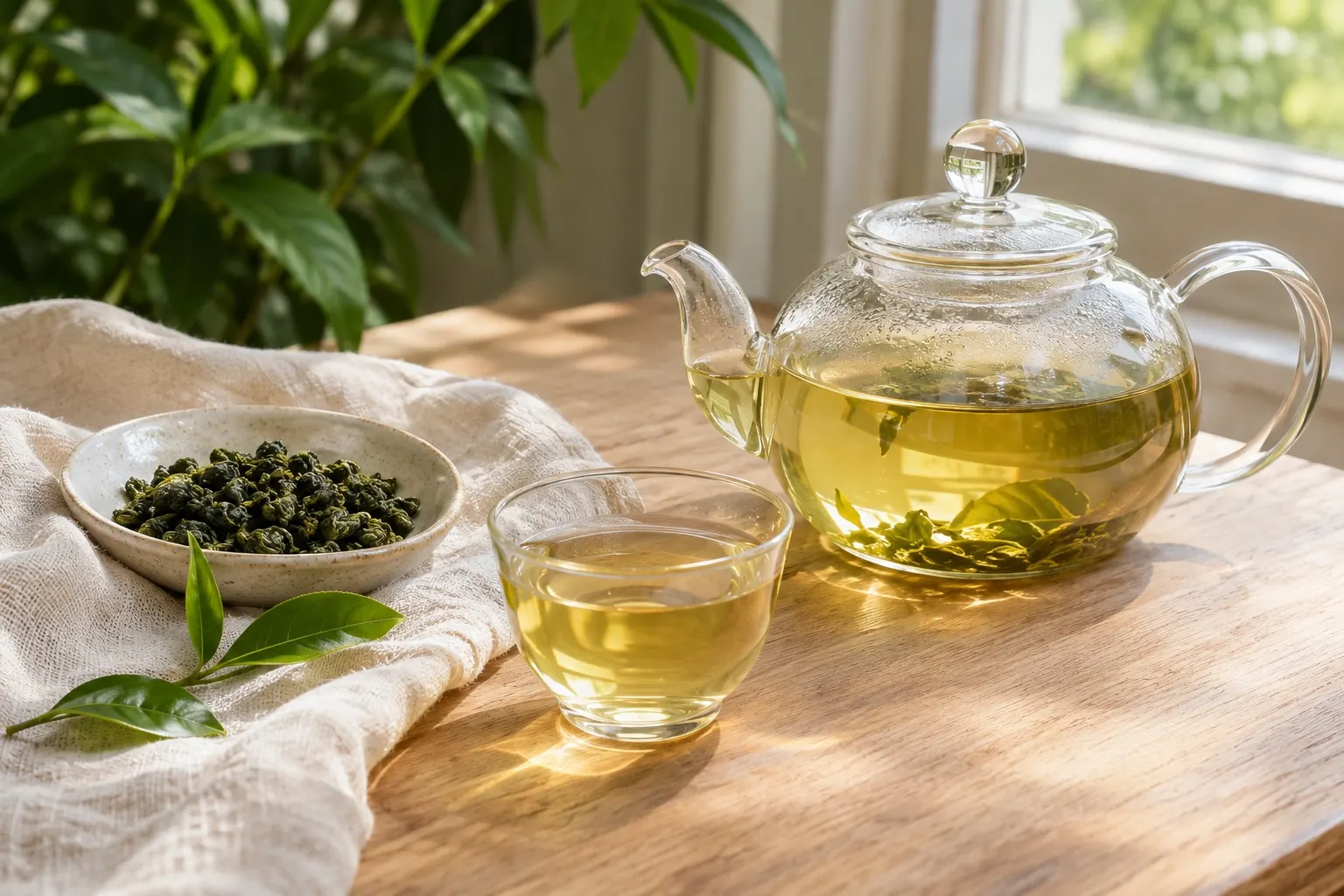
Does green tea help you lose weight?
A little. Green tea contains catechins, the best known of which is EGCG, plus caffeine. In trials that last a few months, that combination produces a small extra weight loss, typically 1 to 3 pounds, and sometimes close to nothing. The NIH's National Center for Complementary and Integrative Health (NCCIH) sums it up as a possible modest effect on body weight.
Here's what the main reviews found. Most trials used green tea extracts or catechin-enriched drinks, not ordinary cups of tea, so the effect of a mug or two a day is likely at the low end.
| Review | What was compared | Extra weight loss | Notes |
|---|---|---|---|
| Cochrane, 2012 | Green tea preparations vs control for 12 to 13 weeks, overweight adults | 0.04 kg (about 0.1 lb) in 6 trials outside Japan; 0.2 to 3.5 kg in 8 Japanese trials | Not statistically significant outside Japan; Japanese trials too different to pool |
| Phung and colleagues, 2010 | Green tea catechins with or without caffeine, 15 trials, 1,243 people | 1.38 kg (about 3 lb) vs caffeine alone; 0.44 kg (about 1 lb) vs a caffeine-free control | Catechins without caffeine showed no benefit |
| Hursel and colleagues, 2009 | Catechins or an EGCG and caffeine mix, 11 studies | 1.31 kg (about 2.9 lb) | Also helped keep weight off after a diet |
| Network meta-analysis, 2024 | Green tea, coffee and other teas, 22 trials, 1,710 people, about 10 weeks | 1.23 kg (about 2.7 lb) vs placebo | Low-certainty evidence; coffee, black tea and green coffee showed no effect |
| Dose-response meta-analysis, 2025 | Green tea supplementation in adults | 0.74 kg (about 1.6 lb) | Waist about 1 cm smaller, body fat 0.65 percentage points lower |
Pounds are converted from kilograms and rounded. See Sources for each review.
The Cochrane reviewers put it plainly: the weight loss was small, not statistically significant, and not likely to be clinically important. NCCIH's page on weight control goes further for supplements, listing green tea extracts among products that haven't been shown to be effective for weight loss.
So green tea is a pleasant, low-calorie drink that may nudge things slightly. It isn't a plan on its own.
How green tea might work: EGCG and caffeine
The theory is that catechins and caffeine together raise the energy your body burns and shift it toward burning fat. A 2011 meta-analysis of six respiration-chamber studies found that catechin and caffeine mixtures raised 24-hour energy expenditure by about 4.7%, roughly 100 calories a day. Caffeine on its own raised it by about the same amount, but only the catechin and caffeine mix also raised fat burning, by about 12 grams of fat a day.
Those were short, tightly controlled lab studies using supplements. The weight trials in the table show how much of that survives real life: a pound or a few.
Caffeine seems to matter. In the 2010 review, catechins taken without caffeine didn't change weight, waist size or BMI. A 2009 review also hinted that people who already drink a lot of caffeine, more than 300 mg a day, may get less out of green tea, although that difference wasn't statistically significant. If you prefer coffee, our mushroom coffee benefits guide looks at a lower-caffeine option.
How much green tea should you drink for weight loss?
There's no official number of cups for weight loss, and the trials don't translate neatly into cups because most used concentrated extracts. What we can say is what a few cups give you, and where the safe range is.
The European Food Safety Authority estimated that adults in Europe who drink green tea get 90 to 300 mg of EGCG a day on average, and that heavy tea drinkers may reach about 866 mg. It considers green tea brewed the traditional way generally safe at those intakes. NCCIH likewise says no safety concerns have been reported for green tea as a beverage in adults.
| Drink | Caffeine |
|---|---|
| Brewed green tea, 8 oz | about 29 mg |
| Green tea, 12 oz | about 37 mg |
| Tea in general, 8 oz | 14 to 60 mg |
| Coffee, 8 oz | 95 to 200 mg |
Sources: USDA FoodData Central (brewed green tea), FDA (12-ounce green tea) and MedlinePlus (tea and coffee ranges).
Even several cups of green tea stay well under the 400 mg of caffeine a day that the FDA cites as not generally linked to negative effects in adults. Count your coffee, sodas and any caffeinated supplements too.
To make it taste good enough to drink every day, let just-boiled water cool for a moment before pouring, steep briefly and taste. Over-steeped or very hot green tea turns bitter.
Best time to drink green tea for weight loss
No trial has compared morning green tea with evening green tea for weight loss, so pick the time that works for your sleep. Because green tea has caffeine, and MedlinePlus lists insomnia among the effects of too much caffeine, earlier in the day is usually the easier choice.
Green tea before bed is fine for some people and a problem for others. If you want a warm evening cup, decaf green tea still has a little caffeine, as the FDA notes for all decaf teas, while caffeine-free herbal teas have none.
Drinking it with or between meals is a matter of taste for tea. Extracts are different: the US Pharmacopeia advises taking green tea extract with food, never on an empty stomach, for reasons explained below.
Matcha for weight loss: is it better than green tea?
Matcha is green tea leaf ground into a fine powder and whisked into water, so you drink the leaf itself rather than an infusion. We found no systematic review of matcha and body weight, which means the green tea trials above are the closest evidence there is.
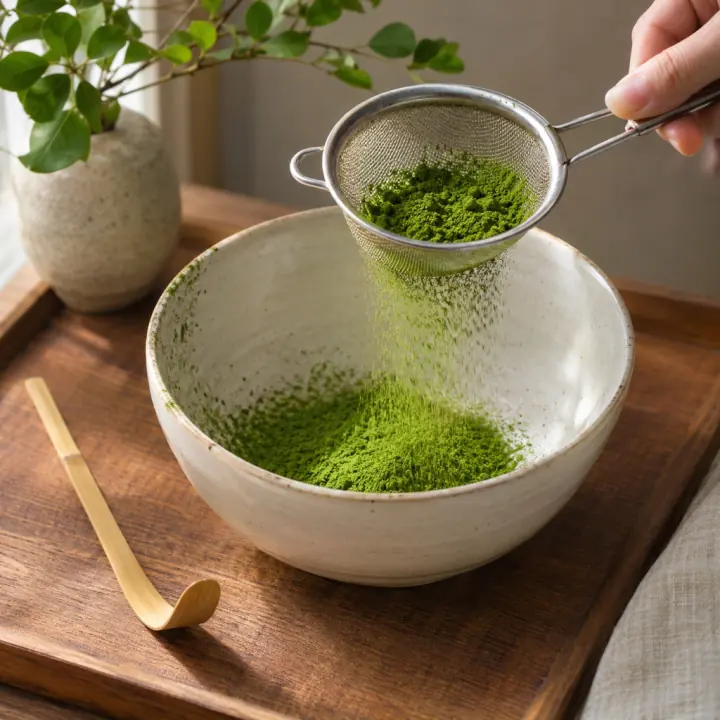
Is matcha stronger? Not necessarily in the way people expect. A 2023 lab analysis of 15 green teas sold in stores found that bagged and rolled-leaf (gunpowder) teas had more total phenolics and higher antioxidant capacity than matcha, while matcha generally had more caffeine. Among matchas, cheaper culinary grades beat ceremonial grades on phenolics.
So choose matcha because you enjoy it. For catechins per dollar, an ordinary bagged green tea did well in that analysis. Either way, a sweetened matcha latte is a different drink: the milk and syrup add calories that cancel out any small benefit.
Does green tea burn belly fat?
Not specifically. No food or drink burns fat from one part of the body. In the reviews, waist size shrank a little along with weight: about 1 cm (under half an inch) in the 2025 analysis and about 2 cm with catechins plus caffeine compared with caffeine alone in the 2010 review. Outside Japan, the Cochrane review found no meaningful change in waist size at all.
Green tea extract and your liver
This is where green tea goes from harmless to something to take seriously. LiverTox, the NIH database on drug-induced liver injury, reports that green tea extract, and more rarely very large amounts of green tea, have been implicated in cases of acute liver injury, including liver failure that needed an urgent transplant or ended in death. NCCIH notes that most cases involved extracts in tablet or capsule form.
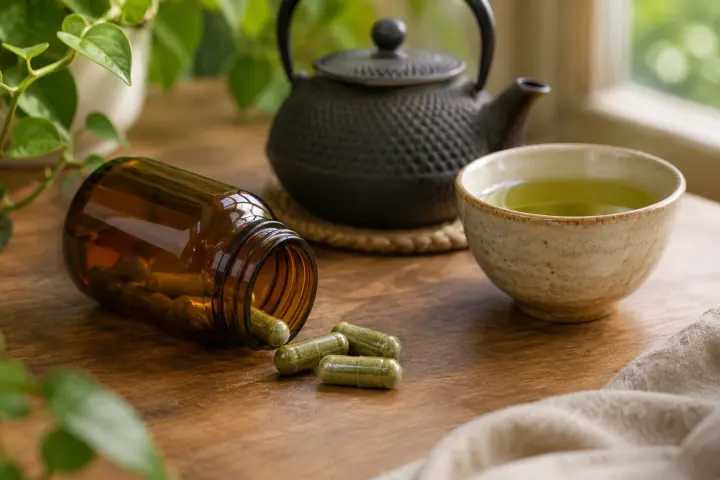
- Dose matters. The European Food Safety Authority found evidence from clinical trials that 800 mg or more of EGCG a day, taken as a supplement, raised liver enzymes. Supplements on the market supply anywhere from 5 to 1,000 mg a day.
- Case reports have linked liver injury to EGCG intakes from 140 to about 1,000 mg a day, according to a US Pharmacopeia review, with large differences in how susceptible people are. NCCIH notes that people with a specific immune-related gene variant, carried by an estimated 5 to 15 percent of Americans, appear especially vulnerable.
- Timing matters too. Taking extract in large doses on an empty stomach makes the body absorb significantly more EGCG. The US Pharmacopeia added a required warning to its standard for powdered green tea extract: don't take it on an empty stomach, take it with food, don't use it if you have a liver problem, and stop and see a health care practitioner if you notice abdominal pain, dark urine or yellowing of the skin or eyes.
- Medicines can interact. NCCIH says high doses of green tea can lower blood levels of the beta-blocker nadolol, green tea extract can lower levels of the cholesterol drug atorvastatin, and a study found an interaction with raloxifene. Extracts can also cause nausea, constipation, stomach discomfort and higher blood pressure.
Green tea pills and fat burners: what to check
Dietary supplements aren't approved by the FDA before they're sold, and NCCIH warns that what's on the label may not be what's in the bottle. The FDA has even found weight-loss products tainted with prescription drug ingredients. If you still want a green tea supplement, check these points first.
- Look for the amount of EGCG per serving, not just milligrams of extract. If the label doesn't say, you can't compare it with the 800 mg mark.
- Add up the caffeine from the supplement, your coffee and your tea.
- Take it with a meal, as the US Pharmacopeia advises, and never stack two products that both contain green tea extract.
- Skip it entirely if you have liver disease, and ask your pharmacist about interactions if you take prescription medicine.
- Prefer a brand that shows third-party testing for what's actually in the capsule.
Skip the sweetened bottled kind
Bottled green tea can be anything from plain tea to a soft drink. USDA's entry for a sweetened ready-to-drink green tea with honey lists about 18 grams of sugar and 78 calories per cup, while its unsweetened bottled green tea has none. The Dietary Guidelines for Americans, 2025–2030, advise avoiding sugar-sweetened beverages altogether.
That swap can matter more than the tea itself. In a 2024 meta-analysis, replacing sugar-sweetened drinks with water led to about 0.8 kg (under 2 pounds) more weight loss, a borderline result, while simply drinking more water didn't change weight. Our guide to cutting sugary drinks has a four-week plan, and how to boost metabolism covers the habits with bigger effects than any tea, starting with strength training and protein.
If you want a tea habit or an add-in
Two products we've reviewed fit readers of this guide in different ways. Their claims are the brands', not proven effects, and we found no independent trial of either formula.
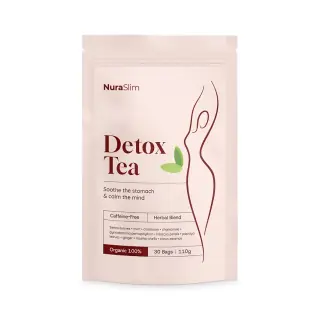
- NuraSlim is a caffeine-free herbal tea, not a green tea, which makes it a candidate for the evening cup when you want to keep caffeine to the morning. The pouch lists ten herbs, starting with senna, a stimulant laxative, even though the brand calls the tea non-laxative. Start with one cup and see how your body responds.
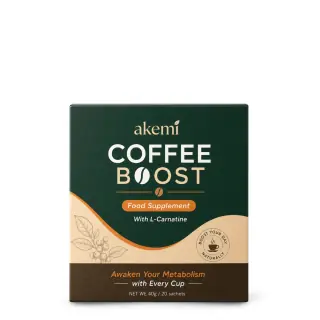
- Akemi Coffee Boost is a flavorless sachet you stir into coffee or tea. Green tea extract is one of its seven listed ingredients, alongside green coffee bean extract and L-carnitine, and the brand puts each sachet at about 30 mg of caffeine. It doesn't publish the dose of each ingredient, so the EGCG per sachet isn't known. If you have a liver condition, ask your doctor first.
If you take medication, especially for blood pressure, cholesterol or your heart, check with your doctor or pharmacist before adding either one.
When to see a doctor
- You notice belly pain, dark urine or yellowing of the skin or eyes while taking a green tea extract or any weight-loss supplement. The US Pharmacopeia advises stopping the extract and seeing a health care practitioner.
- You take nadolol, atorvastatin, raloxifene or other prescription medicines and want to use green tea supplements or drink large amounts of green tea.
- You have a racing heart, palpitations, anxiety or sleep problems that started with more tea or caffeine.
- You're pregnant, trying to become pregnant or breastfeeding. NCCIH advises keeping caffeine at moderate levels in pregnancy and asking your provider how much is right for you.
- You're losing or gaining weight without trying, or you have a chronic condition and want to start a weight-loss supplement.
Tea and add-in products we've reviewed
FAQ
Does green tea help you lose weight?
Only a little. Reviews of trials found about 1 to 3 pounds of extra weight loss over 10 to 12 weeks, mostly with extracts, and a Cochrane review found almost no effect in studies outside Japan.
How many cups of green tea a day for weight loss?
There's no proven number. Most trials used extracts, not cups. A few cups a day is a reasonable habit for most adults: an 8-ounce cup has about 29 mg of caffeine, well under the FDA's 400 mg daily figure.
Is matcha better than green tea for weight loss?
There's no evidence that it is. We found no review of matcha and weight, and a lab analysis of 15 green teas found bagged and rolled-leaf teas had more total phenolics than matcha, which had more caffeine.
Is green tea extract safe?
It carries a rare but serious risk of liver injury. European regulators found that 800 mg or more of EGCG a day from supplements raised liver enzymes. Take any extract with food, and avoid it if you have liver disease.
Does green tea burn belly fat?
Not specifically. Waist size dropped by about 1 to 2 cm in some reviews, along with a small overall weight loss. No drink burns fat from one area.
When is the best time to drink green tea for weight loss?
No study shows a best time. Because green tea has caffeine, earlier in the day is easier on sleep. Take extracts with a meal, never on an empty stomach.
Sources
- Green Tea: Usefulness and Safety, NCCIH
- Weight Control and Complementary Health Approaches, NCCIH
- Green tea for weight loss and weight maintenance in overweight or obese adults, Cochrane Database Syst Rev (2012), PubMed
- Effect of green tea catechins with or without caffeine on anthropometric measures: a systematic review and meta-analysis, Am J Clin Nutr (2010), PubMed
- The effects of green tea on weight loss and weight maintenance: a meta-analysis, Int J Obes (2009), PubMed
- Comparative effects of tea and coffee drinking on body weight in adults: a systematic review and network meta-analysis of randomised trials, Br J Nutr (2024), PubMed
- Effects of green tea supplementation on obesity indices and adipokines in adults: a GRADE-assessed systematic review and dose-response meta-analysis, Int J Food Sci Nutr (2025), PubMed
- The effects of catechin rich teas and caffeine on energy expenditure and fat oxidation: a meta-analysis, Obes Rev (2011), PubMed
- Scientific opinion on the safety of green tea catechins, EFSA Journal (2018), PubMed
- Green Tea, LiverTox (NIDDK), PubMed record
- United States Pharmacopeia (USP) comprehensive review of the hepatotoxicity of green tea extracts, Toxicol Rep (2020), PubMed
- Catechin Composition, Phenolic Content, and Antioxidant Properties of Commercially-Available Bagged, Gunpowder, and Matcha Green Teas, Plant Foods Hum Nutr (2023), PubMed
- Beverages, tea, green, brewed, regular (FDC ID 171917), USDA FoodData Central
- Beverages, tea, green, ready to drink, ginseng and honey, sweetened (FDC ID 171883), USDA FoodData Central
- Beverages, tea, green, ready to drink, unsweetened (FDC ID 171911), USDA FoodData Central
- Spilling the Beans: How Much Caffeine Is Too Much?, FDA
- Caffeine, MedlinePlus (National Library of Medicine)
- Dietary Guidelines for Americans, 2025–2030, USDA and HHS
- Water Intake and Adiposity Outcomes among Overweight and Obese Individuals: A Systematic Review and Meta-Analysis of Randomized Controlled Trials, Nutrients (2024), PubMed
This guide is general information, not medical advice. Talk to your doctor before making changes to your diet, sleep or exercise routine.