
Foot pain
Plantar Fasciitis Stretches: A Daily Routine With Holds and Reps
Plantar fasciitis stretches work best when they target two spots: the plantar fascia under your foot and the calf muscles behind your heel. Below is a routine built on the American Academy of Orthopaedic Surgeons' instructions, with hold times and repetitions, plus what else relieves heel pain and when to see a doctor.
Why stretching helps plantar fasciitis
The plantar fascia is a strong band of tissue that runs from your heel to the front of your foot and supports the arch. When it's overloaded, the heel hurts, usually most with the first steps out of bed or after a long rest, and the pain tends to ease after a few minutes of walking. That's how the American Academy of Orthopaedic Surgeons (AAOS) describes the classic pattern. It lists standing for long periods on hard surfaces, tight calf muscles, flat feet or a high arch, obesity and new or increased activity as risk factors, and says the condition is most common between ages 40 and 60.
Tight calves and a tight plantar fascia aggravate the problem, and AAOS calls stretching them the most effective way to relieve the pain. A 2019 review in American Family Physician (AAFP) rates plantar fascia stretches as effective for heel pain, based on small, limited-quality trials. In one trial it cites, 82 patients did either a plantar fascia stretch or an Achilles tendon stretch: heel pain improved by 52% at eight weeks in the plantar fascia group, against 22% in the Achilles group.
Expect weeks, not days. AAOS says more than 90% of people improve within 10 months of starting simple treatments, and the AAFP review puts it at about 80% within 12 months.
Plantar fasciitis stretches at a glance
| Exercise | Hold or duration | Repetitions | How often |
|---|---|---|---|
| 1. Plantar fascia stretch | 10 seconds | 20 per foot | Best in the morning, before you stand or walk |
| 2. Calf stretch, knee straight | 10 to 30 seconds | 20 per foot, or 2 sets of 10 | 6 to 7 days a week |
| 3. Calf stretch, knee bent | 30 seconds, then 30 seconds of rest | 2 sets of 10 | 6 to 7 days a week |
| 4. Towel stretch | 30 seconds, then 30 seconds of rest | 2 sets of 10 | 6 to 7 days a week |
| 5. Ball or frozen bottle roll | 2 minutes with a ball; up to 20 minutes with a cold bottle or ice | 1 session | Daily; cold rolling 3 to 4 times a day |
| 6. Calf raises | Rise and lower with control | 2 sets of 10 | 6 to 7 days a week |
| 7. Towel curls | Curl, then relax | 20 | Daily |
Holds come from two AAOS handouts: its plantar fasciitis page uses 10-second holds repeated 20 times, and its foot and ankle conditioning program uses 30-second holds in 2 sets of 10. Start with the shorter version if the longer one hurts.
Warm up first with 5 to 10 minutes of easy activity, such as walking or a stationary bike, do the stretches before the strength moves, then repeat the stretches to finish, as the AAOS conditioning program suggests.
1. Plantar fascia stretch
This is the stretch aimed straight at the fascia. AAOS says it's best done in the morning before standing or walking, which is when first-step pain usually hits hardest.
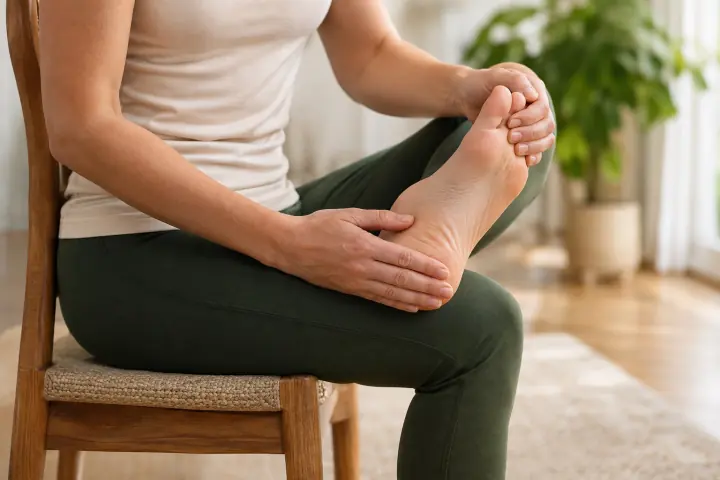
- Sit down and cross your painful foot over the knee of your other leg.
- Grab your toes and slowly pull them back toward your shin. If you can't reach, loop a towel around your big toe and pull with that.
- Place your other hand along the bottom of your foot. The fascia should feel like a tight band when it's stretched.
- Hold for 10 seconds, then relax. Repeat 20 times for each foot.
2. Calf stretch against a wall
This one stretches the calf muscles and the heel cord, or Achilles tendon. AAOS says you should feel a strong pull in the calf.
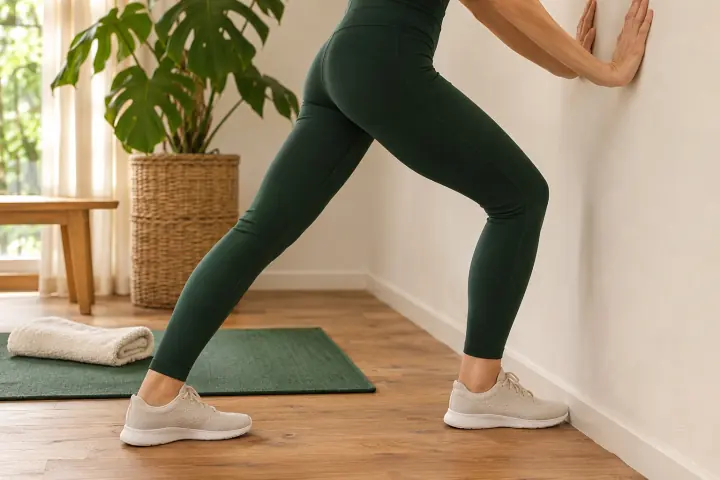
- Stand facing a wall and lean forward with your hands on it.
- Put the painful leg behind you, knee straight, heel flat on the floor and toes pointed in slightly. Put the other leg in front with the knee bent.
- Keeping both heels flat, push your hips toward the wall in a controlled way. Don't arch your back.
- Hold for 10 seconds and relax, and repeat 20 times for each foot. The AAOS conditioning program uses longer holds instead: 30 seconds, then 30 seconds of rest, for 2 sets of 10.
3. Bent-knee calf stretch
Bending the back knee shifts the stretch to the soleus, the deeper calf muscle. AAOS says you'll feel it in the calf, the sides of the ankle and into the heel.
- Stand facing a wall with your other leg forward and slightly bent.
- Put the painful leg behind you with the knee bent and the toes pointed in slightly.
- Keep both heels flat and press your hips toward the wall, with your hips centered over both feet.
- Hold for 30 seconds, relax for 30 seconds, and repeat. AAOS suggests 2 sets of 10, 6 to 7 days a week.
4. Towel stretch
A good choice if standing stretches are hard. You can do it sitting on the floor or in a chair.
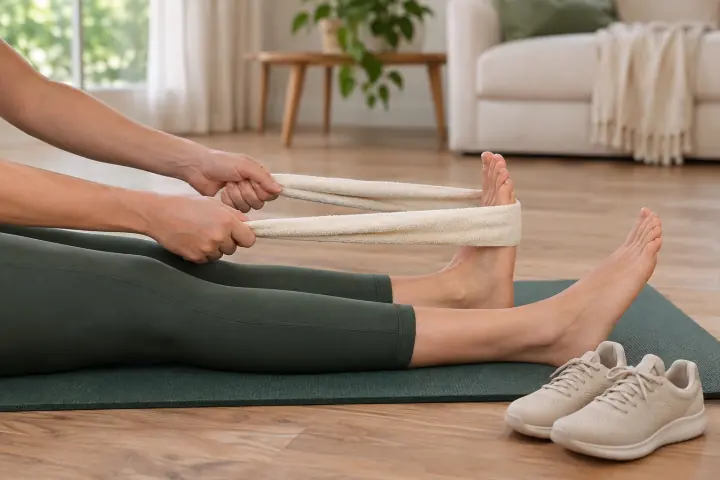
- Sit on the floor with both legs straight out in front of you, or sit in a chair.
- Loop a towel around the ball of your painful foot and hold one end in each hand.
- Keep the leg straight and pull the towel toward you until you feel the stretch in your calf and heel.
- Hold for 30 seconds, relax for 30 seconds, and repeat. AAOS suggests 2 sets of 10, 6 to 7 days a week.
5. Roll your foot over a ball or frozen water bottle
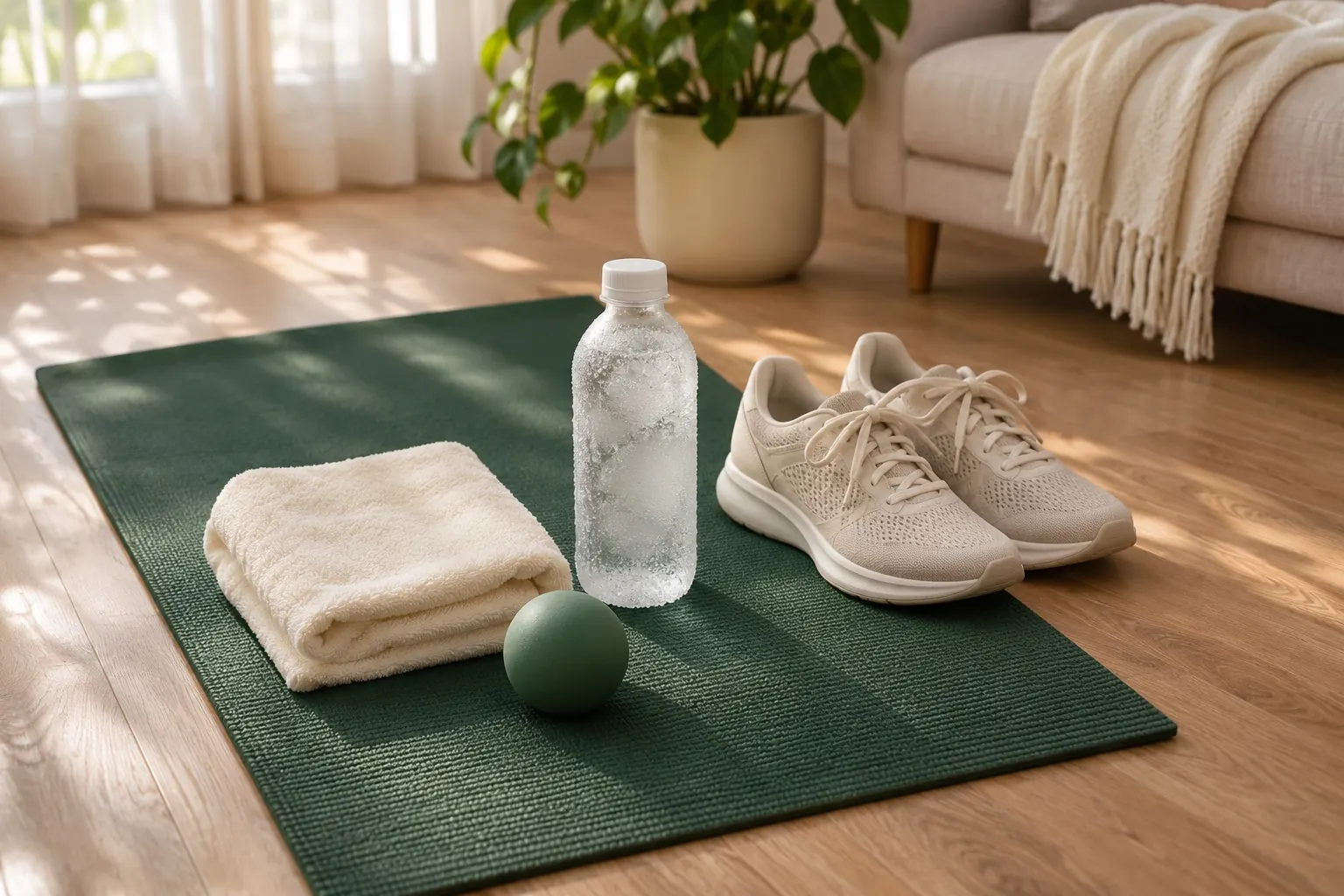
Rolling massages the fascia, and a frozen bottle adds cold. The AAOS conditioning program rolls a golf ball under the arch for 2 minutes a day, with a tennis ball or a frozen water bottle as alternatives. For pain, its plantar fasciitis page suggests rolling the foot over a cold water bottle or ice for 20 minutes, 3 to 4 times a day.
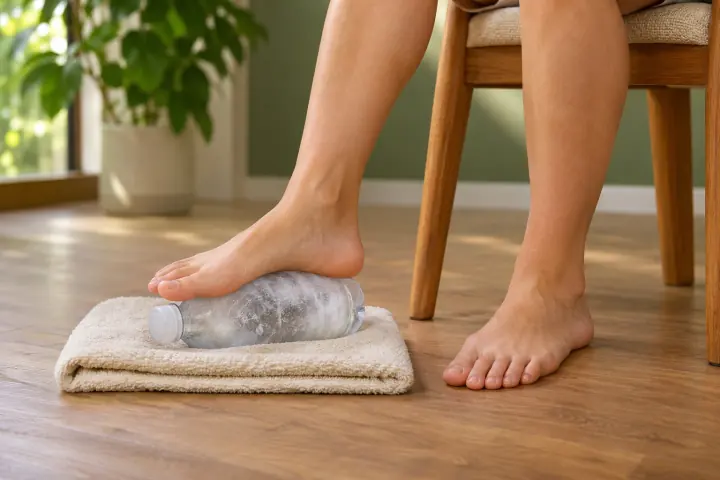
- Sit up tall on a stable chair with both feet on the floor.
- Put the ball or frozen bottle under the arch of your painful foot.
- Roll it slowly from heel to toes and back, with gentle pressure.
- If your feet are numb, ask your doctor before using ice. MedlinePlus notes that numb areas are more prone to injury, and our guide to neuropathy in feet explains why.
Physical therapy exercises for plantar fasciitis: build strength
Stretching isn't the only tool. The AAFP review describes a trial in which a high-load strengthening program for the calf and arch improved symptoms more at three months than a stretching program, although both groups got better. A physical therapist can tailor a program like this; AAOS says one may combine stretching, ice, massage and other therapies. These two moves come from the AAOS foot and ankle conditioning program.
- Calf raises: Stand holding the back of a chair or a wall. Rise onto your toes as high as you can, then lower. Start on both feet, and as it gets easier put more weight on the painful foot until you can lift the other one off the floor. Do 2 sets of 10, 6 to 7 days a week. A variation shown in the AAFP review: rise on both feet, then lower slowly on the painful foot only.
- Towel curls: Sit with both feet flat and a small towel on the floor in front of you. Grab the middle of the towel with your toes, curl it toward you, then relax. Repeat 20 times a day.
The same AAOS program adds picking up 20 marbles with your toes, writing the alphabet in the air with your foot, and balancing on one leg for up to 30 seconds next to a counter you can grab for support.
Make the routine safe and steady
- Stretching should pull, not hurt. AAOS says you shouldn't feel pain during an exercise. If you do, ease off and talk to your doctor or physical therapist.
- Stay with it. The AAOS program runs 4 to 6 weeks, and doing it 3 to 5 days a week after that keeps strength and range of motion in the foot and ankle.
- Ask your doctor or physical therapist which exercises suit you. AAOS says its general program should be done under a doctor's supervision.
- Flexibility is one of the health-related parts of fitness. Our guide to health-related fitness shows where it fits in a weekly routine.
Heel pain relief beyond stretching
Stretches work best alongside a few other simple steps. These come from AAOS unless noted.
- Ease off what hurts. Cut back on activities that pound your feet on hard surfaces, such as running or step aerobics, and swap in cycling or swimming for a while.
- Use cold. Roll your foot over a cold water bottle or ice, as in step 5.
- Consider a pain reliever. Over-the-counter anti-inflammatories such as ibuprofen or naproxen reduce pain and inflammation, but AAOS says not to use them for more than a month without talking to your doctor. MedlinePlus advises asking your provider first if you've had ulcers or liver problems. Follow the label.
- Check your shoes. Thick soles and extra cushioning reduce pain when you stand and walk. Replace athletic shoes before they wear out. Soft silicone heel pads and pre-made or custom orthotics can also help.
- Ask about a night splint. AAOS calls night splints very effective for morning heel pain, although the AAFP review rates the evidence on them as inconclusive.
On insoles, the research is modest. A 2018 meta-analysis of 19 trials with 1,660 people found moderate-quality evidence that foot orthoses eased heel pain more than fake insoles at 7 to 12 weeks, though the authors weren't sure the change was big enough to matter, and ready-made insoles did as well as custom ones. If you want to try a firm arch insole, we reviewed Hewelth StepCore, a trim-to-fit insole with a deep heel cup. The brand lists plantar fasciitis among its uses, but the insole itself hasn't been tested in a trial, so give it a few weeks alongside the stretches.
For sore calves and feet after a long day, some people like a cooling rub while they massage. We reviewed TheraWolf Pain Relief Balm, a plant-based balm the brand pitches for everyday aches. Its cooling comes from peppermint oil, and we found no independent trial of the balm, so think of it as a comfort option, not a plantar fasciitis treatment.
When to see a doctor for heel pain
Most plantar fasciitis improves with time and home care, but heel and foot pain have other causes that need different treatment. MedlinePlus says to contact your provider if:
- You have sudden, severe foot pain
- The pain started after an injury, especially if your foot is bleeding or bruised or you can't put weight on it
- You have redness or swelling of a joint, an open sore or ulcer, or a fever
- You have foot pain and diabetes or a disease that affects blood flow
- Your foot isn't better after 1 to 2 weeks of home treatment
The AAFP review lists other clues that point away from plantar fasciitis: a pop followed by sudden pain, deep bone pain or pain at night, burning or tingling in the heel or sole, and heel pain in children and young teens (girls 8 to 13, boys 10 to 15). Burning and numbness are covered in our guide to neuropathy in feet.
If pain persists after several months of steady treatment, your doctor may suggest imaging or other options. AAOS says surgery is generally saved for people who haven't improved after 12 months of nonsurgical treatment.
Products we've reviewed for sore heels and tired feet
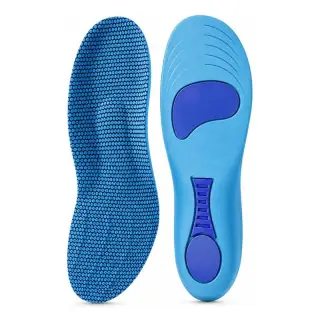
Hewelth StepCore review
People on their feet all day who want firmer arch support and heel cushioning in boots and sneakers, and don't mind buying at least two pairs. From $11.25.
Read the review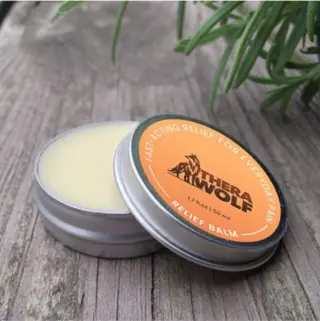
TheraWolf Pain Relief Balm review
Adults with everyday aches in the knees, back, neck or hands who want a plant-based rub alongside their usual care. From $17.24.
Read the review
FAQ
How long does plantar fasciitis last?
It varies. AAOS says more than 90% of people improve within 10 months of starting simple treatments, and a 2019 review in American Family Physician says about 80% improve within 12 months. Daily stretching and easing off activities that hurt are part of those simple treatments.
How often should I do plantar fasciitis stretches?
Most days. The AAOS conditioning program suggests the stretches 6 to 7 days a week for 4 to 6 weeks, and AAOS recommends doing the plantar fascia stretch in the morning before you stand or walk.
Should plantar fasciitis stretches hurt?
No. You should feel a strong pull in the calf or along the bottom of the foot, but AAOS says you shouldn't feel pain during an exercise. If a stretch hurts, ease off and ask your doctor or physical therapist.
Is walking good for plantar fasciitis?
You don't have to stop walking, but AAOS suggests cutting back on activities that make the pain worse and notes that cycling or swimming put less stress on your feet than walking or running. Supportive, cushioned shoes help when you do walk.
What is the fastest way to relieve heel pain?
There's no instant fix. For short-term relief, AAOS suggests rolling the foot over ice or a cold water bottle, resting from activities that hurt, supportive shoes and, if suitable for you, an over-the-counter anti-inflammatory for no more than a month without seeing a doctor. Stretching pays off over weeks.
Do insoles help plantar fasciitis?
A little, for some people. A 2018 meta-analysis found moderate-quality evidence that orthoses eased heel pain at 7 to 12 weeks, with ready-made insoles doing as well as custom ones, but the benefit was small and unclear over the long term.
Sources
- Plantar Fasciitis and Bone Spurs, OrthoInfo, American Academy of Orthopaedic Surgeons
- Foot and Ankle Conditioning Program, OrthoInfo, American Academy of Orthopaedic Surgeons
- Plantar Fasciitis, Am Fam Physician (2019), American Academy of Family Physicians
- Plantar Fasciitis, Am Fam Physician (2019), PubMed
- Foot orthoses for plantar heel pain: a systematic review and meta-analysis, Br J Sports Med (2018), PubMed
- Foot pain, MedlinePlus Medical Encyclopedia, National Library of Medicine
- Numbness and tingling, MedlinePlus Medical Encyclopedia, National Library of Medicine
This guide is general information, not medical advice. Talk to your doctor before making changes to your diet, sleep or exercise routine.