
Gut health
Kefir Benefits: What Kefir Is, What Research Shows and How to Make It
Kefir benefits start with nutrition: a cup of low-fat plain kefir has about 104 calories, 9 grams of protein and nearly a quarter of your daily calcium, plus live bacteria and yeasts. Trials suggest it may modestly improve fasting blood sugar and insulin resistance, but the studies are small. Here's what kefir is, how it compares with yogurt, how milk and water kefir differ, who should be careful, and how to make it at home.

What is kefir?
Kefir is a tangy, drinkable fermented milk. It's made by adding kefir grains to milk and letting them ferment it, usually for about a day at room temperature. Despite the name, kefir grains aren't grains at all. They're small clusters that look like cauliflower florets, made of bacteria and yeasts held together in a matrix called kefiran, as Colorado State University Extension describes them.
That mix of microbes is what sets kefir apart from yogurt. Yogurt is usually made with two specific bacteria, Streptococcus thermophilus and Lactobacillus delbrueckii subsp. bulgaricus, and the milk is warmed. Kefir grains carry a broader mix of lactic acid bacteria, acetic acid bacteria and yeasts, and need no warming, according to University of Florida IFAS Extension. The result is thinner and tangier, often called sippable yogurt.
Most kefir sold in the US is made from cow's milk, but it can also be made from goat, sheep, buffalo or camel milk (UF/IFAS). Water kefir, a dairy-free cousin, is covered further down.
Kefir benefits: what the research shows
Kefir has a big reputation and a modest stack of human trials. These are the systematic reviews and meta-analyses we found on PubMed, and what each one concluded:
| Area | What the review found | Size of the evidence |
|---|---|---|
| Overall health effects | May help reduce a cavity-causing mouth bacterium and support H. pylori treatment; very limited evidence for cholesterol and blood pressure. Appears safe for generally healthy people. | 16 trials, 12 at high risk of bias (2023 systematic review) |
| Blood sugar | Fasting blood sugar fell about 10 mg/dL and insulin dropped; no significant change in HbA1c. | 6 trials, 323 people (2021 meta-analysis) |
| Blood sugar and insulin resistance | Fasting blood sugar fell about 8.5 mg/dL and insulin resistance (HOMA-IR) improved; no effect on body measurements, cholesterol or inflammation markers. | 24 studies (2026 meta-analysis) |
| Heart and metabolic risk factors | Lower fasting insulin and insulin resistance; no effect on cholesterol, triglycerides, fasting blood sugar, HbA1c or body weight. | 6 trials, 314 people (2023 meta-analysis) |
| Blood pressure and inflammation | No significant change in blood pressure or CRP overall; CRP fell in trials lasting 8 weeks or more. | 7 trials, 385 adults (2025 meta-analysis) |
| Gut bacteria | Minor changes overall; Bifidobacterium rose in 3 of the 4 studies that measured it, and kefir microbes turned up in stool samples. | 8 human studies (2026 systematic review) |
Each review is listed in Sources. The trials used different kefirs, amounts and lengths, which is part of why their results differ.
Put together, the most consistent signal is a small improvement in insulin resistance, with fasting blood sugar improving in two of the three reviews that looked at it. None found an effect on body weight. The authors of the broadest review, the 2023 one, concluded that higher-quality trials are needed before kefir can be recommended for any condition.
So the fair way to see kefir is as a nutritious fermented food you can enjoy most days, not as a treatment. If blood sugar is your concern, kefir can be part of the plan you work out with your doctor, not a replacement for it.
Kefir nutrition: kefir vs. milk vs. yogurt
Plain kefir lands between milk and yogurt. Here's how a cup of each compares, according to USDA FoodData Central:
| Per 1 cup | Low-fat plain kefir | 2% milk | Plain low-fat yogurt |
|---|---|---|---|
| Calories | 104 | 122 | 154 |
| Protein | 9 g | 8 g | 13 g |
| Sugars | 11 g | 12 g | 17 g |
| Calcium | 316 mg (24% DV) | 293 mg (23% DV) | 448 mg (34% DV) |
| Potassium | 399 mg | 342 mg | 573 mg |
USDA FoodData Central (SR Legacy) entries for low-fat plain kefir, 2% milk with added vitamins A and D, and plain low-fat yogurt; per-cup amounts are our math, rounded. Calcium %DV uses the FDA's 1,300 mg Daily Value. Flavored kefirs can carry much more sugar, so check the label.
Is kefir better than yogurt? Not across the board. Yogurt is denser, with more protein and calcium per cup, while kefir is lighter and carries a wider mix of microbes, including yeasts. Both are good fermented dairy choices, and our probiotic foods guide compares them with sauerkraut, kimchi, miso and kombucha.
Is kefir lactose free?
No, but many people find it easier to digest than milk. Colorado State University Extension notes that fermentation reduces lactose, without giving an amount. UF/IFAS Extension cites a small 2003 trial of 15 adults with lactose maldigestion, in which kefir cut breath hydrogen, a sign of undigested lactose, to about the same level as yogurt and well below milk, and eased gas. That fits a 2021 systematic review of fermented milks, which found strong evidence that yogurt improves lactose digestion and tolerance.
NIDDK, the NIH institute for digestive diseases, notes that many people with lactose intolerance can have 12 grams of lactose, about the amount in 1 cup of milk, with few or no symptoms. If you're sensitive, start small: Colorado State suggests 4 to 6 ounces a day at first. Lactose-free kefir is another option. If you have a milk allergy, dairy kefir isn't for you.
Kefir for gut health
Kefir is one of the easier ways to get live cultures from food, since it's made from living grains and kept refrigerated. The 2026 systematic review of 8 human studies found kefir microbes in participants' stool, a sign that some survive the trip through the gut, and more Bifidobacterium in 3 of the 4 studies that measured it. The authors described the overall changes as modest and varied, and said direct evidence of what they do in people is still limited.
Homemade kefir is a mixed culture that changes from batch to batch. If you'd rather have a fixed formula with the strains named on the label, we reviewed two capsules. Bioma pairs B. lactis, B. longum and B. breve with the prebiotic fiber XOS; it doesn't publish a CFU count, and its default plans renew automatically, so choose the one-time purchase if you only want to try it. Naori lists 120 billion CFU from more than 30 strains plus digestive enzymes, with automatic refills switched on by default. We found no independent trial of either formula, and neither replaces fermented foods in your diet.
Milk kefir vs. water kefir
Water kefir is a separate, dairy-free drink. It's fermented from water, fruit juice or sugar water with its own grains, and it comes out lighter, sweeter and fizzy, according to Colorado State University Extension. CSU also notes that the two kinds of grains aren't interchangeable, so you need water kefir grains to make water kefir.
Nutritionally they're very different. Water kefir has none of milk's protein or calcium, so its appeal is mostly flavor, fizz and live cultures. We found no systematic review of water kefir's effects in people, so its health claims haven't been tested the way milk kefir's have.

How to make kefir at home
This method follows Colorado State University Extension and makes about 2 cups. You'll need active milk kefir grains, a 1-quart glass jar and a strainer.

- Put 2 tablespoons of active kefir grains in a clean 1-quart canning jar and add 2 cups of pasteurized milk. Skip ultra-pasteurized or UHT milk, which CSU notes is heated too much for good results.
- Cover the jar with two layers of cheesecloth or two or three coffee filters, held on with a rubber band or the jar ring.
- Leave it in a dark spot at 65 to 85°F for 18 to 24 hours. It's ready when it has thickened slightly and smells pleasantly sour.
- Strain it through a plastic, fine nylon mesh or stainless steel strainer into a clean jar with a lid. Stir with a plastic or wooden spoon.
- Refrigerate the finished kefir right away; UF/IFAS Extension advises 41°F or below. Put the grains into fresh milk to start the next batch.
If a yellow, watery layer forms, that's whey separating. Stir it back in or strain it off, and next time ferment for less time or use a little more milk (CSU).
Food safety matters with any home ferment. UF/IFAS Extension notes that kefir's acidity suppresses many germs, but E. coli, Listeria and Salmonella can survive, so use pasteurized milk, quality grains and clean equipment. If a batch looks or smells wrong, throw it out.
How much kefir per day, and when to drink it
There's no official serving size. Colorado State University Extension suggests starting with 4 to 6 ounces a day, because some people get cramps, nausea or gas at first, and working up from there. In the reviews above, the one effect that depended on time, lower CRP, showed up only in trials lasting 8 weeks or more.
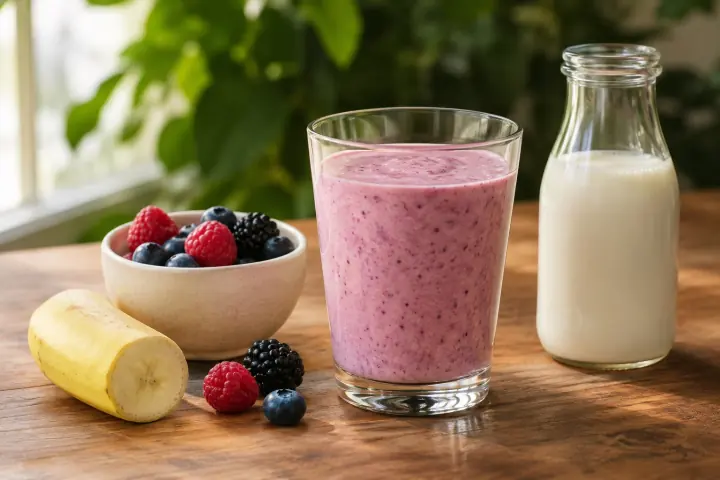
As for timing, none of the reviews we found tested a best time of day, so pick the slot you'll stick with: with breakfast, blended into a smoothie, or as an afternoon snack. Plain kefir also works in place of buttermilk in pancakes or as a base for salad dressing.
Kefir side effects and who should be careful
- Digestive upset at first. Cramps, nausea or gas are possible, which is why Colorado State suggests starting with a small glass.
- Milk allergy or a vegan diet. Dairy kefir isn't suitable for either (UF/IFAS).
- Alcohol. Fermentation can produce some alcohol, and UF/IFAS notes that kefir containing alcohol isn't appropriate for children or pregnant women.
- Homemade kefir and weaker immunity. UF/IFAS says people with compromised immune systems, including infants, pregnant women, older adults and people with chronic illness or autoimmune disorders, may want to avoid homemade kefir because of the risk of foodborne illness.
- Serious illness. NCCIH notes that the risk of harmful effects from probiotics is greater in people with severe illnesses or compromised immune systems.
- Added sugar. Flavored kefirs can carry much more sugar than plain, so compare labels.
When to see a doctor
Kefir is an everyday food, but a few situations call for professional advice. NCCIH's rule for probiotics applies here too: don't use them as a reason to put off seeing your health care provider.
- Digestive symptoms that don't settle after you cut back, or that started without a clear reason.
- Blood in your stool, diarrhea that won't stop or signs of dehydration; the WHO advises seeing a health professional in those cases.
- Vomiting, diarrhea or fever after drinking homemade kefir, which could mean food poisoning.
- Pregnancy, a weakened immune system or a chronic illness: ask before adding homemade kefir or a probiotic supplement.
- Diabetes: count kefir's carbohydrates (about 12 g per cup of plain low-fat kefir, per USDA) and don't change any medicine on your own because of it.
If you'd rather take probiotics as a capsule


FAQ
What is kefir?
A tangy, drinkable fermented milk made by adding kefir grains, clusters of bacteria and yeasts, to milk and letting it ferment for about a day. It's thinner and tangier than yogurt.
What are the benefits of kefir?
It's a good source of protein and calcium, about 9 g and 316 mg per cup of low-fat plain kefir. Reviews of trials suggest small improvements in insulin resistance and fasting blood sugar, but the studies are few and small, and none showed an effect on weight.
Is kefir better than yogurt?
Neither is better across the board. Plain yogurt has more protein and calcium per cup; kefir has fewer calories and a wider mix of microbes, including yeasts.
Is kefir lactose free?
No, but fermentation reduces lactose, and in a small trial kefir was digested about as well as yogurt by adults with lactose maldigestion. Lactose-free kefir is also sold.
How much kefir should I drink a day?
There's no official amount. Colorado State University Extension suggests starting with 4 to 6 ounces a day, since cramps, nausea or gas can happen at first.
What does kefir taste like?
Tangy and slightly sour, like a thin, drinkable yogurt. UF/IFAS Extension describes it as tangier than yogurt, and flavored versions are sweeter.
Sources
- The effects of kefir consumption on human health: a systematic review of randomized controlled trials, Nutr Rev (2023), PubMed
- Effect of kefir beverage consumption on glycemic control: a systematic review and meta-analysis of randomized controlled clinical trials, Complement Ther Clin Pract (2021), PubMed
- Effect of different kefir dosages on inflammation status, metabolic profile, and anthropometric measurements in adults: a systematic review and meta-analysis, Nutr Metab Cardiovasc Dis (2026), PubMed
- Effects of Kefir Consumption on Cardiometabolic Risk Factors: a systematic review and meta-analysis of randomized controlled trials, Curr Drug Targets (2023), PubMed
- The Effect of Kefir Consumption on Blood Pressure and C-Reactive Protein: a systematic review and meta-analysis of randomised controlled trials, Endocrinol Diabetes Metab (2025), PubMed
- Kefir: A Potential Gut Microbiota Modulator: a systematic review of human interventional studies, Microbiologyopen (2026), PubMed
- Yogurt, cultured fermented milk, and health: a systematic review, Nutr Rev (2021), PubMed
- Kefir improves lactose digestion and tolerance in adults with lactose maldigestion, J Am Diet Assoc (2003), PubMed
- Understanding and Making Kefir, Colorado State University Extension
- Fermented Foods: Kefir (FSHN24-2), University of Florida IFAS Extension
- Eating, Diet, & Nutrition for Lactose Intolerance, NIDDK
- Probiotics: Usefulness and Safety, NCCIH
- Diarrhoeal disease fact sheet, World Health Organization
- Kefir, low-fat, plain (FDC ID 170904), USDA FoodData Central
- Milk, reduced fat (2%), with added vitamins A and D (FDC ID 171267), USDA FoodData Central
- Yogurt, plain, low fat (FDC ID 170886), USDA FoodData Central
- Daily Value on the Nutrition and Supplement Facts Labels, FDA
This guide is general information, not medical advice. Talk to your doctor before making changes to your diet, sleep or exercise routine.