
Feet
Flat Feet: Symptoms, Types, Exercises and How to Fix Them
Flat feet means the arch on the inside of your foot drops so the sole touches the ground when you stand; it's common, usually painless and, when the foot is flexible, often needs no treatment at all. If your feet ache, stretching, simple strength moves and arch supports come first. Below is how to tell flexible from rigid flat feet, exercises with reps, and the signs that need a doctor.
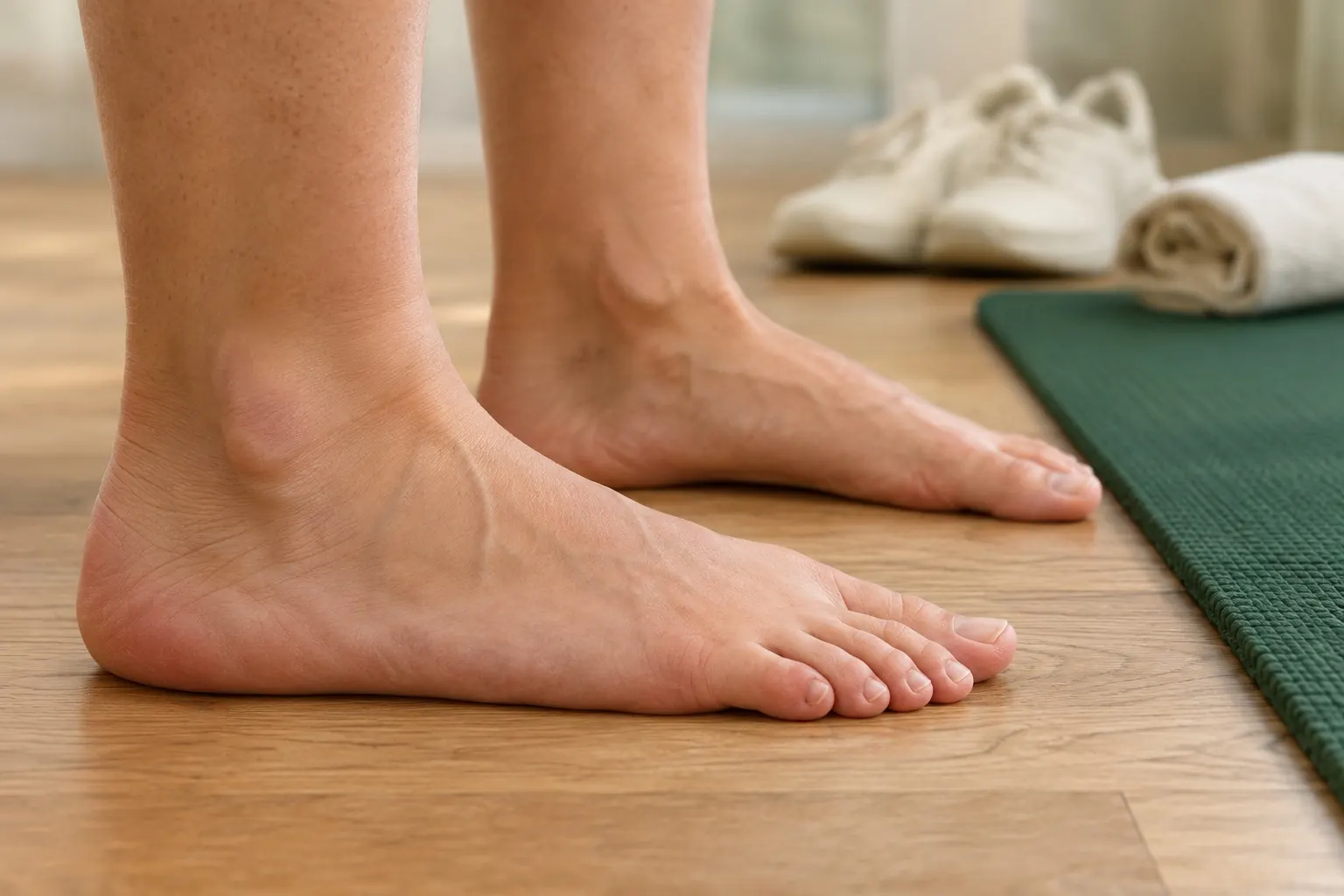
What are flat feet?
Flat feet, or pes planus, describe a foot without a normal arch when you stand, so the instep touches the ground. MedlinePlus, the National Library of Medicine's health site, lists fallen arches and pes planovalgus as other names for it.
It's a common foot shape, not automatically a problem. Babies and toddlers have flat feet because the tendons and ligaments in the foot are still loose, and the arch usually forms as they tighten. The American Academy of Orthopaedic Surgeons (AAOS) notes that some children with flexible flat feet don't develop an arch until age 5 or later, and some never do. A 2023 systematic review of 12 population studies with 16,000 people found flat feet in 15.6%, more often in males, in children aged 3 to 5 and 11 to 17, and in people with obesity.
Most people with flat feet have no pain, MedlinePlus says. What matters is which type you have and whether it hurts.
Flexible vs rigid flat feet
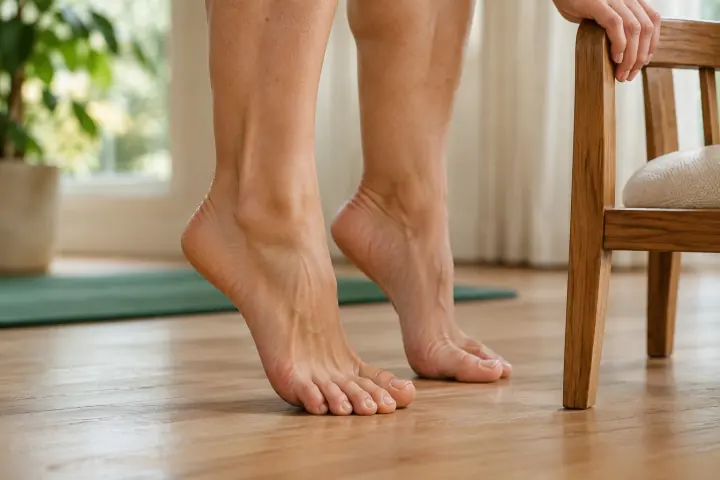
The most useful thing to know is whether your arch comes back when you take weight off the foot. Doctors check this by asking you to stand on your toes, MedlinePlus explains. If an arch forms, the flat foot is flexible. If it stays flat, it's called rigid, and it needs a closer look.
| Type | What you see | Common cause | What usually happens |
|---|---|---|---|
| Flexible flat feet | Arch disappears when standing, returns on tiptoes; both feet | A variation of a normal foot; muscles and joints work normally | Usually painless; no treatment unless it hurts |
| Flexible, with a tight heel cord | Flexible arch plus a tight Achilles tendon | Tight calf and heel cord | Stretching; a doctor may add physical therapy or casting |
| Rigid flat feet (often tarsal coalition) | Arch doesn't fully return on a toe raise; stiff foot | Two or more foot bones abnormally joined, present from birth | Symptoms often start in early adolescence; rest, orthotics, sometimes surgery |
| Adult-acquired flatfoot | An arch that was there collapses over time, sometimes in one foot | Strain or tears of the posterior tibial tendon | Orthotics, braces and therapy first; surgery if pain persists |
Based on AAOS pages on flexible flatfoot, tarsal coalition and progressive collapsing foot deformity, and MedlinePlus.
AAOS estimates that about 1 in 100 people may have a tarsal coalition, half of them in both feet, and many never know. When it does cause symptoms, the foot gets stiff and painful, uneven ground is harder, and ankle sprains keep coming back.
Adult-acquired flatfoot: posterior tibial tendon dysfunction
Flat feet that show up in adulthood are a different story. AAOS now calls this progressive collapsing foot deformity; older names are adult-acquired flatfoot and posterior tibial tendon dysfunction (PTTD). The posterior tibial tendon runs behind the inside ankle bone and holds up the arch. When it's inflamed or torn, the arch sags, nearby ligaments stretch, and the problem can slowly get worse. MedlinePlus notes that this type may affect only one foot.
AAOS says it's more common in women and after 40, with obesity, diabetes and high blood pressure as added risks. High-impact sports, a fall, and years in non-supportive footwear such as sandals can all play a part. Typical signs are pain and swelling along the inner ankle and arch and weakness when you push off or stand on your toes. A doctor may ask you to rise onto the toes of one foot, which needs a healthy posterior tibial tendon, and look at your heel from behind for the "too many toes" sign.
Flat feet symptoms
Many flat feet cause no symptoms at all. When they do, MedlinePlus lists these as the usual ones in adults:
- Tired or achy feet after long periods of standing or playing sports
- Pain on the outside of the ankle
- With long-standing flat feet, changes in the shape and flexibility of the toes, which can hurt
- In rigid flat feet, a stiff foot, a limp with more activity, or repeated ankle sprains (AAOS)
Children with flexible flat feet rarely have pain; MedlinePlus says a child with foot, ankle or lower leg pain should be checked by a provider.
AAOS also lists a flat foot among the risk factors for plantar fasciitis. If your heel hurts most with the first steps of the morning, our plantar fasciitis stretches routine has the holds and reps.
How to tell if you have flat feet
A doctor's exam is the real answer, but you can get a good idea at home. MedlinePlus describes flat feet as the instep touching the ground when you stand, and a wet footprint makes that visible.
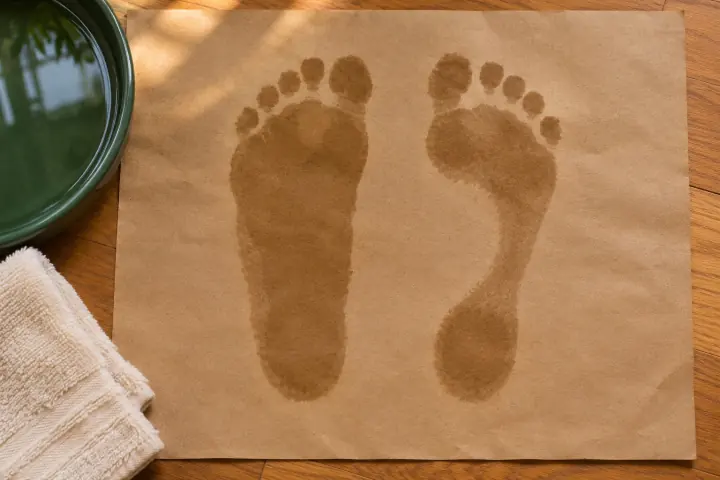
- Wet the soles of your feet and stand normally on a sheet of brown paper or a dry, dark tile.
- Step off and look at the inner edge of each print. A wide print with little or no inward curve suggests the instep reaches the floor.
- Hold a counter and rise onto your toes. If an arch appears along the inside of your foot, the flat foot is likely flexible.
- Book a visit if the arch doesn't come back on tiptoe, only one foot is flat, or it hurts. Doctors may order X-rays, a CT scan or an MRI.
How to fix flat feet, and when you don't need to
If your flat feet are flexible and don't hurt, there's nothing to fix. MedlinePlus and AAOS both say painless flexible flat feet need no treatment. For children, MedlinePlus adds that feet develop the same way with or without special shoes, inserts, heel cups or wedges.
If they hurt, MedlinePlus lists three first steps for flexible flat feet: an arch support in your shoe, store-bought or custom-made; supportive shoes; and calf stretches. For adult-acquired flatfoot, AAOS adds rest from what hurts, a switch to biking, the elliptical or swimming, weight loss when it applies, cold packs for 20 minutes 3 or 4 times a day (never directly on the skin), and physical therapy to strengthen the tendon and stretch the calf. A lace-up ankle brace can help mild to moderate cases. Over-the-counter anti-inflammatories such as ibuprofen or naproxen ease pain and swelling but don't change the foot's shape; AAOS says to ask your doctor about side effects first, especially with heart, kidney or stomach problems.
Can exercise build an arch? The evidence is small. A 2022 meta-analysis of 6 trials with 201 people found that the short-foot exercise slightly improved two arch measures compared with control groups. A 2024 meta-analysis found no clear overall difference, with gains only in programs longer than 6 weeks, and a 2024 network meta-analysis of 11 trials suggested that adding hip and whole-leg strengthening worked best. Expect modest changes over weeks, not a new arch.
AAOS says surgery is considered when pain doesn't improve after several months of proper treatment. It can mean repairing or moving a tendon, reshaping bones or fusing joints.
Flat feet exercises with reps
These come from AAOS handouts, plus the short-foot exercise from the trials above. Warm up with 5 to 10 minutes of walking or easy cycling, and stop any move that hurts: AAOS says you shouldn't feel pain during an exercise. A physical therapist can tell you which moves suit your feet.
| Exercise | Hold or reps | Sets | How often |
|---|---|---|---|
| 1. Calf (heel cord) stretch, knee straight | Hold 15 to 30 seconds | 3 per leg | Daily |
| 2. Calf stretch, knee bent | Hold 30 seconds, rest 30 | 2 sets of 10 | 6 to 7 days a week |
| 3. Calf raises | Rise and lower with control | 2 sets of 10 | 6 to 7 days a week |
| 4. Short-foot exercise | Lift the arch, hold briefly, relax | Several repetitions | Trials: twice a week to twice a day, for 4 to 8 weeks |
| 5. Towel curls | Curl, then relax | 20 | Daily |
| 6. Marble pickup | One marble at a time | 20 marbles | Daily |
| 7. Single-leg balance | Up to 30 seconds | 3 to 5 | 6 to 7 days a week |
Stretch 1 follows the AAOS flexible flatfoot page; the AAOS conditioning program uses 30-second holds in 2 sets of 10. The short-foot schedule comes from the 2022 meta-analysis trials.
AAOS suggests running the program for 4 to 6 weeks, then keeping it up 3 to 5 days a week to hold on to strength and range of motion.
How to do the key moves
- Calf stretch: Face a wall, one leg forward and slightly bent. Keep the back leg straight, heel flat and toes pointed slightly in, and press your hips toward the wall. For the bent-knee version, bend the back knee and keep both heels down.
- Calf raises: Hold a chair, rise onto your toes as high as you can, then lower slowly. As it gets easier, shift more weight onto one foot until you can do it on one leg.
- Short-foot exercise: Sit with your foot flat. Without curling your toes, draw the ball of your big toe toward your heel so the arch lifts and the foot gets slightly shorter, as the 2022 meta-analysis describes it. Hold briefly, relax and repeat, then try it standing.
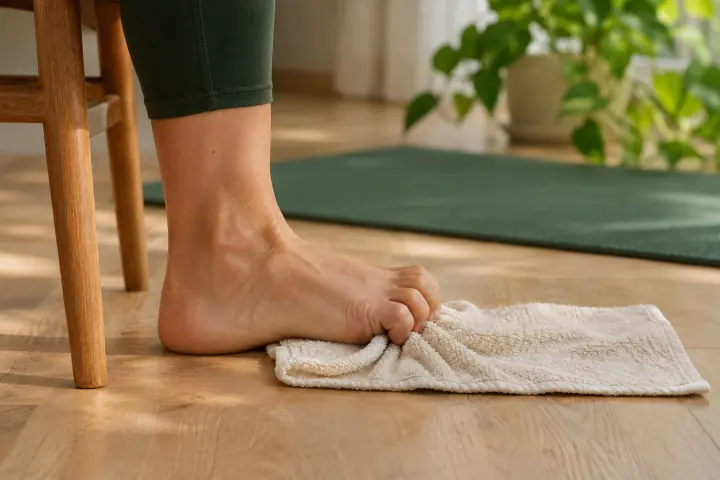
- Towel curls: Grab the middle of a small towel with your toes, curl it toward you, then relax.
- Marble pickup: Pick up 20 marbles or cotton balls one at a time with your toes and drop them in a bowl.
- Single-leg balance: Stand at a counter, lift one foot and let go for up to 30 seconds, grabbing the counter whenever you need it.
Insoles, orthotics and shoes for flat feet
An orthotic is a shoe insert that supports and positions the foot, and AAOS calls it the most common nonsurgical treatment for flatfoot. For a mild change in foot shape, an over-the-counter insert may be enough; custom orthotics cost more and are meant for moderate to severe deformity. For children, AAOS says store-bought arch supports usually work as well as custom-molded ones and are cheaper to replace.
The research is mixed. A 2023 meta-analysis of 9 studies found adults' pain fell more with orthoses than without, but the studies were too different to call orthoses useful for flexible flat feet in general. A 2022 Cochrane review of 16 trials in 1,058 children found that, for healthy kids with painless flat feet, custom or ready-made orthoses made little or no difference to pain compared with shoes alone (low-certainty evidence).
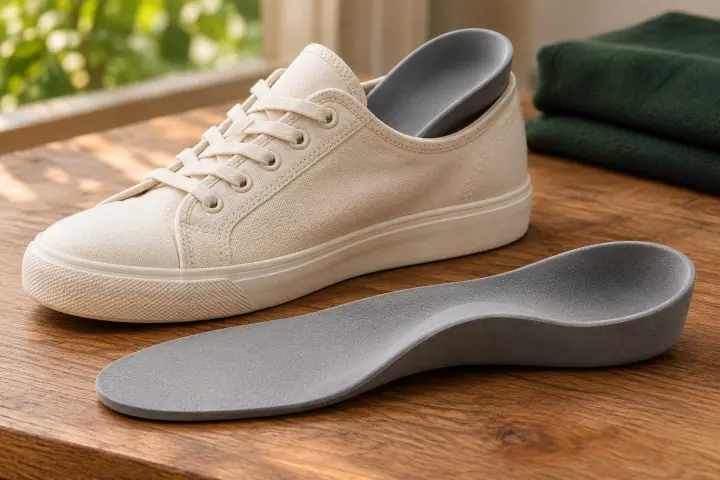
- Start with a ready-made arch support if your flat feet are flexible and only mildly sore.
- Pick supportive shoes. MedlinePlus says well-supported shoes can help, and AAOS notes that pain is often worse in sandals and other non-supportive footwear.
- Give any insert a few weeks, and see your doctor if the pain stays or gets worse.
If you want to try a firm arch insole, we reviewed Hewelth StepCore, a trim-to-fit insole with a TPU arch shell and a deep heel cup. The brand says the contour takes pressure off the plantar fascia and helps with overpronation, but the insole hasn't been tested in a trial, so treat it as one ready-made option, from about $11.25 a pair on the largest pack.
For feet that ache after a long shift, some people like massaging the arches with a cooling rub. We reviewed TheraWolf Pain Relief Balm, a plant-based balm whose cooling comes from peppermint oil. We found no independent trial of it, so think of it as comfort, not a treatment for flat feet.
Flat feet in children
Most children grow out of flexible flat feet, AAOS says, and it rarely gets in the way of walking or sports. Treatment is only needed if your child has discomfort; then a doctor may suggest heel cord stretches and store-bought arch supports, and almost never surgery. The Cochrane authors found no evidence supporting costly custom orthoses for healthy children whose flat feet don't hurt.
Ask your pediatrician to check if your child has pain, a stiff foot, a flat foot on one side only, or keeps spraining an ankle.
When to see a doctor for flat feet
Flat feet that are flexible and painless can be left alone. Get them checked if:
- Your feet hurt persistently, or your child complains of foot or lower leg pain (MedlinePlus)
- The arch doesn't come back when you stand on your toes
- One foot has become flatter than the other, or an arch you used to have is collapsing
- You have pain or swelling along the inside of the ankle, or can't rise onto the toes of one foot
- Your foot is stiff, you limp, or you keep spraining the same ankle
- You have foot pain and diabetes or a disease that affects blood flow (MedlinePlus)
Your doctor will watch how you stand and walk, test the arch on tiptoe and may order imaging. Numbness, burning or tingling is a different problem, covered in our guide to neuropathy in feet.
Products we've reviewed for flat, tired feet
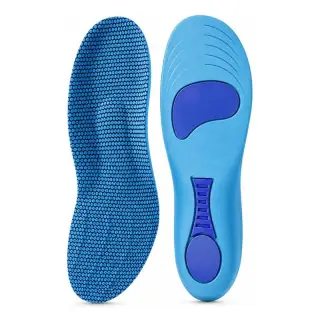
Hewelth StepCore review
People on their feet all day who want firmer arch support and heel cushioning in boots and sneakers, and don't mind buying at least two pairs. From $11.25.
Read the review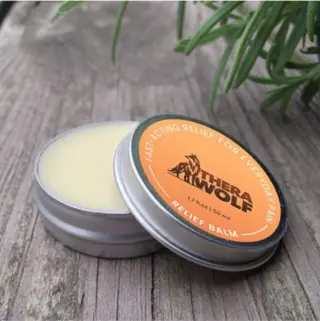
TheraWolf Pain Relief Balm review
Adults with everyday aches in the knees, back, neck or hands who want a plant-based rub alongside their usual care. From $17.24.
Read the review
FAQ
Are flat feet bad?
Usually not. MedlinePlus says most people with flat feet have no pain or other problems, and painless flexible flat feet need no treatment. Rigid or painful flat feet, or an arch that collapses in adulthood, should be checked by a doctor.
Can flat feet be fixed?
Flexible flat feet that don't hurt don't need fixing. Painful ones usually improve with arch supports, supportive shoes, calf stretches and foot exercises, which may change the arch modestly over several weeks. Surgery is kept for rigid or severe cases that don't improve with months of treatment.
What causes flat feet?
In children, loose tendons and ligaments that haven't yet tightened into an arch. In adults, aging, injury or illness can damage the tendons, most often the posterior tibial tendon. Bones joined since birth (tarsal coalition) and some hereditary conditions cause other cases.
Are fallen arches the same as flat feet?
Yes. MedlinePlus lists fallen arches, pes planus and pes planovalgus as other names for flat feet.
Do insoles help flat feet?
They can ease pain for some adults. AAOS calls orthotics the most common nonsurgical treatment and says over-the-counter inserts are often enough for mild cases, though the research on them is mixed.
Do kids grow out of flat feet?
Most do. AAOS says most children outgrow flexible flat feet, although some never develop an arch. Children don't need special shoes or inserts unless their feet hurt.
Sources
- Flat feet, MedlinePlus Medical Encyclopedia, National Library of Medicine
- Foot pain, MedlinePlus Medical Encyclopedia, National Library of Medicine
- Flexible Flatfoot in Children, OrthoInfo, American Academy of Orthopaedic Surgeons
- Progressive Collapsing Foot Deformity (Flatfoot), OrthoInfo, American Academy of Orthopaedic Surgeons
- Tarsal Coalition, OrthoInfo, American Academy of Orthopaedic Surgeons
- Foot and Ankle Conditioning Program, OrthoInfo, American Academy of Orthopaedic Surgeons
- Plantar Fasciitis and Bone Spurs, OrthoInfo, American Academy of Orthopaedic Surgeons
- Prevalence and clinical factors associated with pes planus among children and adults: a systematic review, J Foot Ankle Surg (2023), PubMed
- Effects of the short-foot exercise on foot alignment and muscle hypertrophy in flatfoot individuals: a meta-analysis, Int J Environ Res Public Health (2022), PubMed
- Effects of short foot training on foot posture in patients with flatfeet: a systematic review and meta-analysis, J Back Musculoskelet Rehabil (2024), PubMed
- Comparing the efficacy of exercise therapy on adult flexible flatfoot: a network meta-analysis, Sci Rep (2024), PubMed
- Foot orthoses for flexible flatfeet in children and adults: a systematic review and meta-analysis, BMC Musculoskelet Disord (2023), PubMed
- Foot orthoses for treating paediatric flat feet, Cochrane Database Syst Rev (2022), PubMed
This guide is general information, not medical advice. Talk to your doctor before making changes to your diet, sleep or exercise routine.