
Hydration
Hydrogen Water Benefits: What the Studies Show So Far
Hydrogen water benefits look small and uncertain so far: reviews of the studies find modest effects on exercise fatigue and cholesterol and no effect on endurance or strength. Here's what hydrogen water is, what the research does and doesn't show, whether it's safe, and how much plain water you need each day.
What is hydrogen water?
Hydrogen water, also called hydrogen-rich water, is ordinary water with extra molecular hydrogen gas (H2) dissolved in it. Every water molecule already contains hydrogen atoms; what's added here is the gas itself, which researchers are studying as a possible antioxidant.
A 2024 systematic review in the International Journal of Molecular Sciences describes how it's made: by dissolving hydrogen gas into water under pressure, or with hydrogen-generating tablets, infusion machines, water generators and ionizers. Hydrogen molecules are tiny and can stay dissolved for a while, the review explains, but the amount of hydrogen varies between products and studies, which makes results hard to compare.
Why researchers think hydrogen might help
The interest comes from oxidative stress. Your body makes reactive oxygen species as it uses oxygen, and the 2024 review links an excess of them to lifestyle-related diseases and aging. Hydrogen is thought to neutralize some of the most reactive of these molecules and to switch on the body's own antioxidant defenses, and it has shown anti-inflammatory effects in lab and early human studies.
The same review is careful to add that the exact mechanism is poorly understood. A plausible mechanism is a reason to run trials, not proof of a benefit, which is why the human studies below matter more.
Hydrogen water benefits: what the research shows
Most research on hydrogen water is recent, small and short. These are the systematic reviews and meta-analyses we found on PubMed, and what each one concluded:
| Area | What the review found | Size of the evidence |
|---|---|---|
| Health claims overall | Early results on exercise, liver function, heart health, mood and oxidative stress are encouraging but unproven, and the mechanisms aren't fully explained. | 25 human studies, many small and short (2024 systematic review) |
| Endurance and strength | No meaningful effect on aerobic or anaerobic endurance or on muscle strength in healthy adults; a small gain in leg power. | 27 publications, 597 people (2024 meta-analysis) |
| Fatigue during exercise | Small drops in how hard exercise felt and in blood lactate; no change in VO2max or endurance. | 19 studies, 402 people (2023 meta-analysis) |
| Oxidative stress after exercise | No change in a blood marker of oxidative stress; a small rise in antioxidant capacity. Studies mixed hydrogen water, hydrogen baths and inhaled gas. | 6 studies, 76 people (2024 meta-analysis) |
| Cholesterol | Total cholesterol fell about 6.7 mg/dL and LDL about 3.2 mg/dL, changes the authors judged too small to matter for heart risk. | 13 trials, 757 adults with overweight or obesity and metabolic conditions (2026 meta-analysis) |
| Liver enzymes | Slight drops in the liver enzymes ALT, AST and ALP; more research needed. | 8 trials, 433 people with liver disorders (2024 meta-analysis) |
Each review is listed in Sources. None of these studies tested a specific consumer bottle or device.
The 2024 systematic review is frank about the weak spots: many studies were done in animals, some human trials were small, most looked only at short-term effects, some had no placebo group, and some may have been backed by organizations with an interest in hydrogen water products. Its authors call for larger, longer, well-designed human trials.
The cholesterol meta-analysis goes further, saying its results shouldn't justify routine use of hydrogen water to lower lipids outside research. And if your goal is fitness, the training does the heavy lifting; our guide to health-related fitness covers what to work on.
Is hydrogen water good for you?
It's water, so it hydrates you like any other water, and the early safety picture is reassuring. The 2024 systematic review describes hydrogen-rich water as mostly considered safe, with no to minimal side effects. In 2014 the FDA responded with no questions to a company's notice concluding that hydrogen gas is generally recognized as safe (GRAS) as an ingredient in drinking water, flavored drinks and soda, at up to 2.14% by volume. That's a food-safety notice, not an FDA approval of any health claim.
What isn't established is that it does more for your health than plain water. Long-term effects haven't been studied much, and the benefits seen so far are small. If you have a health condition, hydrogen water isn't a substitute for treatment, and you shouldn't stop or change a medicine because of it.
Hydrogen water vs. plain water: is it worth it?
Plain tap water is cheap and does the main job, keeping you hydrated. Hydrogen water adds a gas with promising but small effects in short studies. Whether that's worth the extra cost is a personal call; nothing in the research makes it necessary.
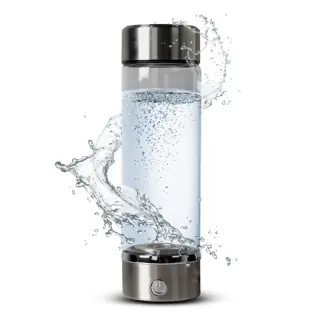
If you're curious and want to make it at home, look for a product that states how much hydrogen ends up in the water. Without that number, you can't compare it with the amounts used in studies. We reviewed the LifeWater Hydrogen Bottle, a rechargeable glass bottle that runs a 3-minute electrolysis cycle. The brand doesn't publish the hydrogen concentration, and no study has tested the bottle itself, so see it as an easy way to make hydrogen water and enjoy your daily water, not as a fix for a health problem.

- Keep your expectations in line with the evidence: possible small effects, not a cure.
- Check what the seller publishes: the hydrogen level, what the bottle is made of, and the return terms.
- Tell your doctor if you're drinking it while being treated for a condition such as liver disease or high cholesterol.
- Count it toward your daily fluids, just like plain water.
How much water do you need?
There's no single number for everyone. In its 2004 report on water and electrolytes, the National Academies set reference levels based on what adequately hydrated people actually take in: about 2.7 liters (91 ounces) of total water a day for women and about 3.7 liters (125 ounces) for men. Total water means everything: plain water, other drinks, including ones with caffeine, and the water in food. For a full breakdown by age, heat and exercise, read how much water you should drink a day.

| Group | Total water a day | From drinks (about 80%) |
|---|---|---|
| Women | About 2.7 liters (91 oz, roughly 11 cups) | About 73 oz (roughly 9 cups) |
| Men | About 3.7 liters (125 oz, roughly 15.5 cups) | About 100 oz (roughly 12.5 cups) |
Cups are 8 fl oz. The drink figures are our math from the report's estimate that about 80% of total water comes from beverages and about 20% from food.
The panel deliberately gave no rule of thumb for glasses per day. It concluded that most healthy people meet their needs by letting thirst be their guide, and that very active people who are often in hot weather can need 6 liters or more.
MedlinePlus adds that you should drink more when it's hot or you're exercising, and pay attention to fluids when someone has a fever, vomiting or diarrhea. Older adults and people with diabetes are at higher risk of dehydration.
When to see a doctor
Hydrogen water isn't a treatment, so see your doctor about any symptom you're hoping it will fix. And because it's still water, know the signs of dehydration. MedlinePlus lists these signs of severe dehydration:
- Not urinating, or very dark yellow or amber urine
- Dry, shriveled skin
- Irritability or confusion
- Dizziness or lightheadedness
- Rapid heartbeat or rapid breathing
- Sunken eyes or listlessness
Call 911 if someone loses consciousness, becomes confused or has a seizure, has a fever over 102°F (38.8°C), shows signs of heatstroke such as a rapid pulse or rapid breathing, or doesn't improve despite treatment (MedlinePlus).
If you have kidney, heart or liver disease, or your doctor has limited how much you drink, ask before changing your fluid intake. And if you're drinking hydrogen water hoping to improve a number such as cholesterol or blood pressure, track that number with your doctor; our guide to blood pressure by age shows how to measure at home.
The hydrogen water bottle we've reviewed
FAQ
What are the benefits of hydrogen water?
Possible but small ones. Meta-analyses show modest drops in perceived effort and blood lactate during exercise, and small changes in cholesterol and liver enzymes in people with metabolic or liver conditions. Reviews found no effect on endurance or strength, and all of them call for larger, longer trials.
Is hydrogen water good for you?
It hydrates like plain water and appears safe in the short term; a 2024 systematic review describes minimal side effects. Whether it adds health benefits beyond those of water hasn't been proven.
Is it safe to drink hydrogen water every day?
Short-term studies, including trials where people drank about 1.5 liters a day, haven't flagged safety problems, and the FDA had no questions about hydrogen gas being added to drinking water. Long-term effects haven't been studied much. If you have a health condition or a fluid limit, ask your doctor.
Does hydrogen water help you lose weight?
There's no good evidence that it does. A few small trials described in the 2024 systematic review reported slight changes in weight or body mass index in people with fatty liver disease or metabolic syndrome, but none of the reviews we found showed meaningful weight loss.
How much water should I drink a day?
About 2.7 liters (91 oz) of total water a day for women and 3.7 liters (125 oz) for men, counting all drinks and food, according to the National Academies. Most healthy people can let thirst guide them, and you need more in hot weather or during exercise.
What is the difference between hydrogen water and regular water?
Hydrogen water has extra hydrogen gas dissolved in it. Otherwise it's the same water, with the same hydrating effect.
Sources
- Hydrogen Water: Extra Healthy or a Hoax? A Systematic Review, Int J Mol Sci (2024), PubMed
- Can molecular hydrogen supplementation enhance physical performance in healthy adults? A systematic review and meta-analysis, Front Nutr (2024), PubMed
- Effects of molecular hydrogen supplementation on fatigue and aerobic capacity in healthy adults: A systematic review and meta-analysis, Front Nutr (2023), PubMed
- Can molecular hydrogen supplementation reduce exercise-induced oxidative stress in healthy adults? A systematic review and meta-analysis, Front Nutr (2024), PubMed
- The effect of hydrogen-rich water interventions on lipid profiles in adults with overweight or obesity and associated metabolic disorders: a systematic review and meta-analysis, Diabetol Metab Syndr (2026), PubMed
- The impact of hydrogen-rich water on liver enzyme levels in clinical populations: a comprehensive review and meta-analysis, Gastroenterol Hepatol Bed Bench (2024), PubMed
- GRAS Notice No. 520: Hydrogen gas, U.S. Food and Drug Administration
- Report Sets Dietary Intake Levels for Water, Salt, and Potassium (2004), National Academies
- Dehydration, MedlinePlus Medical Encyclopedia, National Library of Medicine
This guide is general information, not medical advice. Talk to your doctor before making changes to your diet, sleep or exercise routine.