
Travel
Translator Earbuds and Voice Translators: How to Get By in Any Language
Translator earbuds are wireless earbuds that pair with a phone app, which listens to what's said, translates it and plays the result in your ear, so two people can talk without sharing a language. Here's how they and handheld voice translators work, how to speak so they understand you, what to write down before a trip and when to ask for a professional interpreter.
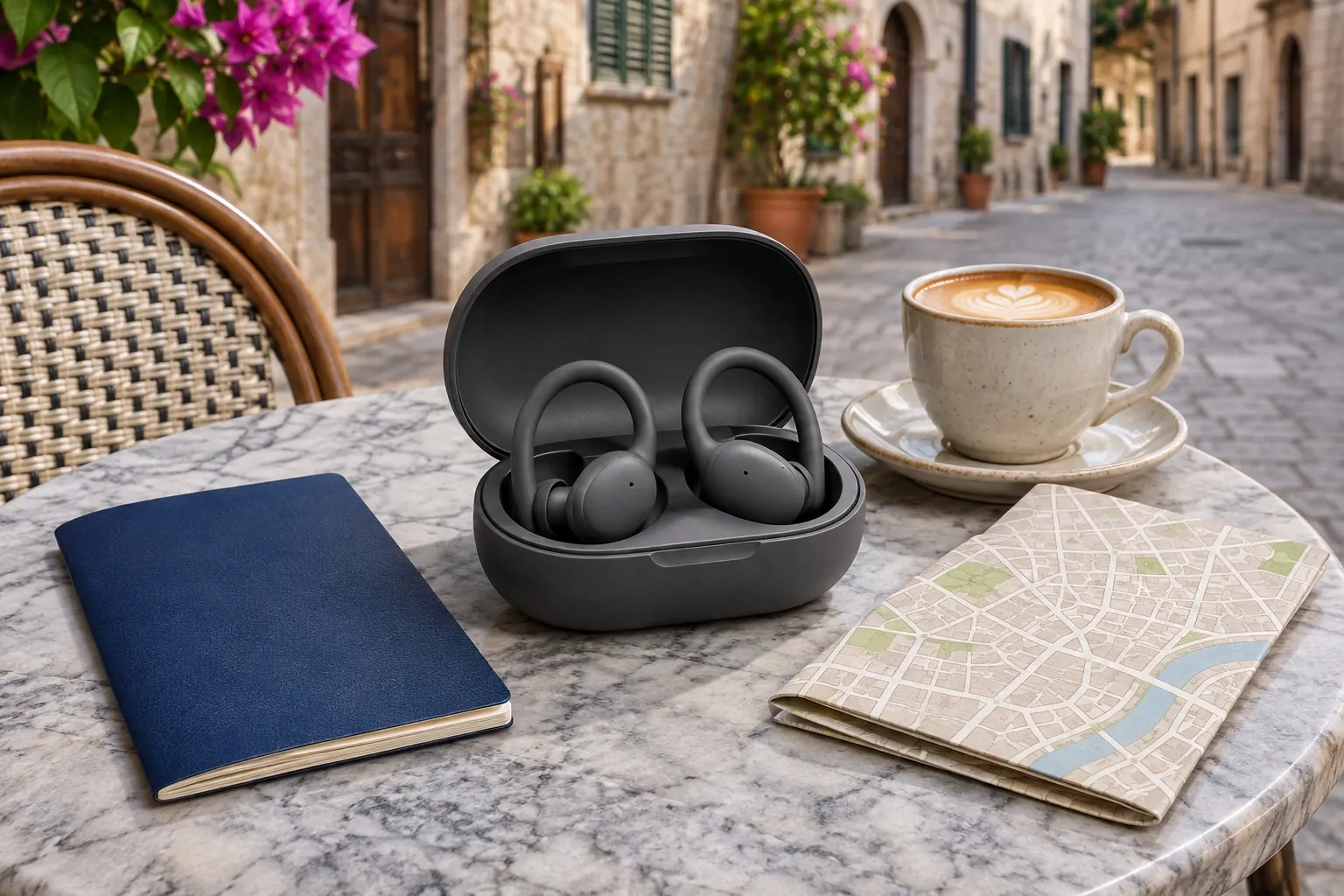
How do translation earbuds work?
A language translator you can carry is really three pieces of software working in a row. Researchers at the National Institute of Standards and Technology (NIST), who evaluated two-way speech translation systems for a US government program, describe the same architecture in every system they tested:
- Speech recognition. The microphone picks up what was said and software turns the sound into text in the speaker's language.
- Machine translation. A second program translates that text into the other person's language.
- Text-to-speech. A third program reads the translated text aloud, through an earbud or a small speaker.
The systems in that NIST evaluation worked in both directions and used either a handheld microphone or a close-talking headset. Today's consumer translators come in the same two shapes: translator earbuds and push-to-talk handheld devices.
In both products we've reviewed, the gadget is the microphone and speaker, and your smartphone does the heavy lifting. You pair the device over Bluetooth, pick your language and the other person's in the maker's app, and talk. That's what brands mean by real time translation: you speak, and a moment later the other person hears the sentence in their own language.
Translator earbuds vs a handheld voice translator
Both kinds of translator device do the same job. What changes is how the conversation feels.
With translator earbuds, the translation plays privately in your ear and your hands stay free for a menu, a suitcase or a steering wheel. The SonaBuds Translating Earbuds are the pair we've reviewed: according to the brand, they connect to your phone, translate both sides of a conversation in more than 140 languages, and play music and take calls when you aren't translating.
A handheld voice translator is built around buttons. With the Enence Instant Translator, the brand's instructions are to hold one button while you speak in your language and release it, and the device says the sentence aloud in the other language. The other person answers with a second button. The brand says it handles 68+ languages and takes about 1.5 seconds per translation.
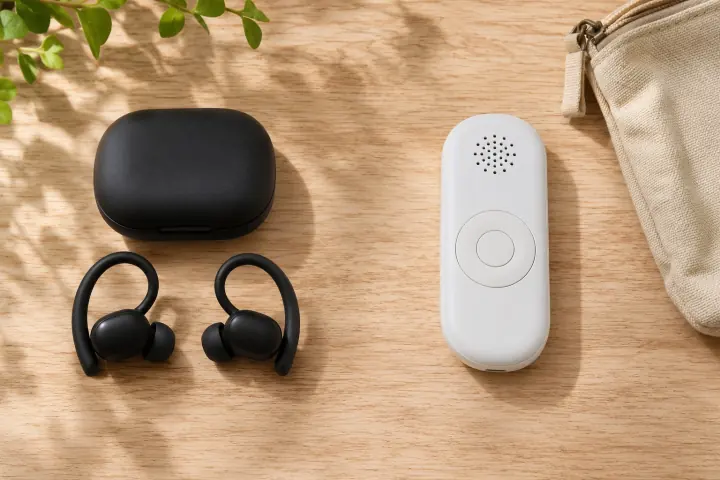
| Translator earbuds | Handheld voice translator | |
|---|---|---|
| How you use it | Wear them and talk; the translation plays in your ear | Hold a button, speak, release; the device speaks the translation |
| How the other person hears you | Through the phone app's speaker, on the pair we reviewed | Out loud from the device's own speaker |
| Hands | Free | One hand on the device |
| Feels most natural for | Longer chats, walking tours, listening while you do something else | Quick exchanges at a counter, a taxi window or a front desk |
| Other uses | Music and calls, on models that support them | The one we reviewed also translates typed text in its app |
| What it needs | A smartphone and the maker's app | A smartphone and the maker's app |
| Good to check first | Fit, your language pair and offline support | Your language pair and which languages have offline packs |
Based on the two translators we've reviewed. Features vary by model, so check the maker's details for the one you buy.
Neither is the better one for everybody. If you'd rather listen than pass something back and forth, go with earbuds. If you travel as a couple or a family and want something anyone can pick up and use with two buttons, a handheld is simpler.
Set up your translator before you leave
The first try shouldn't happen at a ticket counter. Give yourself one evening at home, on your own Wi-Fi, and work through this list.
- Charge the device fully and pack its cable.
- Install the maker's app on your phone and pair the device over Bluetooth.
- Choose your language and the language of the country you're visiting.
- Ask about offline use. With the handheld we reviewed, offline mode works for certain languages once you've downloaded their language packs in the app, according to the seller's terms. Download yours while you still have Wi-Fi.
- Switch the phone to airplane mode with Bluetooth on and try a few sentences, so you know what works without a connection.
- Practice a real exchange with a friend or relative: ordering a meal, asking for directions, checking into a hotel.
- Check with your carrier how mobile data works abroad, since translating online uses your phone's connection.
How to speak so a voice translator understands you
The habits that help a human interpreter help a voice translator too. A federal guide on working with interpreters, published by the Department of Justice, recommends short, simple sentences free of idioms, and tells speakers to avoid compound phrases, double negatives, rambling phrases and colloquialisms. The CDC's guidance for clinicians adds two rules: ask one question at a time, and make sure only one person is talking at a time.

- Keep sentences short. One idea per sentence, then pause and let the translation play.
- Skip slang and idioms. Say "I feel sick" instead of "I'm under the weather".
- One speaker at a time. Wait for the other person to finish before you answer.
- Find a quiet spot. NIST tested its speech translation systems in a lab with no background noise to see the best they could do, and then again outdoors. Step away from the street, the music or the espresso machine and you give the microphone its best chance.
- Speak at a normal pace, close to the microphone, and say names, numbers and addresses slowly.
- Look at the person, not at the gadget. The Justice Department guide gives the same advice for interpreters: address the person directly.
- Check the important parts. The CDC suggests confirming understanding by asking the other person to repeat key information back, which works just as well for a price, a time or a platform number.
It also helps to learn how to say "please repeat" and "I don't understand". The systems NIST evaluated had those two phrases built in as ready-made commands, because every conversation across languages needs them sooner or later.
Language barrier checklist: what to write down before you go
A translator handles the talking. Paper handles the moments when the battery is flat, the signal is gone or you're too rattled to think. The CDC's packing list for travelers and its advice on getting health care abroad cover most of what belongs in your bag:
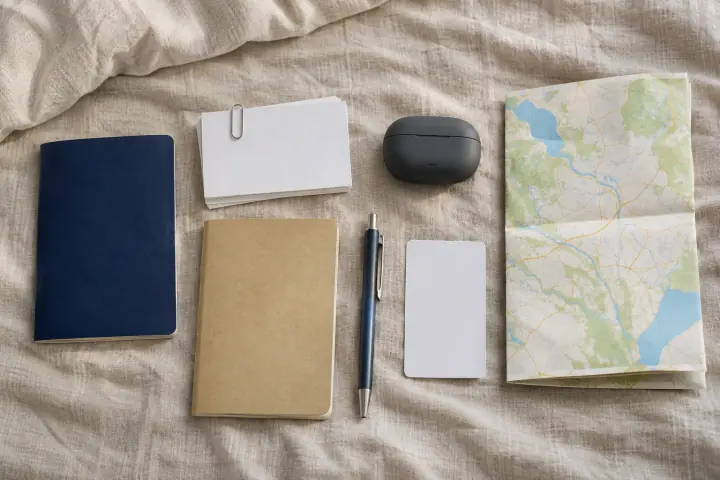
- Where you're staying. The CDC lists lodging information for each destination. Ask your hotel to send its name and address written in the local language and script, so you can show it to a driver.
- A medical card. The CDC advises a card that identifies your blood type, any chronic illnesses, your allergies and the medicines you take, available in your destination's local language if possible. Use generic drug names, because trade names vary widely between countries.
- Allergy cards. For travelers with severe allergies, the CDC's Yellow Book recommends wallet cards with common emergency medical phrases in the local language, chef cards for food allergies, and learning the names of your allergens in that language.
- Copies of your passport and travel documents, plus copies of prescriptions for medicines and glasses. Keep a printed copy and a digital one.
- A contact card with the address, phone number and email of a family member or close contact at home.
- Your health insurance card and travel insurance documents.
- A list of hospitals or clinics at your destination, including emergency services, and the local emergency number.
- The address and phone number of the US embassy or consulate for each country on your route.
Two more steps cost nothing. Enroll in the State Department's Smart Traveler Enrollment Program, which the CDC notes is free and helps the local embassy or consulate locate or contact you in an emergency. And leave copies of your passport, visas and insurance cards with a trusted friend or relative at home.
Travel phrases worth learning in any language
Even with a translator in your pocket, a dozen memorized travel phrases pay off every day of a trip. A greeting in the local language starts the conversation on the right foot, and the practical ones cover you in the seconds before a device is out and switched on. Learn these in the language of wherever you're going, whether that's Spanish phrases for travel in Mexico or a few words of Japanese for Tokyo.
| Phrase in English | When you'll use it |
|---|---|
| Hello / Good morning | Every time you walk into a shop, a taxi or a hotel |
| Please | With every request |
| Thank you | After every answer, helpful or not |
| Excuse me / I'm sorry | Getting someone's attention or squeezing past |
| Do you speak English? | Before you launch into English |
| I don't understand | When the answer comes back too fast |
| Please repeat that slowly | Right after the phrase above |
| Where is...? (the restroom, the station, the pharmacy) | Directions, many times a day |
| How much does this cost? | Markets, taxis, tickets |
| I'm allergic to... | Restaurants and pharmacies; learn your allergen's name too |
| I need a doctor | A medical problem |
| Help! / Please call the police | An emergency |
Have a native speaker, your hotel or an official phrasebook confirm the wording and pronunciation, and write the phrases on a card you keep with your passport.
A handy trick: say each phrase into your translator at home and listen to the result a few times. The maker of the handheld we reviewed lists hearing a phrase and repeating it as a second use for the device.
How to learn a language fast enough for a trip
If you've searched for how to learn a language fast before a vacation, it helps to know the scale of the job. The State Department's Foreign Service Institute, which trains US diplomats, groups languages by how much class time native English speakers need. In the version of its ranking reproduced in 2019 on Language Log, a linguistics blog hosted by the University of Pennsylvania, languages closely related to English, such as Spanish, French and Italian, take about half a year of full-time classes. Languages the list calls exceptionally difficult for English speakers, including Arabic, Mandarin, Japanese and Korean, take 88 weeks (2,200 hours).
Those are full courses, not a few weeks of evening practice. So set a goal that fits the calendar: the twelve phrases above, numbers for prices, and the words on your allergy card. Let a translator carry the longer conversations, and treat every exchange as a free lesson.
Keep the volume comfortable
Translator earbuds sit in or on your ears for hours on a travel day, often with music between conversations. The National Institute on Deafness and Other Communication Disorders (NIDCD) says sounds at or below 70 A-weighted decibels are unlikely to cause hearing loss even after long exposure, while long or repeated exposure at or above 85 can. It puts music through headphones at maximum volume at 94 to 110.
The fix is simple: set the volume just high enough to hear the translation clearly, and move to a quieter spot instead of turning it up. NIDCD's rule of thumb is to avoid sounds that are too loud, too close or last too long. If you like to keep your ears open to traffic and announcements, our guide to bone conduction headphones explains open-ear designs.
When to get professional help
Translators are made for everyday conversation: meals, directions, shopping, small talk and getting to know people. Some situations call for a trained person as well, and it's worth knowing in advance who to ask.
- Medical care. For a diagnosis, a consent form, medication instructions or anything about a child's health, ask the hospital or clinic for a professional interpreter. The CDC's guidance for clinicians is to provide professional interpretation even when a patient has a friend or family member along, to confirm the language and dialect when arranging it, and never to use a child as an interpreter. Hand over your medical card as well.
- Finding a doctor abroad. The nearest US embassy or consulate can help travelers locate medical services and notify friends, family or an employer of an emergency, according to the CDC. Emergency consular services are available 24 hours a day, 7 days a week, at 888-407-4747 or 202-501-4444.
- Your insurer's assistance line. The CDC notes that some supplemental travel insurance plans give access to pre-selected local healthcare professionals through a 24-hour emergency hotline. Put that number on your contact card.
- Arrest or detention. Ask the police or prison officials to notify the US embassy or consulate immediately.
- Crime or a stolen passport. Contact the local authorities and the nearest US embassy or consulate. The State Department can help replace a stolen passport and contact family and friends.
- Contracts and official paperwork. For anything you have to sign, such as a lease, a police report or a legal document, ask for a professional interpreter or translator before you sign.
You can look up any US embassy or consulate through USAGov, which links to usembassy.gov. Save the page for your destination before you fly.
Translators we've reviewed
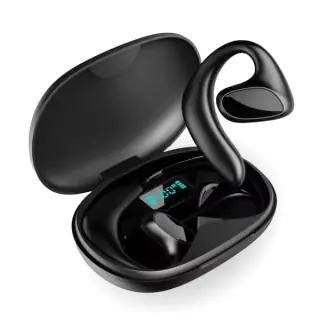
SonaBuds review
Travelers and families who want hands-free help with simple, everyday conversations and are comfortable using a phone app. From $59.90.
Read the review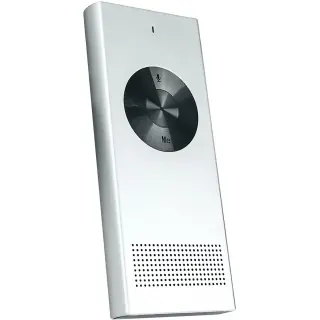
Enence Translator review
Couples, families and travel partners who want a simple push-to-talk translator for everyday conversations and are fine pairing it with a phone. From $52.25.
Read the review
FAQ
How do translation earbuds work?
They pair with a phone app over Bluetooth. The microphone picks up speech, software turns it into text, translates the text and reads the result aloud in your ear. NIST describes the same three steps in the speech translation systems it has evaluated: speech recognition, machine translation and text-to-speech.
Do translator earbuds work without a phone or internet?
The ones we've reviewed need a smartphone and the maker's app. Offline use depends on the model and the language: the brand behind SonaBuds Translating Earbuds says they work offline, and the seller of the handheld we reviewed says offline mode covers certain languages after you download their packs. Test your language pair in airplane mode before the trip.
Is a voice translator device better than translator earbuds?
It depends on how you'll use it. A push-to-talk voice translator like the Enence Instant Translator speaks each sentence aloud and is easy to share at a counter or with a travel partner. Earbuds keep your hands free and the translation private, which suits longer conversations.
How do I get the best real time translation?
Speak in short, plain sentences without slang, let one person talk at a time, and move somewhere quiet. Say names, numbers and addresses slowly, and ask the other person to repeat anything important back to you.
How can I get past a language barrier in an emergency?
Carry a card with your blood type, allergies, conditions and medicines in the local language, as the CDC advises, and keep your hotel address in the local script. The nearest US embassy or consulate can help you find medical services, and emergency consular help is available around the clock at 888-407-4747 or 202-501-4444.
Should I still learn travel phrases if I have a language translator?
Yes. A greeting, please, thank you, "I don't understand" and "I need a doctor" take an evening to learn and work instantly. The translator then handles everything longer than a phrase.
Sources
- Performance Evaluation of Speech Translation Systems, Weiss et al., National Institute of Standards and Technology and MITRE
- Executive Order 13166 Limited English Proficiency Resource Document: Tips and Tools from the Field, US Department of Justice, Civil Rights Division
- Health Communication with Refugee, Immigrant, and Migrant Communities, CDC Yellow Book
- Getting Health Care During Travel, CDC Travelers' Health
- Pack Smart, CDC Travelers' Health
- What To Do When Sick Abroad, CDC Yellow Book
- Severely Allergic Travelers, CDC Yellow Book
- Safety and Security Overseas, CDC Yellow Book
- Find a U.S. embassy, USAGov
- Difficult languages and easy languages, part 2 (Foreign Service Institute language categories), Victor Mair, Language Log, University of Pennsylvania (2019)
- Noise-Induced Hearing Loss, National Institute on Deafness and Other Communication Disorders (NIH)
This guide is general information, not medical, legal or travel-security advice. Translation devices are meant for everyday conversation; for medical, legal and emergency situations, ask for a professional interpreter and contact the nearest US embassy or consulate.