
Eyes
Do Blue Light Glasses Work? What the Research and Eye Doctors Say
Do blue light glasses work? For eye strain, probably not: a 2023 Cochrane review of 17 trials found they may make no difference, and the American Academy of Ophthalmology doesn't recommend them for computer use. For sleep the evidence is mixed. Here's what the lenses do, what the studies found, and the free habits that do more for tired eyes after a day of screens.
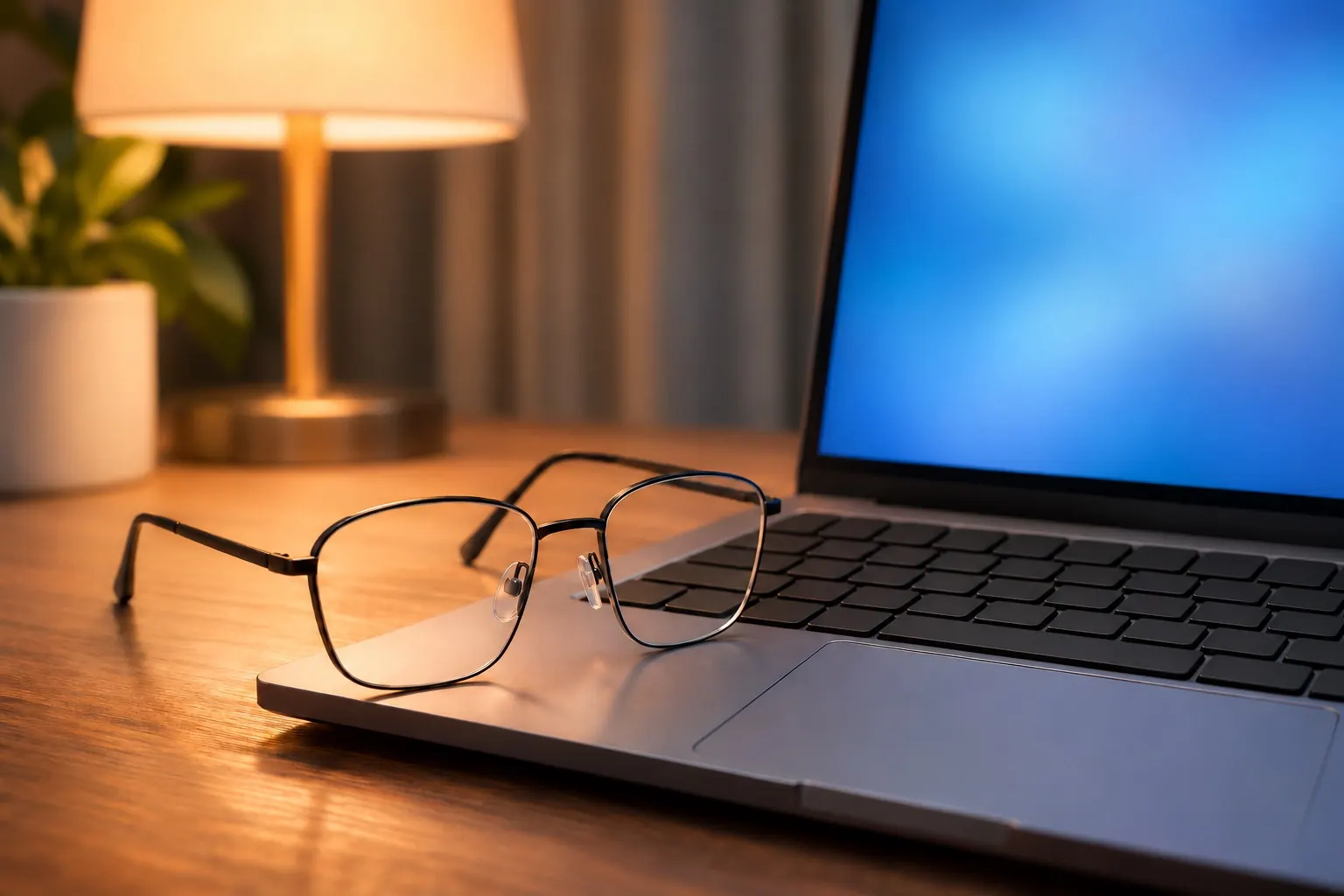
What are blue light glasses, and what do they do?
Blue light glasses, also sold as blue light blocking glasses or blue light filter glasses, have lenses that filter out part of the blue wavelengths of visible light before they reach your eyes. The Cochrane review describes them as lenses that filter ultraviolet radiation and varying portions of short-wavelength visible light. Some are clear with a faint tint or coating, and others are visibly yellow or amber.
They're marketed with three promises: less eye strain from screens, protection for your retinas and better sleep. The American Academy of Ophthalmology (AAO) sums up the advertising this way: overexposure to blue light is said to cause digital eye strain, disrupt sleep cycles and even lead to blinding eye diseases. Each of those claims has been checked, and they don't hold up equally.
Do blue light glasses work for eye strain?
This is the claim with the most research behind it, and the answer so far is no. In 2023, Cochrane reviewers pooled the randomized trials that compared blue-light filtering lenses with ordinary lenses in adults. They found 17 trials, with between 5 and 156 participants each, lasting from less than a day to five weeks.
Their conclusion: blue-light filtering lenses may not reduce the symptoms of eye strain from computer use over the short term, compared with regular lenses. In the largest trial that measured visual fatigue, with 120 participants, the two kinds of lenses scored about the same. The reviewers rated this as low-certainty evidence, because the trials were small and short and none was free of the risk of bias, so better studies could shift the picture.
The AAO's position matches. It says several studies suggest blue light-blocking glasses don't improve symptoms of digital eye strain, and that it doesn't recommend any special eyewear for computer use.
| Claim | What the 2023 Cochrane review found | Certainty of the evidence |
|---|---|---|
| Less eye strain at the computer | May make no difference compared with regular lenses in the short term | Low |
| Sharper vision | Probably little or no effect (1 trial, 156 participants) | Moderate |
| Better sleep | Unknown: 3 of 6 small trials found better sleep scores and 3 found no difference (148 participants in all) | Very low |
| Protection for the retina or macula | No trial measured it | No evidence |
| Side effects | Infrequent: headache, discomfort wearing the glasses and lower mood were reported | Low |
Source: Singh S and colleagues, Cochrane Database of Systematic Reviews, 2023. The review covered 17 randomized trials in adults, with follow-up of five weeks or less.
Is blue light bad for your eyes?
Not at the level your screens give off, as far as anyone has shown. The AAO says there's no scientific evidence that the light coming from computer screens is damaging to the eyes, and that the amount of light from a computer has never been shown to cause any eye disease.
Screens also aren't your main source of blue light. The sun is. The AAO notes that blue light exposure from screens is much less than what you get from sunlight, and that other sources include fluorescent and LED bulbs. Its spokesperson goes a step further and says it's premature to take preventive action against blue light, because there could be unintended consequences. Blue light during the day helps keep you awake and alert.
You may see a different message elsewhere. The American Optometric Association (AOA) says on its computer vision syndrome page that blue light from LED lighting and screens can negatively affect vision over the long term, and that special lens tints and coatings can reduce its impact. The Cochrane review couldn't settle that point, because none of the 17 trials looked at the health of the macula. So long-term protection is unproven either way, and nobody has shown that skipping the filter harms your eyes.
What really causes digital eye strain
If blue light isn't the culprit, why do your eyes feel gritty at 4 p.m.? Mostly because of how you use the screen. People normally blink about 15 times a minute, the AAO explains, but only about 5 to 7 times a minute while using computers and other screens. Fewer blinks means a drier eye surface, and that brings stinging, blurring and tired eyes.
The AOA calls the result computer vision syndrome, or digital eye strain, and lists eyestrain, headaches, blurred vision, dry eyes and neck and shoulder pain as its most common symptoms. Poor lighting, glare on the screen, the wrong viewing distance, poor posture and uncorrected vision problems all feed it. The people at greatest risk, the AOA says, spend two or more continuous hours at a screen every day, which describes most office workers.
The reassuring part is that the AAO says eye strain doesn't cause lasting damage, and most symptoms ease once you step away from the screen.
The 20-20-20 rule and other habits that help more
These are the fixes the AAO and the AOA recommend. They're free, and you can start them today with the glasses you already own.

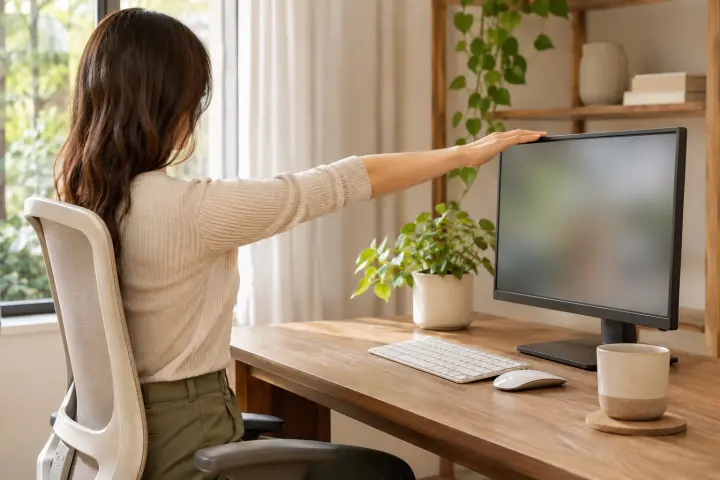
- Follow the 20-20-20 rule. Every 20 minutes, shift your eyes to an object at least 20 feet away for at least 20 seconds. A window works well.
- Blink on purpose. It sounds silly, and the AAO still suggests a sticky note on your monitor as a reminder.
- Use artificial tears when your eyes feel dry. In a dry, warm room, a humidifier can help too.
- Sit about 25 inches, or arm's length, from the screen, and position it so you're gazing slightly downward.
- Match the screen to the room. If your screen glows brighter than your surroundings, your eyes work harder, so adjust the brightness and try increasing the contrast.
- Cut the glare. Move the screen away from windows and overhead lights, or add a matte screen filter.
- If you wear contact lenses, give your eyes a break by wearing your glasses for part of the day.
- Take a longer rest on heavy days. The AOA suggests resting your eyes for 15 minutes after two hours of continuous computer use.
If you're over 40 and the strain comes mostly from reading small text, the problem may be your reading power rather than your screen. Our reading glasses strength chart shows where to start.
Blue light glasses for sleep
Sleep is where blue light has a real, documented effect. The National Institute of General Medical Sciences notes that light from electronic devices at night can confuse your biological clock. The AAO explains that blue light wakes us up and stimulates us, and that when you're exposed to bright light at night the brain stops producing melatonin, the sleep hormone.
Whether glasses solve that is less clear. The Cochrane reviewers found six small trials on sleep, with 148 participants in all. Three reported better sleep scores with blue-light filtering lenses and three found no difference, in very different groups of people, so the reviewers concluded the effect on sleep is unknown. Cleveland Clinic lands in a similar place: the glasses may help someone who uses screens late at night, but healthy sleep habits matter just as much, if not more.
You can cut evening blue light without buying anything:
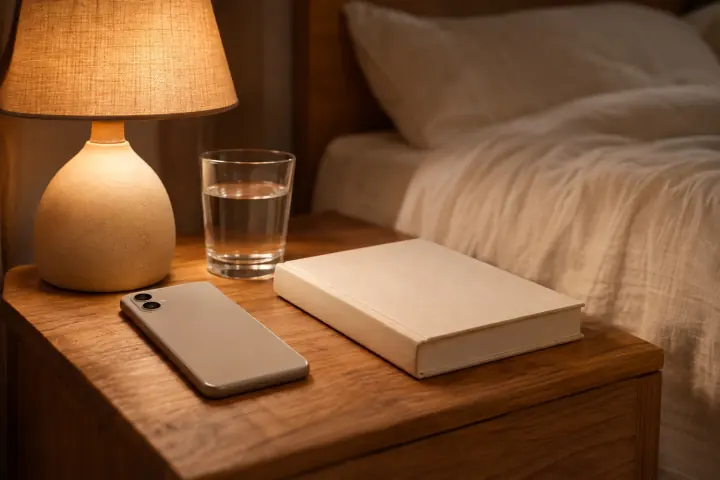
- Put screens away before bed. The AAO's spokesperson recommends limiting screen time in the two to three hours before you go to sleep. The National Heart, Lung, and Blood Institute suggests at least keeping the last hour for quiet time, away from bright artificial light such as a TV or computer screen.
- Turn on night mode or dark mode in the evening. The AAO says it's a simple way to reduce both sleep disruption and eye strain.
- Keep your bedroom quiet, cool and dark, and go to bed and wake up at the same time every day.
For more on winding down, see our guide on how to fall asleep faster.
Do blue light glasses help with headaches?
There's no good evidence that they do. Headaches are one of the most common symptoms of digital eye strain, according to the AOA, and the Cochrane review found that blue-light lenses may not reduce eye strain symptoms. Headache even showed up, infrequently, among the side effects reported by people wearing the blue-light lenses in the trials.
Screen headaches more often trace back to things glasses with a filter can't fix: long stretches without a break, glare, a screen at the wrong distance, or a vision problem that needs correcting. The AOA notes that even minor uncorrected vision problems can significantly affect comfort at a computer. If headaches keep coming, get an eye exam before you buy a pair online.
Blue light glasses benefits: are they worth it?
Going by the evidence, the benefits of blue light glasses are modest and personal. A fair summary:
- Comfort and glare. Cleveland Clinic notes the glasses might reduce glare from your screen, thanks to the tint and anti-reflective coating rather than the blue-light blocking itself, and calls that a personal preference more than a proven effect.
- Evening use. If you can't avoid screens late at night, they're one of several ways to cut blue light, alongside night mode and dimmer lighting.
- The placebo effect. Feeling that you're doing something for your eyes can make symptoms feel better, as Cleveland Clinic acknowledges.
- Low risk. Side effects in the trials were infrequent.
They aren't worth it as protection against eye disease, and they don't replace breaks, a sensible screen setup or an up-to-date prescription. Don't confuse them with computer glasses, either. The AAO describes those as prescription glasses focused for screen distance, about 20 to 26 inches from your face, that may reduce eye strain for people who work at a computer for many hours, and it stresses that they aren't the same thing as blue-light blocking glasses.
Blue light reading glasses: one pair we've reviewed
Many readers now come with a blue-light filter built in, so you may end up with one whether you set out to or not. BlueLume Glasses are the pair we've reviewed. The brand describes them as lightweight glasses with near-to-far lenses for reading and seeing farther away, a photochromic tint that darkens in sunlight, and a built-in blue-light filter that it says adds comfort around computers, phones, tablets and TVs and helps ease screen-related eye fatigue.
That last part is the brand's claim, and as you've seen above, the research doesn't back blue-light filters for eye strain. In our review we treat the filter as a comfort extra rather than the reason to buy. The case for BlueLume is convenience: one pair for the page, the screen and a sunny walk. They aren't a treatment for any eye condition, there are no strength options, and the brand itself says a custom prescription may still be necessary for diagnosed eye conditions or individual vision needs.
When to see an eye doctor
Tired eyes after a long day of screens are common and usually temporary. See an eye doctor if:
- Your symptoms keep coming back even after you change your screen habits. The AAO says to contact your ophthalmologist if they continue.
- Your eyes are consistently red, blurry or watery, or they become painful or sensitive to light.
- You have frequent headaches, or your distance vision stays blurry after you stop working. The AOA notes that some people have reduced vision even after leaving the screen.
- Putting screens away and using night mode doesn't fix your sleep or your eye strain. The AAO suggests asking whether another condition could be contributing.
- You're over 40 and haven't had a baseline eye exam. The AAO recommends one by age 40, and the AOA suggests a thorough eye exam every year for heavy computer users.
Get emergency care if you lose vision in one or both eyes, even briefly, see double, notice a shade or curtain across part of your vision, or have sudden blurred vision with eye pain, especially in a red eye. MedlinePlus lists these as emergencies, and no pair of glasses addresses them.
Glasses we reviewed
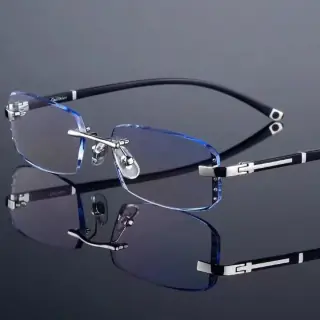
BlueLume Glasses review
Casual readers who want one light pair for the page, the screen and a sunny walk, and don't need a specific prescription. From $35.56.
Read the review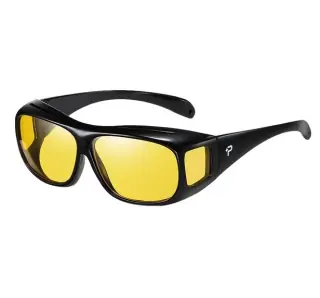
PolorVision Driving Glasses review
Drivers who wear prescription glasses and want one fit-over pair with polarized, UV-blocking lenses for sun glare, low sun and wet roads. From $49.99.
Read the review
FAQ
Do blue light glasses really work?
Not for eye strain, on current evidence. A 2023 Cochrane review of 17 randomized trials found blue-light filtering lenses may not reduce eye strain from computer use compared with regular lenses, and the American Academy of Ophthalmology doesn't recommend them. Their effect on sleep is still unclear.
What do blue light glasses do?
They filter out part of the blue wavelengths of light from screens and other sources before it reaches your eyes. That hasn't been shown to reduce eye strain or protect your eyes. Some people find the tint and anti-glare coating more comfortable.
Do blue light glasses help you sleep?
Maybe. Of six small trials in the Cochrane review, three found better sleep scores and three found no difference. Putting screens away before bed and using night mode in the evening cuts blue light at the source.
Are blue light glasses bad for your eyes?
There's no sign they harm your eyes. In the trials, side effects were infrequent and included headache, discomfort wearing the glasses and lower mood. If you need vision correction, a filter doesn't provide it.
Do blue light glasses help with headaches?
There's no good evidence that they do. Screen headaches are usually tied to eye strain, glare, long sessions without breaks or an uncorrected vision problem, so the 20-20-20 rule and an eye exam are better first steps.
What is the 20-20-20 rule?
Every 20 minutes, look at something at least 20 feet away for at least 20 seconds. Both the American Academy of Ophthalmology and the American Optometric Association recommend it to ease digital eye strain.
Sources
- Blue-light filtering spectacle lenses for visual performance, sleep, and macular health in adults, Cochrane Database Syst Rev (2023), PubMed
- Are Blue Light-Blocking Glasses Worth It? American Academy of Ophthalmology (2021)
- Should You Be Worried About Blue Light? American Academy of Ophthalmology (2021)
- Should You Use Night Mode to Reduce Blue Light? American Academy of Ophthalmology (2019)
- Computers, Digital Devices, and Eye Strain, American Academy of Ophthalmology (2024)
- Computer vision syndrome, American Optometric Association
- Do Blue Light Glasses Work? Cleveland Clinic (2026)
- Circadian Rhythms, National Institute of General Medical Sciences
- Healthy Sleep Habits, National Heart, Lung, and Blood Institute
- Get an Eye Disease Screening by Age 40, American Academy of Ophthalmology (2026)
- Vision problems, MedlinePlus Medical Encyclopedia, National Library of Medicine
This guide is general information, not medical advice. Blue light glasses aren't a treatment for eye strain, headaches, sleep problems or any eye condition. See an eye doctor about symptoms that persist or any sudden change in your vision.