
Travel security
RFID Wallet or RFID Blocking Card: How to Protect Your Cards and Passport on the Go
An RFID wallet is a wallet with blocking material built in, made to keep the chips in tap-to-pay cards and e-passports from being read in your pocket. An RFID blocking card is made for the same job inside the wallet you already own. Below: what RFID is, how the blockers compare, how to avoid pickpockets and card skimmers, and what to do if your wallet goes missing.
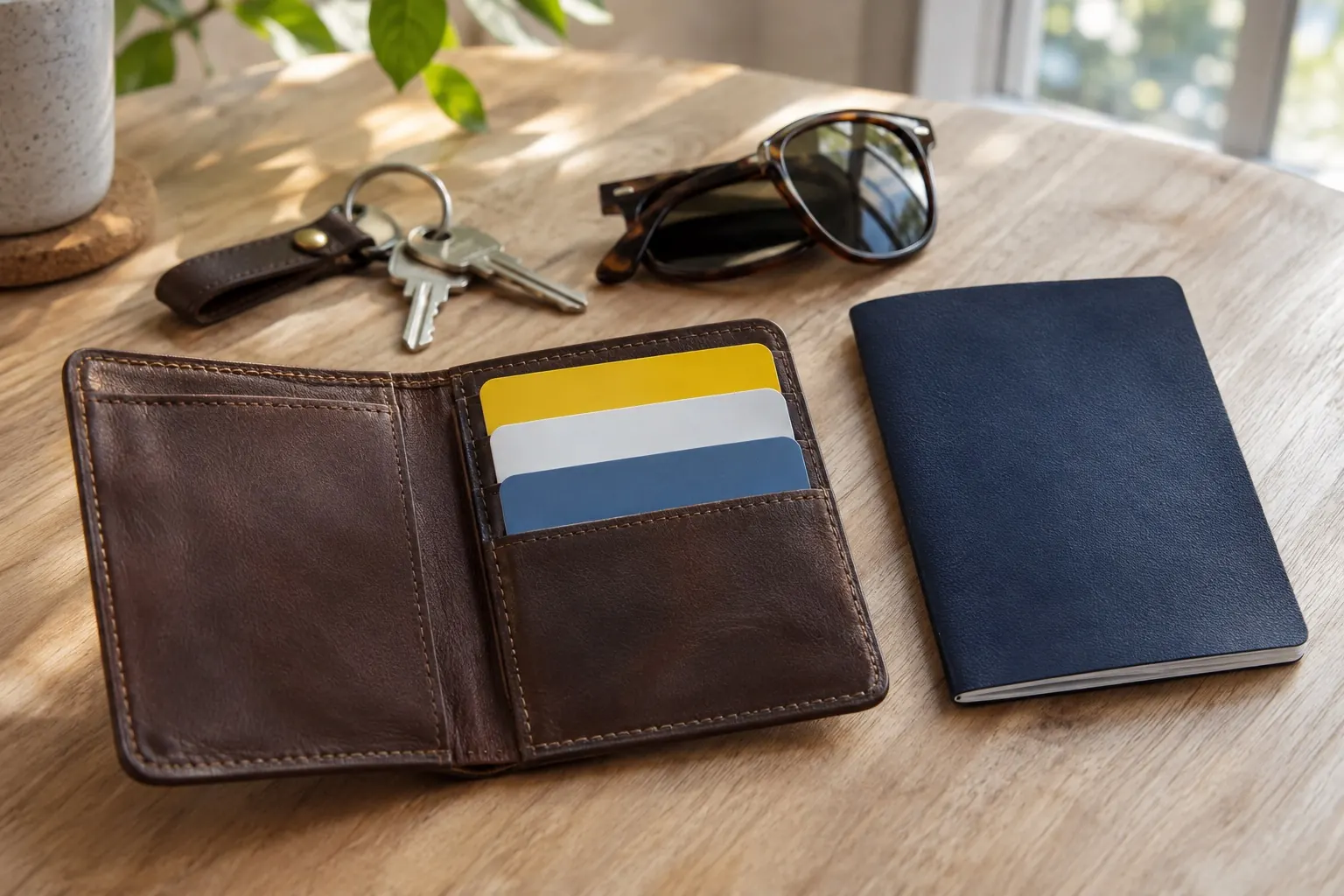
What is RFID, and where is it in your wallet?
RFID stands for radio frequency identification. The Department of Homeland Security (DHS) describes it as technology that uses radio waves to identify people or objects: a reader picks up information from a tag at a distance, with no physical contact and no line of sight.
The FDA breaks an RFID system into two parts, tags and readers. The reader's antennas send out radio waves and receive the signal that comes back from the tag. Many tags are passive: they have no battery and are powered by the reader itself.
You probably carry a few of these chips every day:
- Tap-to-pay cards. Contactless payment uses RFID to bridge the gap between the card and the store's terminal, as an explainer from the University of Southern California's engineering school puts it. A card that can tap carries a small symbol of four curved lines, like a sideways Wi-Fi icon.
- E-passports. According to DHS, an e-passport contains an electronic chip that holds the same information printed on the passport's data page: your name, date of birth and other biographic details. The United States also requires the chip to carry a digital photograph of the holder. An e-passport has a small symbol on its front cover.
- Border and trusted traveler cards. DHS says vicinity-type documents can be read by authorized readers from up to 20 to 30 feet away, while proximity-type documents can be read only from a few inches away.
What is RFID blocking?
RFID blocking is the name for products designed to stand between those chips and any reader you didn't choose to tap. The logic follows from how a passive chip works: it only answers when a reader's radio waves reach it, so blocking products are built to interfere with that signal while the card sits in your pocket or bag.
It comes in three forms: a wallet with the blocking layer built in, a sleeve that covers one card or passport, and a blocking card that rides in the wallet next to your other cards. With all three, you take out the card you want, tap or insert it, and put it back.
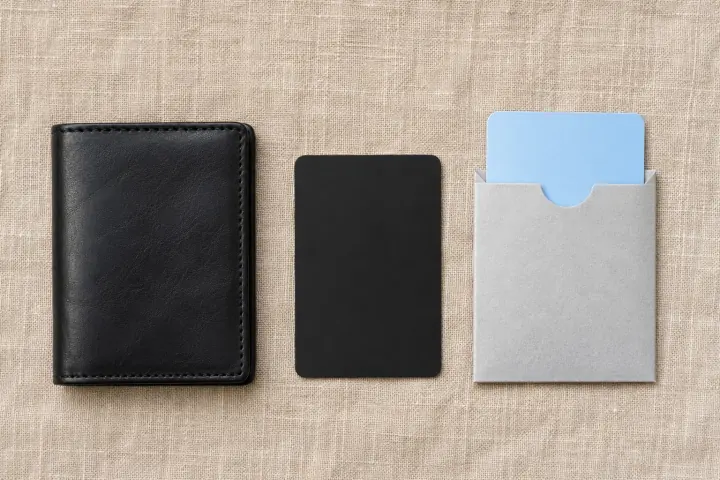
RFID wallet vs. RFID blocking card vs. sleeve
The right choice mostly comes down to how you already carry your cards. An RFID wallet replaces your wallet. A blocking card or a sleeve works with the one you own.
| Type | What it is | Good for | Keep in mind |
|---|---|---|---|
| RFID wallet | A wallet, purse or passport holder sold with a blocking layer built into it | Anyone who is shopping for a new wallet anyway | It replaces the wallet you have, and cards kept elsewhere (a phone case, a bag pocket) aren't inside it |
| RFID blocking card | A card the size of a bank card that sits in a card slot beside your own cards | People who like their current wallet, and households that want one per wallet, purse and passport holder | Makers describe a short range around the card, so keep it in the same compartment as the cards it covers |
| RFID sleeve | A slim envelope that holds one card or one passport | A single document, such as a passport in a travel pouch | One sleeve per item, and the card comes out of the sleeve each time you pay |
Whichever you pick, take the paying card out to tap.
We've reviewed two blocking cards. The Guardality RFID Blocking Card is a black card that the brand says is 1.1 mm thick and blocks the high-frequency RFID and NFC signals, the 13.56 MHz kind, that contactless payment cards use. According to the brand's FAQ, it creates a shield of about 5 cm (roughly 2 inches) around itself, enough to cover the cards stacked beside it, with no battery, app or setup.
The Credifence RFID Blocking Card is built on the same idea: a slim insert that the brand says blocks RFID and NFC reads for the whole wallet at once and needs no charging. Both are sold in multi-packs.
Two tips from our reviews apply to any blocking card. Put it in the middle of your card stack instead of a far pocket, so every card sits inside the range the maker describes. And give a second wallet, a passport holder or a phone case with card slots its own card.
How to carry cards, cash and your passport on a trip
A blocker covers the wireless side. The rest is about what you carry and where you carry it, so that one lost wallet can't take everything with it.
- Carry only the cards you need. That's the FTC's advice for every day, not just for trips. Leave the rest at home or locked up where you're staying.
- Keep your PIN out of your wallet, purse and pocket. The FTC says never to write it on the card or on any slip of paper that could be lost or seen.
- Leave your Social Security card at home. USA.gov says to store it in a safe place and not carry it in your wallet.
- Split your cash. Duke University's global education office tells travelers to carry only the cash they need for the day and keep the rest in a bank, a hotel safe or a deposit box.
- Wear valuables under your clothes on travel days. Duke recommends a money belt or a pouch that hangs around your neck, worn under clothing.
- Make copies. Brown University's study abroad office suggests two photocopies of your passport ID page, tickets and credit cards: one left at home and one carried separately from the originals, plus a digital copy on your phone.
- Save each card issuer's phone number in your phone's contacts. The FTC points out that the right number is on your statement or online account, and you'll want it when the card itself is gone.
How to avoid pickpockets
Petty theft is the crime travelers meet most. The University of South Carolina's education abroad office says the most common crimes abroad are pickpocketing and non-violent theft, and that a pickpocket can be a child or an adult who blends easily into a crowd. Brown's study abroad office names central train stations and crowded shopping areas as the most common places for purse and phone snatchings.
A pickpocket looks for an easy target and a moment of distraction, such as a phone call or a look at the timetable. These habits take both away:
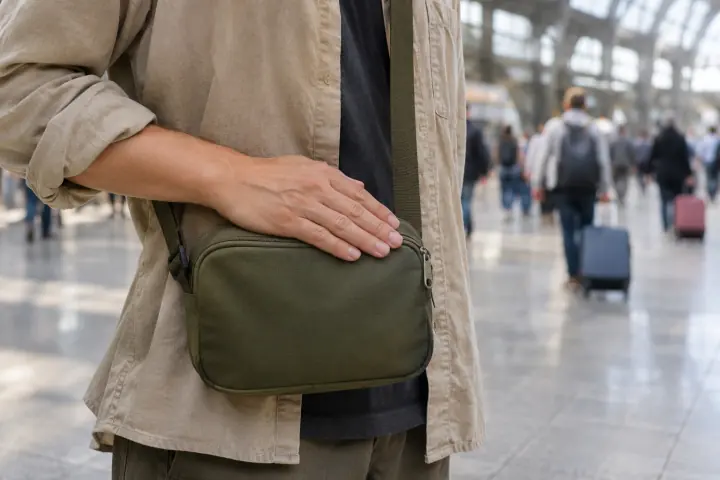
- Move your wallet forward. Weber State's advice is to keep your money and wallet in a front pocket or under your clothes.
- Wear bags in front and across your body. Duke says a bag with a shoulder strap should go across your body, and Weber State suggests wearing a backpack on your front in crowds.
- Keep valuables out of open pockets. Duke warns against exterior bag pockets that are open at the top, and against keeping valuables in backpacks.
- Watch for the bump. Pickpockets often work with an accomplice who jostles you, asks for directions or distracts you some other way, according to Duke.
- Look like you know where you're going. Duke notes that pickpockets tend to pick people who look lost or aren't paying attention. Step inside a shop or cafe to check your map.
- Never park your wallet or phone on a cafe table, the University of South Carolina advises, and don't leave bags unattended in airports and train stations.
How to spot a card skimmer at ATMs and gas pumps
A card skimmer is a different threat from a pickpocket: your card never leaves your hand. The FTC describes skimmers as illegal card readers attached to payment terminals that grab data off a card's magnetic stripe without your knowledge. The Secret Service adds that some are plastic overlays made to look like the terminal, and they can capture your PIN as you type it.
Credit card skimming is easier to dodge once you know where to look. Run through these steps before you pay:
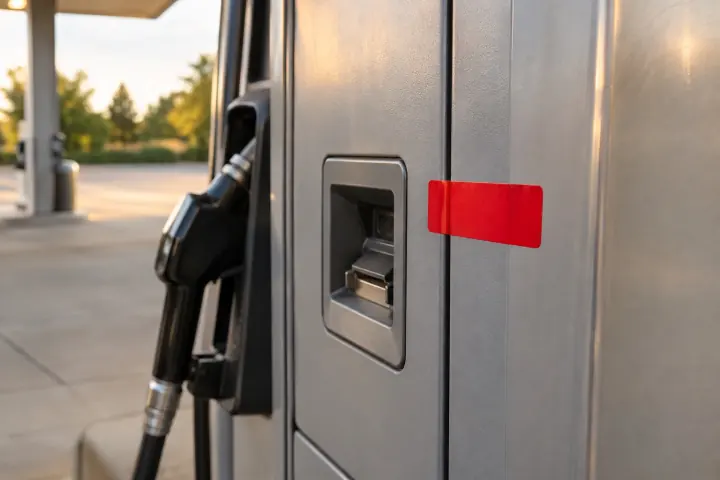
- Choose the machine. The Secret Service recommends ATMs inside financial institutions, in well-monitored bays or near drive-up windows, because they're harder for criminals to reach. The Office of the Comptroller of the Currency (OCC) adds: use well-lit ATMs.
- At a gas pump, look at the cabinet panel. The FTC says to make sure the panel is closed and shows no sign of tampering. Many stations put a security seal over it, and if the panel has been opened, the label will read "void."
- Scan the machine for anything off. The Secret Service lists broken lights, loose or raised parts, and stickers in odd places.
- Tug gently. Pull on the edges of the terminal or the shroud around the keypad. If anything feels loose, the Secret Service says not to use it and to tell the merchant.
- Cover the keypad with your other hand while you enter your PIN, which blocks the view of a hidden camera.
- Tap or use the chip. The Secret Service advises using tap-to-pay or the card's chip instead of the magnetic stripe, and notes that paying with a credit card instead of a debit card limits the exposure of your checking account.
- Check afterward. Look over your account that week, and report any charge you don't recognize right away.
Set up card alerts and guard against identity theft
Alerts turn your phone into an early warning. The OCC recommends turning on alerts for all transactions and checking your statements often for charges you don't recognize. You'll find the setting in your bank's or card issuer's app or website, usually under alerts or notifications.
The same agencies answer how to prevent identity theft with a short list:
- Use multi-factor authentication when your bank offers it, the FTC says. It asks for a second proof, such as a passcode sent to your phone or a fingerprint.
- Consider a credit freeze. The FTC explains that while a freeze is in place nobody can open a new credit account in your name. It's free to place and lift, and it lasts until you lift it.
- Hang up on "card loss protection" offers. The FTC calls these calls and messages a scam. Federal law already protects you from unauthorized use of a credit card.
What to do if you lose your wallet or it's stolen
Speed matters more than anything else here. Under federal law, the FTC explains, you aren't responsible for charges made after you report a card lost or stolen. Work through this list as soon as you notice the wallet is gone:
- Call each card issuer, or use its mobile app, and report the loss. Start with debit and ATM cards, since they draw straight from your bank account. Ask for each card to be deactivated and replaced with a new card and PIN.
- Write down who you spoke to and when. The FTC recommends following up with a letter that gives your account number, when you noticed the card was missing and when you first reported it. Keep a copy.
- Place a fraud alert or a credit freeze. For a fraud alert you contact one credit bureau (Equifax, Experian or TransUnion) and it must tell the other two. The alert is free, lasts one year and tells businesses to check with you before opening new credit in your name. A freeze goes further, and you place it with all three bureaus.
- File a police report if the wallet was stolen, and keep a copy. The OCC suggests giving copies to your banks and the credit bureaus, and Brown notes that a police report helps with insurance claims and with replacing a passport.
- Report a missing passport right away. USA.gov says to file Form DS-64 online with the State Department or call 1-877-487-2778. Once reported, the passport is invalidated and can't be used even if you find it. Outside the US, contact the nearest US embassy or consulate.
- Watch your accounts and your credit reports for the next few weeks. If you see accounts or charges you don't recognize, report it at IdentityTheft.gov or call 1-877-438-4338 to get a recovery plan.
| When you report | Credit card | ATM or debit card |
|---|---|---|
| Before anyone uses the card | $0 | $0 |
| Within 2 business days of learning about the loss | Up to $50 | Up to $50 |
| After 2 business days, but within 60 calendar days of your statement being sent | Up to $50 | Up to $500 |
| More than 60 calendar days after your statement is sent | Up to $50 | All the money taken from the account, and possibly more from linked accounts |
Source: FTC, Lost or Stolen Credit, ATM, and Debit Cards.
When to call the bank, the police or the embassy
Some situations need a phone call now, not a look at the statement next month.
- Call your bank or card issuer right away if a card is missing, if you see a charge or withdrawal you didn't make, or if you think you used a tampered terminal. The Secret Service says to contact the issuer's fraud department, have the card deactivated and ask for a new card and PIN.
- Call the police if your wallet, bag or passport was stolen, or if you lost money to a skimmer, and keep the report. Abroad, Brown's advice is to report anything lost or stolen to the local police.
- Contact the nearest US embassy or consulate if your passport is lost or stolen outside the United States. USA.gov says you may qualify for a limited-validity passport if there isn't time for a regular one.
- Go to IdentityTheft.gov if you see signs that someone is using your identity. USA.gov lists them: bills for things you didn't buy, debt collection calls for accounts you never opened, denied loan applications and mail that stops arriving.
RFID blocking cards we've reviewed
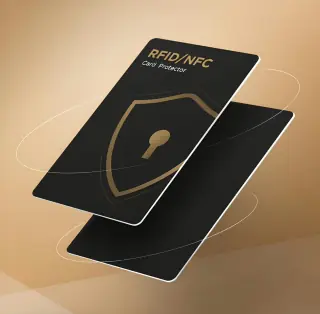
Guardality review
Travelers, commuters and anyone who carries several tap-to-pay cards and wants one card that stays in the wallet and needs no attention. From $13.99.
Read the review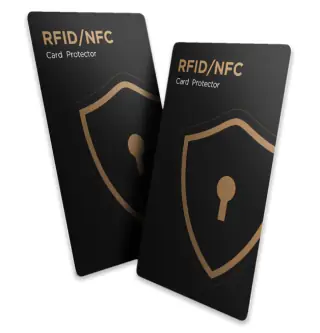
Credifence RFID Blocking Card review
Households that want to put the same thin protector in every wallet at once, and travelers who'd rather not swap wallets to get RFID blocking. From $11.99.
Read the review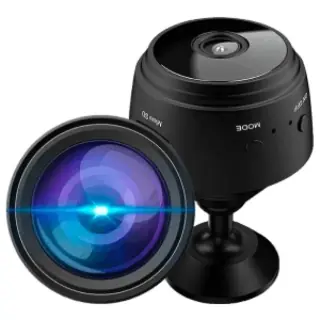
SpyFocus review
Renters and homeowners who want a small, no-drill camera to check on the house, a pet, an entrance or the garage from their phone. From $29.45.
Read the review
FAQ
What is an RFID wallet?
It's a wallet, purse or passport holder made with a blocking layer built in, designed to keep the chips in tap-to-pay cards and e-passports from being read while they're inside. It replaces the wallet you carry now. If you'd rather keep yours, an RFID blocking card or a sleeve is the add-on version.
What is RFID blocking?
RFID is radio frequency identification: a reader uses radio waves to pick up information from a chip without touching it. RFID blocking products are made to interfere with that signal so the chips in your cards stay quiet until you take a card out and tap it yourself.
Do RFID blocking cards work?
A blocking card is built for one job: it sits next to your cards and interferes with reader signals aimed at them. The brand behind the Guardality RFID Blocking Card says its card blocks high-frequency RFID and NFC signals within about 5 cm, enough to cover the cards stacked beside it. You can check yours on day one: hold your closed wallet to a store terminal or transit gate and see that it doesn't read, then take the card out and pay as usual.
Where should an RFID blocking card go in my wallet?
In the middle of your card stack, in the same compartment as the cards you want covered. The makers of the cards we reviewed describe a range of about 5 cm (2 inches), so a long travel wallet or a separate passport holder is better off with its own card.
How do I spot a card skimmer?
Look for a broken seal on a gas pump's cabinet, loose or raised parts, stickers in odd places or broken lights, and gently pull on the edges of the reader and keypad. If anything moves, don't use it. Cover the keypad when you type your PIN, and tap or use the chip instead of swiping.
What should I do first if my wallet is lost or stolen?
Call your card issuers or use their apps to report every card, starting with debit and ATM cards. The FTC says you aren't responsible for charges made after you report. Then place a free fraud alert with one credit bureau, file a police report if it was stolen, and report a missing passport to the State Department.
Sources
- Radio Frequency Identification (RFID): What is it?, Department of Homeland Security (archived page, updated 2024)
- e-Passports, Department of Homeland Security (updated 2026)
- Radio Frequency Identification (RFID), Food and Drug Administration
- Texting Money: How Did Contactless Payment Tap into Existence?, Illumin Magazine, USC Viterbi School of Engineering (2022)
- Lost or Stolen Credit, ATM, and Debit Cards, Federal Trade Commission Consumer Advice
- Credit Freezes and Fraud Alerts, Federal Trade Commission Consumer Advice
- What To Know About Identity Theft, Federal Trade Commission Consumer Advice
- Watch out for card skimming at the gas pump, Federal Trade Commission Consumer Alert (2018)
- ATM and POS Terminal Skimming, United States Secret Service
- Credit Card and Debit Card Fraud, Office of the Comptroller of the Currency
- Identity theft, USAGov
- Lost or stolen passports, USAGov
- Avoiding Unsafe Situations, Duke University Global Education Office
- General Safety Tips, Brown University Undergraduate Study Abroad
- While Abroad, Weber State University Study Abroad
- Crime and Interpersonal Violence, University of South Carolina Education Abroad Office
This guide is general information, not legal or financial advice. Liability rules and reporting steps come from the federal agencies listed above; your bank's or card issuer's own terms may differ, so confirm the details with them. Descriptions of RFID blocking cards are the brands' own.