
Fuel & driving
How to Improve Gas Mileage: Everyday Habits That Use Less Fuel
Here's how to improve gas mileage: accelerate and brake gently, hold a steady speed and ease off above 50 mph, keep your tires at the recommended pressure, clear out extra weight and roof cargo, and combine short trips. Below are the figures the US Department of Energy gives for each habit, a simple way to check your own MPG at the pump, and the signs that it's time to see a mechanic.
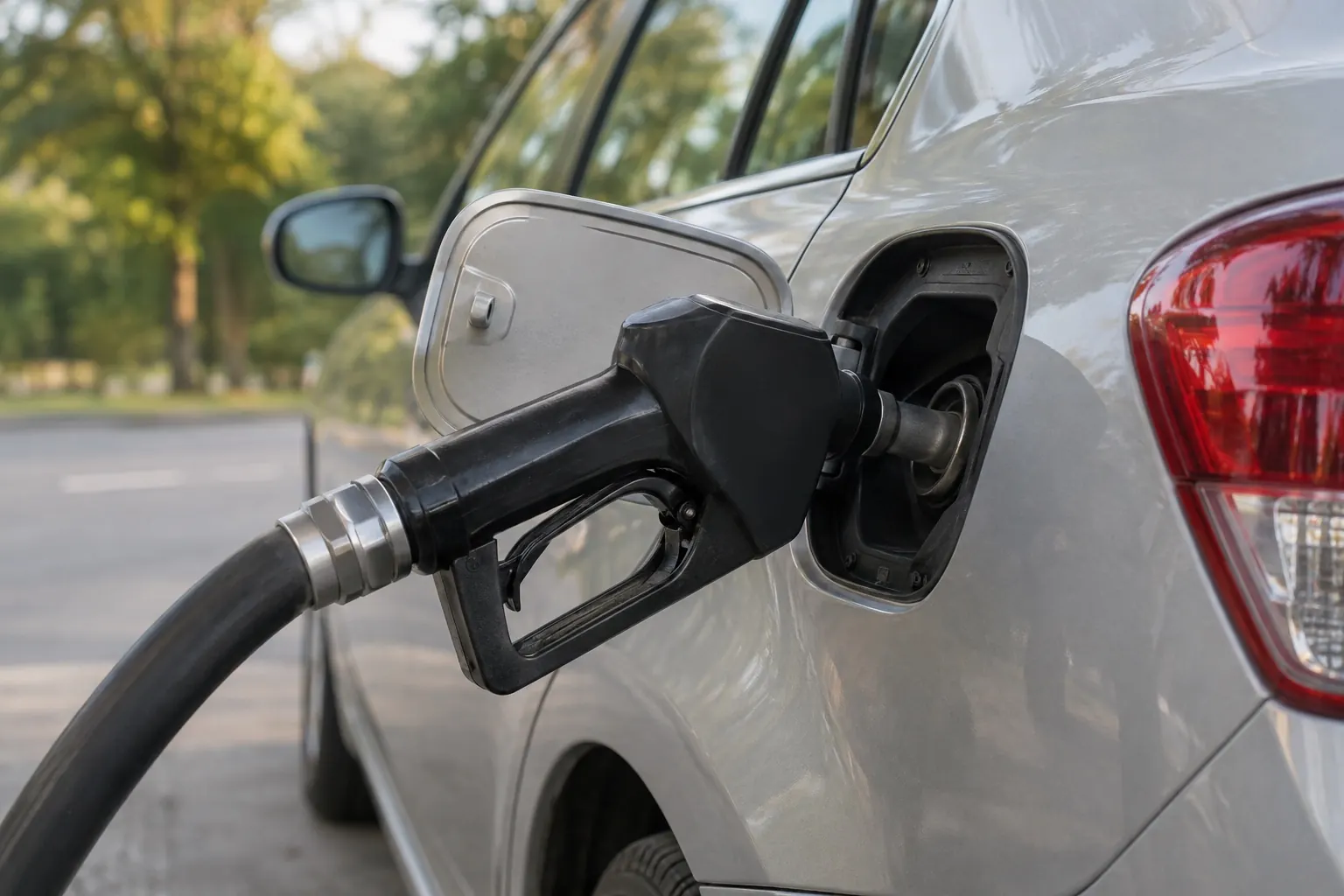
How to get better gas mileage: start with how you drive
The biggest gains cost nothing. Fueleconomy.gov, the fuel economy site run by the US Department of Energy and the EPA, says aggressive driving (speeding, rapid acceleration and hard braking) can lower gas mileage by roughly 15% to 30% at highway speeds and 10% to 40% in stop-and-go traffic. Those figures come from Oak Ridge National Laboratory research.
In practice, driving smoothly looks like this:
- Pull away gently. Press the pedal as if you had a full cup of coffee on the dash.
- Look well ahead. If the light up the road is red, lift off early and coast toward it instead of braking late.
- Leave room. A bigger gap to the car in front lets you ride out small slowdowns without touching the brake.
- Hold a steady pace. Speeding up and slowing down over and over is where the fuel goes.
Feedback helps the habit stick. The Department of Energy's Alternative Fuels Data Center reports, citing a 2018 University of California, Davis study, that instant, in-vehicle feedback on driving improves fuel economy by 6.6% on average. If your dashboard shows a live MPG reading, glance at it as you pull away and you'll soon learn how light a foot your car likes.
Fueleconomy.gov adds a point worth repeating: sensible driving is also safer.
What speed is most fuel efficient?
There's no single number, because each vehicle reaches its best fuel economy at a different speed. What fueleconomy.gov does say is that gas mileage usually drops quickly above 50 mph.
The site puts a price on it. Assuming gas at $4.00 a gallon, each 5 mph you drive over 50 mph is like paying an extra $0.28 per gallon. Slowing down by 5 to 10 mph improves fuel economy by 7% to 14%.
You don't have to crawl. On a long highway drive, settling at the speed limit instead of 10 mph over it is the whole trick.
Does cruise control save gas?
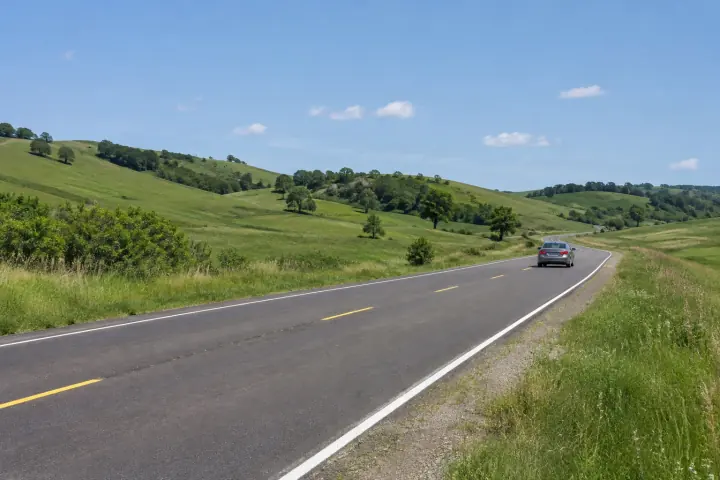
In most cases, yes. Fueleconomy.gov says that using cruise control on the highway helps you maintain a constant speed and, in most cases, saves gas.
The reason is the same one behind smooth driving: a steady speed avoids the small surges of acceleration that a human foot adds without noticing. Set it once you're up to speed on an open highway, and switch back to your own foot in heavy traffic or anywhere the conditions call for full attention to speed.
Fuel efficiency by habit: what each one is worth
Here are the habits side by side, with the figure fueleconomy.gov gives for each. The dollar column is the site's own estimate, based on gas at $4.00 a gallon.
| Habit | What the official source says | Like saving, per gallon |
|---|---|---|
| Drive smoothly | Aggressive driving lowers mileage 15% to 30% on the highway and 10% to 40% in stop-and-go traffic | $0.40 to $1.60 |
| Slow down on the highway | Slowing 5 to 10 mph improves fuel economy 7% to 14% | $0.28 to $0.56 |
| Take off the roof cargo box | A large roof box cuts fuel economy 2% to 8% in the city, 6% to 17% on the highway and 10% to 25% at 65 to 75 mph | $0.08 to $0.68 |
| Clear out extra weight | An extra 100 pounds can reduce MPG by about 1% | $0.04 |
| Keep tires at the right pressure | Proper inflation improves mileage 0.6% on average and up to 3% in some cases | $0.02 |
| Use the recommended oil grade | The manufacturer's recommended grade of motor oil improves mileage 1% to 2% | $0.04 to $0.08 |
| Stop idling | Idling uses a quarter to half a gallon of fuel per hour | $0.02 to $0.03 for every minute not idled |
Source: fueleconomy.gov (US Department of Energy and EPA). Results vary by vehicle and conditions; the idling figure is the cost per minute with the air conditioning off.
Stacked together over a year of commuting, the rows add up, which is why the best answer to how to save money on gas is a handful of small habits.
How to save gas while driving: stop idling
An idling engine gets zero miles per gallon. According to fueleconomy.gov, idling uses about a quarter to a half gallon of fuel per hour, depending on engine size and air conditioner use, while restarting the engine takes only about 10 seconds' worth of fuel.
So the site's advice is to turn the engine off when you're parked: waiting at school pickup, sitting in a long drive-through line that isn't moving, or finishing a phone call in the driveway. It lists a few best practices:
- Shutting down for any stop longer than 1 minute saves money.
- Keep engine starts to about 10 a day on average, unless your vehicle has a start-stop system built for more.
- Go easy on electric accessories while the engine is off, especially on longer stops.
- Drive at least 5 miles between start cycles so the battery fully recharges.
Winter warm-ups count as idling too. Fueleconomy.gov notes that most manufacturers recommend driving off gently after about 30 seconds, because the engine warms up faster when it's being driven.
How to improve fuel economy with tire pressure and maintenance
A car in good shape uses less fuel to do the same work. Fueleconomy.gov's maintenance page covers four things worth knowing.
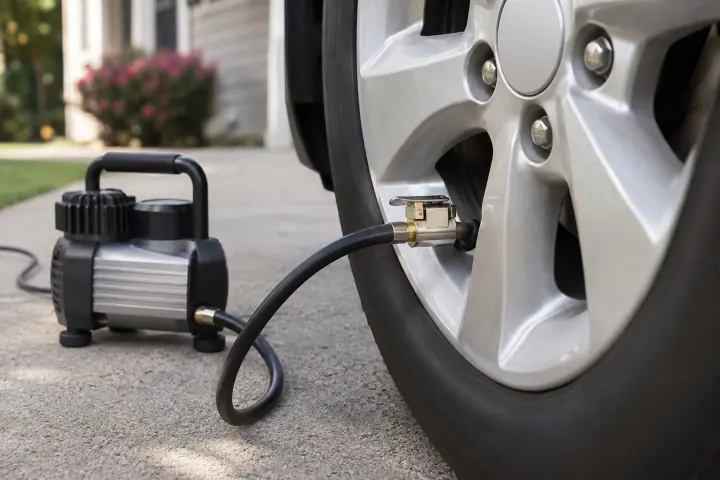
- Tire pressure. Keeping tires inflated to the proper pressure improves gas mileage by 0.6% on average and up to 3% in some cases. Under-inflated tires lower mileage by about 0.2% for every 1 psi drop in the average pressure of all tires. Properly inflated tires are also safer and last longer.
- The right number. The proper pressure for your vehicle is usually on a sticker in the driver's side door jamb or the glove box, and in your owner's manual. Don't use the maximum pressure printed on the tire's sidewall.
- Motor oil. Using the manufacturer's recommended grade improves mileage by 1% to 2%. The site's example: 10W-30 oil in an engine designed for 5W-30 can lower gas mileage by 1% to 2%.
- Air filter. On modern fuel-injected engines, replacing a clogged air filter doesn't improve fuel economy, though it can improve acceleration. On older cars with carbureted engines, a fresh filter can improve both by a few percent.
Check pressure more often when the weather turns. Fueleconomy.gov's cold-weather page points out that tire pressure drops in cold temperatures, which raises rolling resistance.
Beyond those four, the site's list of factors that affect MPG includes a poorly tuned engine, which burns more fuel, improperly aligned tires and dragging brakes, which make the engine work harder. Keeping up with the service schedule in your owner's manual covers all three.
How to increase MPG by shedding weight and roof cargo
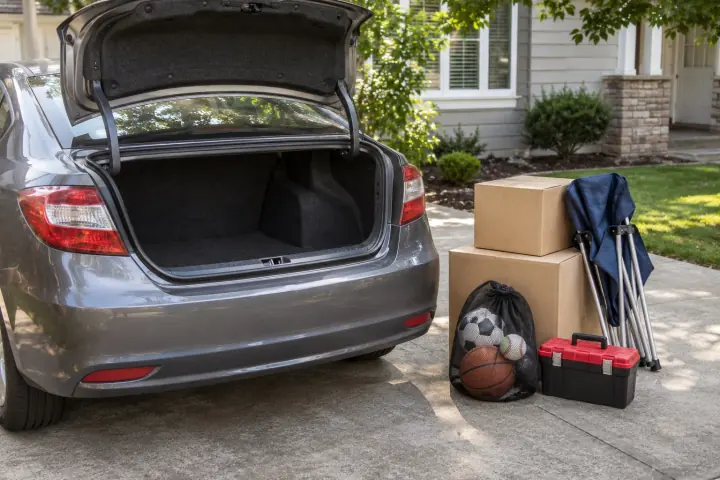
Your engine pays to move everything you carry. Fueleconomy.gov says an extra 100 pounds in the vehicle can reduce MPG by about 1%, and the effect is larger in smaller vehicles. The golf clubs and donation boxes that have been riding in the trunk since spring are worth unloading.
Roof cargo costs more than weight does, because it adds wind resistance. Based on Oak Ridge National Laboratory testing, the site says a large, blunt roof-top cargo box can reduce fuel economy by about 2% to 8% in city driving, 6% to 17% on the highway and 10% to 25% at interstate speeds of 65 to 75 mph.
Two easy fixes follow from that. Take the cargo box or carrier off the roof when the trip is over. And if you're buying a carrier, consider one that mounts at the rear: fueleconomy.gov puts the penalty for rear-mount cargo boxes or trays at just 1% to 2% in the city and 1% to 5% on the highway.
How to save gas by planning and combining trips
A cold engine is a thirsty engine. Fueleconomy.gov says several short trips taken from a cold start can use twice as much fuel as one longer, multipurpose trip covering the same distance. Combining errands into one loop means the engine stays warm between stops and you usually drive fewer miles overall.
A few more ideas from the same page:
- Shift your hours, if your job allows, to stay out of peak rush-hour traffic.
- Commute in the most fuel-efficient vehicle your household owns.
- Share the drive. Taking turns driving with other commuters can cut your weekly fuel costs in half, and carpool lanes are typically less congested.
- Work from home when your employer permits it, or take public transit where it's convenient.
Trip planning matters most in winter. Fueleconomy.gov reports that a conventional gasoline car's mileage is about 15% lower at 20°F than at 77°F in city driving, and up to 24% lower on short trips of 3 to 4 miles. Parking in a garage, so the engine and cabin start out warmer, and grouping errands both help.
Does AC use gas? Air conditioning vs. open windows
Yes. The air conditioner runs off the engine, and fueleconomy.gov calls it the main contributor to reduced fuel economy in hot weather. The site says A/C can reduce MPG by roughly 5% to 25% compared with not using it, and by more than 25% in very hot conditions, with the biggest hit on short trips.
Open windows aren't free either, because they add wind resistance. That effect is small at low speeds and grows at highway speeds, which gives the site's simple rule: roll the windows down at lower speeds and use the A/C on the highway.
More hot-weather tips from the same page:
- Park in the shade or use a sunshade so the cabin doesn't get as hot.
- Drive with the windows open for a short time first to push the hot air out, then switch on the A/C.
- Don't idle with the A/C running before you set off. Most systems cool the car faster while it's moving.
- Don't run the A/C more than you need, or set it colder than you need.
How to check your own MPG at the pump
Tracking your mileage tells you whether a new habit is working, and it's the fairest way to judge any change you make to the car. Fueleconomy.gov describes a trip odometer method that takes a minute at each fill-up:
- Fill the tank completely and reset the trip odometer to zero.
- Drive as you normally would until it's time for gas again.
- Fill the tank completely again. Write down the gallons you added, from the pump or the receipt, and the miles on the trip odometer.
- Divide the miles by the gallons. In the site's example, 335 miles divided by 9.5 gallons is 35.5 MPG.
- Reset the trip odometer and repeat at every fill-up.
No trip odometer? Use the main one: note the reading at each full fill-up, subtract the earlier reading from the later one and divide by the gallons added. In fueleconomy.gov's example, 356.2 miles on 13.5 gallons works out to 26.4 MPG.
One tank is a snapshot, so keep a log on paper or in your phone's notes for several fill-ups. Expect some swing with the seasons: the site notes that cold weather, short trips, A/C use and even the fuel itself move the number. Gasoline with 10% ethanol lowers fuel economy by 3% to 4%, and typical summer gasoline holds about 1.7% more energy than winter gasoline. Compare like with like: similar routes and similar weather.
OBD2 fuel savers: what the OBD-II port is
If you've searched for a fuel saver, you've seen small plugs made for the OBD2 port. Here's what that port is. OBD stands for on-board diagnostics. Oregon's Department of Environmental Quality describes it as a computer technology that monitors a vehicle's emission control system and other key engine parts, and the EPA has stated that all 1996 and newer passenger vehicles are required to have it.
The port itself is the connector a mechanic or emissions inspector plugs into to read what the car's computer has recorded. According to Oregon DEQ, it's usually in front of the driver underneath the dash, though on a few vehicles it's tucked out of sight. Your owner's manual shows the spot.
Plug-in fuel gadgets use either that port or the 12V lighter socket, and they appeal to drivers who want something that takes seconds to set up. We've reviewed two:
- The SynGas OBD Fuel Saver plugs into the OBD2 port. According to the brand, it reads how you drive and tunes the engine control unit for fuel efficiency, adapting over about 150 miles of normal driving. The brand also says it makes no permanent changes, so unplugging it returns the car to its original settings.
- FuelSync Pro goes into the 12V lighter socket instead, which leaves the OBD2 port free. The brand says it works automatically while you drive, helps optimize engine efficiency and supports smoother throttle response. It needs no app, charging or batteries, and it's for 12V vehicles only.
Whichever you pick, log two or three tanks with the pump method above before you plug it in, then keep logging on similar routes afterward. That gives you your own car's numbers, and the habits in this guide keep working alongside it.
When to see a mechanic
Habits can't fix a car that needs a repair. Book a visit to a mechanic when:
- The check engine light comes on and stays on. Fueleconomy.gov says the light means something is wrong with the engine, and that modern vehicles may seem to drive normally even when a repair is needed. It could be as minor as a loose gas cap, or a more serious issue that reduces fuel economy, raises emissions or leads to costly repairs later. Tighten the gas cap first; if the light stays on, have the car inspected.
- The check engine light is flashing. Oregon DEQ says driving is discouraged until the malfunction is repaired.
- Your MPG drops suddenly and your log shows no change in weather, load or routes. A poorly tuned engine, misaligned tires and dragging brakes are all on fueleconomy.gov's list of things that lower fuel economy, and each needs a shop to sort out.
- A tire keeps losing pressure between checks. Have it inspected rather than topping it up every week.
- The car pulls to one side. Alignment is a shop job, and improperly aligned tires are on the same fueleconomy.gov list.
As Oregon DEQ puts it, when an engine isn't running as designed, performance is lost, fuel is wasted and air pollution increases. In fueleconomy.gov's words, getting the car inspected could save you fuel and money down the road.
Plug-in fuel gadgets we've reviewed
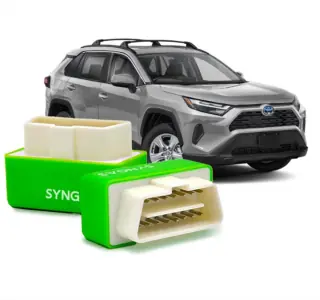
SynGas Fuel Saver review
Drivers of 1996-or-newer cars who want a no-tools, plug-in gadget aimed at fuel use, and families who'd like one for each car. From $24.85.
Read the review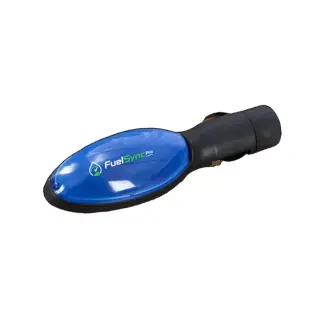
FuelSync Pro review
Daily commuters and multi-car households who want a plug-in gadget aimed at driving efficiency with no tools, no app and nothing to maintain. From $25.49.
Read the review
FAQ
Does cruise control save gas?
In most cases, yes. Fueleconomy.gov says using cruise control on the highway helps you hold a constant speed and, in most cases, saves gas. It suits open highways best; use your own foot in heavy traffic.
Does AC use gas?
Yes. Fueleconomy.gov says air conditioning can reduce MPG by roughly 5% to 25%, and by more than 25% in very hot conditions. Its rule of thumb: windows down at lower speeds, A/C at highway speeds, and don't idle with the A/C running before you drive off.
What speed is most fuel efficient?
It differs from vehicle to vehicle, but gas mileage usually drops quickly above 50 mph. Fueleconomy.gov estimates that slowing down by 5 to 10 mph on the highway improves fuel economy by 7% to 14%.
What is an OBD2 fuel saver?
It's a small plug-in device for the car's OBD2 diagnostic port, which sits under the dash on 1996 and newer passenger vehicles. The one we've reviewed is the SynGas OBD Fuel Saver; the brand says it tunes the engine computer to your driving over about 150 miles. FuelSync Pro is a similar idea for the 12V lighter socket. Track your MPG before and after to see your own numbers.
How can I save money on gas without buying anything?
Drive smoothly, keep to the speed limit on the highway, turn the engine off when you're parked for more than a minute, empty the trunk, take off the roof box and combine errands into one trip. Fueleconomy.gov rates smooth driving alone as worth 10% to 40% in stop-and-go traffic.
Does tire pressure really affect gas mileage?
Yes. Fueleconomy.gov says properly inflated tires improve gas mileage by 0.6% on average and up to 3% in some cases, and that mileage falls about 0.2% for every 1 psi drop in average tire pressure. Use the pressure on the sticker in the driver's door jamb.
Sources
- Driving More Efficiently, fueleconomy.gov (US Department of Energy and EPA)
- Keeping Your Vehicle in Shape, fueleconomy.gov (US Department of Energy and EPA)
- Planning and Combining Trips, fueleconomy.gov (US Department of Energy and EPA)
- Many Factors Affect Fuel Economy, fueleconomy.gov (US Department of Energy and EPA)
- Fuel Economy in Hot Weather, fueleconomy.gov (US Department of Energy and EPA)
- Fuel Economy in Cold Weather, fueleconomy.gov (US Department of Energy and EPA)
- Calculating Your MPG, fueleconomy.gov (US Department of Energy and EPA)
- Efficient Driving to Conserve Fuel, Alternative Fuels Data Center, US Department of Energy
- EPA Improves Availability of Service and Repair Information for Vehicles with On-Board Diagnostic (OBD) Systems, US Environmental Protection Agency news release (2003)
- On-Board Diagnostics Frequently Asked Questions, Oregon Department of Environmental Quality
This guide is general information. Figures are the official sources' estimates and vary by vehicle and conditions. Follow your owner's manual for tire pressure, oil grade and service, obey posted speed limits, and have a mechanic check any warning light.