
Muscle pain
Muscle Soreness: What Helps Sore Muscles, Ice or Heat, and When to See a Doctor
Muscle soreness after a hard or unfamiliar workout usually peaks within one to three days and is gone within about a week, and gentle movement, massage, ice or heat, sleep and fluids may help you feel better while it passes. Below you'll find what delayed onset muscle soreness (DOMS) is, how to tell it from a pulled muscle, what to do at home, and the warning signs that mean a doctor should take a look.
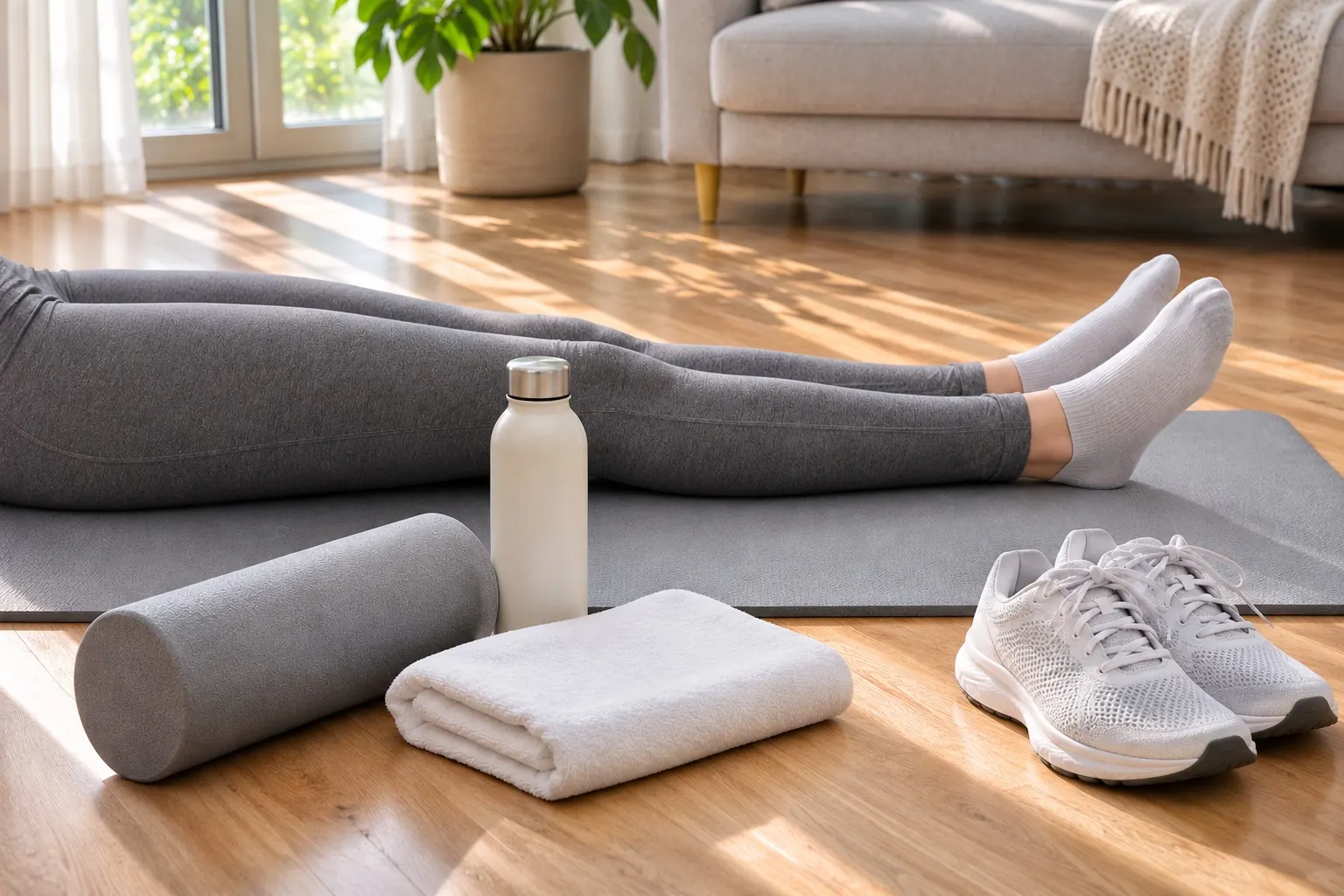
What is DOMS (delayed onset muscle soreness)?
You try a new class, hike a steep trail or spend Saturday moving furniture. That evening you feel fine. The next morning the stairs feel twice as tall. That late-arriving ache is delayed onset muscle soreness, or DOMS.
A review in The Journal of Physiological Sciences calls DOMS "quite a common consequence of unaccustomed strenuous exercise", especially exercise with lengthening (eccentric) contractions, where a muscle works while it stretches: walking downhill or lowering a weight, for example.
The same review describes the usual timeline:
- A pain-free gap of about 12 to 24 hours after the activity
- A peak somewhere between 24 and 72 hours
- Soreness gone within 7 days of the exercise
The typical feeling is tenderness when you press on the muscle and pain when you move it, with usually no pain at rest.
It isn't necessarily a bad sign. A sports medicine physician at The Ohio State University Wexner Medical Center describes DOMS as muscle fibers being broken down so they can rebuild stronger, and notes that once a workout stops making you sore, your muscles have adapted to it.
Sore muscles after a workout or a pulled muscle?
Ordinary soreness and a muscle strain need different care. A muscle strain, also called a pulled muscle, happens when a muscle is stretched too far and part of it tears, according to MedlinePlus, the National Library of Medicine's health site. The National Institute of Arthritis and Musculoskeletal and Skin Diseases (NIAMS) adds that a strain can range from a minor stretch to a partial or complete tear.
| Muscle soreness (DOMS) | Muscle strain (pulled muscle) | |
|---|---|---|
| When it starts | After a pain-free gap of about 12 to 24 hours | Suddenly, with the overstretching, heavy effort or fall that caused it |
| How it feels | Tender to the touch and achy when you move; usually no pain at rest | Pain and trouble moving the muscle, sometimes with muscle spasm, weakness or cramping |
| Other signs | Tenderness when you press on the muscle | Swelling, and sometimes bruising or discolored skin |
| How long it lasts | Peaks at 24 to 72 hours and is gone within 7 days | Varies with how severe the tear is; see a provider if pain lasts several weeks |
| What to do | Gentle movement, massage, ice or heat, sleep and fluids | Rest, ice, compression and elevation; a doctor's visit for the warning signs below |
Sources: Mizumura and Taguchi (J Physiol Sci), MedlinePlus, NIAMS and the American Academy of Orthopaedic Surgeons (AAOS). A general guide; it can't diagnose an injury.
If you think you've pulled a muscle, MedlinePlus advises applying ice right away, wrapped in a cloth, for 10 to 15 minutes every hour on the first day and every 3 to 4 hours after that, for the first 3 days. Rest the muscle for at least a day, raised above the level of your heart if possible. As the pain eases, stretch gently and build activity back up gradually. Call 911 or your local emergency number if you can't move the muscle or the injury is bleeding.
What helps sore muscles at home
DOMS clears up on its own, so the goal is to feel more comfortable and keep moving while it does. Here's what official sources and research reviews support.
- Keep moving, gently. MedlinePlus recommends regular low-impact exercise such as walking, cycling or swimming for muscle aches, starting slowly. A meta-analysis of 99 studies in Frontiers in Physiology found that light activity after exercise (active recovery) reduced DOMS, although the effect was short-lived.
- Massage the area. In that same meta-analysis, massage came out as the most effective technique for reducing DOMS and perceived fatigue. The steps are below.
- Use ice or heat. Ice suits the first days; after that, heat may feel more soothing.
- Stretch lightly. MedlinePlus says massage and gentle stretching can help muscle aches from overuse. Never stretch to the point of pain.
- Sleep and drink fluids. Both are on MedlinePlus's home-care list for muscle aches.
- Ease back into hard training. While a muscle is in pain, MedlinePlus says to avoid high-impact activity and weight lifting.
If you're thinking about an over-the-counter pain reliever, follow the label and ask your pharmacist or doctor whether it's right for you. Don't stop or change a prescribed medicine on your own.
Ice or heat for sore muscles?
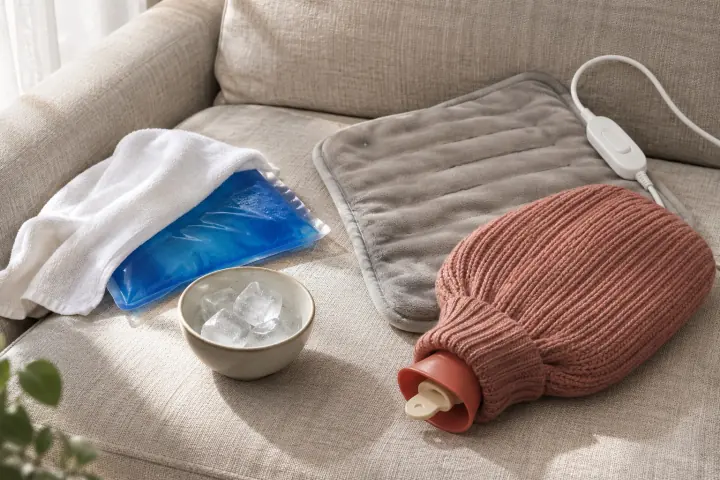
Both have a place, and the right one depends mostly on timing. MedlinePlus says to apply ice for the first 24 to 72 hours after an injury; after that, heat may feel more soothing. A sports medicine physician at the Hospital for Special Surgery (HSS) explains that ice is for fresh problems such as strains and pulled muscles, and heat helps loosen tight joints and muscles once swelling has gone down. For routine workout soreness, HSS suggests heat before exercise to warm up muscles and ice afterward to cool down.
| Ice | Heat | |
|---|---|---|
| Best for | The first 24 to 72 hours after a strain or other fresh injury; cooling down after a workout | Stiff, tight muscles once swelling is gone; warming up before activity |
| How long | 10 to 15 minutes at a time, on and off through the day; never more than 20 minutes | 10 to 15 minutes at a time, on and off through the day |
| How to apply | Ice pack or bag of frozen vegetables, with a towel between it and your skin | Heating pad, hot-water bottle or warm bath, with a barrier between the heat source and your skin |
| Avoid | Putting ice directly on skin; icing right before a workout, which may stiffen muscles | Heat in the first days after an acute injury; falling asleep on a heating pad |
Sources: MedlinePlus, HSS and NIAMS. NIAMS says not to use heat until at least 72 hours after an injury. If you have reduced feeling in your skin, for example from neuropathy, ask your doctor first.
How to relieve muscle soreness with massage
Massage has the best research support of the recovery methods studied for DOMS. A systematic review and meta-analysis of 11 randomized trials with 504 participants found that soreness ratings were lower at 24, 48 and 72 hours in people who received massage after intense exercise than in those who didn't. The authors concluded that massage after strenuous exercise "could be effective for alleviating DOMS". The trials were small and used different techniques, so treat it as something that may help, not a guarantee.
Sessions in those trials lasted 6 to 30 minutes. For everyday soreness you can do it yourself. Here's a simple routine for a calf, thigh or forearm:
- Sit comfortably with the muscle relaxed and supported, for example with your leg up on the sofa.
- Put a little lotion or massage gel on your hands so they glide instead of dragging the skin.
- Start with long, light strokes along the length of the muscle for a minute or two.
- Move to slow circles with your palm or fingertips, working along the muscle. Stay off bones and joints.
- When you find a tender spot, ease up, hold gentle pressure for a few extra seconds and breathe slowly.
- Finish with light strokes again, then get up and walk around for a minute.
An HSS exercise physiologist advises starting "slow and light" and backing off if it feels like more than tenderness. Don't massage a muscle you think is torn. The National Center for Complementary and Integrative Health (NCCIH) describes the risk of harmful effects from massage as low, and adds that massage shouldn't be used to put off seeing a provider about a medical problem.
A cooling gel can make the routine more pleasant. We reviewed Kinzeno, a mint-scented massage gel with menthol on its ingredient list, which gives a cooling feel as it goes on. The brand's directions are to massage a coin-sized amount over the area in circles and leave it uncovered and unwashed for 15 to 20 minutes, 2 to 3 times a day or as needed. It's a body-care product, not a medicine: the brand says it isn't intended to diagnose, treat, cure or prevent any condition. Use it on unbroken skin only.
How to get rid of muscle knots
A "knot" is the everyday word for a trigger point: a tender spot in a tight band of muscle that hurts when pressed. The American Academy of Physical Medicine and Rehabilitation (AAPM&R) lists unaccustomed or intense exercise, muscle overuse, repetitive work and poor posture among the common causes, and names stretching and "generous use of ice and heat" among the mainstays of care. At home, that looks like this:
- Warm the area with a heating pad or warm shower for 10 to 15 minutes.
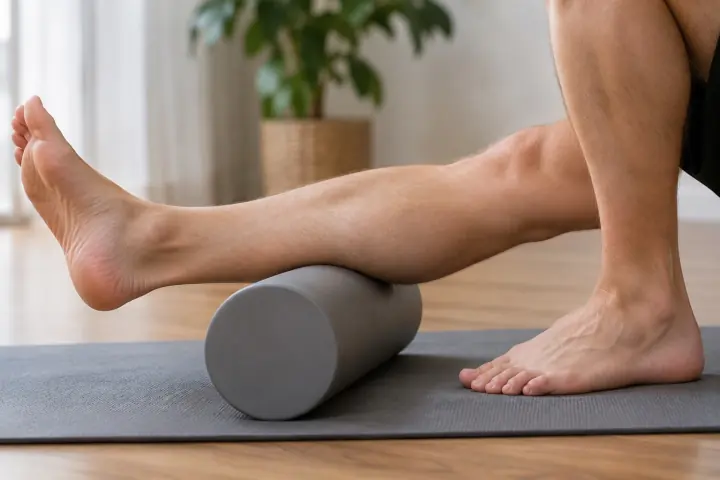
- Roll the muscle slowly over a foam roller. When you hit the sensitive spot, HSS suggests holding there for a few extra seconds while you breathe slowly and deeply.
- Follow with a gentle stretch. The American Academy of Orthopaedic Surgeons (AAOS) says to hold each stretch for 10 to 30 seconds, without bouncing and never to the point of pain.
- Change position often. If you sit for long periods, MedlinePlus recommends stretching at least every hour.
For knots in the neck, shoulders or lower back that a roller can't reach, kneading with your fingertips works, and a massage gel such as Kinzeno fits in here too; the brand pitches it for the neck and shoulders, back and hips, and legs. If a stiff neck is costing you sleep, see our guide on how to sleep with neck pain.
See a doctor if a knot comes with tingling, numbness or weakness in a limb, or with a sudden increase in pain or swelling.
Muscle recovery: sleep, fluids and protein
The everyday habits matter while your muscles rebuild. Here's what official guidance recommends for anyone who's active.
Sleep. Adults 18 to 60 need at least 7 hours a night, according to the CDC; the range is 7 to 9 hours for ages 61 to 64 and 7 to 8 hours from 65 on. If you have trouble switching off, our wind-down routine has ideas.
Fluids. The AAOS suggests drinking a pint of water about 15 minutes before you exercise, a drink about every 20 minutes during the session, and another pint after you cool down. For everyday targets, see how much water to drink a day.
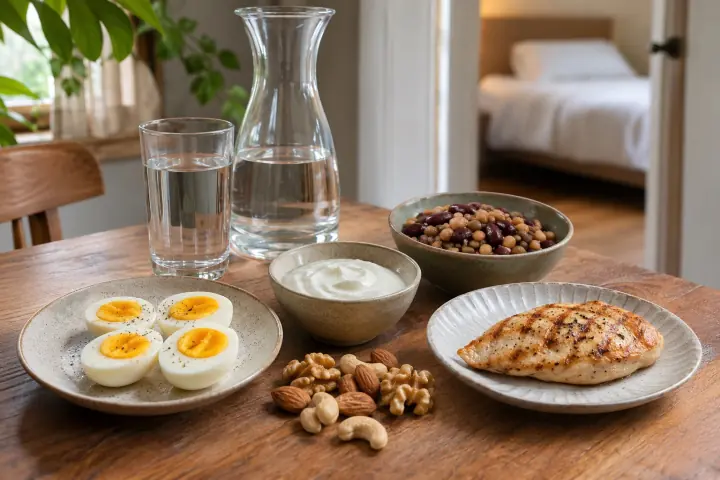
Protein. Your body uses protein to repair cells and make new ones, MedlinePlus explains. The recommended intake for healthy adults is 10% to 35% of total calories. An ounce of most protein-rich foods has about 7 grams of protein: an ounce of meat, fish or poultry, one large egg, a quarter cup of tofu, or half a cup of cooked beans or lentils. If you have kidney disease or another condition that affects your diet, ask your doctor before changing how much protein you eat.
How to prevent sore muscles after a workout
DOMS follows effort your muscles aren't used to, so how sore you get is largely in your hands. These steps come from the AAOS, NIAMS and the CDC:
- Warm up first. Start with easy aerobic movement, such as running in place for a few minutes or slowly rehearsing the motions you're about to do. The AAOS says newer exercisers need a longer warm-up.
- Add new things gradually. The AAOS advises no more than one or two new activities per workout, and easing back in slowly after a long break. NIAMS says to increase intensity gradually.
- Cool down. Slow your pace for at least 10 minutes before you stop, then stretch while your muscles are still warm.
- Take rest days. Schedule regular days off from vigorous exercise, and rest when you're tired.
- Stay regular. The CDC recommends 150 minutes of moderate activity a week plus muscle strengthening on at least 2 days. The AAOS advises against the "weekend warrior" pattern.
- Stop if something hurts. NIAMS says to stop right away when an activity causes pain, and not to try to work through it.
Coming back after time off? Our guide to the components of fitness can help you plan a balanced week. If you have a chronic condition such as heart disease, arthritis or diabetes, the CDC advises asking your doctor which activities and amounts are right for you.
Dark urine after hard exercise: a sign to act on
One situation can't wait. Rhabdomyolysis, or "rhabdo", is a serious condition in which damaged muscle releases its proteins and electrolytes into the blood, which can damage the kidneys. The CDC's National Institute for Occupational Safety and Health (NIOSH) says it can follow any type of muscle damage, including overuse, heat and hard physical exertion, and that people in good shape, athletes included, can get it.
NIOSH lists these symptoms, which may not begin until hours or days after the effort:
- Muscle cramps, aches or pains that are more severe than expected
- Dark urine, the color of tea or cola
- Feeling weak or tired, or unable to finish a workout you could do before
If you have any of them, NIOSH says not to ignore it: seek medical treatment right away. Symptoms alone can't confirm rhabdo; that takes a blood test.
When to see a doctor
Ordinary soreness improves a little each day. Pain that is extreme or getting worse is a different story.
Call 911 or your local emergency number if muscle pain comes with shortness of breath or trouble swallowing, muscle weakness or being unable to move part of your body, vomiting, a very stiff neck or a high fever, or sudden weight gain, water retention or urinating less than usual. These are on MedlinePlus's emergency list for muscle aches.
See a health care provider soon if:
- The pain is severe, or comes with marked swelling or bruising
- You can't put any weight on the leg or arm, or something looks out of shape
- You felt a pop or a tearing sensation when it happened
- You have tingling, numbness or weakness in a limb
- The area around the sore muscle is red or swollen, which can be a sign of infection
- Muscle pain lasts more than 3 days without easing, or soreness is still there after about a week
- The pain started after you began a medicine or changed its dose, such as a statin. Don't stop the medicine yourself; call the doctor who prescribed it
- You have a tick bite or a rash along with the muscle pain
If you're pregnant, have a chronic illness or the person in pain is a child, check with a doctor instead of treating it at home.
Massage gel we've reviewed
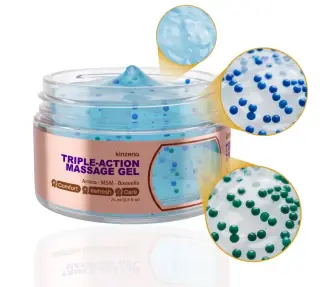
Kinzeno Gel review
Adults who like a cooling, non-greasy gel to massage into tired knees, backs, shoulders and hands as part of a daily routine. From $29.99.
Read the review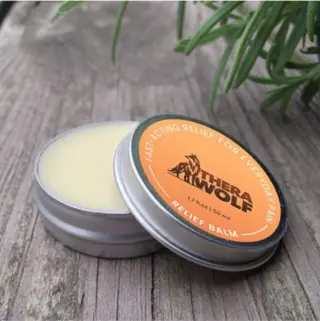
TheraWolf Pain Relief Balm review
Adults with everyday aches in the knees, back, neck or hands who want a plant-based rub alongside their usual care. From $17.24.
Read the review
FAQ
How long does DOMS last?
Delayed onset muscle soreness usually starts 12 to 24 hours after the activity, peaks between 24 and 72 hours and is gone within about 7 days. Pain that keeps getting worse, or lasts longer than that, deserves a call to your doctor.
What helps sore muscles after a workout?
Gentle movement such as walking, massage, ice or heat, light stretching, sleep and fluids. In a meta-analysis of 99 studies, massage was the most effective recovery technique for reducing delayed onset muscle soreness, though results vary from person to person.
Is ice or heat better for sore muscles?
It depends on timing. MedlinePlus recommends ice for the first 24 to 72 hours after an injury, and says heat may feel more soothing after that. For workout soreness, sports medicine doctors suggest heat before activity and ice afterward, 10 to 15 minutes at a time.
How do I know if it's muscle soreness or a pulled muscle?
Soreness shows up the next day, feels tender and achy when you move, and fades within a week. A pulled muscle (muscle strain) is typically felt during the activity and can bring swelling, bruising, spasm or trouble moving the muscle.
How can I speed up muscle recovery?
There's no shortcut, but the basics help: light activity on the days after a hard session, massage, at least 7 hours of sleep, enough fluids and regular meals with protein. Rotate muscle groups and add new exercises gradually.
Should I work out with sore muscles?
Light, low-impact movement such as walking, cycling or swimming is fine and may ease the soreness. MedlinePlus advises avoiding high-impact activity and weight lifting while a muscle is injured or in pain, so train a different muscle group until it settles.
Sources
- Muscle aches, MedlinePlus Medical Encyclopedia (National Library of Medicine)
- Strains, MedlinePlus Medical Encyclopedia (National Library of Medicine)
- Muscle strain treatment, MedlinePlus Medical Encyclopedia (National Library of Medicine)
- Sprains and Strains, MedlinePlus (National Library of Medicine)
- Protein in diet, MedlinePlus Medical Encyclopedia (National Library of Medicine)
- Sprains and Strains, National Institute of Arthritis and Musculoskeletal and Skin Diseases (NIH)
- Sports Injuries: Diagnosis, Treatment, and Steps to Take, National Institute of Arthritis and Musculoskeletal and Skin Diseases (NIH)
- Sprains, Strains and Other Soft-Tissue Injuries, OrthoInfo, American Academy of Orthopaedic Surgeons
- Warm Up, Cool Down and Be Flexible, OrthoInfo, American Academy of Orthopaedic Surgeons
- About Rhabdomyolysis, CDC National Institute for Occupational Safety and Health (NIOSH)
- Signs and Symptoms of Rhabdomyolysis, CDC National Institute for Occupational Safety and Health (NIOSH)
- Adult Activity: An Overview, Centers for Disease Control and Prevention
- Adding Physical Activity as an Adult, Centers for Disease Control and Prevention
- About Sleep, Centers for Disease Control and Prevention
- Massage Therapy: What You Need To Know, National Center for Complementary and Integrative Health (NIH)
- Guo J, et al. Massage Alleviates Delayed Onset Muscle Soreness after Strenuous Exercise: A Systematic Review and Meta-Analysis. Front Physiol. 2017 (PMID 29021762)
- Dupuy O, et al. An Evidence-Based Approach for Choosing Post-exercise Recovery Techniques: A Systematic Review With Meta-Analysis. Front Physiol. 2018 (PMID 29755363)
- Mizumura K, Taguchi T. Delayed onset muscle soreness: Involvement of neurotrophic factors. J Physiol Sci. 2016 (PMID 26467448)
- Ice or Heat: What's Best for Your Pain?, Hospital for Special Surgery
- Foam Roller Exercises for the Whole Body, Hospital for Special Surgery
- Myofascial Pain, American Academy of Physical Medicine and Rehabilitation
- Is your workout effective?, The Ohio State University Wexner Medical Center
This guide is general information, not medical advice, and it can't diagnose an injury. See a doctor about pain that is severe, getting worse or not improving, and get care right away for dark urine or extreme muscle pain after hard exercise.