
Skin care
Copper Peptides: What They Do for Skin and Hair, and What the Research Shows
Copper peptides are short chains of amino acids bound to copper, best known as GHK-Cu, that serums use to support smoother, firmer-looking skin. Lab studies are encouraging, but trials in people are few and small, so think of them as a reasonable extra in a routine built on sunscreen and moisturizer. This guide covers cosmetic use on the skin and scalp only.
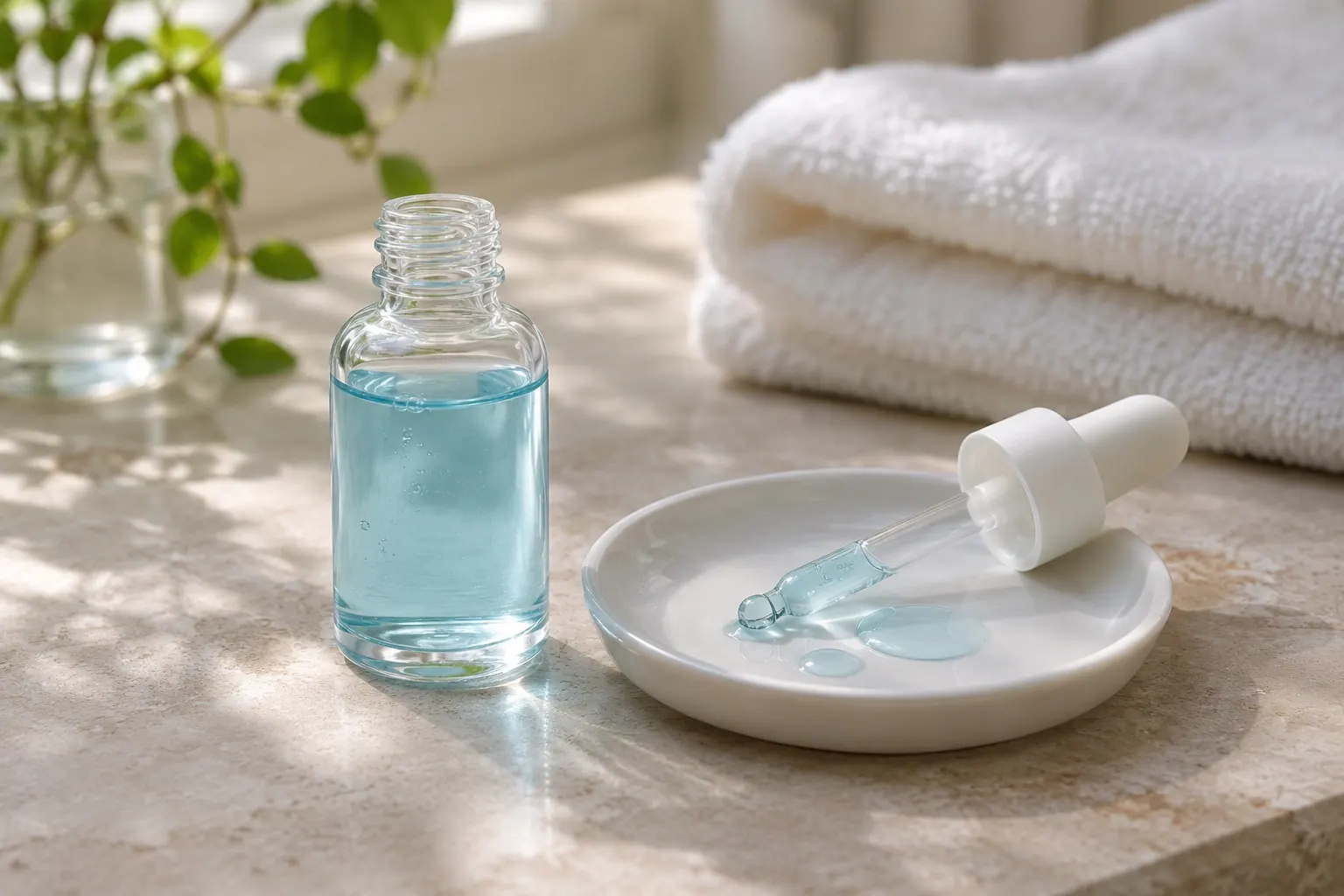
What are copper peptides?
A peptide is a short chain of amino acids. A copper peptide is one that holds on to a copper ion. The one you'll meet in almost every serum is GHK-Cu: three amino acids (glycine, histidine and lysine) carrying copper. On an ingredient list it usually appears as copper tripeptide-1, so "copper peptides", "GHK-Cu" and "copper tripeptide-1" on a label generally point to the same ingredient.
GHK isn't an invention of the beauty aisle. A 2015 review describes it as a peptide found naturally in human plasma, saliva and urine, at levels that decline with age. That natural role is why researchers started testing it on skin cells in the first place.
One thing to know before you read any label: in the US, cosmetic products and ingredients, apart from color additives, don't need FDA approval before they go on sale. The FDA also says that claims such as restoring hair growth or regenerating cells describe a drug, not a cosmetic. So a serum reaches the shelf without the agency checking the product or its promises.
Copper peptides benefits: what the research shows
The short version: the lab work is strong, and the proof in people is thin.
In cell and animal studies, GHK-Cu has increased the production of collagen and other building blocks of the skin's support structure, calmed markers of inflammation and supported repair. A 2026 systematic review in a plastic surgery journal collected the studies that tested GHK-Cu on its own for cosmetic uses and found 20 of them. Eighteen were lab or animal studies. Only two were randomized trials in people.
Those trials were positive as far as they went: the review reports that GHK-Cu reduced wrinkle volume and depth compared with controls and improved how satisfied patients were after laser resurfacing. The reviewers still concluded that the findings were limited by inconsistent methods and too few well-designed trials.
A second 2026 review, which mapped all the evidence it could find, was blunter. It called the clinical evidence sparse, noted that older cosmetic reports were small or incompletely described, pointed to a 13-person study after laser treatment that found no benefit on objective measures, and summed GHK-Cu up as promising but unproven. An earlier review of GHK as an anti-wrinkle ingredient had already remarked on a "surprising absence of clinical studies" for an ingredient so widely sold.
| Claim | What studies show | How solid it is |
|---|---|---|
| Supports collagen | Consistent increases in collagen and related compounds in cell and animal studies | Lab evidence only |
| Softens the look of wrinkles | Less wrinkle volume and depth than controls in randomized testing | Early: very few trials in people |
| Helps skin after laser treatment | A randomized trial found patients were more satisfied; a 13-person study found no benefit on objective measures | Mixed |
| Fuller-looking hair | Small trials of mixed peptide formulas; an 18-person eyebrow study was positive | Early: hard to credit to copper peptides alone |
Based on two 2026 systematic reviews of GHK-Cu and a 2026 systematic review of peptides for hair, listed in the sources.
One more detail worth knowing: a 2026 systematic review noted that roughly 35% of the primary research on GHK-Cu includes the scientist who first isolated the peptide, who held commercial interests in the field for decades. The reviewers called that work scientifically substantive. It's still a reason to want independent trials.
Copper peptides for skin: can they get where they need to go?
For a peptide to act on collagen, it has to pass through the outer layer of the skin, and that layer is built to keep things out. A 2025 review describes GHK-Cu as a fairly water-loving compound with limited ability to cross the skin's oily outer barrier. The anti-wrinkle review mentioned above found that binding GHK to copper does improve its passage through skin, and that the published data on how well these peptides penetrate and perform is still insufficient.
Researchers are testing ways around this, including wrapping the peptide in tiny fat bubbles called liposomes and delivering it with microneedles. Those methods improved uptake in lab and animal-skin models, but one 2026 review pointed out that not a single adequately sized randomized trial of microneedle delivery in people has been published.
That's a research gap, not an invitation to experiment at home. The American Academy of Dermatology (AAD) warns against do-it-yourself cosmetic procedures bought online, which it says can be dangerous to your health.
Copper peptides for hair: what we know
Copper peptides also show up in scalp serums and brow products, and plenty of people look them up for hair rather than skin. The evidence here is at an earlier stage.
A 2026 systematic review of peptide treatments for hair loss screened 981 studies and found 14 clinical trials that met its criteria. It gave a grade B recommendation to formulas containing the GHK peptide along with a few other peptides, and described them as well tolerated. Most of those products combined several ingredients, so the result can't be credited to copper peptides alone. Separately, an 18-person split-face study reported fuller-looking eyebrows with GHK-Cu, though reviewers noted that it didn't describe the formula precisely.
If your hair is thinning, the AAD's advice is to start with the cause, because effective treatment depends on it. A board-certified dermatologist can check your scalp and, if needed, order tests. Among at-home options, the AAD says studies show minoxidil can help early hair loss, usually taking about 6 to 12 months to show results. A cosmetic scalp serum is something you add for the look and feel of your hair, not a replacement for that visit.
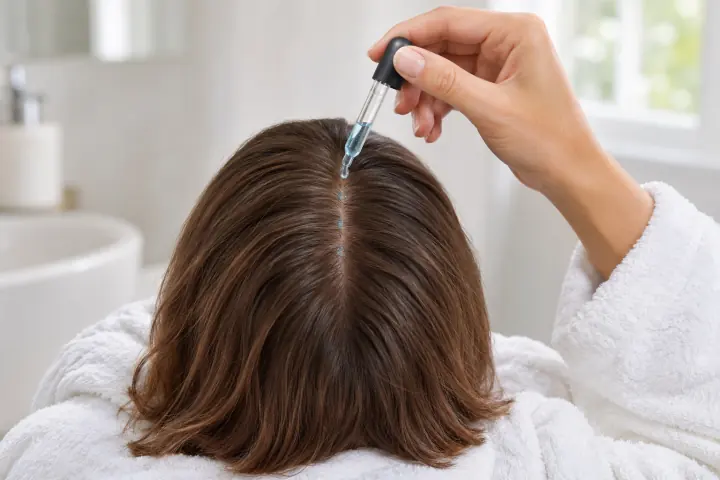
How to use copper peptides
No official guideline covers copper peptides specifically, so these steps combine the AAD's general advice for anti-aging products with each product's own directions.
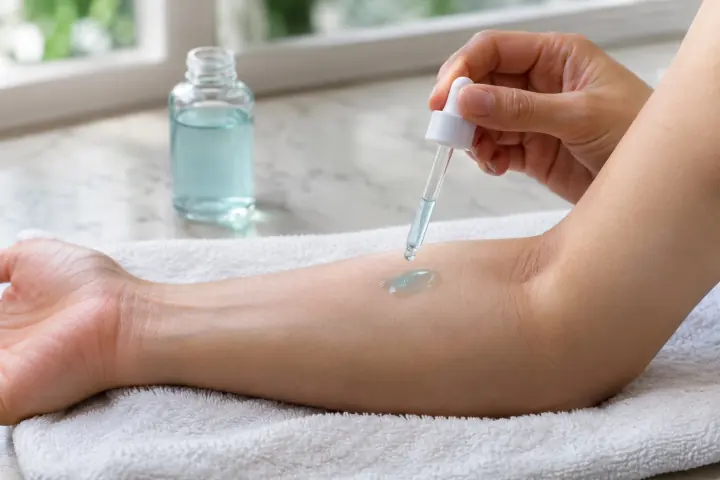
- Test it first. The AAD suggests applying a new product to a quarter-sized spot, such as the underside of your arm or the bend of your elbow, twice a day for 7 to 10 days. If your skin stays calm, go ahead and use it.
- Add one new product at a time. The AAD notes that starting several anti-aging products within a few days or weeks can irritate the skin, and you won't know which one caused it.
- Follow the label for how much and how often. More isn't better: the AAD warns that overusing active products can leave skin blotchy, dry or clogged.
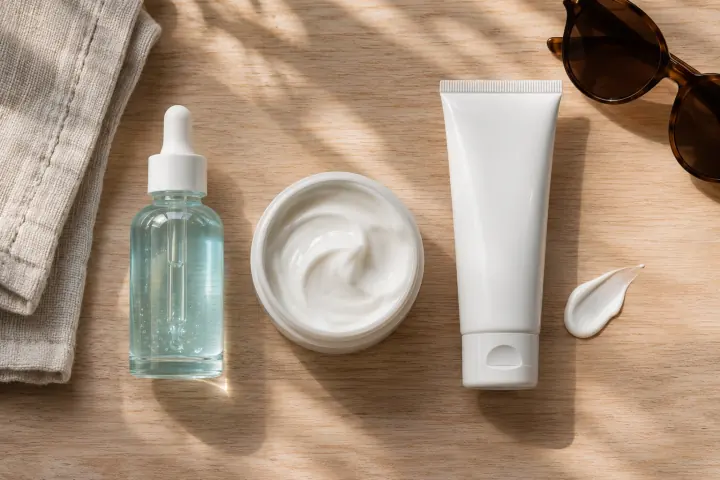
- Apply the serum to clean skin, then moisturize. Moisturizer traps water in the skin, which the AAD says can reduce the appearance of fine lines.
- Use sunscreen every morning: broad-spectrum, SPF 30 or higher. Dermatologists agree that sunscreen and moisturizer are the two most effective anti-aging products you can buy, according to the AAD.
- Give it time. A moisturizer can plump fine lines in a few days, but the AAD says most products take at least six weeks to work, and sometimes up to three months.
For the wider picture on signal peptides, expression-line peptides and how they compare, see our guide to peptides for skin.
Can you use copper peptides with retinol or vitamin C?
You'll find firm rules about this online, usually without a source. We searched for clinical trials that tested copper peptides together with retinol or with vitamin C and didn't find any, so nobody can say from evidence that the combinations help or hurt.
What the AAD does say applies here: introduce one product at a time, and stop anything that stings, burns or tingles. A cautious way to use both is to keep them apart, for example vitamin C in the morning and copper peptides at night, or a retinoid on some nights and copper peptides on others. If a dermatologist prescribed your retinoid, ask them where a peptide serum fits.
Copper peptides side effects and the "copper uglies"
Safety data on copper peptides in people is limited, simply because so few trials exist. Like any leave-on product, a serum can irritate your skin or trigger an allergy, and the culprit can be another ingredient in the bottle: the AAD names preservatives and fragrance among the usual suspects.
MedlinePlus describes contact dermatitis as skin that becomes red, sore or inflamed after touching a substance, often with itching. An allergic rash can be delayed, showing up 24 to 48 hours after contact. If that happens, the AAD says to wash the product off gently, stop using it, and soothe the area with a cool compress or petroleum jelly.
"Copper uglies" is an online nickname for skin that looks looser, duller or more lined after starting copper peptides. We found no clinical study that describes or confirms it. If your skin looks or feels worse on any new product, the sensible move is the same: stop, let your skin settle, and see a dermatologist if it doesn't.
GHK-Cu injections are a different matter
Many searches for GHK-Cu are about injections sold online or made by compounding pharmacies. That's a separate subject from skin care, and it carries real unknowns. An FDA page on compounding ingredients that may present significant safety risks says compounded injectable drugs containing GHK-Cu may pose a risk of unwanted immune reactions, because of peptide clumping and impurities, and that there are limited data in humans on their safety.
Everything in this guide is about cosmetic products applied to intact skin. We don't cover injecting GHK-Cu, and it isn't something to try on your own.
Where a copper peptide serum fits
A copper peptide serum makes the most sense once the basics are in place, as the one extra step aimed at the concern that bothers you most. The AAD's reminder is worth keeping in view: anti-aging products deliver modest results, and no cream gives the results of a facelift.
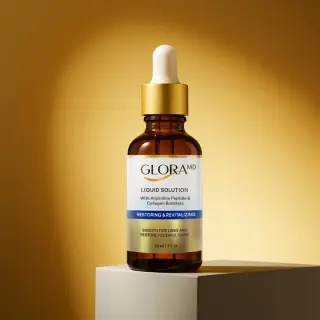
If you'd like copper tripeptide-1 in a formula with other peptides, we reviewed GloraMD. Its full ingredient list includes copper tripeptide-1 alongside acetyl hexapeptide-8 and palmitoyl pentapeptide-4, with sodium hyaluronate and squalane for moisture. The brand suggests a dime-sized amount morning and night, kept away from the eyes, and says a 1 fl oz bottle lasts 30 to 45 days.
Two honest notes from our review: the brand doesn't publish how much of each peptide the serum contains, and the formula includes lavender and geranium oils, so do the patch test above if your skin reacts to fragrance.
When to see a dermatologist
A cosmetic serum is for the look and feel of healthy skin. See a board-certified dermatologist or your doctor if:
- A reaction is severe, keeps spreading or isn't relieved by stopping the product and using cool compresses or petroleum jelly.
- You see signs of infection, such as tenderness, warmth, growing redness or fever.
- You can't work out which product or ingredient is causing a rash. Dermatologists can run patch testing to find it.
- You're losing hair quickly or in an unusual pattern, or the hair loss comes with pain, itching or a red, scaly scalp. MedlinePlus lists all of these as reasons to contact a provider.
- You have a skin condition such as eczema, rosacea or psoriasis, or you use prescription skin treatments, and you want to add an active product.
- You're pregnant or breastfeeding and unsure whether a product is right for you.
- A sore or wound isn't healing. Lab research on skin repair doesn't make a cosmetic serum a wound treatment.
Skin care products for children and teens are a separate question; ask their pediatrician or a dermatologist before using anti-aging actives on young skin.
A copper peptide serum we reviewed
FAQ
What do copper peptides do for skin?
In lab studies, GHK-Cu, the main copper peptide, increases collagen and other compounds that support the skin. In people the evidence is limited: a 2026 systematic review found only two randomized trials, which reported less wrinkle volume and depth than controls and better satisfaction after laser resurfacing.
Do copper peptides work?
They may help a little, but it isn't proven. Reviews published in 2026 describe the lab evidence as consistent and the clinical evidence as sparse, and one calls GHK-Cu promising but unproven. Sunscreen and moisturizer remain the two most effective anti-aging products, according to the AAD.
Are copper peptides good for hair growth?
Possibly, as part of a formula. A 2026 systematic review of 14 clinical trials gave a grade B recommendation to peptide formulas that included GHK, but most combined several ingredients. If your hair is thinning, see a dermatologist to find the cause first.
Can you use copper peptides with retinol?
We found no clinical trials testing the two together, so there's no evidence either way. To be cautious, introduce one product at a time and use them at different times, such as on alternate nights, and stop anything that stings or burns.
Can you use copper peptides and vitamin C together?
No trials have tested the pair, as far as we could find. A simple approach is vitamin C in the morning and copper peptides at night, adding one product at a time so you can tell how your skin responds to each.
What are the "copper uglies"?
It's an online nickname for skin that looks worse after starting copper peptides. We found no clinical study that describes it. If your skin looks or feels worse on a new product, stop using it and see a dermatologist if it doesn't settle.
Sources
- The Regenerative Potential of GHK-Cu in Aesthetic Medicine (systematic review), Aesthet Surg J (2026), PubMed
- GHK-Cu as a Bioactive Metallopeptide and Drug-Delivery Cargo: structured systematic evidence-mapping review, Pharmaceutics (2026), PubMed
- A Systematic Review of the Mechanisms and Therapeutic Applications of GHK-Cu in Topical Microneedle Delivery, Arch Intern Med Res (2026), PubMed
- Peptides for Hair Growth and Treatment of Hair Loss and Alopecia: A Systematic Review, J Drugs Dermatol (2026), PubMed
- Topically applied GHK as an anti-wrinkle peptide: Advantages, problems and prospective, Bioimpacts (2025), PubMed
- Are We Ready to Measure Skin Permeation of Modern Antiaging GHK-Cu Tripeptide Encapsulated in Liposomes?, Molecules (2025), PubMed
- GHK Peptide as a Natural Modulator of Multiple Cellular Pathways in Skin Regeneration, Biomed Res Int (2015), PubMed
- How to select anti-aging skin care products, American Academy of Dermatology
- How to maximize results from anti-aging skin care products, American Academy of Dermatology
- How to test skin care products, American Academy of Dermatology
- Hair loss: Diagnosis and treatment, American Academy of Dermatology
- Is It a Cosmetic, a Drug, or Both? (Or Is It Soap?), U.S. Food and Drug Administration
- Certain Bulk Drug Substances for Use in Compounding that May Present Significant Safety Risks, U.S. Food and Drug Administration
- Contact dermatitis, MedlinePlus Medical Encyclopedia (National Library of Medicine)
- Hair loss, MedlinePlus Medical Encyclopedia (National Library of Medicine)
This guide is general information about cosmetic skin and hair care, not medical advice. Talk to a dermatologist or your doctor about a skin or scalp condition, hair loss, or before adding active products during pregnancy.