
Energy saving
Why Is My Electric Bill So High? Common Causes and How to Lower It
If you're asking "why is my electric bill so high," the usual answers are extra heating or cooling in extreme weather, a longer or estimated billing period, a rate change, more people at home or an appliance that's wearing out. Below you'll find a 20-minute check to pin down which one it is, a table of what uses the most electricity in a home and the habits that bring the bill back down.
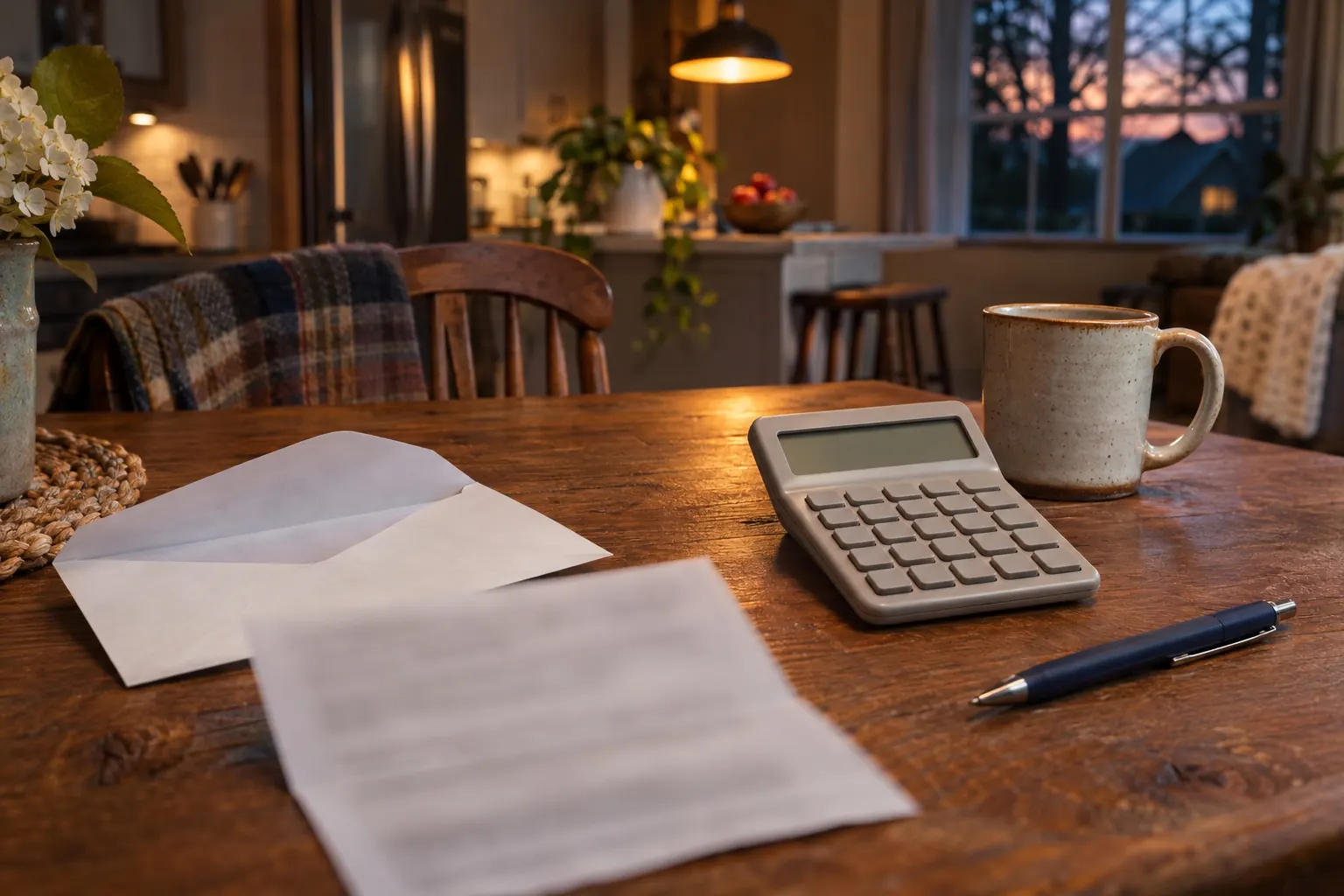
Why is my electric bill so high all of a sudden? The common causes
A bill is two numbers multiplied together: the kilowatt-hours (kWh) you used and what each one cost. When the total jumps, one of the two moved. State utility regulators point to the same short list of reasons.
- Weather. Oregon's Public Utility Commission says higher-than-normal bills are typically caused by colder or hotter weather, because the heating or air conditioning runs longer.
- A harder-working water heater. In cold months the water coming into your home is colder, so the water heater uses more energy to bring it up to temperature, the same commission notes.
- More people at home. Staying indoors all day during a cold snap or heat wave means more heating or cooling, more cooking, more screens and more lights.
- A longer billing period. Kentucky's Public Service Commission lists the number of days in the billing period among the most common reasons a bill changes. A delayed meter reading can add several days to one bill.
- An estimated reading. When the utility can't read the meter, it estimates your use and corrects the difference at the next real reading, which can make that later bill higher than you expected.
- A rate change. North Carolina's Public Staff explains that bills rise with general rate increases and with smaller per-kWh adjustments, often called riders, that change during the year for costs such as fuel.
- An appliance that's failing or aging. Kentucky's commission names malfunctioning furnaces, air conditioners, water heaters and refrigerators as causes of higher use.
- Standby loads. Electronics that draw power while switched off, often called phantom power or vampire power, add up across a whole house.
- An unpaid balance. Oregon's commission points out that amounts left over from last month carry onto the current bill.
What uses the most electricity in a home?
Knowing where the kilowatt-hours go tells you where a change in habits will show up on the bill. The US Energy Information Administration (EIA) says air conditioning, space heating and water heating were the three largest uses of electricity in American homes in 2020, at 19%, 12% and 12%. Refrigerators and lighting come next.
That's why the season matters so much: heating and cooling follow the weather, so their share swings from month to month. A home with gas heat and a gas water heater puts a bigger share of its electricity into cooling, the refrigerator and electronics.
| End use | Share of home electricity | What pushes it up |
|---|---|---|
| Air conditioning | 19% | Heat waves, a low thermostat setting, dirty filters |
| Space heating | 12% | Cold snaps, drafts, electric backup heat |
| Water heating | 12% | A high tank setting, long showers, hot-water laundry |
| Refrigerators | 8% | An old unit, a second fridge in the garage, worn door seals |
| Lighting | 6% | Older incandescent bulbs, lights left on |
| TVs and related devices | 6% | Set-top boxes, game consoles and sound systems left on standby |
| Clothes dryers | 4% | Small loads, high heat, a clogged lint screen |
| Separate freezers | 2% | An older chest or upright freezer in a hot garage |
| Cooking (ranges and ovens) | 2% | Long oven use for small meals |
| Dishwashers and clothes washers | About 1% | The machines themselves use little; the hot water they need counts under water heating |
The top three shares are published by the EIA. We calculated the others from the EIA's 2020 Residential Energy Consumption Survey tables CE5.1a and CE5.1b, dividing each end use by total household electricity, and rounded them. Smaller uses aren't listed, so the column doesn't add up to 100%.
How to read your electric bill and your kWh
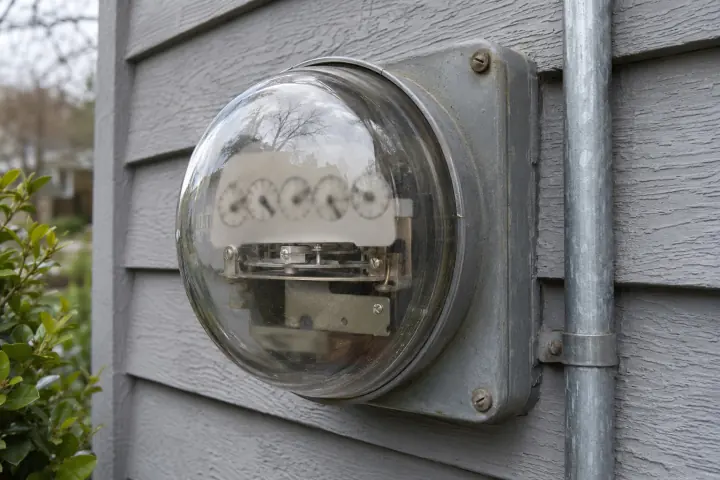
A kilowatt-hour is the unit you're billed in. North Carolina's Public Staff gives an easy picture: a 100-watt bulb left on for 10 hours uses one kWh. It works like a car's odometer, adding up over the month, and your use for the period is simply the current meter reading minus the previous one.
For scale, the EIA says the average US residential customer bought about 899 kWh a month in 2022. State averages ran from 6,178 kWh a year in Hawaii to 14,774 kWh in Louisiana, so compare yourself with your own past bills rather than a national figure.
Most residential bills have the same few parts:
- Billing period. The dates the bill covers, usually around 30 days.
- Meter readings and kWh used. Look for a note that the reading was estimated. In Arkansas, for example, the Public Service Commission requires estimated bills to be marked "E," "EST" or "ESTIMATED."
- Energy charge. The price per kWh times the kWh you used.
- Basic customer charge. A fixed monthly amount for the meter, billing and the connection, owed even in a month with no use.
- Riders or adjustments. Per-kWh add-ons that change on set dates. If your billing period straddles a change, your use is split between the old and new rate and the line appears twice. North Carolina's Public Staff notes that this is not double billing.
- Taxes and any previous balance.
Find the cause in 20 minutes
Before you change anything, find out which of the causes above is yours. You need this month's bill, the bill from the same month last year and a walk through the house.
- Compare kWh, not dollars. Put this bill next to the one from the same month last year. If the kWh match and the total is higher, the price changed, not your use.
- Count the days in the billing period on both bills. A few extra days can explain a good part of the difference.
- Look for an estimated-reading mark on this bill or the one before it. A low estimate last month means a catch-up this month.
- Check the price. Divide the energy charges by the kWh and compare the result with last year's. Look for new or larger rider lines.
- Think back over the month. A cold snap or heat wave? Guests, someone working from home, a new space heater, dehumidifier or second refrigerator?
- Walk the house. Notice an air conditioner or furnace that runs constantly, look at the filter, listen for a refrigerator that never cycles off, and check the water heater's setting and any dripping hot-water faucet.
- Check your hourly use. If you have a smart meter, the Department of Energy notes that your utility's web portal most likely shows consumption hour by hour. A high, flat line overnight points to something that runs all the time.
- Still no answer? Call the utility. Kentucky's commission says customers can ask for an energy audit to find out whether the problem is on their side of the meter.
How to lower your electric bill: heating, cooling and hot water
These three take the biggest share of the electricity in most homes, so this is where energy saving tips pay back first.
- Set the thermostat back when you're asleep or out. The Department of Energy's Energy Saver guide says you can save as much as 10% a year on heating and cooling by turning the thermostat down 7 to 10°F for 8 hours a day in fall and winter, and turning it up in spring and summer.
- Go easy with a heat pump. The same guide warns not to set a heat pump back by hand if that makes the backup electric-resistance heat come on, since that heat costs more. Use a smart or programmable thermostat made for heat pumps.
- Use ceiling fans. A fan lets you raise the thermostat about 4°F in summer with no loss of comfort, according to the Energy Saver guide. Turn it off when you leave the room.
- Change the filter. ENERGY STAR says to check the HVAC filter every month in winter and summer and replace it at least every 3 months, because a dirty filter makes the system work harder.
- Lower the water heater to 120°F. The Department of Energy calls 120°F a temperature considered safe for most of the population. It adds that people with a compromised immune system or chronic respiratory disease may want to keep the tank at 140°F, so ask your doctor if that applies to your household.
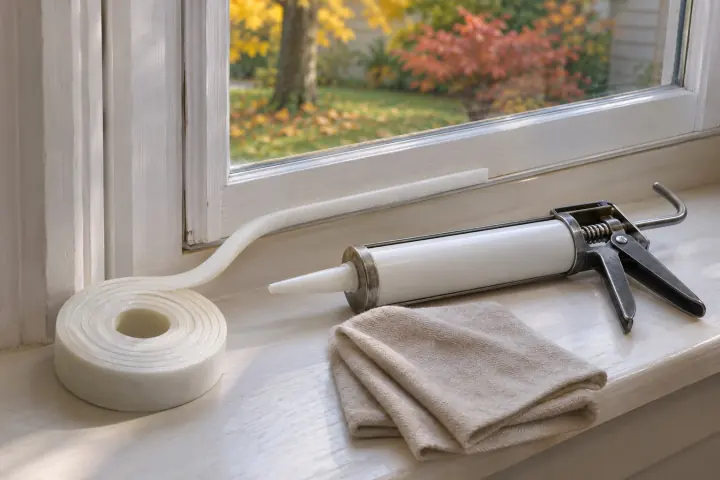
- Seal the drafts. Caulking and weatherstripping the seams, cracks and openings to the outside can save 10% to 20% on heating and cooling bills, the Energy Saver guide says.
How to save electricity in the laundry, kitchen and lighting
Smaller shares of the bill, but the changes cost little or nothing.
- Wash in cold water. ENERGY STAR says heating the water takes about 90% of the energy a clothes washer uses. Switching from hot to warm can cut a load's energy use in half, and cold saves more. Wash full loads too: a washer uses about the same energy whatever the load size.
- Dry smarter. Use the high-speed spin so clothes go into the dryer with less water in them, choose a lower heat setting and clean the lint screen after every load, as the Energy Saver guide advises.
- Set the refrigerator and freezer correctly. The Department of Energy recommends 35 to 38°F for the refrigerator and 0°F for a stand-alone freezer. The FDA's food-safety limit is 40°F or below for the refrigerator, so don't go warmer than that to save power.
- Test the door seal. Close the refrigerator door on a dollar bill. If it slides out easily, the Energy Saver guide says the latch may need adjusting or the seal replacing.
- Rethink the second fridge. The EIA puts the average cost of running a second refrigerator at about $66 a year (2020). ENERGY STAR adds that a refrigerator more than 15 years old can cost roughly $95 more a year to run than a new certified model.
- Switch to LED bulbs. An ENERGY STAR certified LED uses up to 90% less energy than an old incandescent bulb and lasts 15 to 25 times longer, according to the Energy Saver guide. Start with the lights that are on the most hours a day.
Phantom power and vampire power: the standby loads you don't see
Phantom power, vampire power and standby power are three names for the same thing: the electricity a device draws while it's switched off or waiting. Lawrence Berkeley National Laboratory, which has studied it for more than 20 years, says standby typically accounts for 5% to 10% of residential electricity use.
Each device draws very little. The lab's rule of thumb is that 1 watt drawn around the clock comes to about 9 kWh a year, and most current products draw less than half a watt in standby. The total comes from the number of devices, which can pass 40 in one home, and from older equipment that draws more.
- Unplug what you rarely use. The lab's list includes the guest-room TV and its set-top box, old stereos, empty battery chargers, rarely used printers and scanners, and seasonal gear such as dehumidifiers and room air conditioners in the off-season.
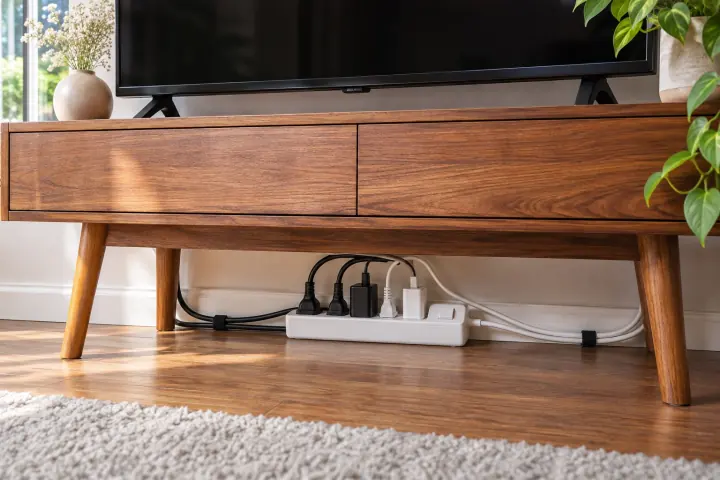
- Put clusters on a switchable power strip. One switch then turns off the whole TV or computer corner.
- Consider an advanced power strip. Pacific Northwest National Laboratory explains how these work: when you turn off the main device, usually the TV or computer, the strip cuts power to the accessories plugged into its controlled outlets. Keep modems, recording devices and boxes with long restart times on an always-on outlet.
- Use each device's energy saver or power saver mode, and let computers go to sleep when idle.
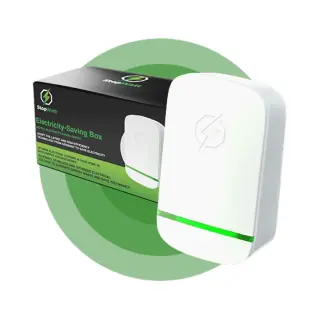
If you like the idea of a plug-in gadget alongside these habits, we reviewed StopWatt. It's a small box that goes into a standard 110V wall outlet and, according to the brand, stabilizes your home's electrical current, filters what it calls dirty electricity and helps protect appliances and electronics. There's nothing to wire or program.
Time-of-use rates: when you use power can matter as much as how much
On a time-of-use plan, the price per kWh changes through the day. The City of San Diego's billing guide describes the usual pattern: rates are higher during peak demand hours and lower in off-peak periods, and the prices follow demand on the regional grid, not your own household's use. In that city the on-peak window is 4 to 9 p.m.; yours will be printed on your bill or your utility's website.
On one of these plans, a bill can rise without your kWh changing, just because more of your use landed in the expensive hours. The fix is to move the big, flexible jobs:
- Run the dishwasher, washer and dryer in off-peak hours. Use the delay-start setting if your machine has one.
- Program a smart thermostat around your plan's schedule, as the City of San Diego's guide suggests.
Help paying a high electric bill
If the bill is more than you can pay this month, call the utility before the due date. Many utilities offer payment arrangements; Arkansas's Public Service Commission, for example, describes delayed payment agreements and levelized billing, which spreads the year's costs into steady monthly payments. Two federal programs can also help households with limited income.
- LIHEAP, the Low Income Home Energy Assistance Program, can help you pay heating or cooling bills or get emergency help in an energy crisis, according to USA.gov. Each state sets its own income rules. You apply through your state or local LIHEAP office.
- The Weatherization Assistance Program, run by the Department of Energy, sends an energy auditor to selected homes to review the bills, test for air leaks and recommend cost-effective energy-saving measures, which a local provider then carries out. The department says households at or below 200% of the poverty guidelines, or that receive Supplemental Security Income, are eligible, and both homeowners and renters can apply. Renters need the landlord's permission.
Rules on shutoffs differ too. USA.gov notes that each state has its own policy on when a utility may disconnect service for non-payment, and it can depend on the weather, your age or a disability.
A plug-in option: where StopWatt fits
Some readers want something they can plug in and forget while they work on the habits above. The device we've looked at closely is the StopWatt Electricity-Saving Box. The brand says its "Electricity Stabilizing Technology," capacitors and a magnetic filter give the home a smoother, more stable current and help protect appliances and electronics.
According to the store, one unit covers 800 to 1,200 square feet and belongs in a central 110V outlet, ideally close to the breaker box. The brand asks you to allow six to eight weeks, so plug it in the day it arrives and judge it inside the 60-day guarantee by comparing the kWh on your bills with the same months last year. Our StopWatt review has the prices, placement tips and how returns work.
When to call the utility or an electrician
Most high bills have an ordinary explanation. A few situations call for someone else to look.
Call the utility when:
- The bill doubles and nothing in your home or the weather changed.
- The reading was estimated more than once in a row. Arkansas, for example, doesn't allow a utility to estimate a bill for more than two consecutive months.
- The reading on the bill doesn't match what your meter shows, or you suspect the meter itself. Arkansas's rules, for instance, say a utility that finds a billing error must correct it, and they set out how a faulty meter is rebilled. If the utility doesn't resolve it, your state's public utility commission takes complaints.
- You need more time to pay.
Call a qualified electrician, or your landlord if you rent, for any of the warning signs on the National Fire Protection Association's electrical safety checklist: frequent blown fuses or tripping circuit breakers, discolored or warm wall outlets, flickering or dimming lights, a tingling feeling when you touch an appliance, a burning or rubbery smell from an appliance, or sparks from an outlet. These are safety problems first and bill problems second, so don't wait for the next statement.
Energy gadget we've reviewed
FAQ
What uses the most electricity in a home?
Air conditioning, space heating and water heating. The EIA says they made up 19%, 12% and 12% of US household electricity use in 2020, followed by refrigerators and lighting.
How can I lower my electric bill quickly?
Start with the big three: set the thermostat back 7 to 10°F while you sleep or are out, turn the water heater down to 120°F and wash laundry in cold water. Then change the HVAC filter, switch the most-used bulbs to LEDs and put the TV corner on a switchable power strip.
What is phantom power or vampire power?
It's the electricity devices draw while switched off or on standby. Lawrence Berkeley National Laboratory says standby typically accounts for 5% to 10% of residential electricity use. Unplugging rarely used devices and using switchable or advanced power strips are the lab's main suggestions.
Why did my electric bill double when my habits didn't change?
Check three things on the bill: the number of days it covers, whether this reading or the last one was estimated, and whether the price per kWh went up. If the kWh really doubled with no change in weather or in who's home, call the utility and ask for an energy audit or a check of the reading.
What is a power saver or energy saver device?
The name covers several things: the energy saver mode built into TVs, computers and appliances, advanced power strips that cut standby power to electronics, and plug-in boxes such as StopWatt, which the brand says stabilizes a home's electrical current. Whichever you try, track the kWh on your bills against the same months last year.
How do I conserve energy at home without spending money?
Use what you already have: adjust the thermostat when you're asleep or away, lower the water heater setting, wash full loads in cold water, clean the dryer's lint screen, air-dry dishes, turn off lights in empty rooms and unplug devices you rarely use.
Sources
- Electricity use in homes, U.S. Energy Information Administration
- 2020 Residential Energy Consumption Survey, consumption and expenditures tables (CE2.1, CE5.1a, CE5.1b), U.S. Energy Information Administration
- How much electricity does an American home use? (FAQ), U.S. Energy Information Administration
- Energy Saver Guide: Tips on Saving Money and Energy at Home (2022), U.S. Department of Energy
- Save energy as a renter: do-it-yourself tips, U.S. Department of Energy
- Home Energy Checklist, Federal Energy Management Program, U.S. Department of Energy
- How to Apply for Weatherization Assistance, U.S. Department of Energy
- Get help with energy bills (LIHEAP and weatherization), USA.gov
- Standby Power: Frequently Asked Questions, Lawrence Berkeley National Laboratory
- What Can I Unplug Now?, Lawrence Berkeley National Laboratory
- Smart Power Strips, Building America Solution Center, Pacific Northwest National Laboratory
- Clothes Washers, ENERGY STAR
- Refrigerators, ENERGY STAR
- Heating and Cooling, ENERGY STAR Save at Home
- Are You Storing Food Safely?, U.S. Food and Drug Administration
- Understanding Your Electric Bill, North Carolina Utilities Commission Public Staff
- Your Utility Bills, Arkansas Public Service Commission
- Consumer Information Center: high energy bills, Oregon Public Utility Commission
- Frequently Asked Questions, Kentucky Public Service Commission
- Energy Billing Overview (time-of-use plans), City of San Diego
- Electrical Safety: Checklist, National Fire Protection Association
This guide is general information, not electrical or financial advice. Billing rules, rates and assistance programs vary by state and utility, so confirm the details with your provider. Leave wiring, panels and meters to the utility or a qualified electrician.