
Eyes
Cataract Symptoms: Early Signs, What Causes Cataracts and When to See an Eye Doctor
Cataract symptoms include cloudy or blurry vision, colors that look faded, trouble seeing at night, lamps or headlights that seem too bright, halos around lights and frequent changes in your glasses prescription, according to the National Eye Institute. They usually build slowly and without pain. Here's how to spot the early signs, what causes cataracts, what recovery from surgery looks like and when to see an eye doctor.

Cataract symptoms: the full list
A cataract is a cloudy area in the lens of your eye, the clear part that helps focus light. The American Academy of Ophthalmology (AAO) compares it to looking through a foggy or dusty car windshield: things look blurry, hazy or less colorful.
The National Eye Institute (NEI) says you may have no symptoms at first, when a cataract is mild. As it grows, you may notice that:
- Your vision is cloudy or blurry
- Colors look faded
- You can't see well at night
- Lamps, sunlight or headlights seem too bright
- You see a halo around lights
- You see double, which sometimes goes away as the cataract gets bigger
- You have to change your glasses or contact lens prescription often
The AAO adds a few details that people often recognize: a ghosted second image in the eye with the cataract, bright colors that look yellowish, and needing more light to read. MedlinePlus, the National Library of Medicine's health site, notes that cataracts develop slowly and painlessly, and that most people have similar changes in both eyes, though one eye may be worse.
None of these symptoms proves you have a cataract. The NEI points out that they can also be signs of other eye problems, which is the main reason to have them checked rather than wait.
Early signs of cataracts
Cataracts are easy to miss early on because the change is so gradual. MedlinePlus says mild clouding of the lens often appears after age 60 and may not cause any vision problems at first. The AAO adds that people over 60 usually start to have some clouding, yet may not notice trouble with their sight until years later.
In everyday life, the first signs tend to look like this:

- You reach for a brighter lamp to read the mail or a menu
- Oncoming headlights feel harsher than they used to, and night driving is more tiring
- Streetlights or headlights have a soft ring or glow around them
- Whites look a little yellow, and colors seem duller
- Your new glasses don't seem right for long, and you need another prescription sooner than expected
| Age | What typically happens | Source |
|---|---|---|
| Around 40 | Proteins in the lens start to break down and clump together | NEI |
| After 60 | Mild clouding of the lens is common, often without vision problems yet | MedlinePlus |
| By 75 | Most people have cataracts that affect their vision | MedlinePlus |
| 80 and older | More than half of Americans have cataracts or have had cataract surgery | NEI |
Ages are typical figures for age-related cataracts. Cataracts linked to diabetes, injury or steroid medicines can appear earlier.
What causes cataracts?
Most cataracts come from normal aging. The NEI explains that after about age 40, the proteins in the lens naturally start to break down and clump together. The clumps make a cloudy area, and over time they get bigger and thicker. The lens may also turn yellow or brown, which changes how you see colors.
Doctors are still studying exactly why cataracts form. The NEI lists these factors, besides age, that make them more likely:
- A family history of cataracts
- Diabetes
- A serious eye injury
- Eye surgery for glaucoma or another eye condition
- Steroid medicines, used for health problems such as arthritis or allergies
- Radiation treatment for cancer or other diseases
Three things make cataracts form faster, according to the NEI: smoking, drinking too much alcohol, and spending a lot of time in the sun, especially without sunglasses. If you take a steroid medicine, don't stop it on your own; ask the doctor who prescribed it about your eyes.
Not every cataract is age-related. The NEI describes five main types: age-related, traumatic (after an injury), radiation, pediatric (in children, which is rare and usually genetic) and secondary, a clouding that can develop after cataract surgery. A cataract can affect one eye or both, but it can't spread from one eye to the other.
Glare at night driving and halos around lights
Night driving is where many people first feel a cataract. Headlights that seem too bright and halos around lights are both on the NEI's symptom list, and the AAO specifically mentions extra sensitivity to oncoming headlights at night.
Glare and halos have other causes too, so don't assume. If night driving has become harder, these steps help while you wait for your eye exam:
- Clean the windshield inside and out, replace worn wiper blades and wipe road grime off your headlights. An ophthalmologist interviewed by the AAO says steps like these address most night vision concerns.
- Keep your glasses clean and your prescription current.
- Limit driving at night once night vision, halos or glare become problems, as the AAO advises people with cataracts. The National Institute on Aging gives the same advice to older drivers who have trouble seeing in the dark.
- Skip tinted lenses after dark. The AAO warns that tinted or polarized lenses reduce the light reaching your eyes, which makes it harder to see at night.
Be clear about what glasses can and can't do. No pair of glasses treats a cataract, clears a cloudy lens or stops one from forming. What the right pair can do is make daytime glare more comfortable: the NEI lists anti-glare sunglasses among the small changes that help early on, next to brighter lights and magnifying lenses.
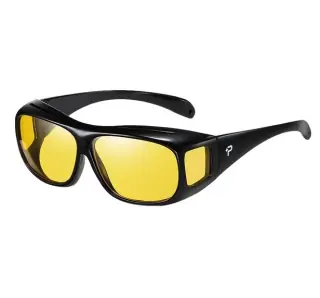
If you wear prescription glasses and want one fit-over pair for low sun and wet roads in daylight, we reviewed PolorVision. They're wraparound driving glasses made to sit over regular frames, with yellow lenses the brand labels polarized, anti-glare and UV-protective. The brand doesn't publish a UV rating, so don't count on them as your sun protection; for that, the AAO says to look for a label promising 100% UV protection. Treat them as a comfort option for daytime glare, not as cataract care, and see our guide to night driving glasses for why tinted lenses aren't the answer after dark.
How an eye doctor checks for cataracts
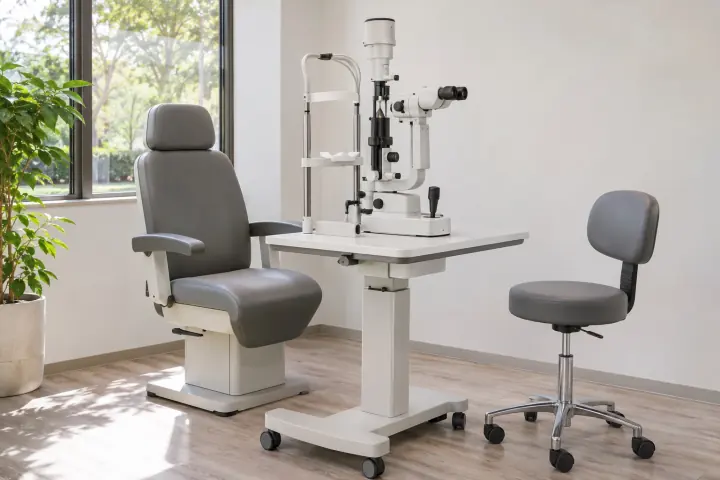
Cataracts are found during a dilated eye exam, which the NEI describes as simple and painless. The doctor puts in drops that widen your pupils, then looks at the lens and the rest of the eye.
The AAO explains that the exam includes a slit lamp, a special microscope that makes it easier to see the cornea, iris and lens up close, plus a visual acuity test, where you read letters of different sizes with each eye. With your pupils wide, the doctor can also check the retina and optic nerve and look for glaucoma. That matters, because the same visit can catch other conditions behind blurry vision.
For a few hours after a dilated exam your vision may be blurry and your eyes sensitive to light, the NEI says, so bring sunglasses and ask a friend or family member to drive you home.
Cataract treatment: brighter lights first, surgery when you need it
The NEI, the AAO and MedlinePlus all say the same thing: surgery is the only way to remove a cataract. None of them lists eye drops, supplements or eye exercises as a way to clear one. If you'd like to avoid or delay surgery, talk it through with your eye doctor rather than buying a remedy.
Surgery doesn't have to happen right away, though. Early on, the NEI suggests small changes:
- Use brighter lights at home and at work
- Wear anti-glare sunglasses outdoors
- Use magnifying lenses for reading and close work
- Get a new prescription for glasses or contacts
Doctors usually suggest surgery when cataracts get in the way of everyday activities such as reading, driving or watching TV. The NEI says most people don't need to rush: waiting usually won't harm your eyes or make surgery harder later. Sometimes a doctor recommends removing a cataract for another reason, such as getting a clear view of the back of the eye to manage diabetic retinopathy or macular degeneration.
Cataract surgery recovery: what to expect
During cataract surgery, the surgeon removes the cloudy lens and puts in a clear artificial one, called an intraocular lens or IOL. It's an outpatient procedure. Adults are usually awake, with numbing drops or an injection and medicine to help them relax. MedlinePlus says the operation itself lasts less than half an hour, and the NEI puts the surgery at about an hour. Afterward you rest for about 15 to 30 minutes, the AAO says, and then someone drives you home.
Official sources give slightly different recovery times, because "recovered" can mean seeing better, getting back to normal activity or being fully healed:
| When | What to expect | Source |
|---|---|---|
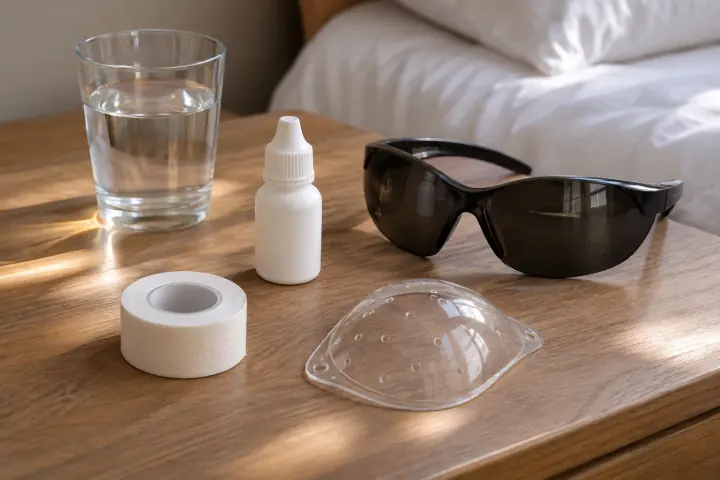
| Day of surgery | Rest in recovery, then go home with a driver. You may leave with a patch or shield and eye drops. | AAO, MedlinePlus |
| First 1 to 2 days | The eye may feel itchy, uncomfortable and sensitive to light and touch, then should start to feel better. A follow-up exam is usually the next day. | NEI, MedlinePlus |
| First few days | Most people see better, though vision can be blurry at first while the eye recovers. | AAO, NEI |
| About 2 weeks | Recovery for everyday purposes; new glasses or contacts can usually be fitted around this time. | MedlinePlus |
| 4 to 8 weeks | Full healing: about 4 to 6 weeks according to the AAO, and 8 weeks for most people according to the NEI. | AAO, NEI |
Your surgeon's instructions come first. Healing varies from person to person and with other eye conditions.
While you heal, your surgeon will likely ask you to use the prescribed eye drops exactly as directed, wear a shield when you sleep, keep soap and water out of the eye, and not rub or press on it. The NEI adds that you may need to avoid bending over or lifting heavy things for a few weeks. Ask before you drive, exercise or go back to strenuous work. MedlinePlus suggests dark sunglasses outdoors once the patch is off.
About 9 out of 10 people who have cataract surgery see better afterward, according to the NEI, and some notice colors look brighter. If both eyes need surgery, they're done separately, usually about a month apart. Surgery won't restore vision lost to other eye conditions such as macular degeneration or glaucoma.
Weeks, months or years later, vision can turn cloudy again. The NEI says up to 2 in 5 people develop this "secondary cataract", a clouding of the capsule that holds the new lens. The NEI describes the fix, a laser treatment that opens the cloudy capsule, as quick and painless.
Call your eye doctor right away after surgery if you have vision loss, bad pain that medicine doesn't relieve, very red eyes, or flashes of light or many new floaters.
How to lower your risk or slow cataracts down
You can't stop your eyes from aging, but the NEI and the AAO list steps that protect them:
- Wear sunglasses and a hat with a brim outdoors. The AAO recommends sunglasses that block at least 99% of UV light, and notes that polarization on its own doesn't block UV.
- If you smoke, quit. The AAO calls smoking a key risk factor. Free help is available at 1-800-QUIT-NOW (1-800-784-8669).
- Protect your eyes from injury with safety eyewear when you use power tools or play certain sports.
- Eat plenty of fruits and vegetables, leafy greens, nuts and whole grains.
- Take care of other health problems, especially diabetes.
- Keep up with eye exams, covered in the next section.
When to see an eye doctor
Some vision changes can't wait for a routine appointment. MedlinePlus says to seek emergency care, from a provider experienced with eye emergencies, if:
- You lose part or all of your vision in one or both eyes, even if it comes back
- You have double vision, even if it's temporary
- It feels like a shade is being pulled over your eye or a curtain is being drawn from the side, above or below
- Blind spots, halos around lights or areas of distorted vision appear suddenly
- You have sudden blurred vision with eye pain, especially if the eye is red. A red, painful eye with blurred vision is a medical emergency.
Make an appointment soon, without waiting for your next routine visit, if you notice any symptom on the cataract list above: cloudy or blurry vision, faded colors, worse night vision, trouble with glare, halos or a prescription that keeps changing. MedlinePlus names decreased night vision and problems with glare as reasons to book an eye exam. Tell the doctor if your sight is getting in the way of reading, driving or work, because that's what guides the decision about surgery.
For routine checks, the NEI recommends a dilated eye exam every 1 to 2 years if you're over 60, if you're African American and over 40, or if you have a family history of glaucoma. Most people with diabetes or high blood pressure need one at least once a year. The AAO advises a complete eye exam by age 40 and every year or two from 65.
If night driving feels unsafe, stop driving after dark until you've been examined. And if a child seems to have trouble seeing, see their doctor promptly; the NEI says cataracts in children that affect vision need treatment right away.
Glare-comfort glasses we reviewed
FAQ
What are the first signs of cataracts?
Often there are none at first. As a cataract grows, early signs include slightly blurry or cloudy vision, needing more light to read, glare from headlights or lamps, halos around lights, colors that look faded and glasses prescriptions that change often.
What causes cataracts?
Mostly aging. After about age 40, proteins in the lens start to break down and clump together, clouding it. The NEI says diabetes, family history, eye injury or surgery, steroid medicines and radiation raise the risk, and smoking, heavy drinking and sun exposure speed cataracts up.
How long does cataract surgery recovery take?
Most people see better within a few days. MedlinePlus puts recovery at about 2 weeks, the AAO says full healing takes about 4 to 6 weeks, and the NEI says most people are completely healed after 8 weeks. Your surgeon will tell you when you can drive and exercise.
Can cataracts be treated without surgery?
Not removed. The NEI, AAO and MedlinePlus all say surgery is the only way to get rid of a cataract. Early on, brighter lights, a new glasses prescription, magnifying lenses and anti-glare sunglasses can help you see better until surgery makes sense.
Do glasses help with cataracts?
They can help you cope, but they don't treat the cataract. A new prescription may sharpen your vision early on, and anti-glare sunglasses can make bright daylight more comfortable. No glasses clear a cloudy lens or prevent one.
Can cataracts cause blindness?
Without treatment, cataracts can cause severe or even permanent vision loss, according to MedlinePlus. The good news is that surgery removes them: the NEI says about 9 out of 10 people see better afterward.
Sources
- Cataracts, National Eye Institute (NIH)
- Causes of Cataracts, National Eye Institute (NIH)
- Types of Cataract, National Eye Institute (NIH)
- Cataract Surgery, National Eye Institute (NIH)
- Get a Dilated Eye Exam, National Eye Institute (NIH)
- What Are Cataracts?, American Academy of Ophthalmology
- Cataract Surgery: Risks, Recovery, Costs, American Academy of Ophthalmology (2026)
- Eye Exam and Vision Testing Basics, American Academy of Ophthalmology
- Night Driving Glasses May Hurt, Not Help, American Academy of Ophthalmology
- How to Choose the Best Sunglasses, American Academy of Ophthalmology
- Cataracts, MedlinePlus (National Library of Medicine)
- Cataract - adult, MedlinePlus Medical Encyclopedia (National Library of Medicine)
- Cataract removal, MedlinePlus Medical Encyclopedia (National Library of Medicine)
- Vision problems, MedlinePlus Medical Encyclopedia (National Library of Medicine)
- Slit-lamp exam, MedlinePlus Medical Encyclopedia (National Library of Medicine)
- Safe Driving for Older Adults, National Institute on Aging (NIH)
This guide is general information, not medical advice, and it can't diagnose an eye condition. See an eye doctor about any change in your vision, and get emergency care for sudden vision loss or a red, painful eye.