
Cleaning
How to Remove Toilet Bowl Ring Stains and Keep Them From Coming Back
To remove a toilet bowl ring, lower the water, cover the ring with undiluted white vinegar, let it sit for an hour or more, then scrub it off with a toilet brush or a wet pumice stone. Rust, black and pink rings need a different approach, and one rule matters more than any method: never mix bleach with vinegar or other cleaners.
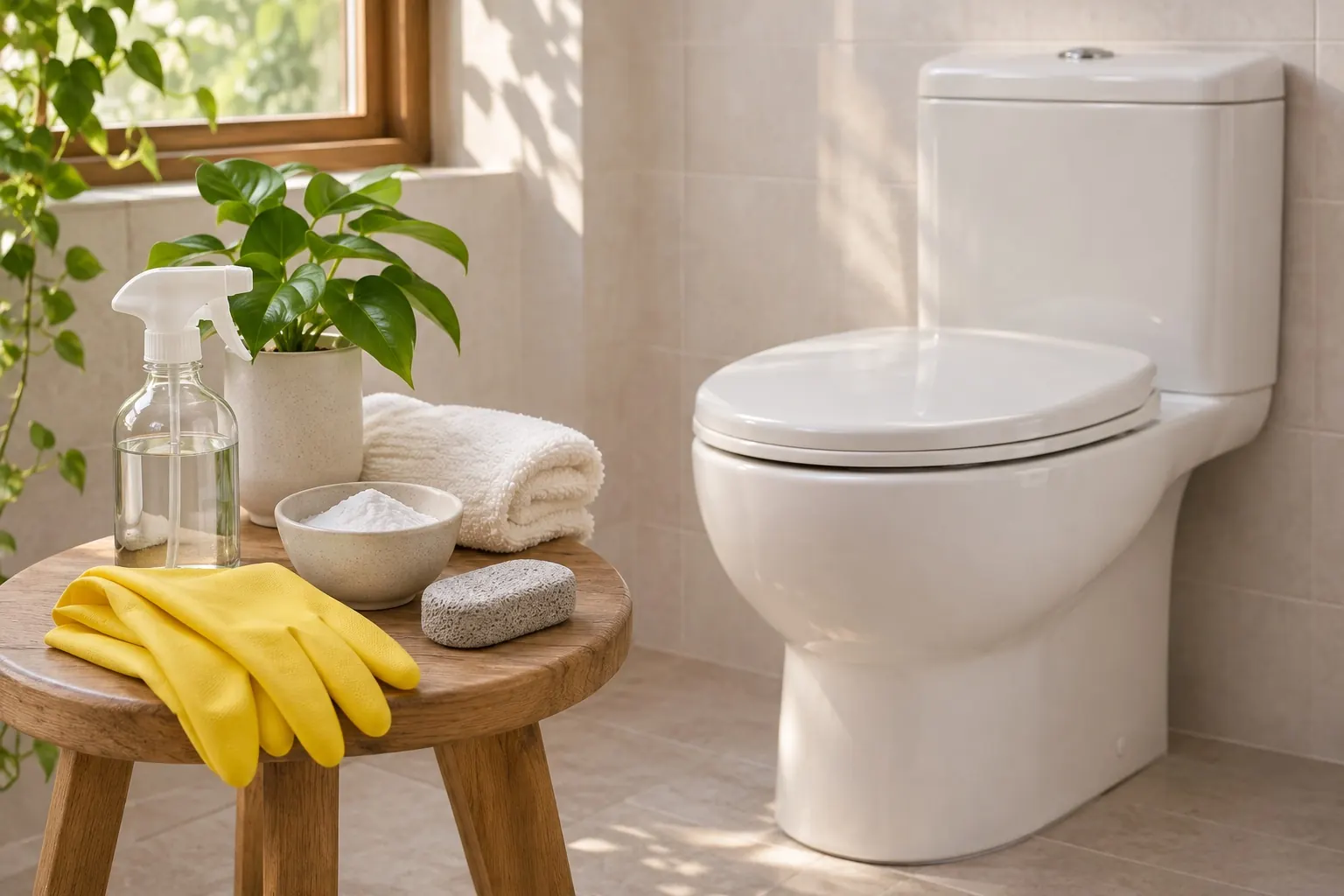
What causes a toilet bowl ring? Start with the color
A ring forms at the waterline because that's where water sits between flushes, and whatever is dissolved or growing in it collects there. The color is your best clue to the cause, and the cause decides the fix.
| Ring color | Likely cause | What to try first |
|---|---|---|
| White, gray or tan crust | Hard-water minerals, mainly calcium and magnesium | A vinegar soak, then a brush or wet pumice stone |
| Orange or red-brown | Iron in the water, which EPA links to reddish or orange staining | A cleaner labeled for rust, used on its own; test your water if you're on a well |
| Black or dark brown | Manganese in the water, which EPA links to black staining | Same as rust; test your water if it keeps coming back |
| Blue-green | Copper, which EPA links to blue-green staining | Clean as for minerals; ask your water utility or a plumber if it persists |
| Pink or orange-pink film | Serratia marcescens, a bacterium that grows in damp spots | A bleach-based cleanser on its own, then keep surfaces dry |
Based on USGS, EPA and NDSU Extension. A ring can mix causes, such as mineral scale with a stain on top.
How hard is your water? USGS classifies water with 0 to 60 mg/L of hardness (measured as calcium carbonate) as soft, 61 to 120 as moderately hard, 121 to 180 as hard and more than 180 as very hard. The harder it is, the more mineral buildup you can expect on fixtures, and your water utility can tell you where yours falls.
How to remove toilet bowl ring stains, step by step
This method is for the most common ring: the white, gray or tan crust left by hard water. Vinegar works because it's an acid. FDA guidance calls for table vinegar to contain 4 grams of acetic acid per 100 mL, and calcium carbonate, the main mineral in scale, dissolves in dilute acetic acid.
- Put on rubber gloves and open a window or turn on the bathroom fan.
- Flush away any other cleaner first. If you used a bleach product, a gel or a drop-in tablet recently, flush a couple of times so nothing mixes with the vinegar.
- Lower the water. Turn off the supply valve behind the toilet and flush, or push water down the drain with the toilet brush, so the ring sits above the waterline.
- Pour undiluted white vinegar over the ring, or press paper towels soaked in vinegar onto it so the acid stays in contact with the crust.
- Let it sit. University of Georgia Extension suggests about an hour for a vinegar wrap on hard-water stains; thick, old crust does better left longer, even overnight.
- Scrub with the toilet brush. For what's left, switch to a wet pumice stone, as described in the next section.
- Turn the water back on, flush and check. On heavy scale, repeat the soak rather than scrubbing harder.
Pumice stone for toilet rings: how to use it without scratching
Pumice is volcanic rock that was frothed up by escaping gases as it cooled, which leaves it light, porous and gritty. That grit is why it takes off rings a brush can't, and also why it needs care: used dry or on the wrong surface, an abrasive can scratch.
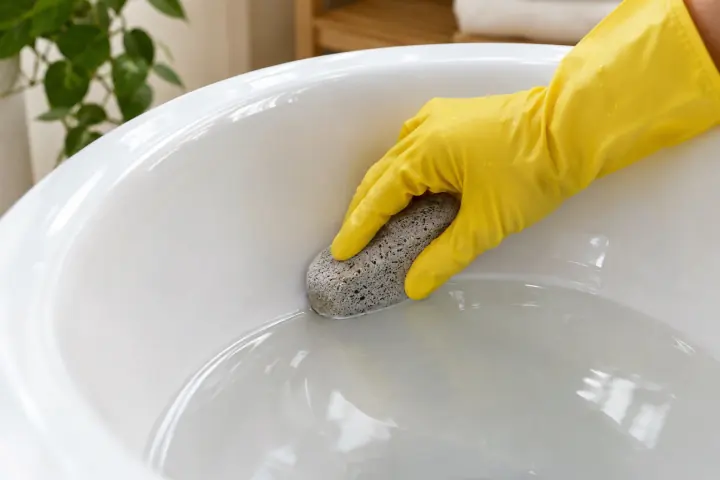
- Use it only on the porcelain bowl. Skip plastic seats, painted or colored finishes and any bowl whose care instructions say no abrasives.
- Soak the stone in water for a few minutes, and keep the bowl surface wet the whole time you work.
- Test a small spot first, then rub lightly along the ring and let the stone wear down rather than pressing hard. It leaves a gray paste that flushes away.
- Check the area in good light. If the surface feels rough or looks dull, stop and go back to vinegar and a brush.
- Rinse the stone and let it dry before you store it.
Cleaning a toilet with vinegar and baking soda: what the fizz does
The foaming mix is popular online, and it certainly looks busy. Chemically, baking soda reacts with acids and releases carbon dioxide gas, so the fizz is the vinegar's acid being used up. Since it's the acid that dissolves calcium carbonate, the more baking soda you pour into the same bowl, the less acid is left for the ring.
A better way to use both: vinegar on its own for the soak, then a sprinkle of baking soda on the brush as a gentle scrub once the vinegar has been flushed away.
One rule never changes. Vinegar is an acid, so it never goes into the same bowl as bleach, the same session or not. The safety section below explains why.
How to clean toilet bowl stains from rust, minerals and pink residue
Hard water stains. Use the vinegar method above and repeat it weekly until the crust is gone. Water with more calcium and magnesium leaves more buildup on fixtures, according to USGS, so in hard-water areas the ring comes back unless you stay ahead of it.
Rust and black stains. These usually come from iron (orange to red-brown) or manganese (black to brown) in the water. EPA's secondary standards, which are guidelines rather than enforced limits, set 0.3 mg/L for iron and 0.05 mg/L for manganese, the levels where staining and taste become noticeable. A cleaner labeled for rust takes off the stain, but rust removers are acids too, so they must never meet bleach. If you're on a private well, a water test tells you whether treating the water would stop the stains at the source.
Pink residue. NDSU Extension identifies it as Serratia marcescens, a bacterium that grows where water sits and feeds on fatty or phosphorus-rich residue. It recommends a general-purpose cleanser that contains chlorine bleach for the bowl. For the tank, it suggests adding 1/4 cup of bleach, waiting 15 to 20 minutes and flushing several times, and it warns not to leave bleach sitting in the tank because it damages rubber valves and seals. Wiping surfaces dry after use helps keep it from coming back.
How to clean a toilet tank
The tank holds fresh supply water, but in hard-water homes it collects scale, and the pink bacteria NDSU describes can grow there too. An occasional scrub, plus a quick leak check while the lid is off, keeps it in good shape.
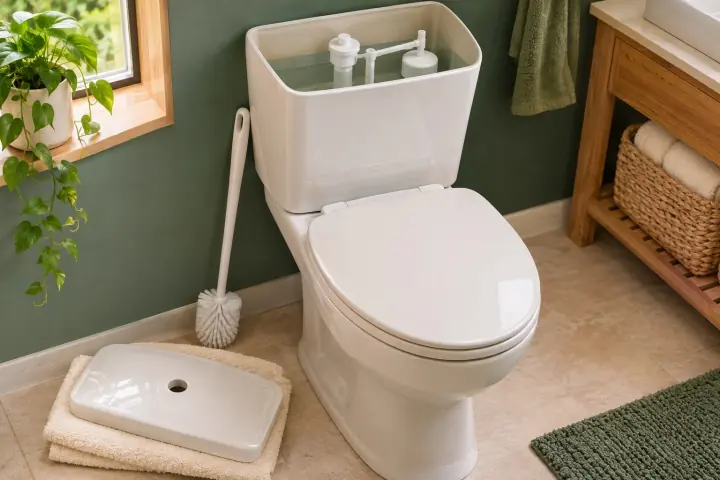
- Turn off the supply valve behind the toilet and flush to empty most of the tank.
- Lift the lid off with both hands and set it on a folded towel on the floor, where it can't slide off or crack.
- Wipe scaly spots with white vinegar, let it sit, then scrub the walls and bottom with a long-handled brush. Go easy around the flapper and the fill valve.
- Don't leave bleach sitting in the tank, which NDSU Extension says damages rubber valves and seals. That's also the trouble with slow-dissolving bleach tablets that sit in the tank between flushes.
- Turn the water back on, let the tank refill and flush a few times.
- Check for a leak. EPA's WaterSense program suggests adding a few drops of food coloring to the tank: if color shows up in the bowl after 10 minutes, the flapper is leaking. Flush right after the test so the dye doesn't stain, and plan to replace the flapper at least every five years.
Never mix these toilet cleaners
This is the one part of toilet cleaning that can send someone to the emergency room. The Washington State Department of Health explains that bleach mixed with an acid gives off chlorine gas, and bleach mixed with ammonia produces toxic gases called chloramines. Acids hide in more products than people expect: vinegar, many toilet bowl cleaners, rust removers and some glass cleaners. Ammonia is in some glass cleaners and in urine, which is why the department urges care when cleaning toilet bowls.
It happens a lot. A study of US poison center reports counted 85,104 chlorine and chloramine gas exposures from 2015 to 2022, and 84.9% of them happened at home. Most were mild, but 619 people were admitted to critical care and 26 died.
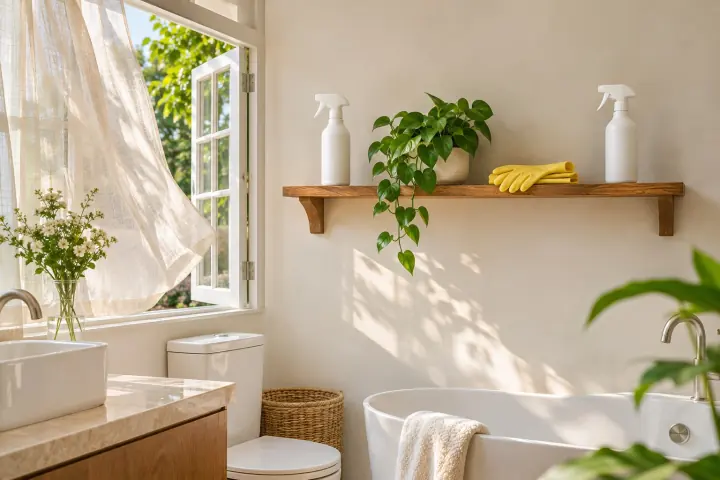
- Use one product at a time, and flush the bowl clean before you switch to another.
- Never add bleach to a bowl that has vinegar, a rust remover or another toilet cleaner in it, and never pour cleaners into each other's bottles.
- Follow CDC's rule: never mix bleach with ammonia or any other cleaner.
- Open a window or run the fan, and wear gloves.
- Store bleach and other cleaners up high and out of children's reach, as Poison Control advises.
Bleach has its place when it's used alone and diluted, as in USDA's method for sanitizing a cutting board.
How to keep the ring from coming back
Rings come back because the water keeps bringing minerals with it. A quick weekly pass at the waterline is far easier than a monthly fight with crust.
If kneeling and scrubbing is the part you dread, foaming toilet powders are made for that weekly step. We reviewed FizzClean, a bleach-free foaming powder that the brand says lifts stains, limescale and rust in about 20 minutes, and Fuugu, pre-dosed foaming bags the brand designed for hard-water rings and limescale. Fuugu's maker says plainly that it cleans but doesn't disinfect, and FizzClean's own FAQ says to use it on its own, never with bleach or acids. Whatever you use, flush away other products first.
For freshness between cleanings, Lidvio is a small UV-C light that sticks under the lid and, according to the brand, runs a 90-second UV and aroma-mist cycle each time the lid closes. It doesn't remove rings, so treat it as an add-on rather than a cleaner.
On a well with iron or manganese, or in a very hard-water area, treating the water itself is the long-term fix, and a water test tells you what you're dealing with.
When to see a doctor
If cleaners got mixed or you breathed in strong fumes, leave the room and get to fresh air right away. Poison Control's line, 1-800-222-1222, is free, confidential and open 24 hours a day. The Washington State Department of Health lists these symptoms of breathing in chlorine or chloramine gas:
- Coughing, wheezing or shortness of breath
- Chest pain
- Burning or watery eyes and an irritated nose or throat
- Nausea or vomiting
Call 911 for trouble breathing, chest pain or feeling faint. If a child was exposed, or if you're pregnant or have asthma or another lung condition, call Poison Control or your doctor even if the symptoms seem mild.
Toilet cleaning products we've reviewed
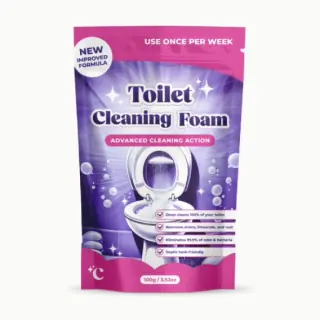
FizzClean review
People who dread scrubbing the toilet and want a weekly pour-and-flush routine without bleach. From $15.29.
Read the review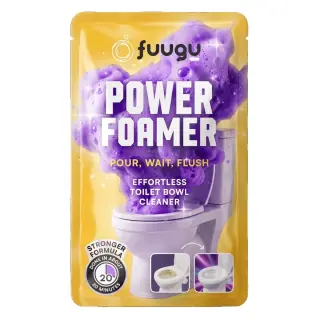
Fuugu review
Homes with hard-water rings and limescale that want a no-measure weekly routine with no bleach. From $6.95.
Read the review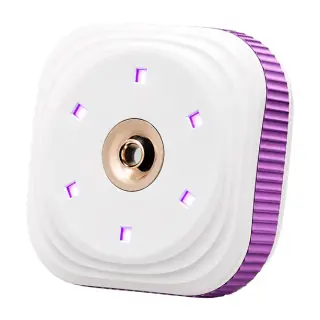
Lidvio review
Busy or shared bathrooms where you want a fresher smell and a hands-free UV-C pass between regular cleans. From $29.99.
Read the review
FAQ
Can you mix bleach and vinegar to clean a toilet?
No. Bleach mixed with an acid such as vinegar gives off chlorine gas, according to the Washington State Department of Health. Use one product at a time and flush the bowl clean before switching.
Will a pumice stone scratch my toilet?
It can if it's used dry, pressed hard or used on the wrong surface. Keep both the stone and the porcelain wet, test a small spot, use it only on the bowl itself and stop if the surface looks dull.
How long should vinegar sit in a toilet bowl?
University of Georgia Extension suggests about an hour for a vinegar wrap on hard-water stains. Thick, old rings often need longer, so leaving the vinegar overnight with the water level lowered is a good next step.
What is the pink ring in my toilet?
Usually Serratia marcescens, a bacterium that grows where water sits, according to NDSU Extension. A cleanser with chlorine bleach removes it, and wiping surfaces dry after use helps keep it from returning.
Why does the ring keep coming back?
Hard water keeps depositing calcium and magnesium, and iron or manganese in the water keeps staining. Regular weekly cleaning keeps up with it, and a water test shows whether treating the water would help.
Are bleach tablets safe for the toilet tank?
NDSU Extension warns that bleach left sitting in the tank damages rubber valves and seals, which is exactly what slow-dissolving bleach tablets do. A periodic scrub of the tank is the safer option.
Sources
- Hardness of Water, U.S. Geological Survey Water Science School
- Secondary Drinking Water Standards: Guidance for Nuisance Chemicals, U.S. Environmental Protection Agency
- Red Substance in Tub, Toilet Is Bacteria, NDSU Extension
- CPG Sec. 525.825 Vinegar, Definitions, U.S. Food and Drug Administration
- Calcium Carbonate: solubility in dilute acetic acid, PubChem (National Library of Medicine)
- Sodium Bicarbonate: reactivity with acids, PubChem (National Library of Medicine)
- Healthy Indoor Environments newsletter, September 2019 (vinegar wrap for hard-water stains), University of Georgia Extension
- Pumice, Volcano Hazards Program glossary, U.S. Geological Survey
- Fix a Leak Week (toilet dye test and flapper replacement), EPA WaterSense
- Dangers of Mixing Bleach with Cleaners, Washington State Department of Health
- How to Safely Clean and Sanitize with Bleach, Centers for Disease Control and Prevention
- Chlorine Gas: Get the Facts, Poison Control (National Capital Poison Center)
- Trends in chlorine and chloramine gas exposures reported to United States poison centers, Clin Toxicol (2024), PubMed
This guide is general information. Follow the label of any cleaning product, never mix cleaners, and keep them away from children and pets.