
Pest control
Do Ultrasonic Pest Repellers Work? What the Research Really Shows
Do ultrasonic pest repellers work? On their own, rarely: in independent tests, plug-in models had little or only short-lived effect on mice, roaches, ants and bed bugs, so treat one as an extra chemical-free layer, not the whole fix. Here's what the studies, the FTC and the EPA say, which pets can hear the sound, and how to set a repeller up so it has its best chance.
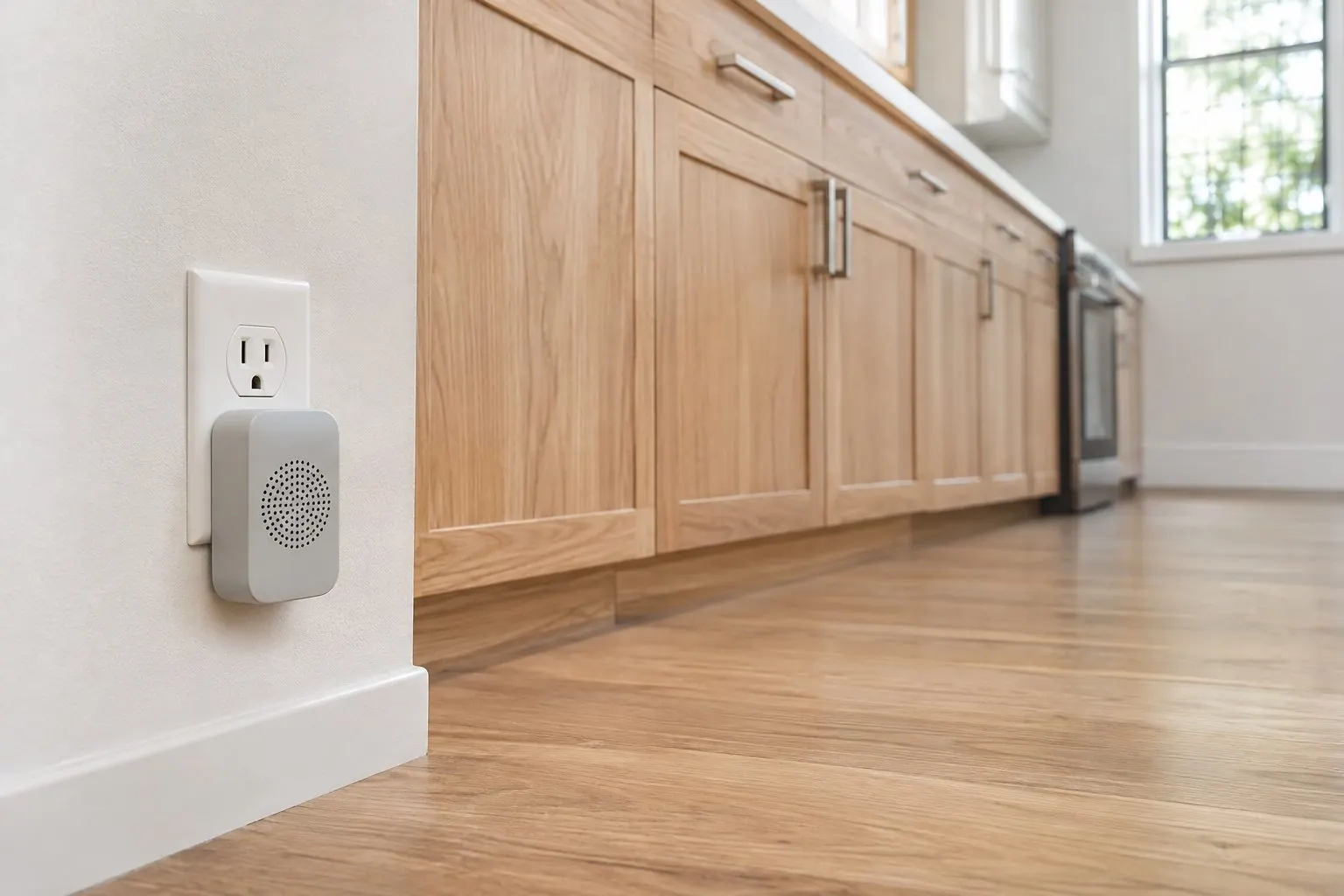
Do ultrasonic pest repellers work? The short answer
Mostly not as a stand-alone fix. The University of Arizona Cooperative Extension reviewed the published tests and concluded that commercially sold sonic devices for homes haven't been shown to work in scientific studies, so it doesn't advise using them to treat common pest problems. Its 2023 fact sheet adds that time and money are better spent on prevention, direct control and exclusion.
That isn't the whole story, though. Some lab work has found real responses to specific frequencies, and rats and mice do show a mild dislike of ultrasound before they get used to it. That's why a plug-in repeller makes the most sense as an easy, chemical-free extra in a plan that also seals gaps, removes food and sets traps, and why you should judge it over a few weeks rather than overnight.
How an ultrasonic pest repeller works
Ultrasound is sound above the range of human hearing. Arizona Extension defines it as anything above 18,000 Hz, and LSU's School of Veterinary Medicine puts human hearing at roughly 64 to 23,000 Hz. Mice hear up to about 91,000 Hz and rats up to about 76,000 Hz, so a tone we can't hear at all can be loud to them.
A plug-in repeller sends out that sound around the clock, with the idea of annoying, scaring or confusing pests until they move somewhere else. Many newer models also advertise electromagnetic pulses or sounds that change pattern over time. UC IPM, the University of California's pest management program, describes three limits that decide how much any of them can do:
- It's directional. Ultrasound travels out from the speaker in a beam rather than filling the room evenly.
- It doesn't get behind objects. A sofa, a stack of boxes or a cabinet leaves a quiet zone where pests can sit undisturbed.
- It fades quickly with distance, and walls stop it, so one unit can't cover a whole house.
Pests also get used to it. Arizona Extension describes rats and mice that showed a mild aversion at first, then kept exploring the room once they found food there, a process called habituation. The FTC made the same point in 2001: rodents become accustomed to ultrasound and return to their nesting or feeding areas.
What about electromagnetic models? Arizona Extension says devices that claim to send low-frequency vibrations through a home's wiring have also been shown not to work, and UC IPM finds little evidence that magnetic or vibrational devices of any kind drive established mice or rats out of buildings.
What the brands claim, and what the FTC and EPA say
Plug-in repellers are sold with big promises, and Arizona Extension notes that many claim to handle almost any pest. The two we've reviewed are more specific. PestPulse says it combines ultrasonic, electromagnetic and "bionic" pulses that mimic predators, shifts its frequency pattern over time so pests don't get used to it, and covers up to 900 sq ft. Repellio says it pairs bionic, electromagnetic and ultrasonic waves and rates each unit for about 120 sq ft, and its own chart describes a significant decline at 2 weeks and no pests left at 3 to 4 weeks.
Regulators have watched this category for decades. In May 2001 the Federal Trade Commission sent warning letters to more than 60 makers and sellers of ultrasonic pest devices, reminding them that claims to eliminate or repel pests need competent and reliable scientific evidence. Between 1985 and 1997 it had already brought cases against six companies over claims it called false or unsupported.
The EPA treats repellers like these as pest control devices, not pesticides. They don't need EPA registration, and makers generally don't submit efficacy or safety data before selling them. A compliant device carries an EPA Establishment Number, which shows it was made in an EPA-registered facility; the agency is explicit that this number doesn't mean it reviewed the product's safety or how well it works.
What independent research found, pest by pest
Most tests run in labs or test rooms, switching commercial devices on and off and giving the pests a choice of where to go.
| Pest | What the tests found | Study |
|---|---|---|
| Mice and rats | A mild aversion at first that faded as the animals got used to the sound, especially once they found food nearby | Greaves and Rowe (1969), via University of Arizona Extension |
| German cockroaches | With nine devices, equal numbers of roaches entered rooms with and without sound. A 2023 lab study did find avoidance of 35 and 40 kHz tones from a signal generator in a glass chamber | Koehler and colleagues (1986), via Arizona Extension; Khan-Ahmadi and colleagues (2023) |
| Ants | Three devices failed to repel three ant species in field and lab trials; one worked briefly in the lab | Huang and colleagues (2002), via Arizona Extension |
| Bed bugs | With four devices, bed bugs were just as likely to settle near the sound as away from it | Yturralde and Hofstetter (2012) |
| Mosquitoes | No effect on bites in 10 field studies; in one lab test, bite attempts rose by up to about 50% while devices were on | Cochrane review (2007); Andrade and Cabrini (2010) |
| Fleas and ticks | Two devices didn't change where fleas or ticks went over 24 hours; with nine devices, at most 19.5% of ticks moved away | Brown and Lewis (1991); Panthawong and colleagues (2021) |
We found no controlled study of plug-in repellers on spiders. Lab results with a signal generator aren't the same as a plug-in unit in a real kitchen. For roaches, see how to get rid of roaches.
Arizona Extension also points out where sound has worked: devices built by researchers for a single species, using sounds that matter to that animal. Playing back a bark beetle's own stress call cut the beetles' entry into pine logs by 72%. Store-bought units tend to use generic tones instead.
Do ultrasonic mouse repellers work?
Mice are the main reason people buy a plug-in mouse repeller, and they're the pest where the evidence is clearest. UC IPM says ultrasound has very limited use in rodent control, that house mice quickly become accustomed to regularly repeated sounds, and that there's little evidence that sound, magnetic or vibrational devices drive established mice or rats out of buildings.
So if you already find droppings, a repeller alone won't clear them out. Where one can earn its place is as a deterrent in a room you've already sealed and cleaned, next to the steps with strong evidence behind them. Our guide on how to get rid of mice walks through traps and cleanup in detail; these are the basics:
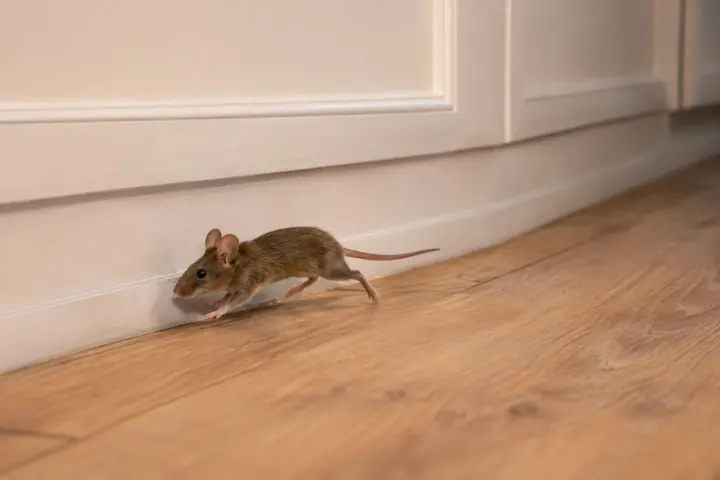
- Seal the gaps. CDC says mice can fit through a hole the width of a pencil, about 1/4 inch. Fill small holes with steel wool, with caulk or spray foam around it to keep it in place, and check under and behind cabinets, behind appliances and around pipes under sinks. UC IPM warns that plastic, rubber, vinyl, expanding foam and wood on their own get chewed through.
- Trap the mice that are already inside. UC IPM suggests setting traps close to walls, behind objects and in dark corners where you see activity, no more than about 10 feet apart, baited with the food the mice are already eating.
How to get the most from a plug-in pest repeller
If you decide to try one, set it up the way the physics allows. These steps give a repeller its best chance and make the rest of your plan stronger at the same time.
- Find where pests travel. Look for droppings, gnaw marks or trails along baseboards, under the sink, behind the fridge and in the pantry, and plan around those spots.
- Use one unit per problem room. Ultrasound doesn't pass through walls, so a hallway unit won't protect the kitchen. Brand ratings range from about 120 sq ft for Repellio to up to 900 sq ft for PestPulse, and furniture and walls shrink any rating.
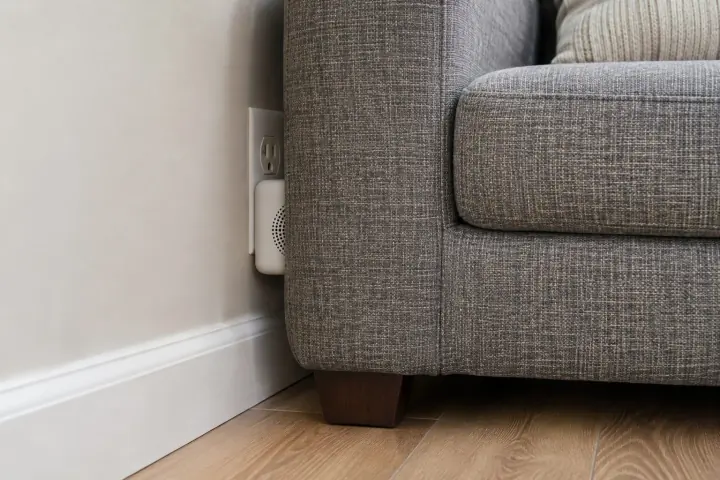
- Plug it in low, with open floor in front. Mice run along walls, which is why UC IPM puts traps there, so an outlet near the baseboard facing open space beats one hidden behind a sofa, a curtain or the trash can.
- Take away food and water. Arizona Extension advises sealing food, pet food included, in pest-proof containers and keeping areas clean. UC IPM adds: feed pets only what they'll eat in one sitting, and keep garbage containers closed.
- Give it a few weeks and keep watch. Repellio's own chart talks about 3 to 4 weeks. Check for fresh droppings or roach activity each week, and if nothing changes, move to traps or a professional rather than adding more units.
- Keep it out of rooms with pet rodents, rabbits or ferrets, as explained in the next section.
Ultrasonic pest repeller side effects: pets and people
The tones are aimed at hearing that many pets share. LSU's veterinary school lists approximate upper hearing limits of about 45,000 Hz for dogs, 64,000 Hz for cats, 42,000 Hz for rabbits, 44,000 Hz for ferrets, 50,000 Hz for guinea pigs, 60,000 Hz for gerbils and 76,000 Hz for rats. Hamsters aren't on that list, but they're small rodents too, and Arizona Extension notes that dogs hear ultrasonic sounds.
Brands often describe their sound as inaudible to pets. The cautious approach is simple: don't run a repeller in a room with a hamster, gerbil, guinea pig, pet rat or mouse, rabbit or ferret, and watch your dog or cat. If a pet starts avoiding the room or seems restless near the unit, move it.
Adults usually can't hear ultrasound, but a repeller isn't always pure ultrasound. In a 2018 study of one device, researchers in Belgium tested 25 young and 25 middle-aged adults with normal hearing. Short exposure caused no significant problems on average, yet the device also gave off a faint audible tone around 4 to 5 kHz, and the younger listeners often heard its lower settings (12 to 14 kHz). Several found them disturbing, especially with two units running, and the authors called for better guidelines for long-term home use.
If anyone at home, especially a child or teen, notices a whine or headache near the unit, move it or unplug it.

PestPulse vs Repellio: our two picks at a glance
If you'd like to add a repeller to your plan, these are the two we've reviewed in full. Both are chemical-free, plug straight into an outlet and need no refills, so either one is an easy extra layer for a kitchen, garage, basement or dorm room. Neither brand publishes independent test results, so buy one, set it up as above and judge it within the return window.
| What we compared | PestPulse | Repellio |
|---|---|---|
| Price for one device | $44.95 | $39.95 |
| Lowest price per device | $19.50 each in the 10-pack | $20.00 each in the 10-pack |
| Shipping for one device | $12.95 | $6.99 |
| Coverage, according to the brand | Up to 900 sq ft | Up to 120 sq ft |
| Technology, according to the brand | Ultrasonic, electromagnetic and "bionic" pulses that shift pattern over time | Bionic, electromagnetic and ultrasonic waves |
| Returns | 30 days; device unmodified and in its original packaging; refund minus shipping and handling | 30 days; change-of-mind returns must be unused |
Prices and policies from each brand's official store and terms, checked November 12, 2026. They can change.
PestPulse suits people who want to cover several rooms, since its price per device drops quickly in the bigger packs. Repellio has a modest, room-sized rating that fits how ultrasound actually behaves, which makes it a good match for one problem room such as an apartment kitchen or a garage. With either one, start small and keep the extra units sealed until you've seen results, because returns need the device unused or in its original condition.
When to call a pest professional
A repeller, traps and sealing handle a lot, but some situations need a licensed pest management professional:
- Droppings, gnaw marks or roach sightings keep turning up after a few weeks of sealing, cleaning and trapping.
- You hear scratching inside walls or ceilings, or find nests in the attic, crawl space or insulation.
- You suspect bed bugs. Plug-in devices failed to repel them in testing, so get them confirmed and treated.
- Pests have damaged wiring, insulation or wood, or you see signs of termites.
- Someone at home is pregnant, has asthma or a weakened immune system, or you have young children, and you'd rather not handle droppings or pesticides yourself.
If you clean up droppings yourself, follow CDC's steps: air the room out for 30 minutes, wear rubber or plastic gloves, and don't sweep or vacuum. Soak the droppings with a disinfectant or a fresh mix of 1 part bleach to 9 parts water, wait 5 minutes, then wipe them up with paper towels. Our mice guide covers the full routine.
Use bleach on its own. The Washington State Department of Health warns that bleach mixed with an acid such as vinegar gives off chlorine gas, and mixed with ammonia it makes toxic chloramines. Our toilet ring guide lists the symptoms to watch for. Poison Control's free line, 1-800-222-1222, is open 24 hours a day; call 911 for trouble breathing.
Ultrasonic pest repellers we've reviewed
PestPulse review
Renters and families who want a no-chemical, plug-and-forget extra layer against insects and mice in kitchens, garages and basements. From $19.50.
Read the review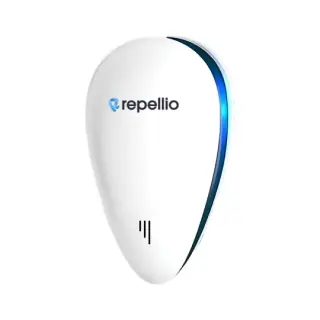
Repellio Ultrasonic Pest Repeller review
Small spaces and single problem rooms, like a dorm, an apartment kitchen or a garage, where you want a chemical-free unit you can plug in and move around. From $20.00.
Read the review
FAQ
Do electronic pest repellers work?
Independent tests have mostly found weak or short-lived effects. University of Arizona Extension concludes that commercial sonic devices haven't been shown to work in homes, and UC IPM finds little evidence that sound, magnetic or vibrational devices drive established mice out. They work best as an extra layer next to sealing, food storage and traps.
Are ultrasonic pest repellers safe for dogs and cats?
They use no chemicals, but dogs and cats hear far above our range: up to about 45,000 Hz for dogs and 64,000 Hz for cats, according to LSU's veterinary school. Watch how your pets react and move the unit if they avoid the room. Keep repellers away from pet rodents, rabbits and ferrets.
Do ultrasonic pest repellers work on roaches?
Not reliably in real rooms. In a test of nine devices, German cockroaches entered rooms with and without sound in equal numbers. A 2023 lab study found roaches avoided 35 and 40 kHz tones in a glass chamber, which suggests frequency matters, but it isn't proof that a plug-in unit clears a kitchen. Cleanup, sealing and bait come first; our roach guide explains how.
Do ultrasonic mosquito repellers work?
No. A Cochrane review of 10 field studies found no difference in mosquito bites with or without an electronic repeller, and one lab study found that some devices increased bite attempts.
How long does an ultrasonic pest repeller take to work?
There's no independent answer, because most tests found little effect. Repellio's own chart describes a significant decline at 2 weeks and no pests at 3 to 4 weeks. Give any repeller a few weeks alongside sealing and trapping, check for fresh droppings each week, and stay within the return window.
Can humans hear ultrasonic pest repellers?
Usually not the ultrasound itself, but some units also give off audible tones. In a 2018 test of one device, younger adults often heard its lower settings, and several found them disturbing. If you hear a whine near the unit, move it or unplug it.
Sources
- Sonic Pest Repellents, AZ1639, University of Arizona Cooperative Extension
- Ultrasonic Pest Control, Backyard Gardener #46 (2023), University of Arizona Cooperative Extension
- Pest Notes: House Mouse, UC IPM, University of California Agriculture and Natural Resources
- FTC Warns Manufacturers and Retailers of Ultrasonic Pest-control Devices (2001), Federal Trade Commission
- Pesticide Devices: A Guide for Consumers, U.S. Environmental Protection Agency
- Evaluation of Repellency and Lethal Effects of Ultrasonic Waves on the Blattella germanica, J Arthropod Borne Dis (2023), PubMed
- Efficacy of commercially available ultrasonic pest repellent devices to affect behavior of bed bugs, J Econ Entomol (2012), PubMed
- Electronic mosquito repellents for preventing mosquito bites and malaria infection, Cochrane review (2007), PubMed
- Electronic mosquito repellers induce increased biting rates in Aedes aegypti mosquitoes, J Vector Ecol (2010), PubMed
- The efficacy of ultrasonic pest controllers for fleas and ticks, J S Afr Vet Assoc (1991), PubMed
- The Efficacy of Ultrasonic Pest Repellent Devices against the Australian Paralysis Tick, Insects (2021), PubMed
- Assessment of short-term exposure to an ultrasonic rodent repellent device, J Acoust Soc Am (2018), PubMed
- How Well Do Dogs and Other Animals Hear?, LSU School of Veterinary Medicine
- How to Seal Up to Prevent Rodents, Centers for Disease Control and Prevention
- How to Clean Up After Rodents, Centers for Disease Control and Prevention
- Dangers of Mixing Bleach with Cleaners, Washington State Department of Health
- Chlorine Gas: Get the Facts, Poison Control (National Capital Poison Center)
This guide is general information. Plug-in repellers aren't registered pesticides or a guaranteed fix. Follow the device's directions, keep them away from pet rodents, rabbits and ferrets, and call a licensed pest professional for an established infestation.