
Kitchen
How to Clean Strawberries, Grapes and Blueberries the Right Way
To clean strawberries, rinse them in a colander under cool running water just before you eat them, rubbing gently, then pat them dry and cut off the green caps. Below: what plain water, baking soda and vinegar each remove, plus the steps for grapes, blueberries and other produce.
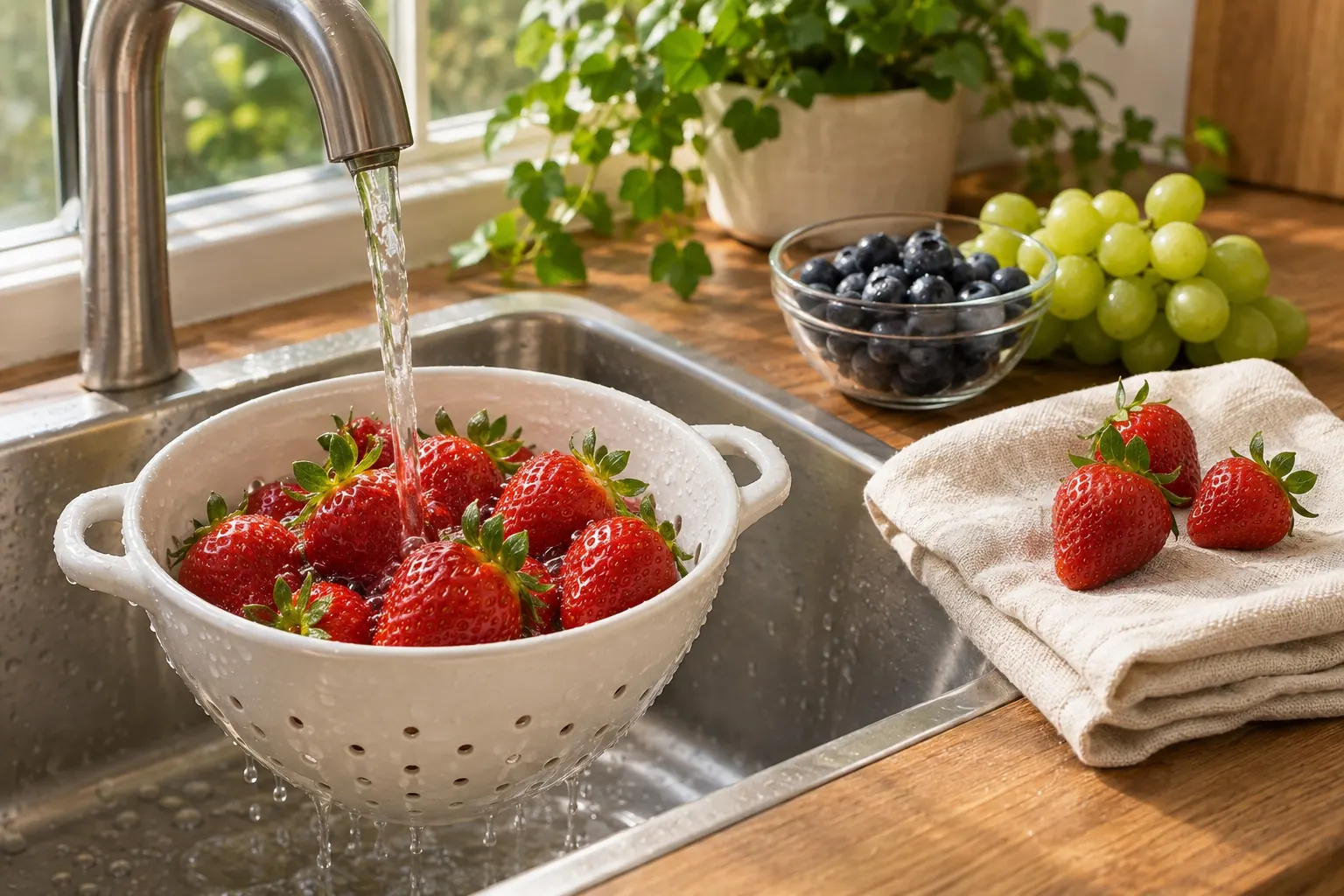
How to clean strawberries, step by step
Cool running water is the method food safety agencies recommend. The FDA says to wash all produce under running water before you prepare or eat it, including fruit you grew yourself or bought at a farmers market, and notes that washing reduces bacteria but doesn't eliminate them. Here's how that looks with a carton of strawberries.
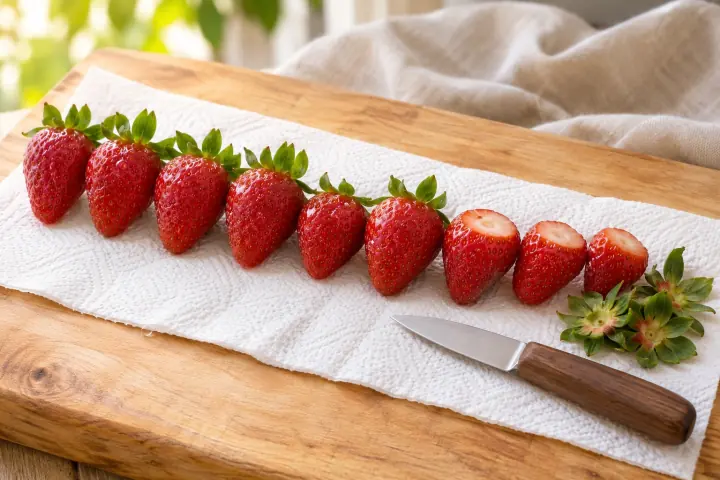
- Wait until you're ready to eat them. Illinois Extension advises against washing berries until you're about to use them, and Clemson Extension explains why: berries are sensitive to moisture, and washing them before storage makes them mold and rot faster.
- Sort them first. Toss any berry with fuzzy mold or a mushy, leaking spot. USDA advises discarding moldy soft fruit, since mold can reach below the surface, and the FDA says to cut away bruised or damaged areas before eating.
- Leave the green caps on and put the berries in a colander. Illinois Extension recommends removing the caps only after washing.
- Rinse them under cool running water, turning them with your fingers so the water reaches every side, and rub gently as you go.
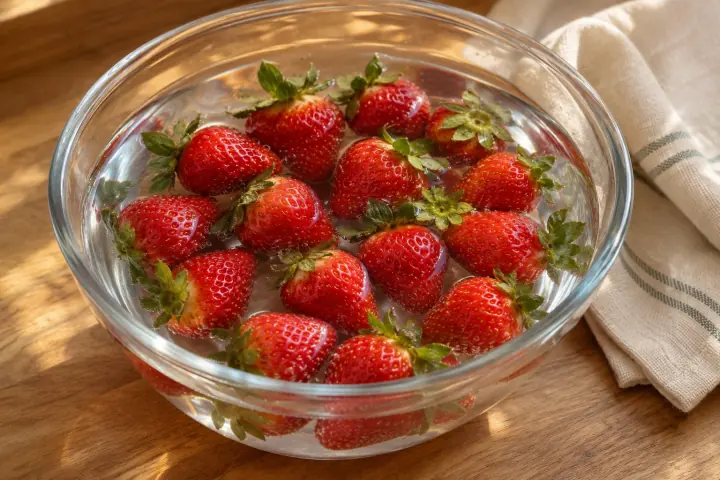
- Keep it brief. Illinois Extension warns that berries left sitting in water lose color and flavor, so rinse rather than soak.
- Pat them dry on a clean cloth or paper towel. The FDA recommends drying produce after washing to further reduce bacteria on the surface.
- Hull them last, on a clean board, with a paring knife or the tip of a vegetable peeler, taking as little fruit as possible. If that board is wood, here's how to clean a wooden cutting board afterward.
- Serve them right away, or keep cut berries in a covered container in the fridge.
Should you wash strawberries before storing them?
No. Store them unwashed and wash them right before you eat them. Clemson's Home & Garden Information Center says to keep berries unwashed in plastic bags or containers and to leave the green tops on strawberries until you use them.
Illinois Extension suggests keeping unwashed berries loosely covered in the coldest part of the fridge for two to three days at most, and not leaving them at room temperature for more than a few hours. It also notes that when one berry in a package is moldy, mold spores will have spread through the whole package, so check the carton before you buy.
Already washed a batch? Dry it thoroughly with a clean paper towel before it goes into a container in the fridge, as Clemson advises for any produce washed ahead of time.
Baking soda vs vinegar vs plain water: what each one removes
There are two different jobs here, and they don't have the same answer. One is germs, the bacteria that come from soil, water and handling. The other is pesticide residue on the skin. Here's what the evidence says about each method, and how strong it is.
Plain running water. The FDA and FoodSafety.gov both recommend it. For germs, a Tennessee State University study on lettuce, broccoli, apples and tomatoes concluded that rubbing or brushing produce under cold running tap water is a sound method to teach at home. For pesticides, a meta-analysis of studies on fruit found that tap-water washing left about 59% of residues on average, so roughly 40% came off. A study on strawberries specifically found that washing with tap water cut 16 pesticides by 19.8% to 68.1%, depending on the chemical.
Baking soda. This has the most lab support for pesticide residue. In a 2017 University of Massachusetts study, apples soaked in a 1% baking soda solution (10 grams per liter, which is roughly 2 teaspoons per quart of water) were cleared of surface residue from two pesticides after 12 and 15 minutes, doing better than tap water or a bleach wash. The soak couldn't reach what had already moved into the peel: 20% of one pesticide and 4.4% of the other after 24 hours. A 2025 study by the same group found that soaking in corn starch and then baking soda removed about 92% to 94% of one pesticide from apples, and the method also worked on grapes and strawberries. Neither study measured germs, and both used pesticides applied in the lab.
Vinegar. FoodSafety.gov says salt, vinegar, lemon juice and lime juice have not been shown to be effective at removing germs on produce. In the Tennessee study, soaking lettuce in a 5% vinegar solution worked no better than soaking it in cold tap water. We found no good evidence that vinegar beats water for pesticide residue either. If you use it, rinse the fruit under running water afterward.
Soap, detergent and produce sprays. Skip them. The FDA says produce is porous, that soap and household detergents can be absorbed by fruits and vegetables despite rinsing and can make you sick, and that the safety and effectiveness of commercial produce washes haven't been established.
| Method | Germs | Pesticide residue | Best use |
|---|---|---|---|
| Cool running water | Reduces bacteria but doesn't eliminate them | About 40% less on fruit on average; 20% to 68% less on strawberries, by pesticide | Every wash, every fruit |
| Baking soda soak (about 1%) | Not measured in these studies | Cleared surface residue of two pesticides on apples in 12 to 15 minutes; can't reach residue inside the peel | Firm fruit when residue is your concern; rinse afterward |
| Vinegar soak | Not shown to work better than water | No good evidence it beats water | Optional; rinse afterward |
| Soap, detergent, produce sprays | Not recommended by the FDA | Not recommended by the FDA | Don't use on food |
| Peeling (after washing) | Wash first so the knife doesn't carry germs inside | Left about 11% of residues in the fruit meta-analysis | Fruit with a peel you don't eat |
Lab studies used pesticides applied at known doses, so results at home vary with the fruit and the chemical.
Peeling beat every wash in the fruit meta-analysis, but you can't peel a strawberry or a grape, and the apple study notes that peeling also throws away the beneficial compounds in the skin. For berries, a careful rinse is the realistic goal.
How to wash grapes
Grapes keep longer than berries, about a week in the fridge according to Clemson's storage chart, but the rule is the same: store them dry and unwashed, and wash only what you're about to eat.
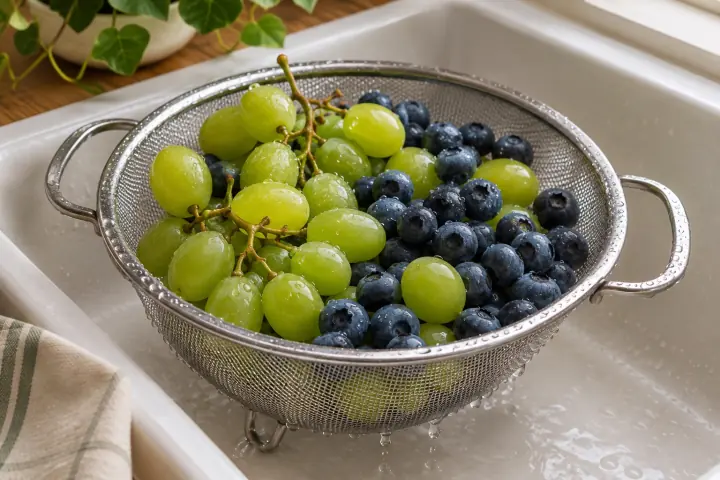
- Snip off the amount you want in small clusters, so the rest of the bunch stays dry.
- Put them in a colander and rinse under cool running water, turning the clusters with your hand so the water reaches between the grapes.
- Rub them gently as they rinse. The dusty white film you may see on grapes and blueberries, often called bloom, is a natural waxy coating; Clemson notes that many fruits make their own wax to hold in moisture.
- If pesticide residue is your worry, a short soak in water with baking soda followed by a rinse is the home method with the most lab support, and the 2025 study included grapes.
- Drain them, then pat dry on a clean towel before serving or packing them for lunch.
How to clean blueberries, raspberries and blackberries
Small berries are delicate, so treat them like strawberries: wash them just before eating and don't leave them sitting in water. Clemson gives unwashed berries two to three days in the fridge.
- Pick out any soft, leaking or moldy berries and loose stems first.
- Rinse them in a colander under a gentle stream of cool water, shaking the colander so the berries roll and every side gets wet.
- Tip them onto a towel-lined tray in a single layer and let them drain. Raspberries and blackberries are hollow and fragile, so blot them lightly instead of rubbing.
- Wash only what you'll eat today, and leave the rest dry in the fridge.
How to wash produce: a quick guide by fruit and vegetable
The basics barely change from one item to the next: clean hands, running water, no soap and a clean towel. FoodSafety.gov adds that firm produce such as potatoes, cucumbers and melons should be scrubbed with a clean brush even if you won't eat the peel, so germs aren't carried inside when you cut it.
| Produce | How to wash it | When | Good to know |
|---|---|---|---|
| Strawberries | Rinse in a colander under cool running water, rubbing gently; hull after washing | Just before eating | Store unwashed with the caps on, 2 to 3 days in the fridge |
| Blueberries, raspberries, blackberries | Gentle rinse in a colander; drain on a towel | Just before eating | Discard soft or moldy berries; store unwashed, 2 to 3 days |
| Grapes | Rinse small clusters in a colander, rubbing gently | Just before eating | Store unwashed, about 1 week in the fridge |
| Apples, pears, peaches | Rub under running water; a baking soda soak can lift more surface residue | Before eating or cutting | Peeling removes the most residue, along with the nutrients in the peel |
| Melons, cucumbers | Scrub with a clean produce brush under running water | Before cutting | Wash them even if you won't eat the rind |
| Potatoes, carrots | Scrub with a clean brush under running water | Before peeling or cooking | Brush off loose soil before storing them unwashed |
| Bagged greens labeled prewashed | No need to wash again | Ready to use | If you rinse them anyway, keep them away from unclean surfaces |
Based on guidance from the FDA, FoodSafety.gov, Clemson Extension and Illinois Extension. Fridge times come from Clemson's storage chart.
Do produce cleaning devices work?
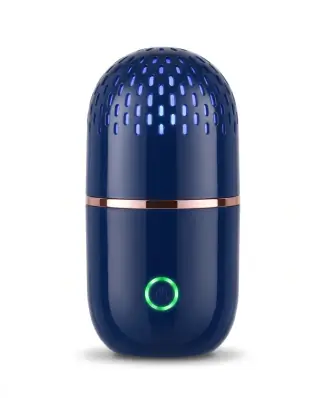
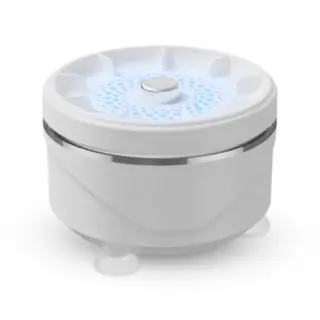
Countertop produce cleaners are a newer option. They sit in a bowl of water with your fruit and, according to their makers, use electrolysis to help lift residue, with no soap, tablets or refills. Because the brands say they run on plain water, they aren't the chemical produce washes the FDA advises against.
The research on electrolyzed water is encouraging, but a 2026 review describes it as water made from a dilute salt solution and used mainly in post-harvest food handling, so those results don't prove what a small device does in a kitchen bowl. We found no independent test of the two devices below, so treat their claims as the brands' own.
If washing berries and grapes is a daily chore at your house, either one is a hands-off step before the final rinse. We reviewed PodBloom, which the brand says runs a 10-minute cycle in up to 3 liters of water, and PuriEasy, a cordless device with a 5-minute cycle that, according to the brand, also spins the water around the food. Both brands advise rinsing your produce after each cycle.
When to see a doctor
Washing lowers the risk from fresh produce, but it can't remove it completely. If you get sick after eating, CDC says to see a doctor if you have:
- Bloody diarrhea
- Diarrhea that lasts more than 3 days
- A fever over 102°F
- Vomiting so often that you can't keep liquids down
- Signs of dehydration, such as peeing very little, a dry mouth and throat, or feeling dizzy when you stand up
If you're pregnant and have a fever with flu-like symptoms, call your doctor, as CDC advises. For young children, older adults and anyone with a chronic illness, it's worth calling the doctor sooner rather than waiting it out.
Produce cleaners we've reviewed
FAQ
Should you wash strawberries before eating them?
Yes. The FDA says to wash all produce under running water before eating it, including berries from your own garden or a farmers market. Wash them just before you eat them, not before you store them.
Is it better to wash strawberries with vinegar or baking soda?
Baking soda has more lab support for removing surface pesticide residue, though the main studies were done on apples. Vinegar hasn't been shown to remove germs from produce better than water. For everyday washing, cool running water is the standard advice, and whichever soak you use, finish with a rinse.
How long should you soak strawberries in baking soda water?
No study has set a time for strawberries. The apple study needed 12 to 15 minutes to clear surface residue, but Illinois Extension notes that berries left in water lose color and flavor. A short soak followed by a rinse under running water is a reasonable middle ground.
Are there bugs in strawberries, and does salt water get them out?
The viral salt-water soak comes from a test growers use to check fruit for the tiny larvae of spotted wing drosophila, a fruit fly. NC State Extension describes soaking sample fruit in salt water (1/4 cup of salt per gallon) and found infestation rates under 1% in most of the berries it checked. It's a check, not a cleaning step, and FoodSafety.gov says salt hasn't been shown to remove germs from produce.
Do you wash strawberries with the stems on?
Yes. Illinois Extension recommends rinsing strawberries with the green caps on and removing them after washing, with a paring knife or the tip of a vegetable peeler.
Can you wash strawberries ahead of time?
It's better not to. Washing before storage adds moisture, and Clemson Extension says that makes berries mold and rot faster. If you do wash them early, dry them thoroughly with a paper towel before refrigerating them.
Sources
- Selecting and Serving Produce Safely, U.S. Food and Drug Administration
- Safe Ways to Handle and Clean Produce, FoodSafety.gov (U.S. Department of Health and Human Services)
- Molds on Food: Are They Dangerous?, USDA Food Safety and Inspection Service
- Strawberries: Handling Care, University of Illinois Extension
- Selecting & Storing Fruits & Vegetables, Clemson Cooperative Extension Home & Garden Information Center
- Efficacy of home washing methods in controlling surface microbial contamination on fresh produce, J Food Prot (2006), PubMed
- Meta-analysis of food processing on pesticide residues in fruits, Food Addit Contam Part A (2014), PubMed
- Removal of 16 pesticide residues from strawberries by washing with tap and ozone water, ultrasonic cleaning and boiling, Environ Monit Assess (2016), PubMed
- Effectiveness of Commercial and Homemade Washing Agents in Removing Pesticide Residues on and in Apples, J Agric Food Chem (2017), PubMed
- Efficacy of Household and Commercial Washing Agents in Removing the Pesticide Thiabendazole Residues from Fruits, Foods (2025), PubMed
- Leavening agents, baking soda: portion weights (1 teaspoon = 4.6 g), USDA FoodData Central
- Electrolyzed water technologies in agri-food fields: From pesticide reduction to shelf-life extension and bioactive preservation, Food Chem (2026), PubMed
- Preventing and Managing Spotted Wing Drosophila Infestation, NC State Extension
- Symptoms of Food Poisoning, Centers for Disease Control and Prevention
This guide is general information. Follow the label of any cleaning product, never mix cleaners, and keep them away from children and pets.