
Eyes
Night Driving Glasses: Do They Work, and What Actually Helps With Glare
Night driving glasses, usually yellow-tinted lenses, haven't been shown to help you see better after dark: in a driving-simulator study they didn't speed up pedestrian detection or reduce the effect of headlight glare. What helps more is an up-to-date prescription with an anti-reflective coating, a clean windshield and an eye exam if your night vision is slipping.
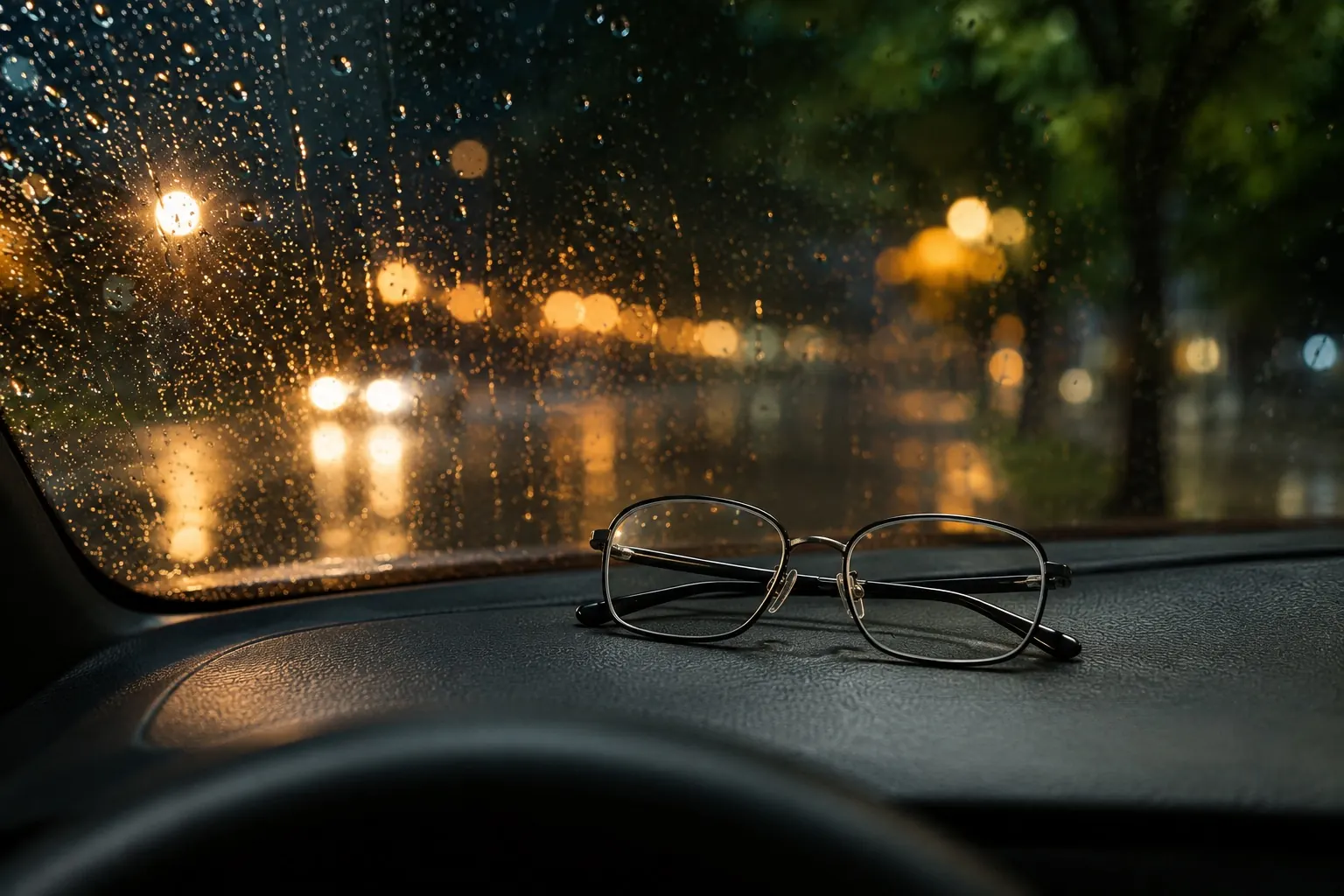
Why driving at night feels harder
In the dark, your pupils open wider to let more light reach the retina, and your eyes lean on rod cells, which handle low light but see only in black and white, the American Academy of Ophthalmology (AAO) explains. That's why colors are hard to tell apart on an unlit road.
Age makes it harder. The National Institute on Aging (NIA) notes that as you get older you may have trouble seeing clearly at night, and that glare from oncoming headlights or streetlights can become a problem. In a 2019 driving-simulator study, oncoming glare slowed a small group of older drivers' response to a pedestrian by about 1.5 seconds, compared with 0.3 seconds for younger drivers.
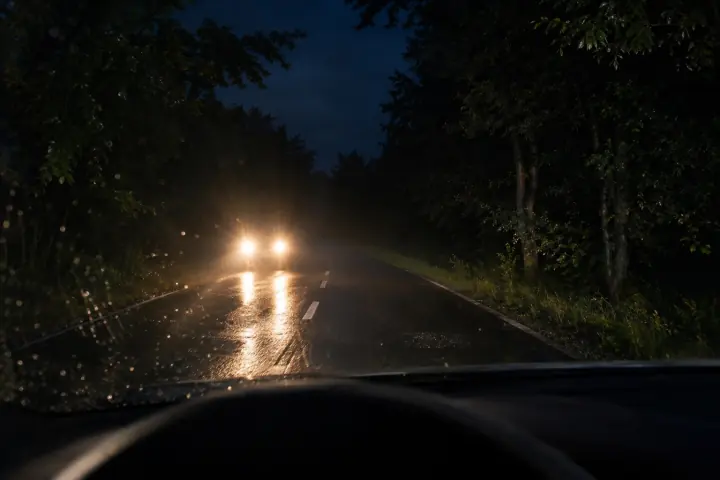
Do night driving glasses work?
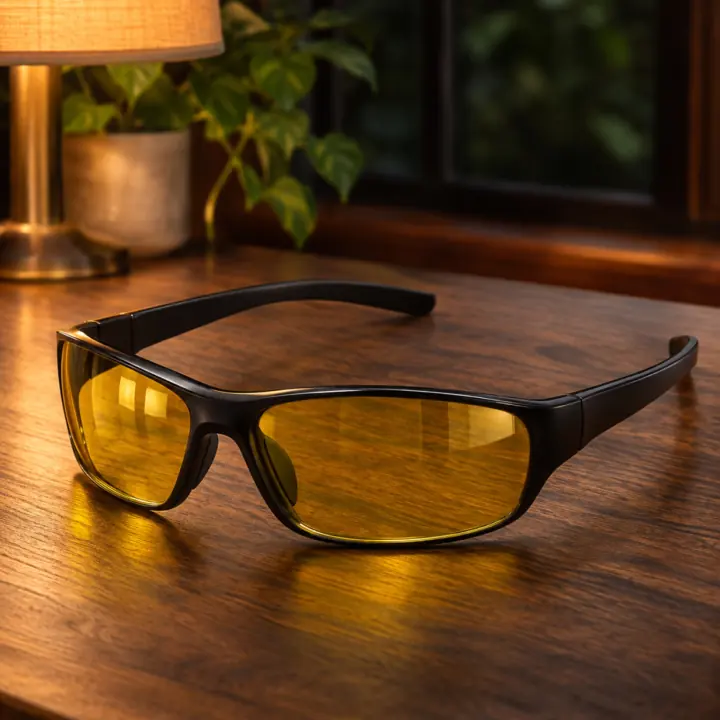
Most night driving glasses have a yellowish tint and are marketed to reduce glare from headlights, streetlights and neon signs, the AAO notes. The research hasn't found that benefit.
The best test so far came from the Schepens Eye Research Institute at Harvard Medical School. Twenty-two drivers with normal vision drove night scenes in a simulator, three times with three different commercially available yellow-lens glasses and once with clear lenses, with simulated oncoming headlight glare switched on and off. Their response time to a pedestrian was no better with yellow lenses in any condition. The authors concluded that the glasses didn't appear to improve pedestrian detection at night or reduce the effect of headlight glare, and that the findings don't support eye care professionals advising patients to use them.
The AAO summarized the study under the headline "Driving at Night: Do Yellow-Tinted Lenses Improve Vision?" Its answer: putting on the lenses "did not improve participants' ability to detect pedestrians," and "yellow lenses do not live up to product claims." A separate AAO commentary noted that participants said things looked brighter through the yellow lenses, but concluded that "yellow lens glasses do not improve the performance of driving at night, particularly with pedestrian detection."
They might even make things worse. An ophthalmologist interviewed by the AAO explains that tinted or polarized lenses reduce the amount of light reaching your eyes, which makes seeing at night harder, and warns: "You have to be careful about limiting the amount of light in variable low-light conditions." The study was small, used a simulator and included only people with normal eyes, but its authors also noted that there's no scientific evidence behind the marketing claims.
Best glasses for night driving: what to look for
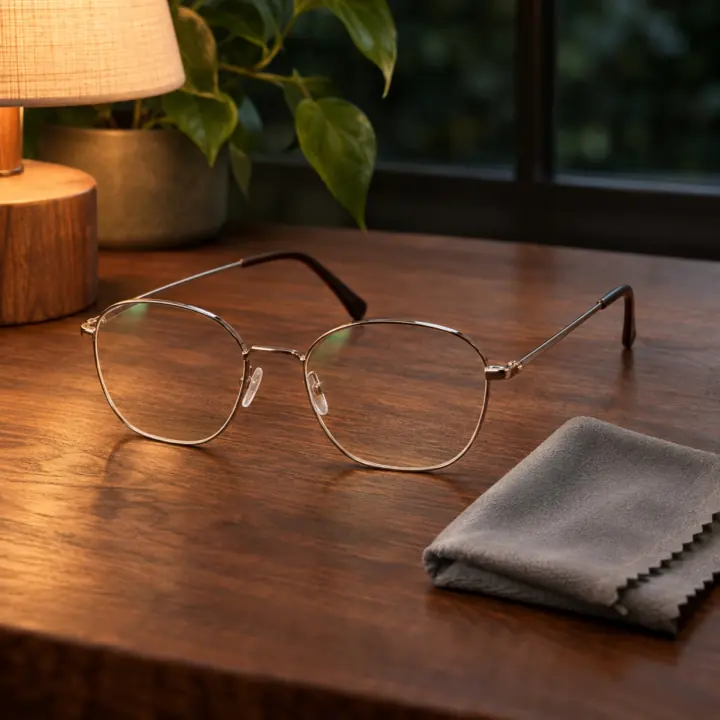
For most people, the best glasses for night driving are their regular glasses, set up well. Here's how common lens options stack up after dark:
| Lens option | At night | Why |
|---|---|---|
| Up-to-date prescription | Yes | The NIA advises making sure your prescription is up to date and correct if you need glasses to see far away while driving. |
| Anti-reflective coating | Yes | The AAO says it reduces glare and is especially helpful for people bothered by headlights and other lights at night. |
| Clear lenses | Yes | They don't cut the light your eyes need after dark. |
| Yellow or amber tint | Not shown to help | Didn't improve pedestrian detection or reduce glare effects in a 2019 simulator study. |
| Polarized lenses | Skip | Useful for daytime glare off water and car hoods, but the AAO says polarized glasses for night driving may do more harm than good. |
| Sunglasses and dark tints | Skip | The AAO says tinted glasses shouldn't be worn at night or in low light because they reduce the light entering the eye. |
| Light-adjusting (photochromic) lenses | Check they've cleared | The AAO notes they can take several minutes to go from dark to light, and don't darken well behind a windshield. |
Sources: the AAO, the NIA and the 2019 simulator study listed at the end of this guide.
Your glasses aren't the only glass between you and the road. The AAO's advice for night vision complaints starts with simple fixes: keep the windshield clean inside and out, replace worn wiper blades, clean road grime off your headlights, and keep your glasses clean. The ophthalmologist it interviewed says these steps address most night vision concerns.
Anti-glare glasses and anti-reflective coating
"Anti-glare glasses" gets used for two very different things: tinted night driving glasses, and clear lenses with an anti-reflective (AR) coating. Only the second has the AAO's support for night driving. Its eyeglasses guide says anti-reflective coatings reduce glare, let more light pass through the lens and are "especially helpful for people bothered by the glare of headlights and other lights while driving at night."
You can ask for an AR coating when you order prescription lenses, and it's worth asking about if headlights bother you. Keep the lenses clean too, one of the AAO's simple fixes for night vision complaints; a microfiber cloth in the car makes it easy.
Astigmatism and lights at night
If headlights and streetlights look blurry or smeared at night, astigmatism is one possible reason. The National Eye Institute (NEI) explains that astigmatism happens when the cornea or lens has an irregular shape, so it bends light unevenly. Its most common symptoms include blurry vision, squinting, headaches, eye strain and trouble seeing at night.
Tinted night driving glasses don't correct astigmatism. Eyeglasses or contact lenses do, and the NEI calls them the most common treatment; an eye doctor can check for astigmatism as part of a dilated eye exam. So the best night driving glasses for astigmatism are simply your prescription glasses, ideally with an anti-reflective coating.
When trouble seeing at night means something else
Glasses can't fix an eye condition, and night vision that keeps getting worse deserves an exam. The AAO says trouble seeing or driving at night can be one of the first symptoms of a cataract. Its list of conditions that affect night vision also includes glaucoma, macular degeneration, retinal diseases such as retinitis pigmentosa, vitamin A deficiency, refractive errors and past refractive surgery.
Cataracts are very common with age: more than half of Americans 80 or older either have cataracts or have had surgery to remove them, according to the NEI. Its list of cataract symptoms reads like a night driver's complaint list:
- Cloudy or blurry vision
- Colors that look faded
- Not seeing well at night
- Lamps, sunlight or headlights that seem too bright
- A halo around lights
- Double vision, which sometimes goes away as the cataract grows
- Needing to change your glasses or contact lens prescription often
Early on, the NEI says a new prescription for glasses or contacts, brighter lights at home and anti-glare sunglasses for daytime can help, and most people don't need to rush into surgery. When cataracts get in the way of everyday life, surgery replaces the cloudy lens with an artificial one. The NEI calls it very safe and says 9 out of 10 people who have it see better afterward.
Night blindness, real difficulty seeing in dim light, can have other causes. The AAO calls it one of the first signs of vitamin A deficiency, which in wealthier countries can occur in people with intestinal inflammation, liver or pancreatic disease, a history of bariatric surgery or a severely restricted diet. A doctor can check for it, so don't guess with supplements.
Night driving tips that help more than tinted lenses
These steps come from the AAO, the NEI and the NIA, and the first one catches problems no pair of glasses can fix.
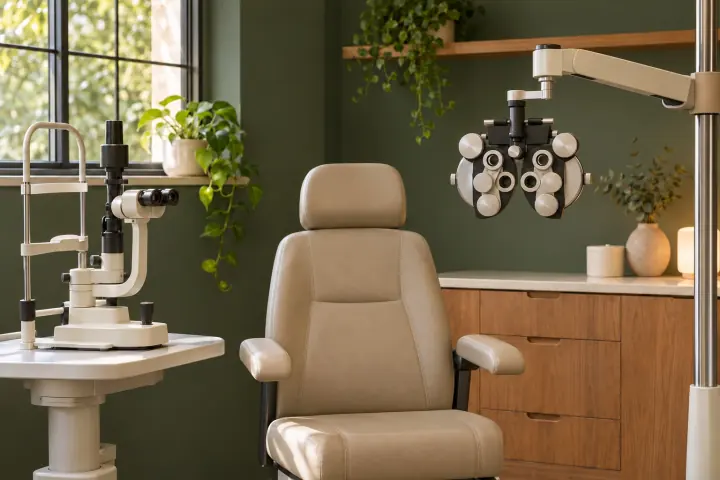
- Get your eyes checked. The NEI and the NIA advise a dilated eye exam every one to two years from age 60, and the AAO recommends regular eye exams starting at 40.
- Wear your current prescription, in clear lenses with an anti-reflective coating if glare bothers you.
- Clean the windshield inside and out, and replace worn wiper blades.
- Clean your headlights, which collect road grime, and keep your glasses spotless.
- Cut back on or stop driving at night if you have trouble seeing in the dark, as the NIA suggests, and avoid driving into the sunrise or sunset when you can.
- Don't drive if you feel drowsy or lightheaded, and check your medicines for warnings about driving.
Where driving glasses fit: daytime glare
Glare isn't only a night problem. Low sun, bright days and rain-slicked roads bother plenty of drivers, and that's where tinted, polarized lenses earn their keep: the AAO says polarized lenses cut glare and eyestrain by blocking light reflected off surfaces like water and car hoods.
If you wear prescription glasses and want one pair for those conditions, we reviewed PolorVision, wraparound driving glasses made to fit over regular frames, with yellow lenses the brand labels polarized, anti-glare and UV-protective. The brand also pitches them for night driving. Given the research above, keep them for bright days, low sun and wet roads in daylight, and wear clear lenses after dark. Change-of-mind returns must be unused, so try them over your own glasses as soon as they arrive.
Glasses we reviewed
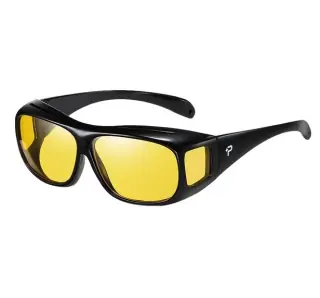
PolorVision Driving Glasses review
Drivers who wear prescription glasses and want one fit-over pair with polarized, UV-blocking lenses for sun glare, low sun and wet roads. From $49.99.
Read the review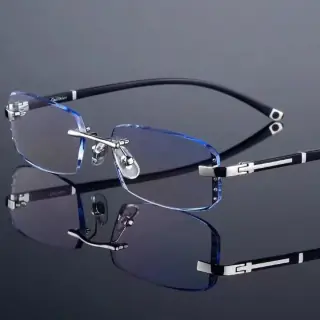
BlueLume Glasses review
Casual readers who want one light pair for the page, the screen and a sunny walk, and don't need a specific prescription. From $35.56.
Read the review
FAQ
Do night driving glasses work?
Not for seeing better. In a 2019 simulator study, three yellow-lens night driving glasses didn't improve pedestrian detection or reduce the effect of headlight glare compared with clear lenses. Drivers said things looked brighter through them, but looking brighter isn't the same as seeing more.
Do yellow glasses help night driving?
The evidence says no. The AAO's summary of the research: "yellow lens glasses do not improve the performance of driving at night, particularly with pedestrian detection." Any tint also cuts the light reaching your eyes, which can make dim scenes harder to see.
Are polarized glasses good for night driving?
No. Polarized lenses cut daytime glare off water and car hoods, but the AAO says polarized glasses for night driving may do more harm than good. Save them for daylight.
What are the best glasses for night driving?
Clear lenses in your current prescription, with an anti-reflective coating, which the AAO says is especially helpful for people bothered by headlight glare. If glare still troubles you, see an eye doctor rather than adding a tint.
Why do I see halos around lights at night?
A halo around lights is one of the cataract symptoms the NEI lists, and the AAO says cataracts can increase glare, halos or streaks from headlights and streetlights. Astigmatism can also cause trouble seeing at night. If halos are new or getting worse, book an eye exam.
How can I improve my night vision?
The AAO says there are no home treatments or exercises that can improve night vision. What helps is treating the cause: an updated prescription, cataract surgery when it's needed, or care for another eye condition.
Sources
- Driving at Night: Do Yellow-Tinted Lenses Improve Vision?, American Academy of Ophthalmology (2019)
- No evidence to support benefits of yellow lens night-driving glasses, American Academy of Ophthalmology (2019)
- Night Driving Glasses May Hurt, Not Help, American Academy of Ophthalmology
- What Are Polarized Lenses?, American Academy of Ophthalmology
- Eyeglasses: How to Choose Glasses for Vision Correction, American Academy of Ophthalmology
- Best Glasses for Age-Related Macular Degeneration (AMD), American Academy of Ophthalmology
- Night Vision, American Academy of Ophthalmology
- What Is Vitamin A Deficiency?, American Academy of Ophthalmology
- Cataracts, National Eye Institute (NIH)
- Astigmatism, National Eye Institute (NIH)
- Safe Driving for Older Adults, National Institute on Aging (NIH)
- Comparison of Pedestrian Detection With and Without Yellow-Lens Glasses During Simulated Night Driving With and Without Headlight Glare, JAMA Ophthalmol (2019), PubMed
This guide is general information, not medical advice. Talk to your doctor before making changes to your diet, sleep or exercise routine.