
Home security
Apartment Security for Renters: No Drilling, No Contract
Apartment security comes down to a few renter-friendly basics: lock the deadbolt every time, block the sliding door track, put a lamp on a timer, know your neighbors and add a small indoor camera that needs no drilling. Below is a walk-through that starts at your front door, with what you can do today on your own, what to ask your landlord for, and who to call when something looks wrong.
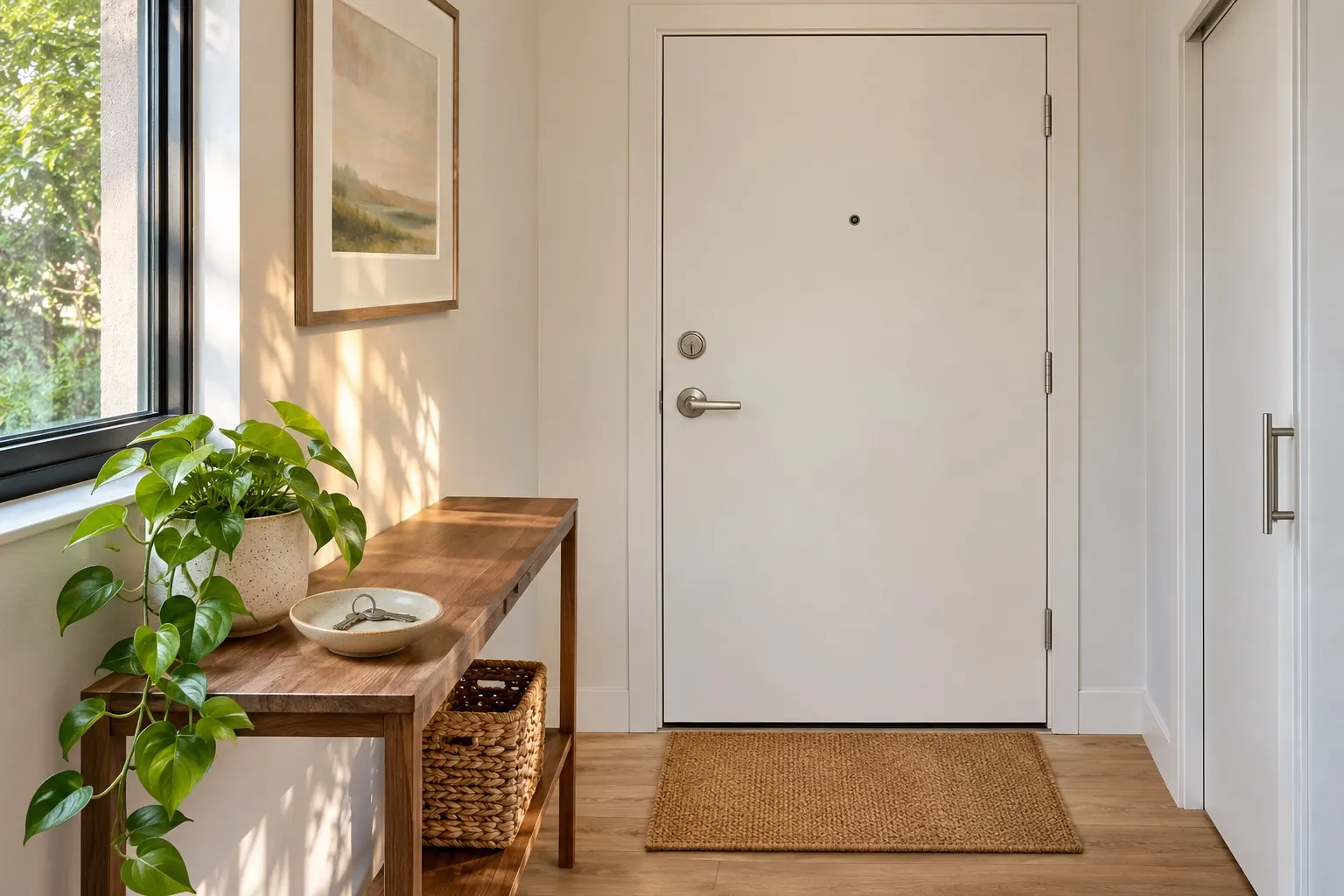
Apartment security starts with a locked door
Most of what keeps a rental safe is not equipment. A Bureau of Justice Statistics report on household burglary, based on national survey data from 2003 to 2007, found that in 40% of unlawful entries to homes where nobody was in, the offender simply came through an unlocked door or window. The same report notes that households in rental properties experienced higher rates of burglary, and that burglaries of empty homes were more likely during the day, between 6 a.m. and 6 p.m., than at night.
That is good news for renters, because the fix for an unlocked door is free. The walk-through below starts at the entry door and works its way through the unit.
How to secure a door in a rental
The National Crime Prevention Council's apartment checklist opens with one question: does your entry door have a deadbolt lock and a peephole? Start there.
- Use the deadbolt, every time. The Seattle Police Department recommends a deadbolt with a minimum one-inch throw on every exterior door. If yours has one, lock it when you leave, when you're home and when you go to bed.
- Ask for the locks to be rekeyed. Washington, DC's Metropolitan Police Department advises rekeying locks when you move in, since you can't know how many copies of the old key exist. In a rental that is the landlord's job, so put the request in writing.
- Check the door viewer. Seattle police recommend a wide-angle, 180-degree viewer on the main entrance door. If your door has none, ask the landlord to add one. The University of California, Irvine police put the habit simply: check your peephole before opening the door, and if you can't see anyone, don't open it.
- Don't hide a key. UC Irvine police warn that experienced thieves know where to look. The DC police suggest leaving a spare with a trusted neighbor instead.
None of this needs a drill on your side. If the door rattles, the frame is split or the lock doesn't catch, report it to the landlord as a repair: Seattle police say an exterior door should fit snugly in a frame free of warping and cracks.
Sliding doors and windows: the easy way in
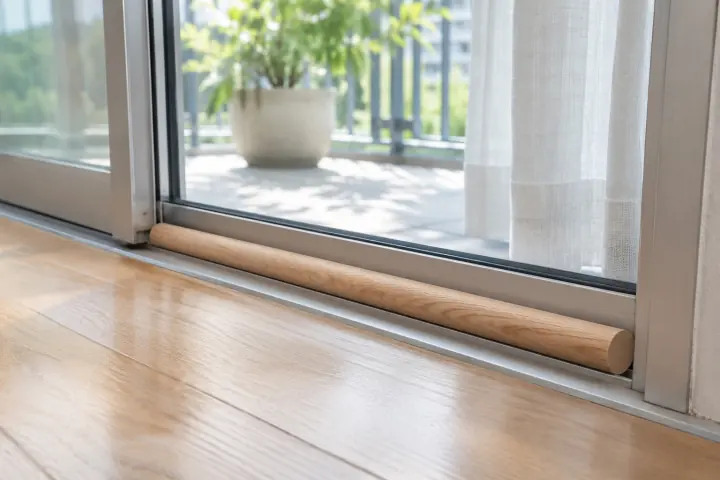
A sliding glass door to a balcony or patio needs a second device besides its latch. Duke University Police say sliding glass doors must have a secondary security feature, such as a security bar in the door frame.
The crime prevention council's checklist describes the classic renter's fix: a wooden rod in the track so the door can't be slid open, plus pins in the overhead frame so it can't be lifted out. The rod is something you can do this afternoon with a length of dowel cut to fit the track, or an adjustable security bar. The pins mean drilling into the frame, so ask the landlord about those.
- Lock windows whenever you're out. Duke police say to keep doors and first-floor windows locked at all times, and UC Irvine police point out that first-floor apartments offer the easiest access.
- Add window locks where you can. Seattle police recommend pinning or adding extra locks to double-hung windows to discourage prying. Clamp-on sash locks that tighten by hand need no holes; pins drilled through the sash are a landlord question.
- Keep valuables out of view. UC Irvine police say valuables should not be visible through the windows and doors of your home.
- Keep one way out. Seattle police add that security improvements should not compromise fire safety: at least one door or window in each room should still work as a fire escape.
Lighting and timers that make an apartment look lived in
An empty apartment tends to look empty: dark every evening, mail piling up. A plug-in timer on a lamp near a window changes that picture. Seattle police recommend interior and exterior timers that turn lights on while you're away, and the DC police list light timers and avoiding mail buildup among the things to do before you leave.
Sound helps too. The crime prevention council's checklist suggests leaving a radio playing or a light on while you're gone, and Duke police recommend a radio or television on low volume when you're not home, plus a porch light left on each night.
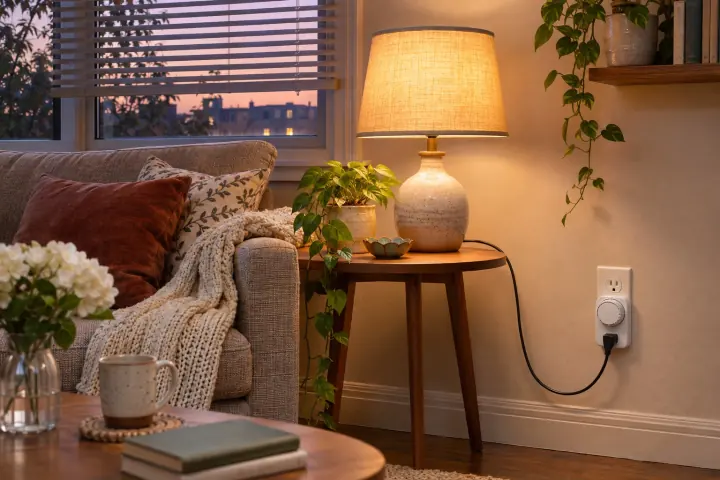
- If you have your own porch, balcony or entry light, leave it on at night or use a bulb with a built-in motion or dusk sensor. The DC police recommend motion-activated lighting.
- Report burnt-out lights in hallways, stairwells and parking areas. UC Irvine police say to notify your landlord of exterior and common-area lights and locks that aren't working.
Home security tips that cost nothing
These are the habits police departments repeat most often.
- Lock up every time, including when you're home. UC Irvine police say to lock your door at all times, especially when you or a roommate are sleeping.
- Don't let strangers follow you in. Respect the building's access control and don't hold the entry door for people you don't know.
- Keep travel plans off social media. UC Irvine police say not to leave public messages indicating you're out of town, and CISA, the federal cybersecurity agency, gives the same advice about vacation plans and location sharing.
- Tell a neighbor and the building manager when you'll be away for a business trip or vacation, as the crime prevention council's checklist recommends, and ask someone to pick up mail and flyers. Duke police suggest stopping the mail for longer absences.
- Get to know your neighbors. The council's checklist recommends joining or organizing an Apartment Watch so neighbors can look out for each other.
- Bring packages in quickly. The U.S. Postal Inspection Service advises not leaving letters and packages in your mailbox or at your door for any length of time. If you can't be home, arrange a mail hold or have the package held for pickup at the post office.
Home security for renters: what you can do without drilling
The dividing line is simple. Anything that changes the door, the lock, the frame or the wall belongs to the landlord, and your lease may say so in writing. Anything that plugs in, clamps on, sits in a track or sticks with a magnet is usually yours to add and take with you when you move.
| Measure | No drilling, do it yourself | Ask the landlord first |
|---|---|---|
| Entry door lock | Use the deadbolt every time; don't hide spare keys | Rekeying at move-in, adding or replacing a deadbolt |
| Seeing who's there | Check the door viewer before opening | Installing a wide-angle viewer or a wired video doorbell |
| Sliding door | Rod or adjustable bar in the track | Pins in the overhead frame, an added lock |
| Windows | Lock them; add clamp-on sash locks; close the shades | Pinned sashes, repairs to locks that don't work |
| Lighting | Lamp timers; a sensor bulb in your own fixture | New fixtures; burnt-out lights in common areas |
| Camera | A small indoor camera on a shelf or magnetic mount inside your unit | Anything mounted in hallways or other shared areas |
Leases differ. Read yours, and get permission in writing for anything that alters the unit.
Where an indoor security camera helps in an apartment
Locks and habits keep people out. A camera tells you what's happening while you're not there, and for a renter the simplest kind is one that needs no wiring, no drilling and no contract.
A small Wi-Fi mini camera fits that description. The one we've reviewed is the SpyFocus Mini WiFi Camera. According to the brand, it sits on a magnetic base that needs no drilling or tools, streams 1080P video with a 120° view to a phone app, switches to night vision in the dark and sends an alert when it detects motion. The brand also says the core features work with no monthly fee, which suits a renter who doesn't want a contract.
- The entrance. One camera facing the front door from inside covers the way everyone comes in.
- A pet. If the dog or cat is home alone during the workday, a camera in the living room lets you look in. The brand says SpyFocus has two-way audio, so you can listen and talk through the app.
- A sliding door or ground-floor window. Point the camera at it from across the room, with a clear line of sight.
- A garage or storage room that comes with your unit.
If you have several spots to cover, the price per camera drops in the larger packs. Our SpyFocus review lists the pack prices and the return policy.
How to set up an apartment security camera, step by step
The security settings below come from the Federal Trade Commission's advice on home security cameras and from CISA's tip sheet on protecting a digital home.
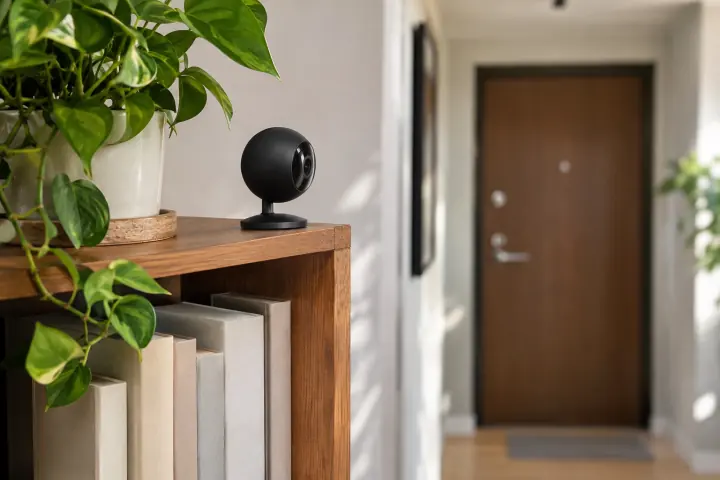
- Place it high, facing the entry and angled down. A top bookshelf, the top of a cabinet or a metal surface for the magnetic mount keeps the camera out of reach and gives it a wide view of the room.
- Keep glass out of the way. The SpyFocus brand's FAQ says motion detection may not work reliably through glass, so point the camera at the door or window from inside the room.
- Plan the power. A camera near an outlet can stay plugged in. On battery, the brand says SpyFocus typically needs charging about once a week with standard use and that the app warns you when it runs low.
- Check the Wi-Fi where the camera will live. Pair it near the router first, then move it to its final spot and open the live view there.
- Secure the router. The FTC says to use a strong password on your router, keep its software up to date and make sure the Wi-Fi is encrypted with WPA3 or WPA2. CISA adds that you should change the router's default username and password.
- Set a strong password for the camera account. The FTC's advice: don't keep a default username and password, and don't reuse a password from another account. If two-factor authentication is offered, turn it on.
- Keep the camera and its app updated. The FTC recommends installing updates when they're released and setting the app to update automatically.
- Test it. Walk through the door and confirm the alert reaches your phone, then check the picture again after dark.
Camera privacy basics for renters and roommates
A little courtesy keeps a camera from becoming a problem with the people you live with.
- Keep it to your own space. Point cameras at the inside of your unit: your entry, your living room, your storage room. Hallways, stairwells and a neighbor's door or window are not yours to record, and the building's shared areas are the landlord's responsibility.
- Never in a bathroom, and never in a bedroom someone else uses or anywhere a guest or roommate expects privacy.
- Tell people it's there. Let roommates, guests, pet sitters and anyone who works in your home know about the camera, and agree with roommates on where it points.
- Think before you record sound. Recording people's voices needs their consent and has to follow your local law, so ask before you record anyone and check the rules where you live.
Renter's insurance and a home inventory
Your landlord's policy generally covers the building, not what you own. The National Association of Insurance Commissioners (NAIC) explains that a renter's policy covers your belongings and your personal liability if someone is hurt in your home, and that most standard homeowners and renters policies cover stolen items up to the policy limits. It put the average cost of a renter's policy at $15 to $30 a month in a consumer article first published in 2008, so ask for a current quote. Flood and earthquake damage are generally not included.
Duke University Police and UC Irvine police both recommend renter's insurance for apartment dwellers. The NAIC also notes that insurers may offer a discount for security features such as burglar alarms and exterior deadbolts, so mention yours when you ask for a quote.
A claim goes faster with a home inventory. Here's a simple way to make one in an evening:
- Go room by room and photograph or film everything of value: electronics, bikes, jewelry, tools, furniture.
- For each item, note what the NAIC lists: brand, model, serial number, price and date of purchase, and keep the receipt if you have it.
- Photograph the serial numbers of laptops, phones, TVs and bikes. UC Irvine police recommend recording serial numbers and photos so items can be identified as yours.
- Store a copy outside the apartment. The NAIC suggests emailing the inventory to a family member, a friend or your insurance agent, and offers a free home inventory app and checklist.
- Update it once a year, as the NAIC recommends.
When to call the police or the landlord
Knowing who handles what saves time.
- Call 911 from a safe place if you come home and something looks wrong, such as a slit screen, a broken window or an open door. UC Irvine police and the DC police both say the same thing: do not go inside.
- Call the police non-emergency number to report a suspicious person around the building, or a theft you discover after the fact. Your inventory and any camera footage will help with the report.
- Report stolen mail or packages to the U.S. Postal Inspection Service, online or at 1-877-876-2455.
- Contact the landlord or property manager, in writing, about locks, doors or windows that don't work, burnt-out lights in common areas, a broken building entry door or lost keys. Duke police draw the same line: apartment management for issues with the complex, local law enforcement for crimes and emergencies.
- Call your insurer after a theft to start a claim, with your home inventory at hand.
Save the building's emergency maintenance number and your local police non-emergency number in your phone today, before you need them.
Security gadgets we've reviewed
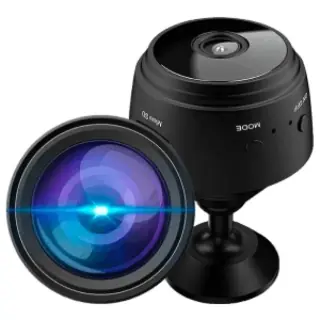
SpyFocus review
Renters and homeowners who want a small, no-drill camera to check on the house, a pet, an entrance or the garage from their phone. From $29.45.
Read the review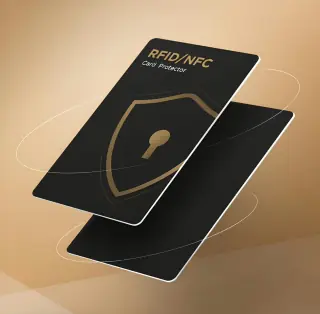
Guardality review
Travelers, commuters and anyone who carries several tap-to-pay cards and wants one card that stays in the wallet and needs no attention. From $13.99.
Read the review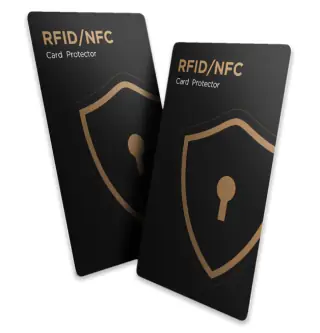
Credifence RFID Blocking Card review
Households that want to put the same thin protector in every wallet at once, and travelers who'd rather not swap wallets to get RFID blocking. From $11.99.
Read the review
FAQ
What is the best apartment security camera for renters?
Look for a small indoor security camera that needs no drilling, connects to Wi-Fi and sends motion alerts to your phone. The SpyFocus Mini WiFi Camera is the one we've reviewed: the brand says it mounts with a magnet, records 1080P video with night vision and works with no monthly fee.
How can I make my apartment more secure without drilling?
Lock the deadbolt every time, put a rod or security bar in the sliding door track, lock the windows, put a lamp on a timer and place a small indoor camera on a shelf facing the entry. Ask the landlord for anything that changes the door, lock or frame.
How do you secure a door in a rental?
Use the deadbolt whenever you're out, home or asleep, check the door viewer before opening, and never hide a spare key outside. Ask the landlord to rekey the locks at move-in and to fix a loose lock, a warped door or a damaged frame.
Can a renter install a home security system?
Anything wired or screwed into the walls needs the landlord's permission, so read your lease. A plug-in or battery camera that sits on a shelf or a magnetic mount inside your unit involves no alterations and moves with you.
Where should I put a mini camera in an apartment?
Inside your own unit, high on a shelf or cabinet, angled down toward the front door with nothing blocking the view. A second camera can cover a sliding door or the room where a pet spends the day. Keep cameras out of bathrooms and other private spaces.
Does renter's insurance cover theft?
According to the National Association of Insurance Commissioners, most standard renter's policies cover stolen items up to your policy limits. A home inventory with photos, serial numbers and receipts makes a claim easier to file.
Sources
- Victimization During Household Burglary (NCJ 227379, 2010), Bureau of Justice Statistics
- Home Security and Burglary Prevention, Seattle Police Department
- Burglary Prevention: Secure Your Space, Metropolitan Police Department, Washington, DC
- A Safety Checklist for Apartments, National Crime Prevention Council (hosted by the Memphis Police Department)
- Off Campus Safety Tips and Apartment Considerations, Duke University Police Department
- Residence Halls, Apartment, and Home Security (brochure, revised 2020), University of California, Irvine Police Department
- How To Secure Your Home Security Cameras, Federal Trade Commission Consumer Advice
- Protecting Your Digital Home (tip sheet, 2022), Cybersecurity and Infrastructure Security Agency
- Mail and Package Theft, U.S. Postal Inspection Service
- Understanding Your Homeowners or Renter's Policy, National Association of Insurance Commissioners
- From Homeowner to Renter: What You Need To Know About Renter's Insurance, National Association of Insurance Commissioners
- My Insurance Doesn't Cover What?, National Association of Insurance Commissioners (NAIC)
This guide is general information, not legal or insurance advice. Read your lease and get your landlord's permission before changing locks, doors or walls, follow your local law on recording, and call 911 in an emergency.