
Nutrition
Okra Water for Women: What It Can and Can't Do
Okra water has become a popular morning drink, often pitched to women for everything from weight loss to fertility. Here is what the vegetable actually contains, what researchers have tested, and where the claims run ahead of the evidence.

What okra water is
Okra water is exactly what it sounds like: okra pods soaked in water, usually overnight, then strained. As the pods sit, they release their slippery inner gel, which leaves the water slightly thick. That gel is okra's mucilage, a highly viscous polysaccharide that researchers have studied both for its texture and for its possible effects on blood sugar.
The drink is often promoted to women with claims about weight loss, hormones, fertility and vaginal health. Okra itself has a long history in cooking and in traditional medicine. Okra water as a drink, however, has barely been studied, and that gap matters for everything that follows.
How people make it
There is no standard recipe. Some people squeeze the pods to release more gel, and a longer soak makes the water thicker; a squeeze of lemon helps if the texture puts you off. Most versions follow the same basic steps:



- Wash 4 to 6 fresh okra pods under running water. The FDA advises washing produce under running water and not using soap, detergent or produce wash.
- Trim the ends and slice the pods lengthwise, or cut them into rounds.
- Put them in a clean jar with 1 to 2 cups of water.
- Cover the jar and leave it in the refrigerator overnight. The FDA recommends storing perishable produce in a clean refrigerator at 40°F or below.
- Strain and drink the water, ideally the next day. The leftover pods can go into a soup or stew.
What nutrients okra has
USDA's FoodData Central lists the nutrients in raw okra, not in okra water. Per 100 grams of raw okra, which USDA lists as about 1 cup, you get:
- 33 calories and 7.5 grams of carbohydrate
- 3.2 grams of fiber
- 1.9 grams of protein
- 23 milligrams of vitamin C
- 60 micrograms of folate
- 31 micrograms of vitamin K
- 57 milligrams of magnesium, 82 milligrams of calcium and 299 milligrams of potassium
What ends up in the glass
Those numbers describe the whole pod. We could not find published measurements of what okra water itself contains. Insoluble fiber, by definition, doesn't dissolve in water, so that part stays in the pods you strain out. If you want what's on that list, eating okra is the surer way to get it.
Folate is one reason okra comes up in conversations about women's health. The CDC advises all women who could become pregnant to get 400 micrograms of folic acid every day, and notes that folic acid is the only form of folate shown in studies to help prevent serious birth defects. Okra is a food source of folate, but neither okra nor okra water replaces folic acid.
What the research does show
Most human studies on okra involve people with prediabetes or type 2 diabetes, and they used dried okra powder or capsules, not okra water. In one 8-week trial, 60 adults with type 2 diabetes were given 10 grams of okra powder blended into yogurt, taken with lunch and dinner. Compared with people who ate plain yogurt, the okra group had larger drops in fasting blood sugar, insulin resistance and several blood fats. HbA1c, a marker of longer-term blood sugar, did not differ between the groups.
Pooled analyses point in a similar direction. A 2023 meta-analysis of eight studies with 331 people with prediabetes or type 2 diabetes found that okra lowered fasting blood sugar by about 15 mg/dL on average compared with placebo, with no significant difference in HbA1c. A 2025 meta-analysis of six randomized trials in type 2 diabetes reported lower fasting blood sugar and lower HbA1c.
Taken together, okra looks promising as a food for people working on their blood sugar. But the trials were small and short, and they tested concentrated okra rather than a glass of soaking water. None of them suggests okra can replace diabetes treatment.
What the research doesn't show
We found no clinical trials testing okra water for fertility, menstrual symptoms, hormone balance or vaginal health, which are the claims most often aimed at women. The weight-loss claim doesn't hold up well either: in the 2025 meta-analysis, okra supplements did not significantly change body weight or BMI.
None of this means okra water is harmful or useless. It is mostly water with some okra gel and whatever else leaches out of the pods. If it helps you drink more water or brings more vegetables into your week, that's a reasonable habit. Just don't expect it to do what social media videos promise.
Who should be careful
For most healthy adults, okra is an ordinary vegetable. A few groups should talk with a doctor or pharmacist before making okra water a daily habit:
- People who take metformin or other diabetes medicines. In a study in rats, the water-soluble part of okra changed how metformin was absorbed, and the authors advised against taking the two together. This hasn't been confirmed in people, but it's worth asking about, especially since okra may also lower blood sugar.
- People who take warfarin. Okra contains vitamin K, and MedlinePlus notes that sudden changes in vitamin K intake can change how warfarin works. Keeping your intake of vitamin K foods steady from day to day matters more than avoiding them.
- People with a history of kidney stones. Okra contains oxalate. One small study found that very little of okra's oxalate showed up in urine, but if you've been told to follow a low-oxalate diet, check with your care team.
- Anyone who is pregnant or trying to conceive. Okra water is not a fertility treatment, and it doesn't replace prenatal care or the folic acid the CDC recommends.
The bottom line
Okra is a low-calorie vegetable with fiber, folate, vitamin C and vitamin K. Research on concentrated okra in people with diabetes is encouraging but limited, and okra water has not been tested for the women's health claims attached to it. Eat okra if you like it, and drink okra water if you enjoy it. For questions about blood sugar, fertility or weight, a doctor or registered dietitian is a better guide than a trend.

Products we've reviewed for gut & digestion

ColonBroom review
Adults who want an easy, tasty way to add psyllium fiber for regularity and fewer bloated days. From $0.93 a day.
Read the review
Bioma review
Adults who want a simple, stimulant-free daily probiotic for digestive comfort and regularity. From $0.88 a day.
Read the review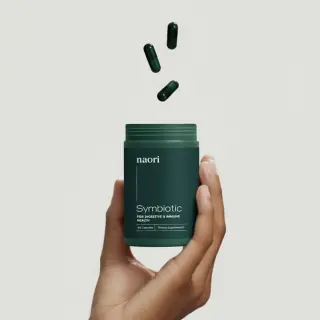
Naori review
Adults who want probiotics, prebiotic fiber and digestive enzymes in one capsule. From $0.87 a day.
Read the review
FAQ
Is it safe to drink okra water every day?
For most healthy adults, okra is a common food, and okra water is unlikely to be a problem. Check with your doctor first if you take diabetes medicine or warfarin, have had kidney stones, or are pregnant or trying to conceive.
Does okra water help with weight loss?
There's no good evidence that it does. In a 2025 meta-analysis of okra supplements in people with type 2 diabetes, body weight and BMI did not change significantly, and okra water itself hasn't been studied for weight loss.
Can okra water improve fertility or vaginal lubrication?
We found no clinical studies testing okra water for fertility, lubrication or menstrual symptoms. If you have concerns in these areas, talk to a gynecologist or your primary care doctor.
Does okra lower blood sugar?
Small trials in people with prediabetes or type 2 diabetes found that okra powder or capsules lowered fasting blood sugar. Those studies didn't test okra water, and okra is not a substitute for diabetes treatment.
Is it better to drink okra water or eat okra?
Eating the pods gives you everything USDA measures in okra, including all of the fiber. Okra water likely carries only part of those nutrients, and its exact content hasn't been measured in published data we could find.
Sources
- Okra, raw (FDC ID 169260), USDA FoodData Central
- Okra ameliorates hyperglycaemia in pre-diabetic and type 2 diabetic patients: a systematic review and meta-analysis, Frontiers in Pharmacology (2023), PubMed
- The impact of okra supplementation on diabetes and obesity biomarkers in type 2 diabetes patients: a systematic review and meta-analysis, Phytotherapy Research (2025), PubMed
- The effect of okra on lipid profiles and glycemic indices in type 2 diabetic adults: a randomized double-blinded trial, Phytotherapy Research (2020), PubMed
- Okra as a potential functional food source of mucilage and bioactive compounds, Plants (2021), PubMed
- Water-soluble fraction of Abelmoschus esculentus interacts with glucose and metformin hydrochloride in rats, ISRN Pharmaceutics (2011), PubMed
- A further study of oxalate bioavailability in foods, Journal of Urology (1990), PubMed
- About Folic Acid, Centers for Disease Control and Prevention
- Vitamin K, MedlinePlus Medical Encyclopedia, National Library of Medicine
- Selecting and Serving Produce Safely, U.S. Food and Drug Administration
This guide is general information, not medical advice. Talk to your doctor before making changes to your diet, sleep or exercise routine.