
Herbs
Mullein Benefits: Traditional Uses, the Real Evidence and How to Use It Safely
The best-known mullein benefits are traditional ones: for centuries, people have sipped mullein tea to ease coughs, chest congestion and sore throats. Lab studies back up part of that folklore, finding anti-inflammatory, antioxidant and antiviral activity, but trials in people are almost nonexistent. Here's what mullein can and can't do, how to brew and strain the tea, and when a cough needs a doctor instead.
What are the benefits of mullein? The short answer
Common mullein (Verbascum thapsus) is one of the oldest folk remedies for the chest. A 2022 review in Phytotherapy Research describes a long history of use for lung, skin and throat complaints, particularly as an astringent and calming agent. Cleveland Clinic notes that Native Americans and colonists used it for coughs, breathing and wound healing. It's still a kitchen remedy in parts of the US: a 2025 survey found people in Pike County, Kentucky, brewing it as a cough tea.
The catch is the kind of evidence behind those uses. Lab and animal studies have found antioxidant, anti-inflammatory, antiviral and antibacterial activity in mullein extracts, according to the same 2022 review. But when we searched PubMed, the National Library of Medicine's research database, in November 2026, we found no clinical trial of mullein alone for cough, asthma or lung health in people.
The honest summary: mullein may help soothe an irritated throat and a nagging cough the way it traditionally has, and it appears gentle for most adults, but it isn't proven to treat or prevent any disease.
- Traditional use: long and widespread, mostly as tea or syrup for cough, sore throat, colds and chest congestion.
- Lab and animal studies: anti-inflammatory, antioxidant, antiviral and antibacterial activity in extracts.
- Studies in people: very few, and none on the lungs. They include two small ear-drop trials in children, where mullein was one of several herbs.
- Regulation: in the US, mullein is sold as a dietary supplement, which the FDA doesn't approve before sale.
What is mullein?
Common mullein, also called great mullein, belongs to the snapdragon family. It's native to Europe, Asia and North Africa and now grows wild across the US on roadsides, meadows and pastures.
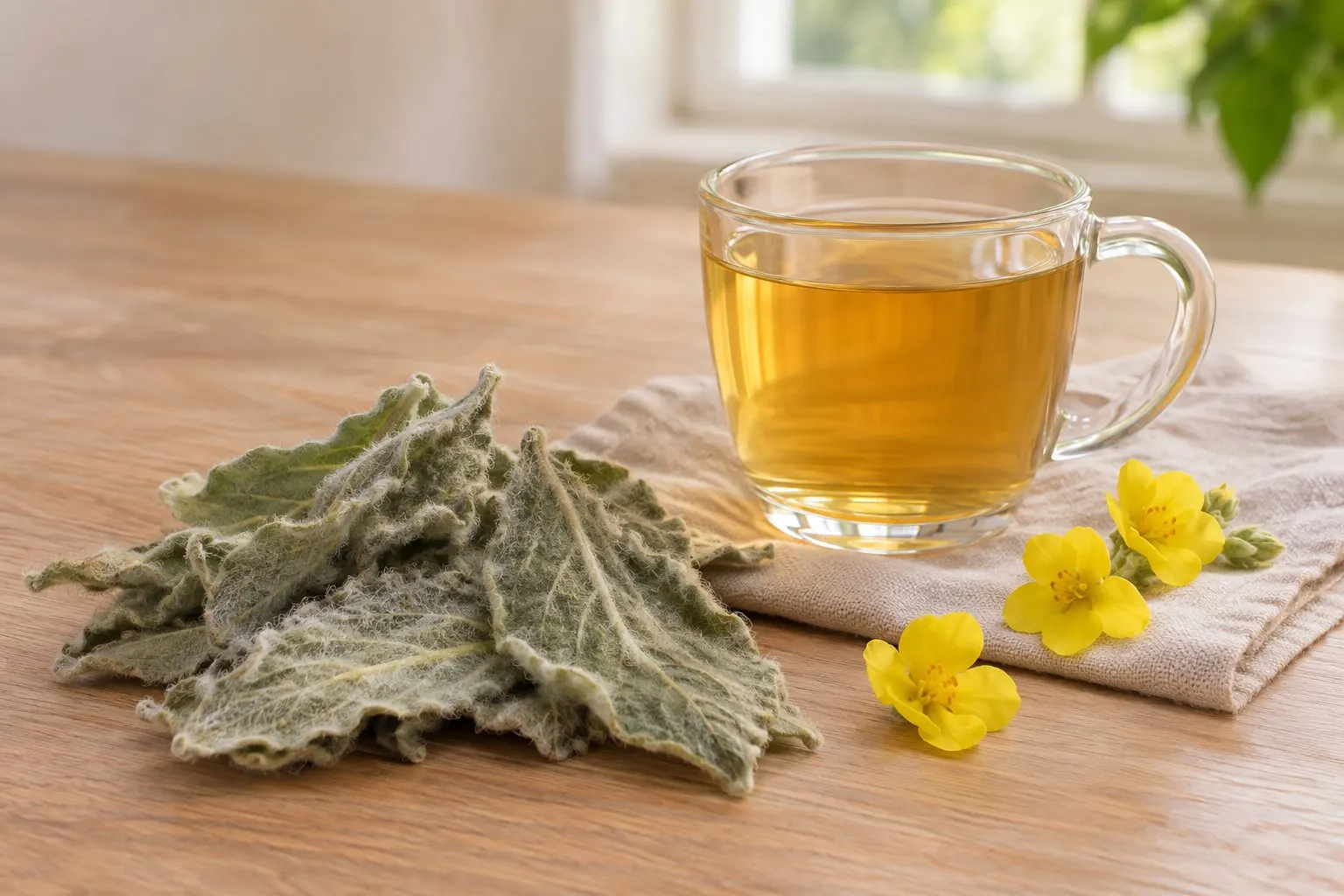
It's a biennial. In its first year it forms a low rosette, up to 2 feet across, of thick, grey-green leaves that are densely hairy and up to a foot long. In the second year it sends up a single stalk that can reach 6 feet or more, topped with a long spike of small yellow flowers, according to Iowa State University Extension. The soft leaves earned it nicknames like flannel leaf.

Products mostly use the leaves and flowers: a 2005 review found dried leaves and flowers, capsules, alcohol extracts and flower oil in US health stores. The plant contains flavonoids, iridoids, phenylethanoid glycosides, saponins, vitamin C and minerals, and Cleveland Clinic adds that its leaves and flowers contain mucilage, a gel-like substance.
What is mullein good for? Traditional uses vs. what's been tested
A 2021 review of Spanish folk medicine found that the most common use of mullein for the airways is as a drink: teas, soaks and syrups for hoarseness, sore throat, colds, cough, asthma and bronchitis, often mixed with other herbs or honey. The authors linked those uses to the anti-inflammatory compounds in the plant, such as quercetin. Their evidence came from lab and animal tests and computer modeling, not from trials in people.
| Use | How it's used traditionally | What the research shows |
|---|---|---|
| Cough and chest congestion | Tea, syrup or infusion, often with other herbs | Lab studies only; no trials of mullein alone |
| Sore throat and hoarseness | Warm tea | Mucilage coats the throat; not tested in trials |
| Colds and flu | Tea | Antiviral and antibacterial activity in lab tests |
| Asthma and bronchitis | Tea; in parts of New Mexico, dried leaves were smoked | No evidence it treats either; keep your prescribed medicines |
| Earache | Flowers steeped in olive oil | Two small trials of mixed herbal ear drops in children |
Is mullein good for your lungs?
Cleveland Clinic describes mullein as an expectorant, a substance that thins mucus so it's easier to cough up, and notes that the mucilage in its leaves and flowers coats the moist linings of the airways. That soothing coat may explain why a warm cup feels good on a raw, coughing throat. Neither effect has been measured in a clinical trial of mullein.
Part of the comfort may simply be the warm liquid: MedlinePlus notes that fluids help thin the mucus in your throat, making it easier to cough up. Our guide on how much water to drink a day covers the basics.
What mullein is not: a treatment for asthma, COPD, bronchitis, pneumonia or any other lung disease. If you have a chronic lung condition, MedlinePlus advises taking the medicines your provider prescribed. Never skip or replace an inhaler with an herb, and tell your doctor or pharmacist before adding mullein.
Mullein lung detox: can a tea cleanse your lungs?
Search for "lung detox" and you'll find teas, pills, oils and inhalers promising to undo years of smoke and pollution. The American Lung Association's advice is blunt: don't trust quick fixes. It says most of these detox products are not FDA approved, lack adequate scientific data, and can even be harmful, particularly if the products are inhaled.
The good news from the same source: your lungs are self-cleaning organs that begin to heal once they're no longer exposed to pollutants. So no tea, mullein included, "cleanses" your lungs. A cup of mullein can be a comforting ritual, but the steps that truly protect your lungs are below.
How to clear your lungs naturally: what actually helps
The American Lung Association calls quitting smoking the most effective thing you can do to minimize and heal lung damage, and that includes e-cigarettes. The National Heart, Lung, and Blood Institute (NHLBI) adds these steps to protect your lungs:

- Quit smoking or vaping, or don't start, and avoid secondhand smoke. The National Cancer Institute's free quitline is 1-877-44U-QUIT.
- Be physically active. Activity helps your heart and lungs work more efficiently. Ask your provider what level is right for you first.
- Check the Air Quality Index before outdoor activities and avoid heavy traffic when you can.
- Keep indoor air clean: ventilate, clean regularly to cut dust, allergens and mold, limit strong fumes, and avoid burning wood for heat or cooking.
- Get a flu shot every year and ask your provider about the pneumonia vaccine.
- Test your home for radon, an odorless gas that can cause lung cancer.
- Wear protective gear if your job exposes you to dust, silica or chemical fumes, and aim for a healthy weight.
Mullein tea benefits, and how to make mullein tea
Tea is the classic way to take mullein and the form with the longest track record: a warm, mild cup that may soothe a scratchy throat and calm a cough. A tea is made by adding boiling water to fresh or dried plant material and letting it steep, as the NIH's Office of Dietary Supplements explains. We found no official US dosing guidance for mullein tea, so the package directions are your guide.
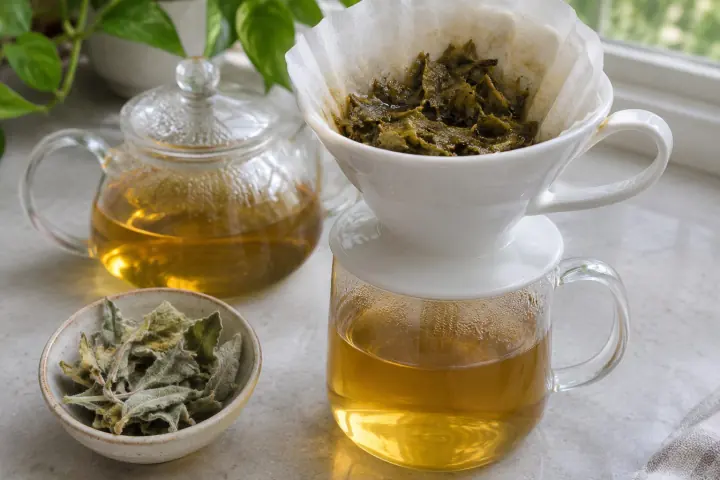
- Buy dried mullein leaf sold as a tea or supplement, labeled with the Latin name Verbascum thapsus and the plant part. Skip plants picked from roadsides, where mullein often grows.
- Measure the amount the package recommends into a cup or teapot.
- Pour just-boiled water over the leaves, cover, and steep for the time on the package.
- Strain through a paper coffee filter or a tightly woven cloth, not just a mesh strainer. Mullein leaves are covered in fine hairs, and extension services warn they can irritate the skin; a fine filter keeps them out of your mouth and throat.
- Sip it warm, and stop if your mouth or throat feels itchy or irritated, or you get a rash.
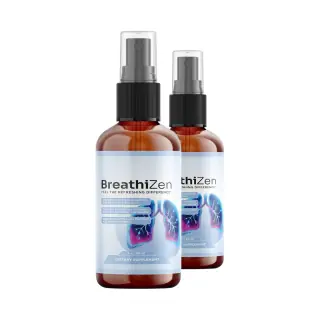
If you'd rather not brew and strain tea every day, mullein also comes in daily oral sprays. We reviewed BreathiZen, a spray that pairs mullein leaf extract with ginger and lemon; the label directs 4 sprays into the mouth or onto the tongue once a day.
Mullein tincture, drops, oil, capsules and sprays compared
Beyond tea, mullein comes in several concentrated forms. According to the NIH's Office of Dietary Supplements, a tincture is made by soaking a plant in a mix of alcohol and water, and an extract is made by soaking it in a liquid such as water or alcohol; the extract can then be dried to fill capsules or tablets.
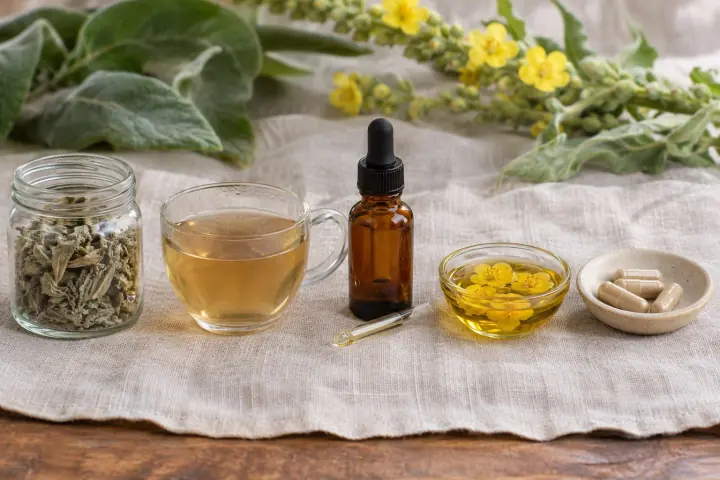
| Form | How it's made | Why people choose it | What to watch |
|---|---|---|---|
| Tea | Dried leaves or flowers steeped in hot water | The traditional cup for cough and sore throat | Strain through a fine filter to catch leaf hairs |
| Tincture or drops | Plant soaked in alcohol and water | A few drops instead of brewing | Tinctures contain alcohol; strengths vary by brand |
| Capsules and gummies | Dried leaf or dried extract | No taste, easy to fit in a routine | Amounts and extract ratios aren't standardized |
| Oral spray | Liquid extract sprayed into the mouth | Quick daily routine, no brewing | Check the other herbs in the blend |
| Flower oil | Flowers steeped in olive oil | Folk remedy for earache | Never use in an ear that may have a ruptured eardrum |
Ratios such as 10:1 on a label compare the weight of dried plant with the amount of finished extract, as the Office of Dietary Supplements explains. They differ by brand, so compare labels rather than assuming two products match.
Oral sprays are a newer, convenient format. BreathiZen, for example, lists a 154 mg proprietary blend per 4 sprays (0.60 mL) of mullein leaf extract 10:1, ginger root extract and organic lemon extract, made in the USA. The brand says it "helps promote clear breathing and respiratory function" and "supports healthy lung function and immune health." Like every claim of this kind on a supplement label, those statements haven't been evaluated by the FDA. Our BreathiZen review covers how it's used and who it suits.
Mullein flower oil has a folk reputation for earaches, and it's one of the few uses tested in people. In a 2003 study in Pediatrics, 171 children aged 5 to 18 with ear pain from a middle-ear infection got herbal ear drops (garlic, mullein, calendula, St. John's wort and lavender in olive oil) or anesthetic drops, with or without an antibiotic. Pain improved in every group, and the authors found that about 80% of it was self-limited, explained simply by time passing. That doesn't show mullein alone eases ear pain. MedlinePlus says ear drops should only be used when the eardrum hasn't ruptured, and to call a provider if a child has a high fever, severe pain, or symptoms that don't improve within 24 to 48 hours.
Mullein side effects: is mullein safe?
Mullein has a reputation as a gentle herb. A Cleveland Clinic physician says there are no reports of toxic side effects, though full-strength mullein applied to the skin or mucous membranes can cause a reaction. But "no reports" isn't the same as "well tested": there are very few studies in people, and NCCIH, the NIH's center for complementary health, points out that "natural" does not always mean safe. What to watch:
- Leaf hairs. University extension services note that the hairy leaves and stems can cause contact dermatitis in some people. Strain tea through a fine filter, and wear gloves if you handle fresh plants with sensitive skin.
- Allergies. Stop if you get itching, a rash or hives. Call 911 for a swollen face or throat with trouble swallowing or breathing.
- Pregnancy, nursing and children. Many dietary supplements haven't been tested in pregnant women, nursing mothers or children, NCCIH says. Ask your doctor or your child's pediatrician first.
- Medicines and surgery. Supplements may interact with medications, so the FDA advises talking to your doctor or pharmacist before you start one. Tell your surgical team about every supplement you take, well before an operation.
- Product quality. The FDA doesn't approve or test supplements before they're sold, and a Cleveland Clinic physician notes that US mullein products aren't made in a standardized way. She suggests brands that say they're third-party tested, used within the label's directions.
When to see a doctor about a cough or breathing problem
Mullein is for comfort, not for diagnosing or treating anything. MedlinePlus, the National Library of Medicine's health site, says to call 911 or your local emergency number if:
- Shortness of breath or trouble breathing comes on suddenly, or makes it hard to talk
- You have hives or a swollen face or throat with difficulty swallowing
Contact your provider right away if you have a cough along with any of these: a cough lasting longer than 10 to 14 days; coughing up blood; a fever; thick, foul-smelling, yellow-green phlegm; wheezing or a high-pitched sound when you breathe in; chest pain, pressure or discomfort; shortness of breath with slight activity, at rest or that wakes you at night; unexplained weight loss or night sweats; or a cough in a baby younger than 3 months.
If you live with asthma, COPD or another lung condition, keep taking your prescribed medicines and ask your provider before adding any herb. If a supplement seems to cause a problem, stop it, see your provider and report it through the FDA's Safety Reporting Portal.
Mullein products we've reviewed
FAQ
What does mullein do for the body?
Traditionally, mullein is used to soothe coughs, sore throats and chest congestion. Its leaves and flowers contain mucilage, which coats irritated linings, and lab studies have found anti-inflammatory, antioxidant and antiviral activity. Clinical trials in people are still missing, so these effects aren't proven.
Is it safe to drink mullein tea every day?
There's no official daily limit and no long-term safety study in people. Follow the package directions, strain the tea through a fine filter to catch the leaf hairs, and talk to your doctor first if you're pregnant, nursing, giving it to a child or taking medicines.
Does mullein help with asthma or COPD?
There's no evidence that mullein treats asthma, COPD or bronchitis. It has been used traditionally for coughs, but it's not a substitute for an inhaler or any prescribed medicine. Talk to your provider before adding it.
What's the difference between mullein tea and mullein drops?
Tea is dried leaf steeped in hot water. Drops are usually a tincture or liquid extract, made by soaking the plant in alcohol and water or another liquid, so they're more concentrated and their strength varies by brand. Follow the label of the product you buy.
Can you smoke mullein?
Some people historically smoked dried mullein leaves, but there's no evidence it helps your lungs. MedlinePlus lists smoking, including substances other than tobacco, among the causes of cough, and the American Lung Association warns that products sold to cleanse the lungs can be harmful, particularly if inhaled.
Sources
- Health-promoting and disease-mitigating potential of Verbascum thapsus L. (common mullein): A review, Phytother Res (2022), PubMed
- Common mullein (Verbascum thapsus L.): recent advances in research, Phytother Res (2005), PubMed
- Searching for Scientific Explanations for the Uses of Spanish Folk Medicine: A Review on the Case of Mullein (Verbascum, Scrophulariaceae), Biology (2021), PubMed
- A Review and Survey of Local Eastern Kentucky Medicinal Plants and Their Pharmacological Benefits, Plants (2025), PubMed
- Naturopathic treatment for ear pain in children, Pediatrics (2003), PubMed
- How Mullein Benefits Your Lungs, Cleveland Clinic Health Essentials
- Common mullein, Iowa State University Extension and Outreach
- Weed of the Week: Common mullein, University of Maryland Extension IPM Report (July 10, 2020)
- Botanical Dietary Supplements: Background Information, NIH Office of Dietary Supplements
- Using Dietary Supplements Wisely, National Center for Complementary and Integrative Health (NIH)
- Questions and Answers on Dietary Supplements, U.S. Food and Drug Administration
- Cough, MedlinePlus Medical Encyclopedia
- Breathing difficulty, MedlinePlus Medical Encyclopedia
- Earache, MedlinePlus Medical Encyclopedia
- How to Keep Your Lungs Healthy, National Heart, Lung, and Blood Institute (NIH)
- Can You Detox Your Lungs?, American Lung Association
This guide is general information, not medical advice. Talk to your doctor before making changes to your diet, sleep or exercise routine.