
Stress
How to Feel Calmer: Everyday Habits That Support Your Mental Health
Stress is part of life, but feeling wound up all the time doesn't have to be. These are small, practical habits with real research behind them, along with clear signs that it's time to get professional help.
If you need help right now
If you are in crisis or thinking about suicide, call or text 988 to reach the 988 Suicide & Crisis Lifeline, or chat at 988lifeline.org. It's free, confidential and available 24 hours a day, 7 days a week. In a life-threatening situation, call 911 or go to the nearest emergency room.
Start with your breath
Your breath is the quickest calming tool you have. The National Center for Complementary and Integrative Health (NCCIH) describes relaxation techniques as ways to bring on the body's relaxation response: slower breathing, lower blood pressure and a reduced heart rate. Slow, deep belly breathing, also called diaphragmatic breathing, is one of them. NCCIH notes these techniques are generally considered safe for healthy people, though occasionally people feel more anxious. If an exercise makes you feel worse, stop and breathe normally.
One pattern has newer research behind it. In a month-long randomized study by Stanford researchers, with 108 participants, people who practiced 5 minutes a day of cyclic sighing had greater improvement in mood and a larger drop in breathing rate than people who spent the same time on mindfulness meditation. Most participants were university students, so the results may not apply to everyone. To try it:
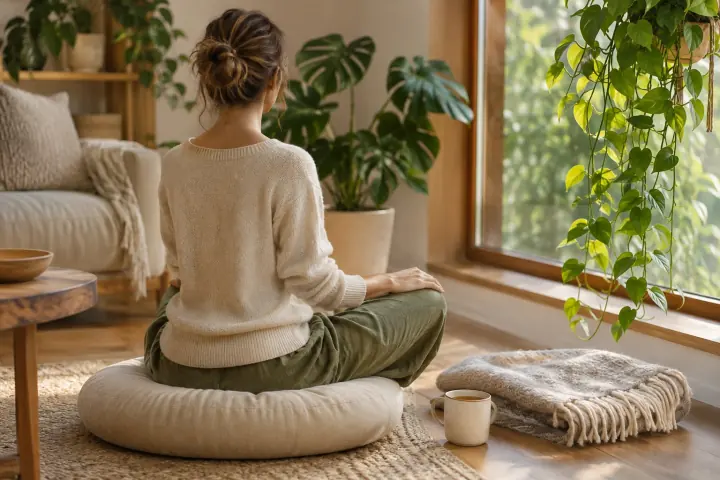
- Sit or lie down and set a timer for 5 minutes.
- Breathe in slowly, ideally through your nose, until your lungs feel full.
- Take a second, shorter breath in to fill them completely.
- Breathe out slowly and fully, ideally through your mouth.
- Repeat until the timer ends, then return to normal breathing.
Move your body, even a little
Physical activity is one of the best-studied ways to ease stress and low mood. The CDC says some benefits come right after a session of moderate-to-vigorous activity, including reduced short-term feelings of anxiety, and that regular activity can lower your risk of depression and anxiety and help you sleep better.
A 2023 umbrella review of 97 reviews, covering more than 1,000 trials, found medium-sized benefits of physical activity for symptoms of depression, anxiety and distress across a wide range of adults, with bigger improvements at higher intensity.
You don't need a gym. The National Institute of Mental Health (NIMH) notes that just 30 minutes of walking a day can boost your mood, and that shorter bouts add up. The CDC's weekly target for adults is 150 minutes of moderate activity plus 2 days of muscle strengthening.
Protect your sleep
NIMH lists making sleep a priority among its core self-care tips: stick to a schedule, get enough sleep, and cut back on light from phones and computers before bed. The CDC says adults ages 18 to 60 need 7 or more hours of sleep, and suggests consistent bed and wake times, a calm, quiet and cool bedroom, and less caffeine later in the day. If you lie awake night after night for months, raise it with a doctor.
Get outside
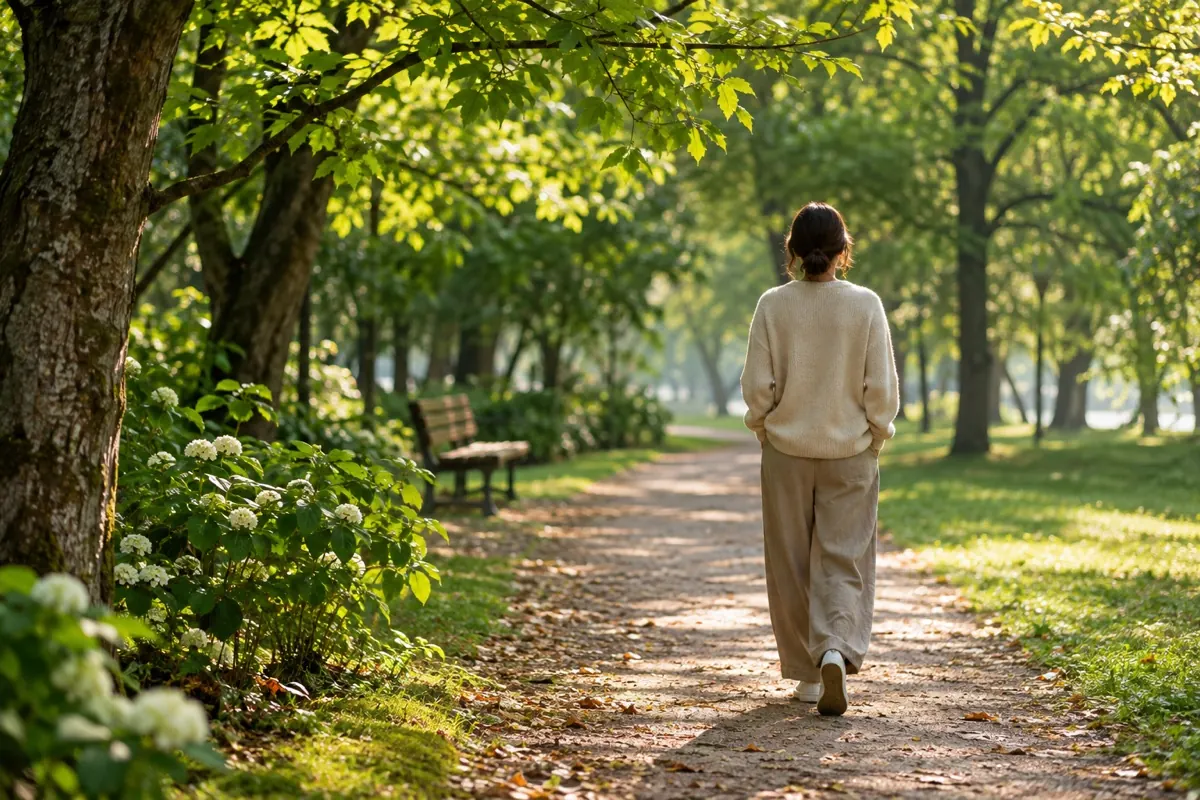
Time in green spaces, parks, woods or near water may help. In a national survey of nearly 20,000 adults, people who spent at least 120 minutes a week in nature were more likely to report good health and high well-being than people who spent none. The benefits leveled off between about 200 and 300 minutes a week, and it didn't matter whether the time came in one long visit or several short ones.
A survey shows a link, not proof that nature causes better well-being. Still, a walk in a park combines two habits from this list, and NIMH includes time in nature among the activities worth scheduling.
Stay connected
Relationships are protective. The CDC says social connection can lower the risk of depression and anxiety and improve our ability to manage stress, anxiety and depression. NIMH's advice is simple: reach out to friends or family members who can provide emotional support and practical help. A few easy starting points:

- Put one regular call or walk with a friend on your calendar.
- Say yes to one invitation you'd usually skip.
- Join something that meets on a schedule, such as a class, a team, a volunteer shift or a faith community.
- Tell one person how you're really doing.
Small daily habits that add up
NIMH's self-care advice also includes a handful of everyday habits:

- Eat regular, balanced meals and drink plenty of water, which can help your energy and focus.
- Notice how caffeine and alcohol affect your mood. For some people, cutting back helps.
- Decide what must get done now and what can wait, and practice saying no when you're taking on too much.
- Each day, write down or think through a few specific things you're grateful for.
- When a harsh or negative thought shows up, question whether it's accurate and helpful.
When to get professional help
Self-care helps, but it doesn't replace treatment when something more is going on. NIMH advises seeking professional help if you've had severe or distressing symptoms for 2 weeks or more, such as:
- Difficulty sleeping
- Changes in appetite or unplanned weight changes
- Trouble getting out of bed in the morning because of your mood
- Difficulty concentrating
- Loss of interest in things you usually enjoy
- Being unable to complete usual tasks and activities
- Feeling irritable, frustrated or restless
Where to find help
A good first step is your primary care provider, who can do an initial mental health screening and refer you to a psychologist, psychiatrist or clinical social worker. According to NIMH, treatment usually includes therapy, in person or virtual, medication, or a combination of the two. Other places to turn:
- 988 Suicide & Crisis Lifeline: call or text 988, or chat at 988lifeline.org, for free, confidential support at any hour.
- Veterans Crisis Line: call 988 and press 1, or text 838255.
- Disaster Distress Helpline: call or text 1-800-985-5990 for distress related to a natural or human-caused disaster.
- Your health insurance company can tell you which local providers are covered by your plan.
- If you have a job, ask whether your employer offers an Employee Assistance Program, a free and confidential service.
- The Substance Abuse and Mental Health Services Administration (SAMHSA) offers a helpline and an online locator for mental health services.
Products we've reviewed for sleep & stress
FAQ
What is the fastest way to calm down?
Slow breathing is the quickest tool most people have. Try a few minutes of slow belly breathing or cyclic sighing, a double inhale followed by a long exhale. A session of moderate activity, such as a brisk walk, can also ease short-term anxiety, according to the CDC.
How do I know if I need professional help?
NIMH advises seeking help if severe or distressing symptoms, such as trouble sleeping, appetite changes, poor concentration or loss of interest in things you enjoy, have lasted 2 weeks or more. Your primary care provider is a good place to start.
Is 988 only for people who are suicidal?
No. The 988 Lifeline says it's there for mental health struggles, emotional distress, alcohol or drug use concerns, or anyone who just needs someone to talk to. It's free and confidential, 24 hours a day.
How much exercise helps mental health?
NIMH notes that 30 minutes of walking a day can boost your mood, and shorter bouts add up. The CDC's weekly adult target is 150 minutes of moderate activity plus 2 days of muscle strengthening.
Can time in nature really improve your mood?
In a survey of nearly 20,000 adults, those who spent at least 120 minutes a week in nature were more likely to report good health and high well-being. It shows a link, not proof, but it's an easy habit to try.
Sources
- Caring for Your Mental Health, National Institute of Mental Health
- Help for Mental Illnesses, National Institute of Mental Health
- 988 Suicide & Crisis Lifeline
- Relaxation Techniques: What You Need To Know, National Center for Complementary and Integrative Health
- Brief structured respiration practices enhance mood and reduce physiological arousal, Cell Reports Medicine (2023), PubMed
- Benefits of Physical Activity, Centers for Disease Control and Prevention
- Adult Activity: An Overview, Centers for Disease Control and Prevention
- Effectiveness of physical activity interventions for improving depression, anxiety and distress: an overview of systematic reviews, British Journal of Sports Medicine (2023), PubMed
- Spending at least 120 minutes a week in nature is associated with good health and wellbeing, Scientific Reports (2019), PubMed
- Social Connection, Centers for Disease Control and Prevention
- About Sleep, Centers for Disease Control and Prevention
This guide is general information, not medical advice. Talk to your doctor before making changes to your diet, sleep or exercise routine.