
Gut health
Psyllium Husk Benefits: What the Research Shows, and How to Take It Safely
Psyllium husk benefits are best proven for constipation, where pooled trials show more regular, easier bowel movements, and for LDL cholesterol, which it lowers modestly. It may also help some people with IBS and blood sugar, but it won't do much for weight on its own, and every dose needs a full glass of water.
What is psyllium husk?
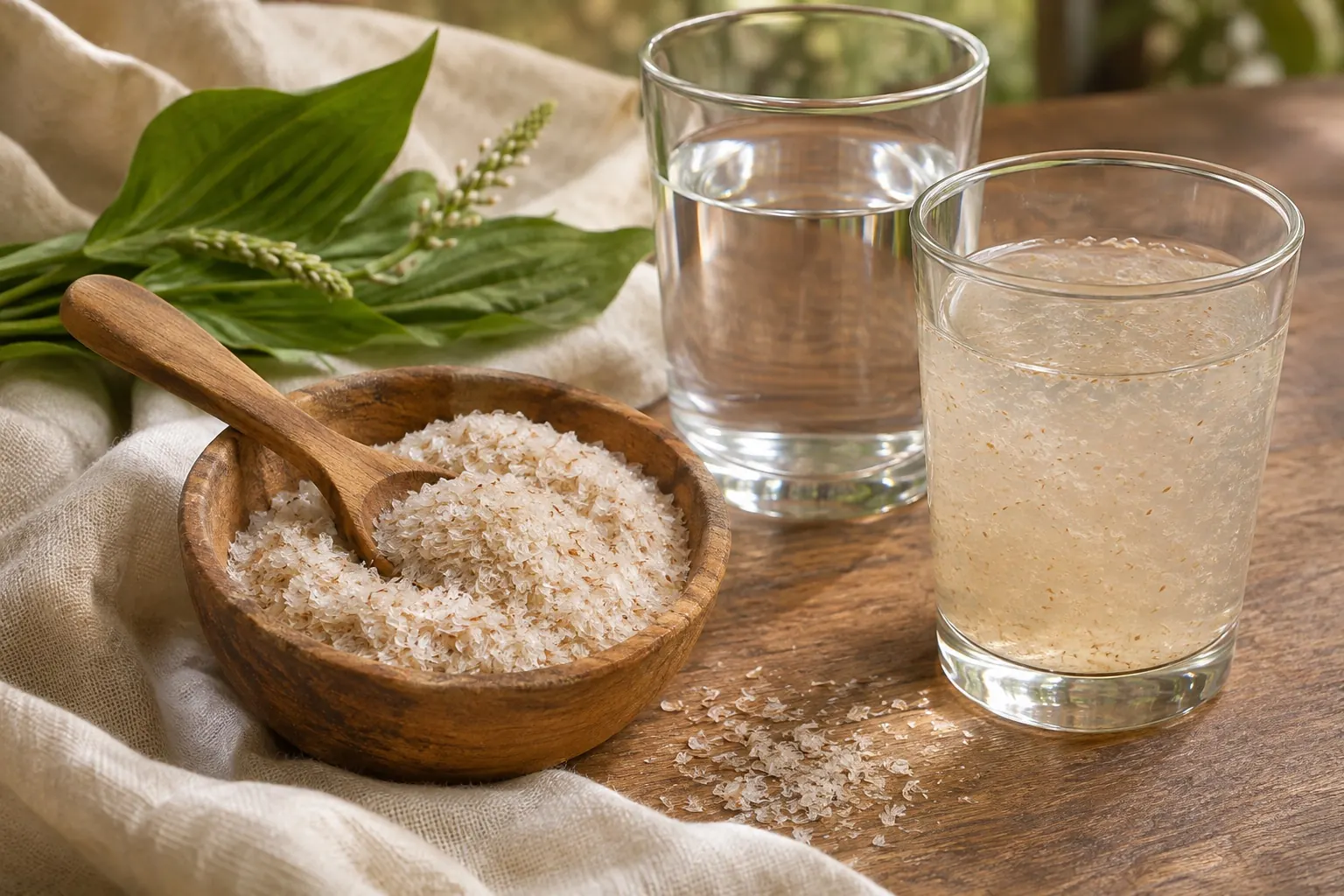
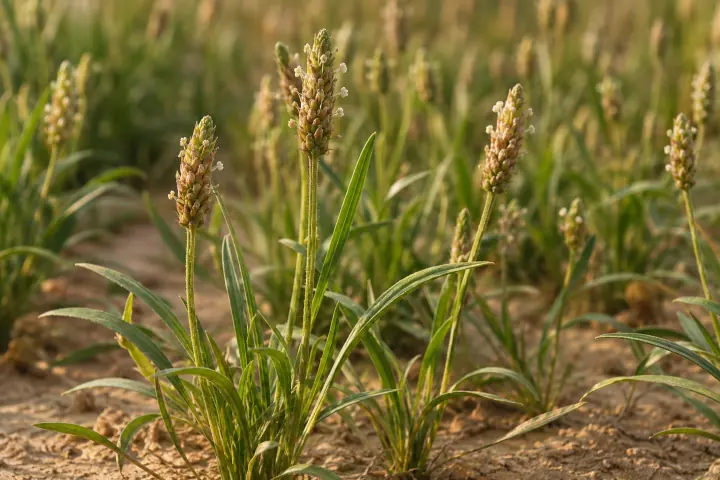
Psyllium husk is the dried seed coat of Plantago ovata, a plant also known as blond or Indian psyllium, as the FDA's food rules define it. It's a soluble, gel-forming fiber. Stir it into water and it swells and thickens; in your gut, it absorbs liquid and forms a bulky, softer stool that's easier to pass, as MedlinePlus explains.
You'll find it as whole husk, finer powder, capsules, wafers and flavored drink mixes, and it's the active ingredient in many over-the-counter fiber laxatives. Mayo Clinic lists psyllium alongside oats, beans, apples, citrus fruits and barley as sources of soluble fiber, the type that can help lower cholesterol and blood sugar.
Psyllium husk benefits at a glance
Here's what systematic reviews and meta-analyses, the strongest kind of evidence, have found for psyllium so far.
| Use | What pooled studies found | How strong |
|---|---|---|
| Constipation | 16 trials, 1,251 adults: 66% responded to fiber vs. 41% to control, with psyllium among the fibers that clearly worked; best above 10 g of fiber a day for at least 4 weeks | Consistent benefit, but trials varied a lot |
| IBS | 30 trials, 1,904 people: 52% responded to fiber vs. 44% to control, and psyllium on its own also beat control | Moderate; overall symptom scores didn't change significantly |
| LDL cholesterol | 28 trials, 1,924 people: a median of about 10.2 g of psyllium a day lowered LDL by 0.33 mmol/L (about 13 mg/dL) | Moderate |
| Blood sugar | 19 trials, 962 adults: lower fasting blood sugar and HbA1c than placebo, with bigger effects above 10 g a day | Promising, from small trials |
| Body weight | 22 trials: no significant change in weight, BMI or waist size | Psyllium alone isn't a weight-loss tool |
Sources: meta-analyses in Am J Clin Nutr (2022 and 2018), Gastroenterology (2026), BMC Endocr Disord (2024) and Crit Rev Food Sci Nutr (2020). The mg/dL figure is converted from mmol/L.
The FDA also lets foods carry a heart-health claim for psyllium: 7 grams or more a day of soluble fiber from psyllium husk, as part of a diet low in saturated fat and cholesterol, is linked to a lower risk of coronary heart disease.
Psyllium husk for constipation
This is psyllium's best-supported use, and the one MedlinePlus describes first: it's a bulk-forming laxative. In the 2022 meta-analysis, fiber made stools more frequent and easier to pass, and psyllium and pectin were the two fibers with clear effects. The improvement showed up with higher doses and with at least four weeks of use, so a few days isn't a fair trial.
It may help loose stools, too. Mayo Clinic notes that fiber absorbs water and adds bulk, which can make watery stools more solid, and MedlinePlus says doctors sometimes prescribe psyllium for diarrhea. If diarrhea is your problem, talk to your doctor first, since it can have causes that fiber won't fix.
For IBS, a 2026 meta-analysis found that more people responded to fiber than to placebo, with psyllium specifically showing a benefit. Our guide on how to get rid of bloating covers the other habits that help when bloating comes with constipation.
Psyllium husk, cholesterol and blood sugar
As a gel-forming fiber, psyllium can help lower cholesterol. Across 28 trials, people taking about 10 grams a day saw their LDL cholesterol drop by about 13 mg/dL, along with non-HDL cholesterol and apolipoprotein B, two other markers of heart risk. The authors rated the LDL evidence as moderate quality.
For blood sugar, a 2024 meta-analysis of 19 trials found lower fasting blood sugar, HbA1c and insulin resistance than with placebo, but not lower insulin, and doses above 10 grams a day did better. If you take medicine for diabetes or cholesterol, psyllium is something to add with your doctor, not instead of your treatment.
Psyllium husk for weight loss: what to expect
Not much on the scale. A review of 22 trials found no significant change in body weight, BMI or waist size from psyllium supplements. Where fiber can help is fullness: Mayo Clinic notes that high-fiber foods tend to be more filling and less energy dense. That's an argument for eating more high fiber foods, with psyllium as an extra rather than the plan.
How to take psyllium husk
The steps are simple, and the water part isn't optional:
- Follow the label for your product. Serving sizes differ between whole husk, powder, capsules and drink mixes, and MedlinePlus says these products are usually taken one to three times a day.
- Mix each dose with at least 8 ounces (a full glass) of water or another liquid just before you drink it. The FDA requires that direction on psyllium laxatives, together with a choking warning.
- Start low and build up over a few weeks. Adding fiber slowly gives your gut bacteria time to adjust and means less gas and bloating, according to MedlinePlus.
- Drink plenty of fluids through the day. Mayo Clinic notes that fiber works best when it absorbs water.
- Keep other medicines apart. MedlinePlus says not to take digoxin, aspirin or nitrofurantoin within 3 hours of psyllium, so ask your pharmacist about spacing anything else you take.
- Give it time. In the constipation meta-analysis, stool frequency improved with treatment of at least 4 weeks.
- If you're using it as a laxative, MedlinePlus advises not taking it for longer than 1 week unless your doctor tells you to. Longer daily use, for cholesterol or regularity, is a plan to agree on with your doctor.
What's the best time to take psyllium husk?
There's no official best time. What matters more is taking it the same way every day, always with a full glass of liquid, and spacing it from your medicines. Some people prefer it before meals. ColonBroom's directions, for example, suggest 30 to 60 minutes before breakfast and dinner, and not within 2 hours of bedtime. Follow your own product's label.
Psyllium husk side effects
- Gas and bloating, especially in the first weeks. In the constipation meta-analysis, flatulence was higher in the fiber groups than in the control groups.
- Choking or blockage if it's taken without enough fluid. The FDA-required warning reads: taking this product without adequate fluid may cause it to swell and block your throat or esophagus and may cause choking. Don't take it if you have trouble swallowing, and get immediate medical attention for chest pain, vomiting, or trouble swallowing or breathing after a dose.
- Allergic or other reactions. MedlinePlus lists difficulty breathing, skin rash, itching, stomach pain, nausea and vomiting among the side effects to call your doctor about right away. It also warns not to inhale the powder while mixing.
- Interactions. MedlinePlus names digoxin, aspirin and nitrofurantoin, which is why the spacing rule above matters.
Tell your doctor before you start if you have diabetes, heart disease, high blood pressure, kidney disease, rectal bleeding, an intestinal blockage or trouble swallowing, if you follow a low-sugar or low-sodium diet, or if you're pregnant or breastfeeding. MedlinePlus lists all of these. For children, ask their pediatrician first.
Psyllium husk powder, whole husk or capsules?
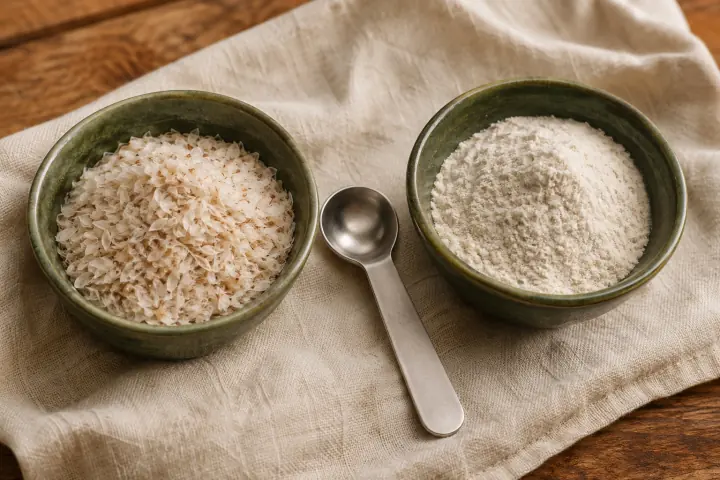
They're the same fiber in different forms. Whole husk is flaky. Powder is ground finer, so it mixes more smoothly. Capsules are the most convenient, but the FDA's choking warning covers capsules too, so they still need a full glass of water. Whatever you buy, the Supplement Facts or Drug Facts label tells you how many grams of fiber one serving gives.
Flavored drink mixes are the other route. If you'd rather take psyllium as a flavored drink, we reviewed ColonBroom: one scoop gives 3.6 grams of psyllium and 3 grams of dietary fiber in a strawberry drink the brand describes as sugar-free.
Fiber supplements vs. fiber from food
Mayo Clinic's view is that whole foods generally beat fiber supplements, because supplements don't bring the mix of fibers, vitamins and minerals that beans, whole grains, fruit and vegetables do. Your doctor may still suggest a supplement if diet changes aren't enough, or for constipation, diarrhea or IBS. Psyllium, methylcellulose and calcium polycarbophil are the common types, and psyllium is one of the fibers with clear results for constipation in trials.
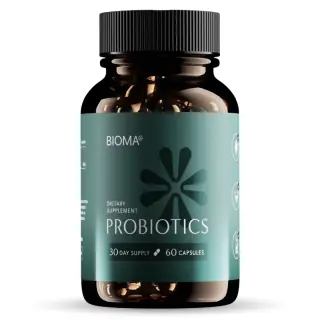
A probiotic is a different tool altogether. If what you're after is gut bacteria rather than bulk, start with our guide to probiotic foods; for a capsule, our review of Bioma covers a two-capsule probiotic with a small 100 mg dose of XOS, a prebiotic fiber; it doesn't replace the grams of fiber psyllium supplies.
How much fiber per day do you need?
The National Academy of Medicine's daily recommendations, as listed by Mayo Clinic, are:
- Women 50 or younger: 25 grams
- Women older than 50: 21 grams
- Men 50 or younger: 38 grams
- Men older than 50: 30 grams
MedlinePlus says the average American gets only about 16 grams a day, so most people have a real gap to close. The Daily Value on food labels is 28 grams. Psyllium can cover a few of those grams, and our USDA chart of high fiber foods shows how to get the rest from meals.
When to see a doctor
See a doctor if constipation doesn't get better with self-care, or if you have a family history of colon or rectal cancer, as NIDDK advises. Get care right away if constipation comes with any of these:
- Rectal bleeding or blood in your stool
- Constant belly pain, or being unable to pass gas
- Vomiting or fever
- Lower back pain
- Weight loss you can't explain
- Chest pain, vomiting, or trouble swallowing or breathing after a dose of psyllium
Fiber and gut health products we've reviewed
FAQ
Is psyllium husk good for you?
For most adults, yes, when taken with enough water. It has good evidence for constipation and moderate evidence for lowering LDL cholesterol. Check with your doctor first if you have trouble swallowing, a bowel blockage, kidney disease or take regular medicines.
How much psyllium husk should I take per day?
Follow your product's label and start at the low end. Studies that helped constipation used more than 10 grams of fiber a day, and the FDA's heart-health claim is based on 7 grams of soluble fiber from psyllium a day. Don't go beyond the label unless your doctor tells you to.
Does psyllium husk help you lose weight?
Not by itself. A review of 22 trials found no significant change in weight, BMI or waist size. It may help you feel fuller, but eating more high-fiber foods overall does more.
Is psyllium husk good for diarrhea?
It can be. Psyllium absorbs water and adds bulk, and MedlinePlus says doctors sometimes prescribe it for diarrhea. Talk to your doctor first, especially if diarrhea is new, severe or lasts more than a few days.
Can I take psyllium husk every day?
Many people do, but MedlinePlus advises not using it as a laxative for more than a week unless your doctor tells you to. For long-term daily use, agree on a plan with your doctor, and always take it with a full glass of liquid.
Does psyllium husk cause bloating?
It can at first. Fiber groups had more gas than control groups in trials. Starting with a small dose and increasing over a few weeks, with plenty of water, usually helps.
Sources
- Psyllium, MedlinePlus Drug Information
- 21 CFR 101.81, Health claims: soluble fiber from certain foods and risk of coronary heart disease, eCFR
- 21 CFR 201.319, Water-soluble gums and hydrophilic mucilloids (including psyllium): required warnings and directions, eCFR
- Dietary fiber: Essential for a healthy diet, Mayo Clinic
- Dietary fiber, MedlinePlus
- Daily Value on the Nutrition and Supplement Facts Labels, FDA
- Symptoms and Causes of Constipation, NIDDK
- The Effect of Fiber Supplementation on Chronic Constipation in Adults: an updated systematic review and meta-analysis, Am J Clin Nutr (2022), PubMed
- Fiber Supplementation in Irritable Bowel Syndrome: a systematic review and meta-analysis, Gastroenterology (2026), PubMed
- Effect of psyllium fiber on LDL cholesterol, non-HDL cholesterol and apolipoprotein B: a systematic review and meta-analysis, Am J Clin Nutr (2018), PubMed
- The effect of psyllium on fasting blood sugar, HbA1c, HOMA IR and insulin: a systematic review and meta-analysis, BMC Endocr Disord (2024), PubMed
- The effects of psyllium supplementation on body weight, BMI and waist circumference in adults: a systematic review and meta-analysis, Crit Rev Food Sci Nutr (2020), PubMed
This guide is general information, not medical advice. Talk to your doctor before making changes to your diet, sleep or exercise routine.